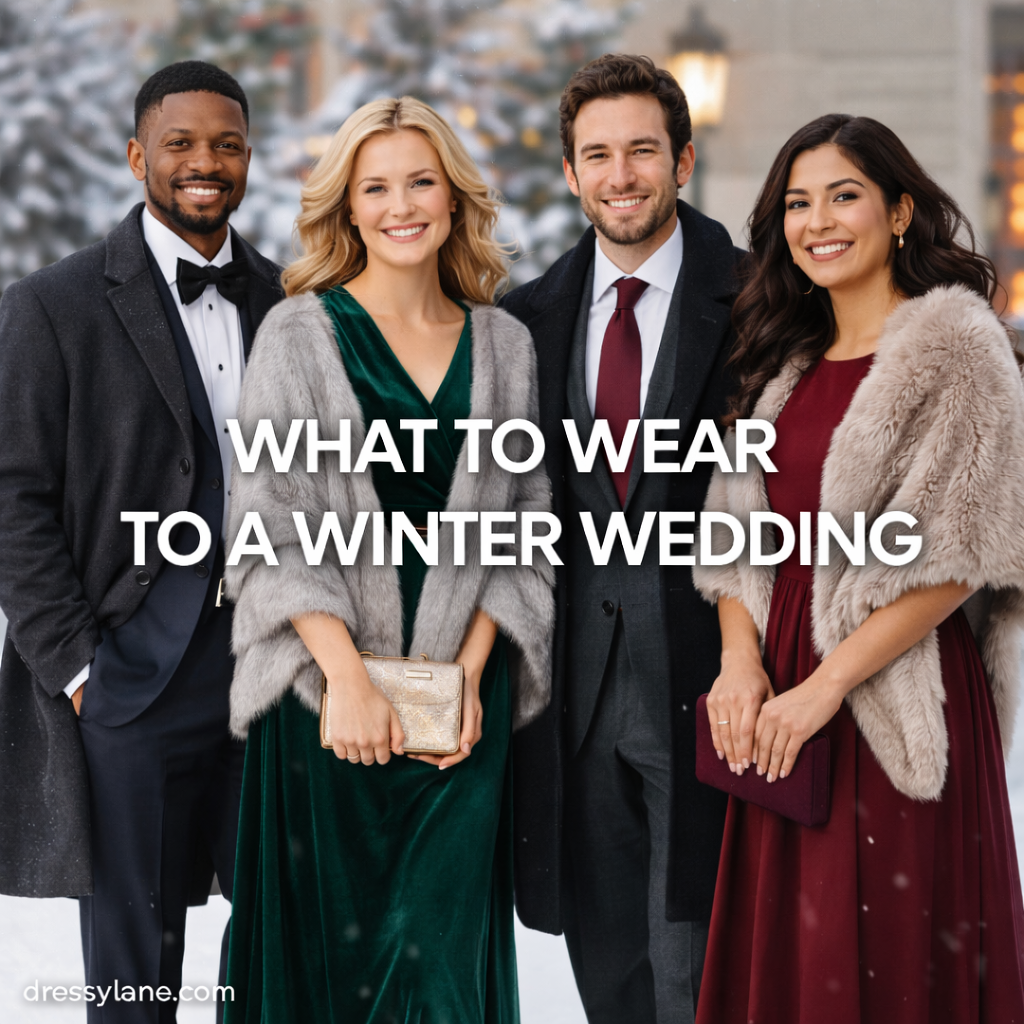
Winter weddings offer an opportunity to wear richer fabrics, deeper colors, and more structured outfits than you might choose for a summer celebration. The challenge is staying warm without looking bundled up or feeling overheated once you reach the reception.
A velvet midi dress or a well-tailored wool suit can look beautiful in a candlelit ballroom, but neither will help much if you’re standing outside in freezing temperatures without the right coat.
Here’s what to wear to a winter wedding, including specific outfit combinations, practical footwear advice, and layering tips that won’t compromise your look.
Start With the Wedding Dress Code
Before choosing an outfit, check the invitation. Winter weddings often take place indoors, but the season doesn’t automatically make an event formal.
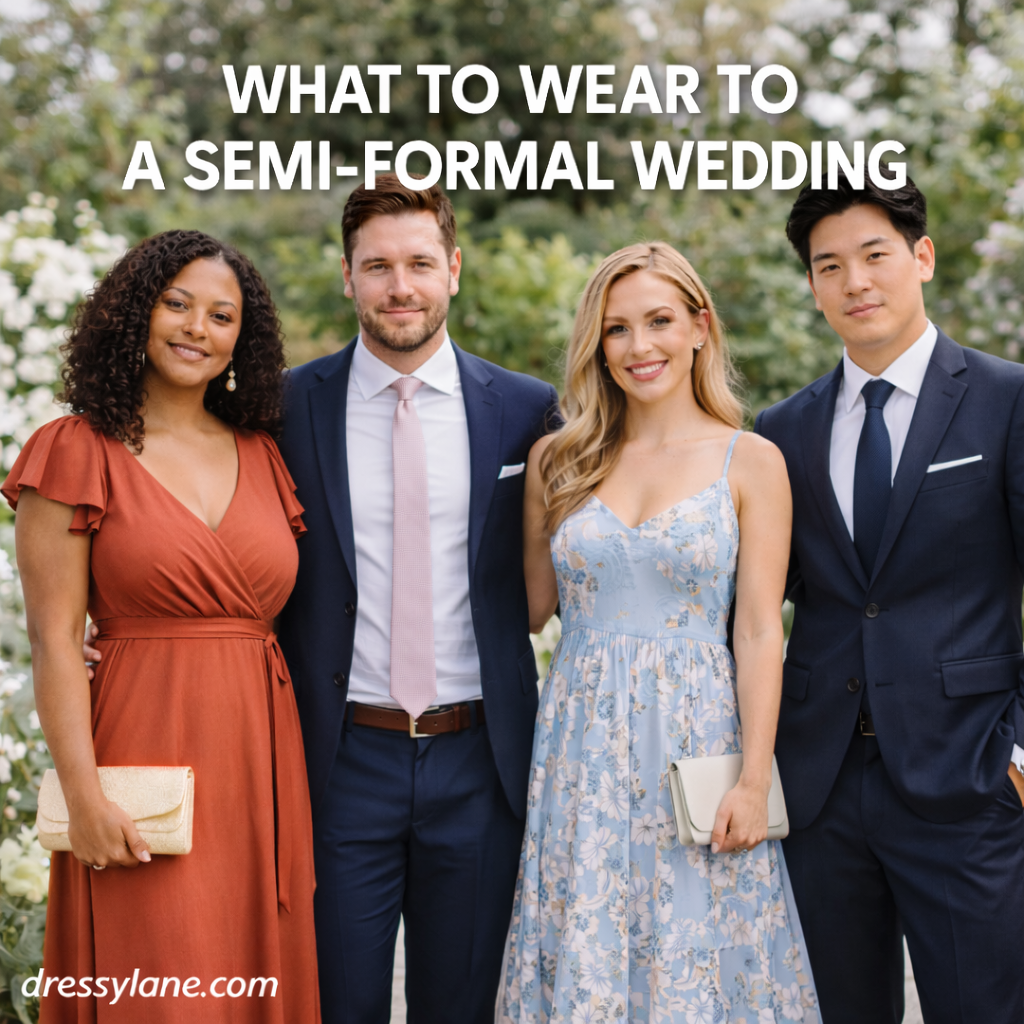
For a semi-formal or cocktail wedding, an elegant midi dress, dressy jumpsuit, or dark suit is usually appropriate.
Formal or black-tie-optional weddings call for more elevated attire, such as a floor-length dress, a suitably dressy cocktail dress, or a dark suit. A tuxedo is also an option for black tie optional.
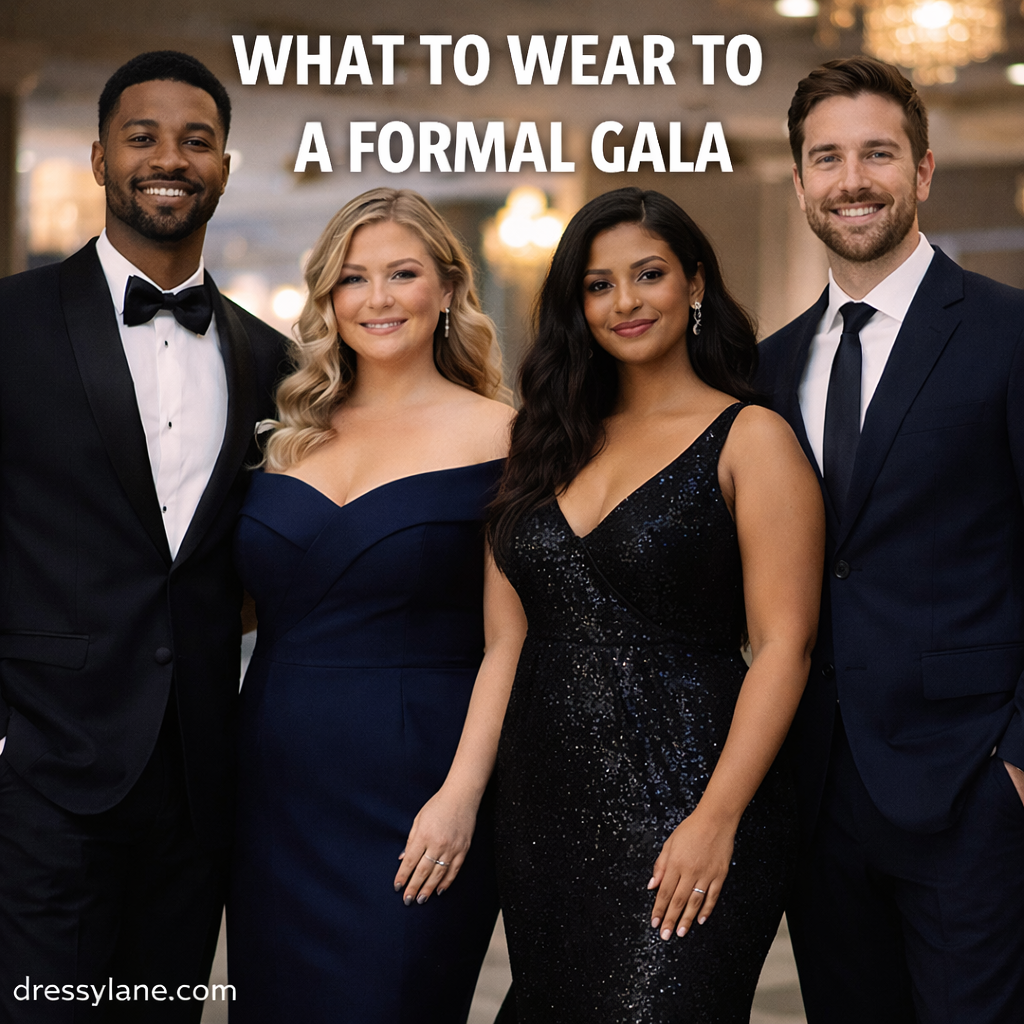
For a black-tie wedding, choose a formal evening gown or tuxedo.
The key is to follow the requested dress code first, then adapt your fabric, outerwear, and footwear to the weather.
The Best Fabrics for a Winter Wedding
Fabric is one of the easiest ways to make an outfit feel seasonally appropriate.
Velvet is particularly well suited to winter celebrations. A deep green velvet dress or burgundy velvet dinner jacket has a rich texture that looks beautiful under evening lighting.
Other fabrics worth considering include:
- Wool and wool blends: Ideal for tailored suits, structured dresses, and overcoats.
- Heavy crepe: Offers a smooth, substantial drape for midi dresses and jumpsuits.
- Satin: Works beautifully for evening dresses, although it doesn’t provide much warmth on its own.
- Brocade: Adds texture and structure to cocktail dresses and formal jackets.
I’d avoid choosing a thin, unlined satin dress simply because it looks winter-appropriate in a dark color. If the fabric offers no insulation, you’ll still need proper layers for the journey to and from the venue.
What Women Should Wear to a Winter Wedding
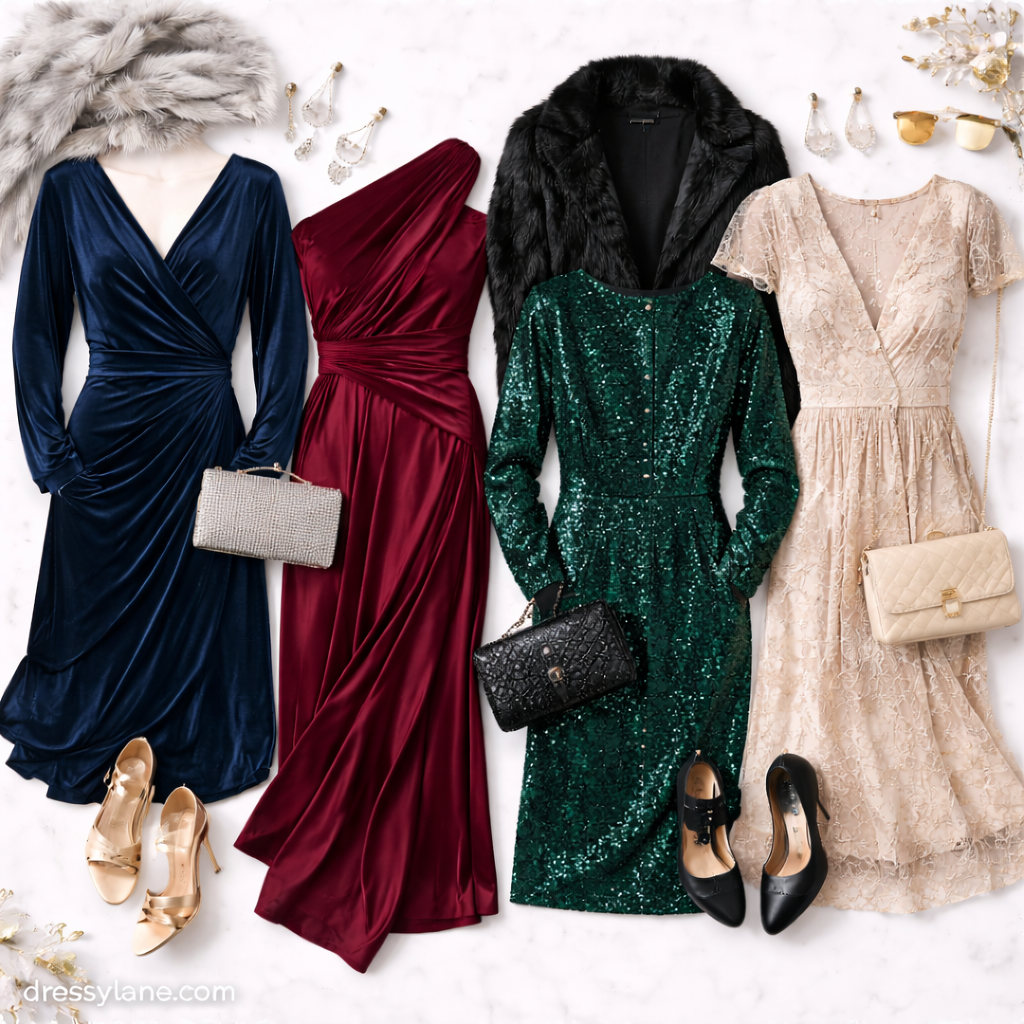
A long-sleeve midi dress is one of the most versatile choices for a winter wedding. It provides additional coverage while remaining appropriate for cocktail and semi-formal celebrations.
Look for a defined waist, an elegant neckline, and fabric with enough weight to drape smoothly.
Some combinations that work particularly well include:
- An emerald velvet midi dress with black pointed-toe pumps and gold earrings.
- A burgundy long-sleeve crepe dress with sheer black tights and closed-toe heels.
- A navy satin maxi dress with a tailored black coat for a formal evening reception.
- A plum wrap dress with a structured clutch and dark leather pumps.
For a cocktail wedding, my preference would be a long-sleeve velvet midi dress rather than a sleeveless dress with a bulky cardigan. The velvet provides a little more warmth, and the outfit looks complete even after you remove your coat.
Alternatives to Dresses
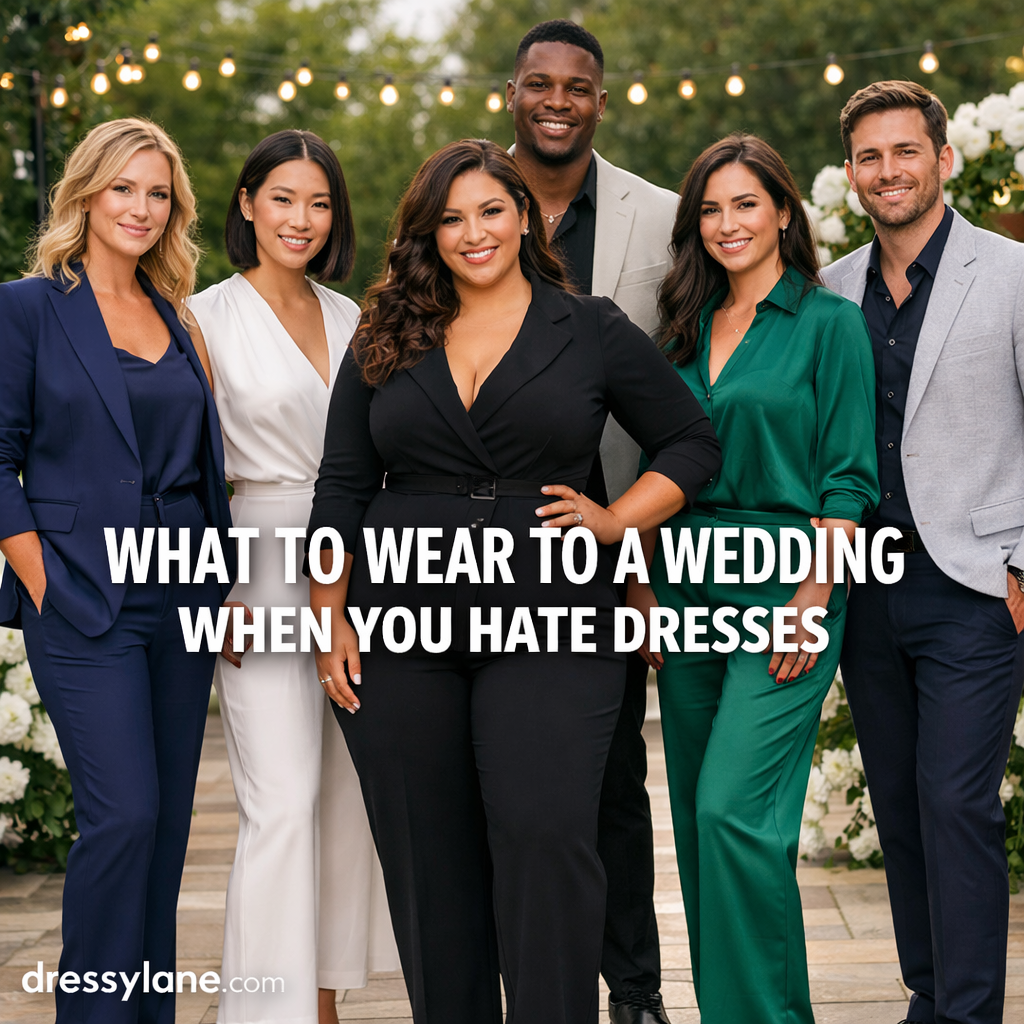
A tailored jumpsuit is an excellent option for winter, particularly one made from substantial crepe with long sleeves and wide legs.
A black jumpsuit with a defined waist, metallic earrings, and pointed-toe heels can work beautifully for an evening reception.
A coordinated trouser suit is another option. Choose wool-blend tailoring in navy, charcoal, or burgundy and pair it with a silk blouse or dressy camisole.
Avoid everyday office separates that look more appropriate for a work meeting than a wedding.
Winter Wedding Shoes: Style Versus Weather
Footwear requires a little more planning when rain, snow, or icy sidewalks are involved.
For indoor receptions, closed-toe pumps, block heels, and elegant slingbacks are reliable choices.
If you’ll be walking across wet pavement or uneven outdoor paths, a wider heel provides better stability than a thin stiletto, although it won’t necessarily provide traction on ice.
Dressy ankle boots may work for casual or semi-formal celebrations, but they’re generally less appropriate for black-tie events.
Here’s a practical tip: if snow is expected, wear weatherproof boots for the journey and carry your dress shoes in a separate bag. Change once you’re inside and leave the boots at the coat check if the venue offers one.
It’s much better than trying to navigate an icy parking lot in delicate heels.
What Men Should Wear to a Winter Wedding
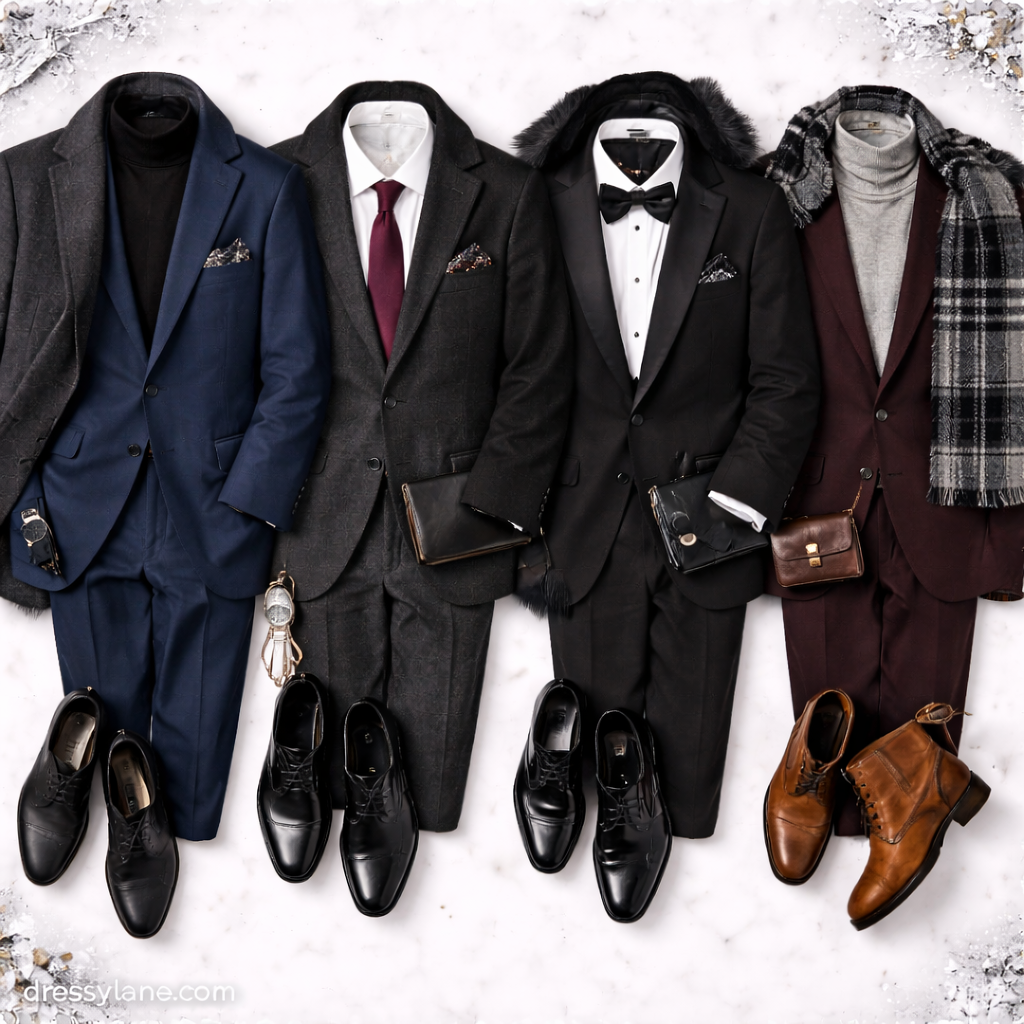
A dark wool suit is a dependable starting point for most winter weddings.
Navy, charcoal, and black are versatile choices, particularly for evening celebrations. Medium-weight wool provides more warmth than lightweight summer suiting while maintaining a clean, tailored silhouette.
For a semi-formal or cocktail wedding, consider:
- A charcoal wool suit with a white dress shirt and burgundy silk tie.
- A navy suit with a pale blue shirt and dark brown leather Oxfords.
- A dark gray suit with a subtle patterned tie and black Derby shoes.
A tweed suit can work for a rustic or less formal winter wedding, but I’d skip heavy, country-style tweed for a formal hotel reception. A smooth wool suit is more appropriate for that setting.
For black-tie weddings, wear a tuxedo with the appropriate formal shirt, bow tie, and dress shoes.
Shoes and Accessories for Men
Black leather Oxfords and polished Derby shoes work well with dark winter suits. Dark brown leather can also complement navy and charcoal tailoring.
Choose dress socks long enough to keep your legs covered when seated.
A silk tie, wool-silk blend tie, or understated pocket square can add texture without making the outfit look overly busy.
For black tie, follow traditional formal accessories rather than treating the tuxedo like an ordinary business suit.
Choosing Winter Wedding Colors
Winter is particularly suited to deeper, more saturated colors.
Emerald, burgundy, plum, navy, forest green, and charcoal are excellent options for both daytime and evening celebrations.
Metallic accessories in gold, silver, or bronze can add a festive touch without requiring an entirely sequined outfit.
Black is also appropriate for most winter weddings, especially evening receptions.
Avoid white, ivory, and bridal-looking champagne dresses unless the couple specifically requests those colors. If you’re choosing a pale metallic dress, check how it photographs under bright lighting before committing to it.
Don’t Forget the Coat
Your outerwear is part of the outfit, especially if guests will be gathering outside before the ceremony or taking photographs outdoors.
For women, a tailored wool coat that falls at least to the knee works beautifully over a midi dress. Black, camel, and charcoal are versatile choices.
For men, a dark wool overcoat worn over a suit looks more cohesive than a bulky casual puffer jacket.
A scarf and gloves can provide additional warmth during the journey, but remove them once you’re indoors.
I’d prioritize a properly fitting coat over a decorative shawl if temperatures are close to freezing. A thin wrap might look elegant, but it won’t provide enough protection while you’re waiting outside for transportation.
Dressing for Different Winter Wedding Venues
An indoor hotel wedding and a ceremony at a snowy mountain lodge require different preparations.
For a ballroom or hotel reception, focus on the dress code. Structured dresses, wool suits, and formal footwear are appropriate, and you can leave heavier outerwear at the coat check.
For a mountain or outdoor wedding, check whether the ceremony itself takes place outside. You may need thermal underlayers, weatherproof footwear, and a heavier coat.
Also, consider indoor temperatures. Some venues keep the heating quite high, so wearing several thick layers underneath a fitted outfit can become uncomfortable during dinner and dancing.
Choose removable layers whenever possible.
What Not to Wear to a Winter Wedding
Warm clothing isn’t automatically wedding-appropriate.
Unless the invitation specifies a casual dress code, avoid everyday sweaters, jeans, bulky snow boots worn throughout the reception, and casual fleece jackets.
Thin summer dresses without suitable layers can also be impractical, particularly if the ceremony includes outdoor portions.
Be careful with overly heavy outfits, too. A thick wool sweater underneath a fitted blazer may feel comfortable outside but become restrictive and excessively warm indoors.
Final Thoughts
The best winter wedding outfit combines the requested dress code with fabrics and layers that make sense for the temperature.
For women, a velvet or crepe midi dress with closed-toe heels and a tailored coat is a versatile combination. For men, a dark wool suit, polished leather shoes, and a proper overcoat work well for most semi-formal and cocktail celebrations.
Check the forecast, find out whether any part of the wedding takes place outdoors, and plan your footwear accordingly.
A beautiful outfit is much easier to enjoy when you’re not shivering through the ceremony or worrying about slipping on the way to the reception.