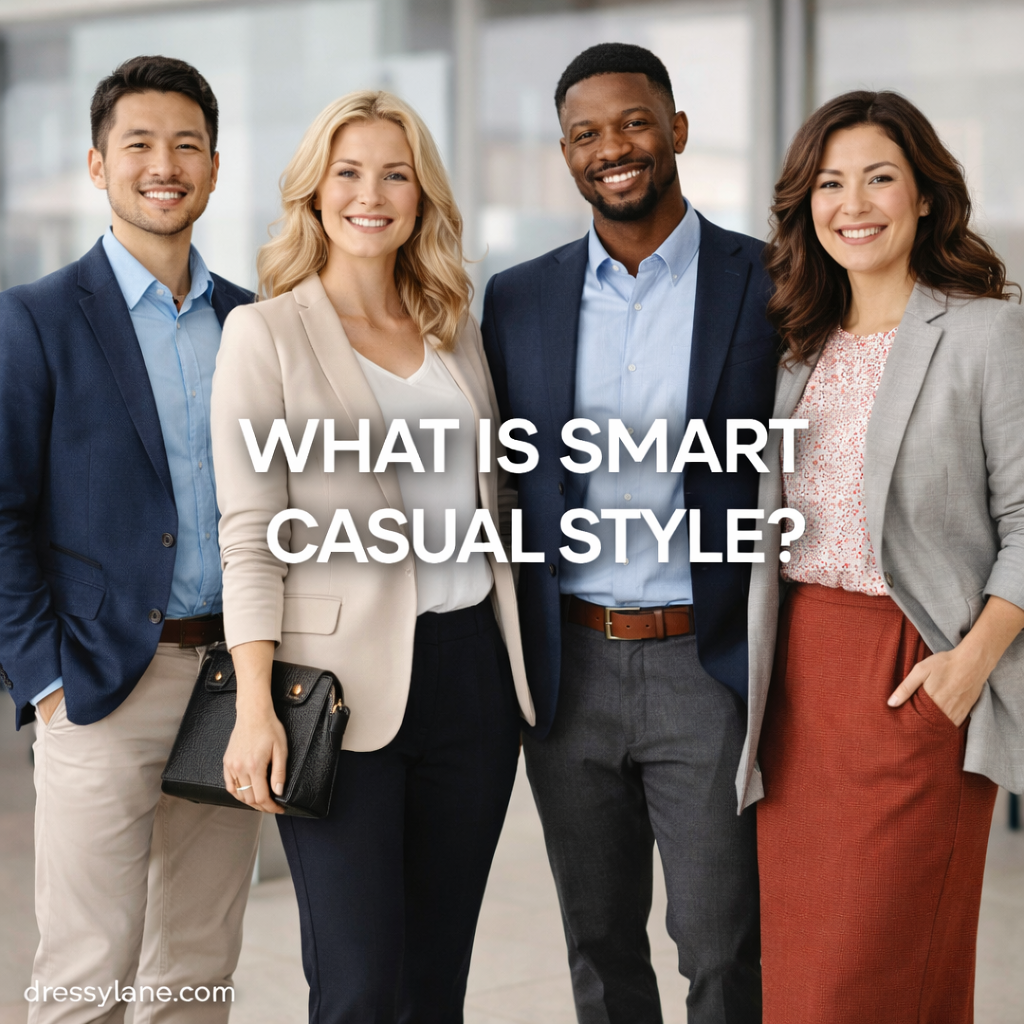
Smart casual is the dress code you encounter when an invitation says to look polished but doesn’t call for a suit or formal dress. Think dark straight-leg jeans with a fine-knit sweater and suede loafers, or tailored trousers with a relaxed blazer and clean leather sneakers.
The challenge is that smart casual means slightly different things depending on where you’re going. What works for dinner at a neighborhood restaurant might feel too relaxed for an upscale networking event.
The trick is to combine everyday clothing with a few more refined pieces rather than dressing formally from head to toe.
Here’s what smart casual style actually means, which clothes work best, and how to put together outfits for men and women.
What Does Smart Casual Mean?
Smart casual is a dress code that combines polished clothing with relaxed, everyday pieces.
Unlike business formal, it doesn’t require a matching suit or traditional dress shoes. It’s also more considered than ordinary casual wear, where jeans, graphic T-shirts, and athletic sneakers might be the default.
A good example is a pair of dark indigo jeans, a cream merino sweater, and brown suede Chelsea boots.
The jeans keep the outfit relaxed, while the knitwear and boots make it suitable for a dinner reservation or informal professional gathering.
Smart casual typically includes:
- Tailored trousers, chinos, or clean denim.
- Oxford shirts, blouses, knit polos, and fine sweaters.
- Relaxed blazers, cardigans, or structured casual jackets.
- Loafers, ankle boots, polished flats, or minimalist sneakers.
You don’t need every piece to look expensive or formal. What matters is how the clothing works together.
When Should You Wear Smart Casual?
Smart casual is common at occasions where everyday clothing feels too relaxed but formal attire would be excessive.
Examples include dinner parties, restaurant dates, informal networking events, creative workplaces, and certain social gatherings.
However, the venue matters.
For dinner at a casual restaurant, dark jeans and a knit polo may be perfectly appropriate. An upscale hotel event might call for tailored trousers, a blazer, and leather shoes.
If an invitation specifies smart casual, consider the location and time of day before choosing your outfit.
I’d avoid assuming sneakers are acceptable everywhere simply because the dress code includes the word “casual.” Some venues still expect more traditional footwear.
The Easiest Way to Build a Smart Casual Outfit
Start with one relaxed piece and balance it with something more refined.
For example, if you’re wearing jeans, choose a crisp shirt, quality knitwear, or a tailored jacket.
If you’re wearing formal trousers, you can relax the outfit with a knit polo, textured sweater, or minimalist sneakers.
Fabric makes a noticeable difference.
Cotton-twill chinos, fine-gauge merino wool, suede, and structured denim generally create a more refined appearance than thin jersey or heavily worn fabrics.
My recommendation: Don’t automatically add a blazer to every smart casual outfit. A well-fitting knit polo with tailored trousers and suede loafers can look more natural than a stiff suit jacket thrown over a casual T-shirt.
The goal is balance, not making every outfit resemble office clothing.
Smart Casual Style for Women
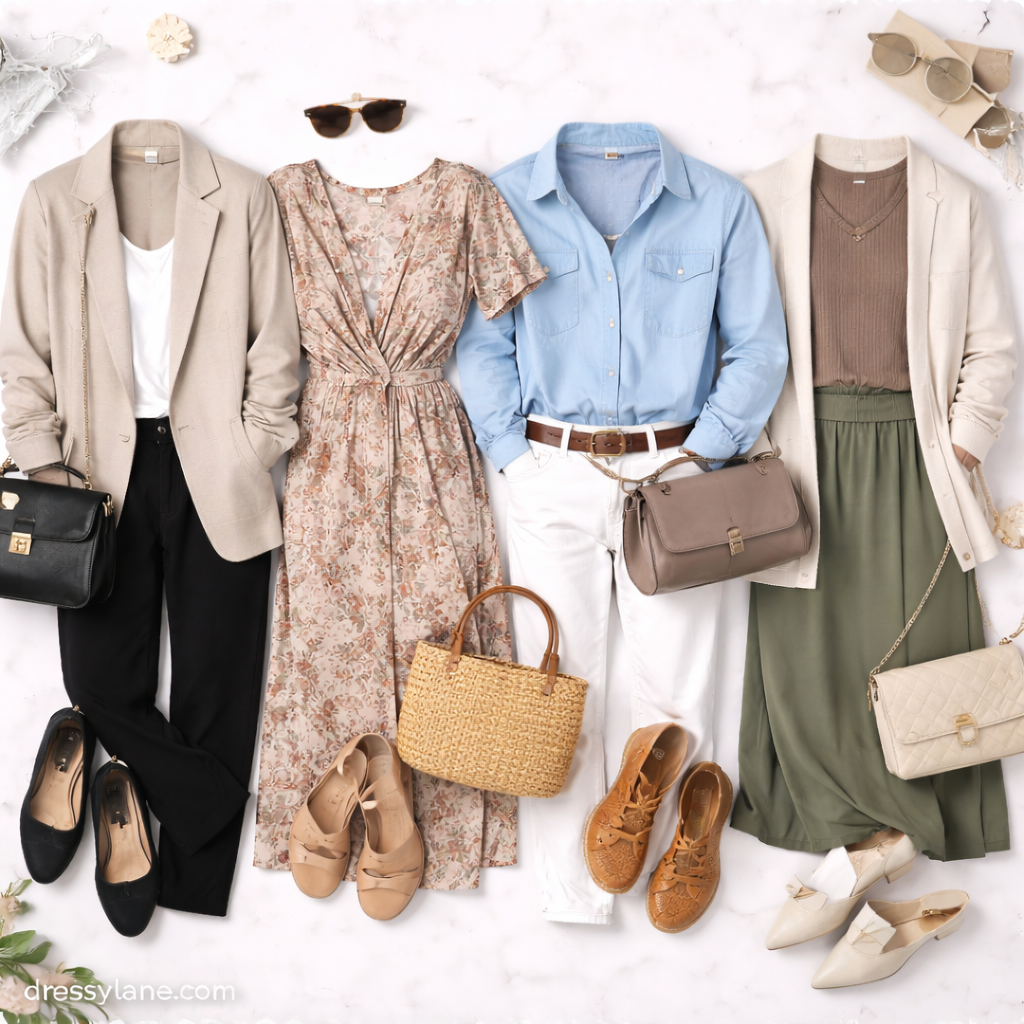
Women’s smart casual outfits can incorporate tailored separates, denim, dresses, and knitwear.
The easiest approach is to choose a silhouette that feels comfortable and add one or two polished elements.
Outfit 1: Dark Jeans and a Blazer
Pair dark indigo straight-leg jeans with an ivory blouse, a relaxed camel blazer, and black leather loafers.
Choose jeans with minimal fading and a hem that falls neatly over your shoes.
A small leather shoulder bag completes the look without making it feel overly formal.
This combination works well for casual business dinners and social events.
Outfit 2: Midi Skirt and Knitwear
Try an A-line midi skirt with a fitted fine-gauge sweater and leather ankle boots.
A satin skirt can create an interesting contrast with matte knitwear, particularly for an evening occasion.
If the skirt is full or flowing, I’d choose a more fitted top rather than pairing it with an oversized sweater. The contrast helps define the silhouette without requiring a belt.
Shoes and Accessories
Leather loafers, ballet flats, ankle boots, and low block heels are versatile choices.
Minimal leather sneakers can also work for relaxed occasions.
Keep accessories appropriate for the setting. A structured handbag and simple jewelry are dependable, but a colorful scarf or statement earrings can add personality without overwhelming the outfit.
Smart Casual Style for Men
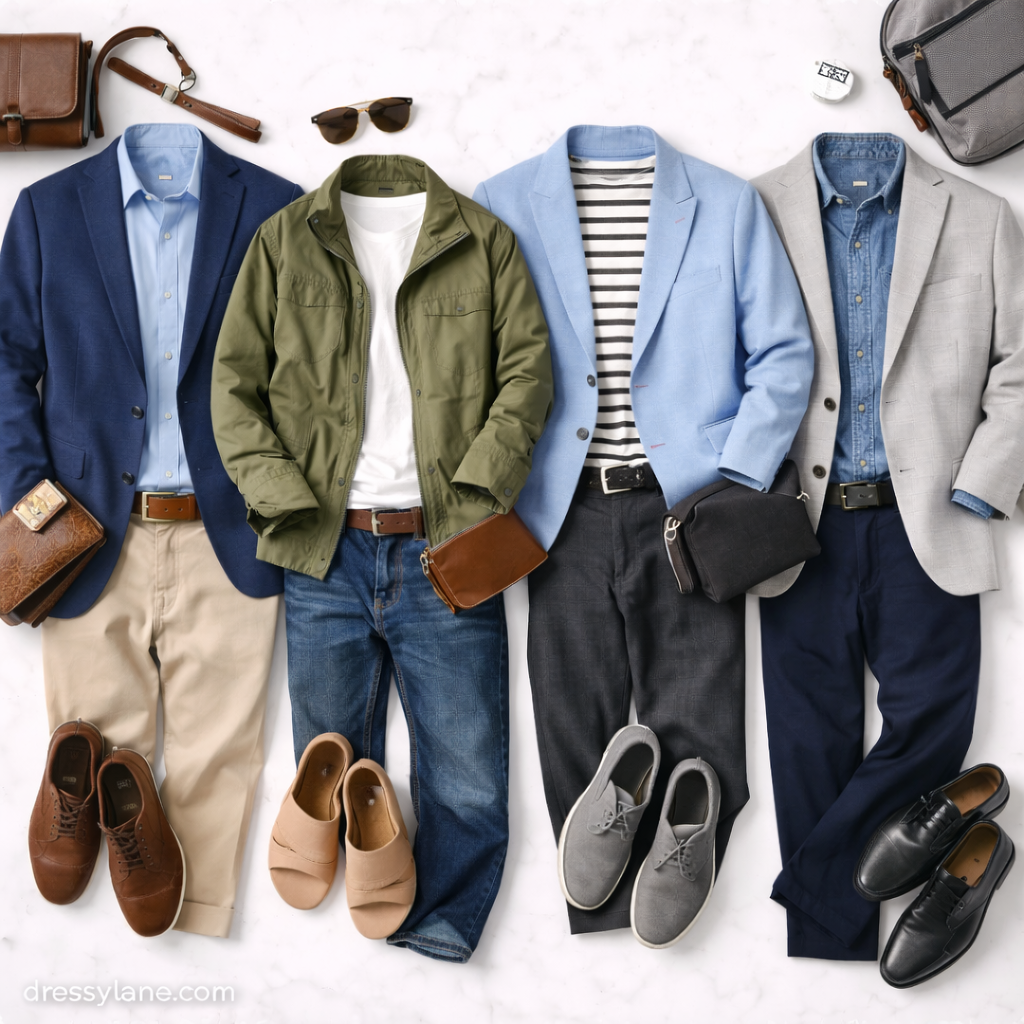
Men’s smart casual clothing works particularly well when classic wardrobe pieces are combined with softer fabrics and relaxed tailoring.
Outfit 1: Chinos and a Knit Polo
Start with navy cotton-twill chinos and add a cream textured knit polo.
Finish with brown suede loafers and a simple leather belt.
The polo feels more relaxed than a traditional dress shirt, while the chinos and loafers keep the outfit refined.
This combination works particularly well for restaurant dinners and informal professional gatherings.
Outfit 2: Dark Jeans and an Overshirt
Pair dark straight-leg jeans with a white Oxford shirt, an olive cotton overshirt, and brown Chelsea boots.
The overshirt provides structure without the formality of a suit jacket.
Choose denim with minimal fading and avoid excessive bunching around the ankles.
Shoes and Accessories
Suede loafers, Chelsea boots, casual derby shoes, and minimalist leather sneakers all work well.
I’d skip bulky running shoes when wearing tailored trousers. Their thick soles and technical mesh uppers can look disconnected from the rest of the outfit.
A simple watch or leather belt is usually enough to finish the look.
Can You Wear Jeans and Sneakers for Smart Casual?
Yes, although the occasion still matters.
Dark, non-distressed jeans are among the most versatile smart casual pieces. Straight-leg and slim-straight fits work particularly well because they’re easy to pair with shirts, knitwear, and jackets.
For sneakers, choose a clean, low-profile design in leather or quality faux leather.
White, cream, black, and navy are easy to coordinate.
Try pairing dark jeans with a fine-knit sweater and white leather sneakers for a relaxed daytime outfit.
For a more formal evening event, replace the sneakers with suede loafers or leather ankle boots.
I’d avoid wearing distressed jeans and athletic sneakers together when an invitation specifically requests smart casual. The combination can look closer to everyday weekend clothing.
Smart Casual vs Business Casual
The two dress codes share many wardrobe essentials, but they have different priorities.
Business casual is primarily a workplace dress code. It generally emphasizes tailored trousers, collared shirts, blouses, and polished footwear.
Smart casual allows more flexibility with denim, relaxed jackets, textured fabrics, and casual shoes.
For example, navy trousers with a white Oxford shirt and leather loafers create a dependable business casual outfit.
Replace the shirt with a textured knit polo and the loafers with clean leather sneakers, and the same trousers take on a more relaxed smart casual appearance.
The boundaries overlap, and individual workplaces may interpret both dress codes differently.
Common Smart Casual Mistakes to Avoid
Smart casual doesn’t mean combining random formal and casual pieces.
A few details can make an otherwise good outfit feel disconnected:
- Wearing heavily distressed jeans with a formal blazer.
- Pairing bulky athletic sneakers with traditional suit trousers.
- Choosing shirts that pull across the buttons or trousers that drag on the floor.
- Wearing too many competing statement pieces.
- Assuming expensive clothing automatically looks more refined.
Pay particular attention to proportions. A relaxed blazer generally works better with straight-leg trousers than an extremely tight pair of jeans.
Clean shoes and clothing that holds its shape also make a noticeable difference.
Final Thoughts on Smart Casual Style
Smart casual style combines refined clothing with relaxed pieces to create outfits suitable for dinners, social gatherings, creative workplaces, and informal professional events.
Dark jeans, tailored trousers, quality knitwear, relaxed jackets, and versatile shoes provide a dependable foundation.
You don’t need to buy an entirely new wardrobe to achieve the look. Start with clothing you already own and adjust one or two pieces to suit the occasion.
A well-fitting pair of trousers, a textured sweater, and polished shoes can often do more than an elaborate outfit that feels uncomfortable or overly formal.