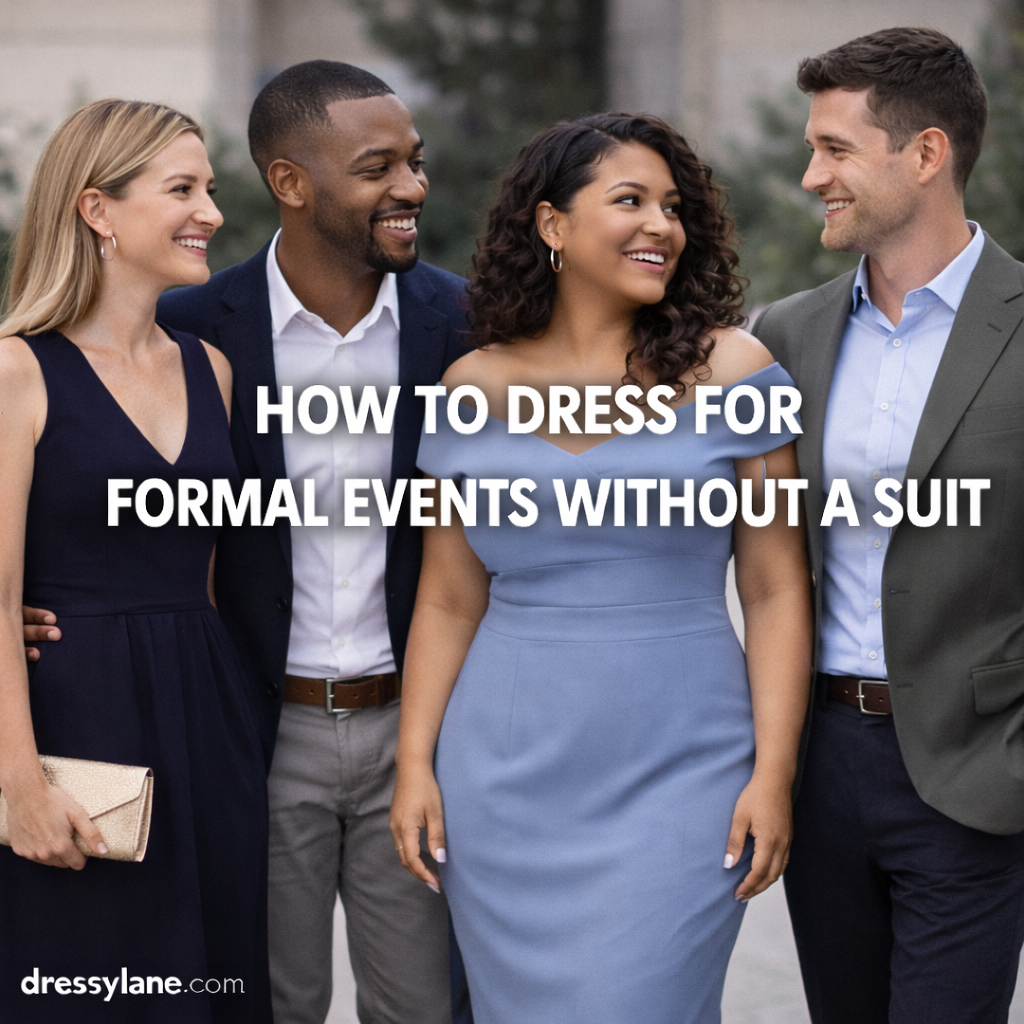
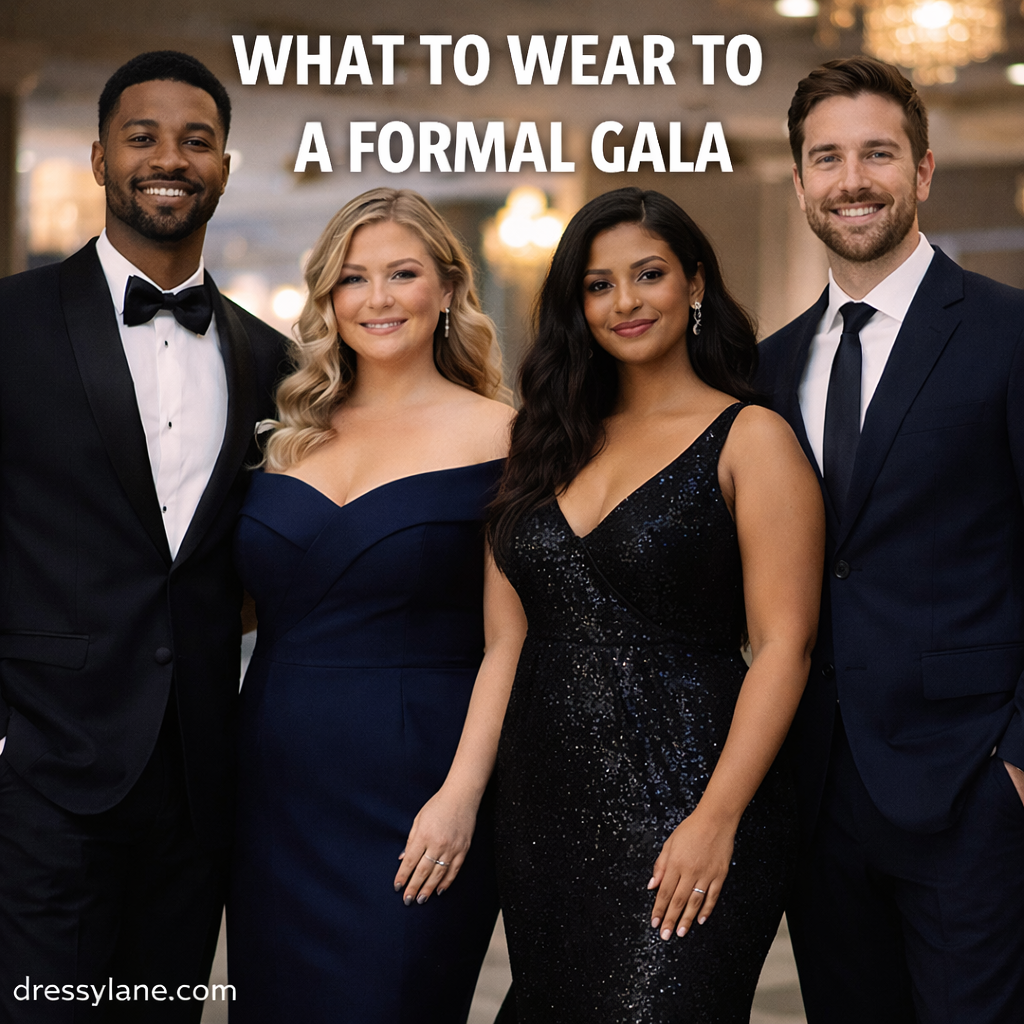
A formal gala is one of those occasions when your everyday dressy clothes might not be quite enough. Whether you’re attending a charity fundraiser, awards ceremony, or black-tie dinner, the expectation is usually eveningwear rather than a standard cocktail outfit.
But not every gala requires the same level of formality. A black-tie fundraiser at a hotel ballroom calls for a different outfit than a creative arts gala with a more flexible dress code.
The key is understanding what the invitation actually requires, then choosing an outfit that looks appropriate and remains comfortable through cocktails, dinner, speeches, and possibly dancing.
Here’s how to get gala attire right without overcomplicating it.
What Does a Formal Gala Dress Code Mean?
Most formal galas specify black tie, black tie optional, or formal attire. These terms aren’t interchangeable, so check the invitation before deciding what to wear.
Here’s how to interpret them:
- Black tie: A tuxedo for men and a floor-length evening gown for women are the traditional choices.
- Black tie optional: Men can wear a tuxedo or dark formal suit. Women can choose an evening gown or an exceptionally dressy cocktail dress.
- Formal: Often interpreted similarly to black tie optional, although expectations vary by event.
- Creative black tie: Traditional eveningwear with room for distinctive colors, accessories, or unconventional tailoring.
If the invitation doesn’t specify a dress code, look at the event website or photographs from previous years.
A fundraising gala with a red-carpet entrance, seated dinner, and live auction may have different expectations from a cocktail-style charity event at an art gallery.
I’d check with the organizer rather than assume every event called a gala requires a tuxedo. The invitation should take priority over the event’s name.
What Women Should Wear to a Formal Gala
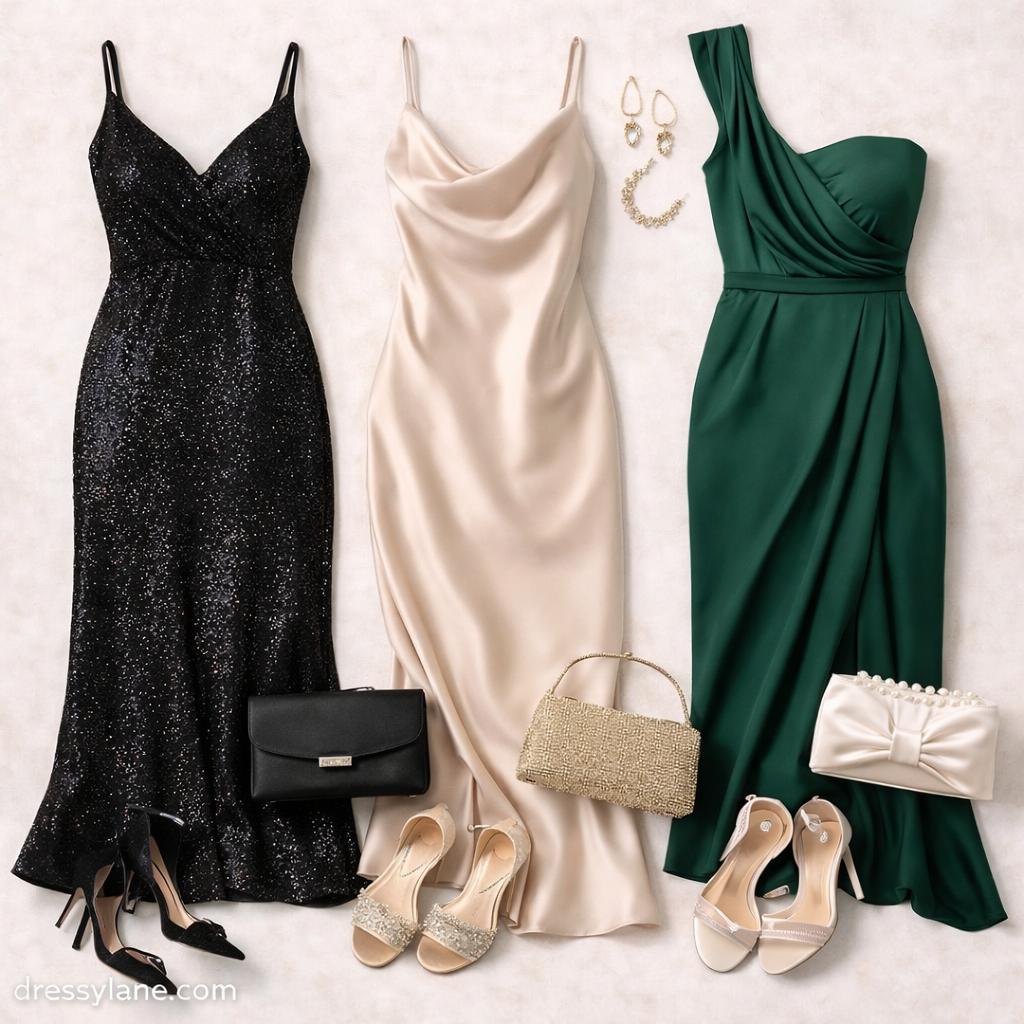
A floor-length evening gown is the most reliable choice for a traditional formal gala, particularly when the invitation specifies black tie.
For a classic look, consider a black crepe column gown with a square neckline, delicate earrings, and a small satin clutch. An emerald satin gown with a draped bodice or a navy velvet dress can be equally appropriate.
Other options worth considering include:
- A structured evening gown: A fitted bodice with an A-line skirt in silk faille or crepe.
- A bias-cut satin gown: A fluid silhouette that works particularly well for evening events.
- A velvet gown: An elegant choice for fall and winter galas.
- A formal cocktail dress: Appropriate for many black-tie-optional events when the fabric and styling are sufficiently dressy.
- A tailored evening jumpsuit: A sophisticated alternative when the event’s dress code allows it.
The fabric often determines whether an outfit feels formal enough. A simple floor-length gown in substantial crepe can look more appropriate than a heavily embellished dress made from thin, casual jersey.
Choosing a Gown That Fits Properly
I’d prioritize alterations over expensive accessories.
A gown that’s slightly too long can drag across the floor, catch beneath your shoes, or become difficult to manage when walking up stairs.
Have the hem adjusted while wearing the exact shoes you plan to bring.
Also, sit down in the dress before committing to it. Gala dinners can last several hours, and a tightly fitted bodice or restrictive skirt may become uncomfortable once you’re seated.
If the gown has a high slit or low neckline, check how it behaves when walking, sitting, and bending. The goal is to enjoy the event without constantly adjusting your clothing.
What Men Should Wear to a Formal Gala
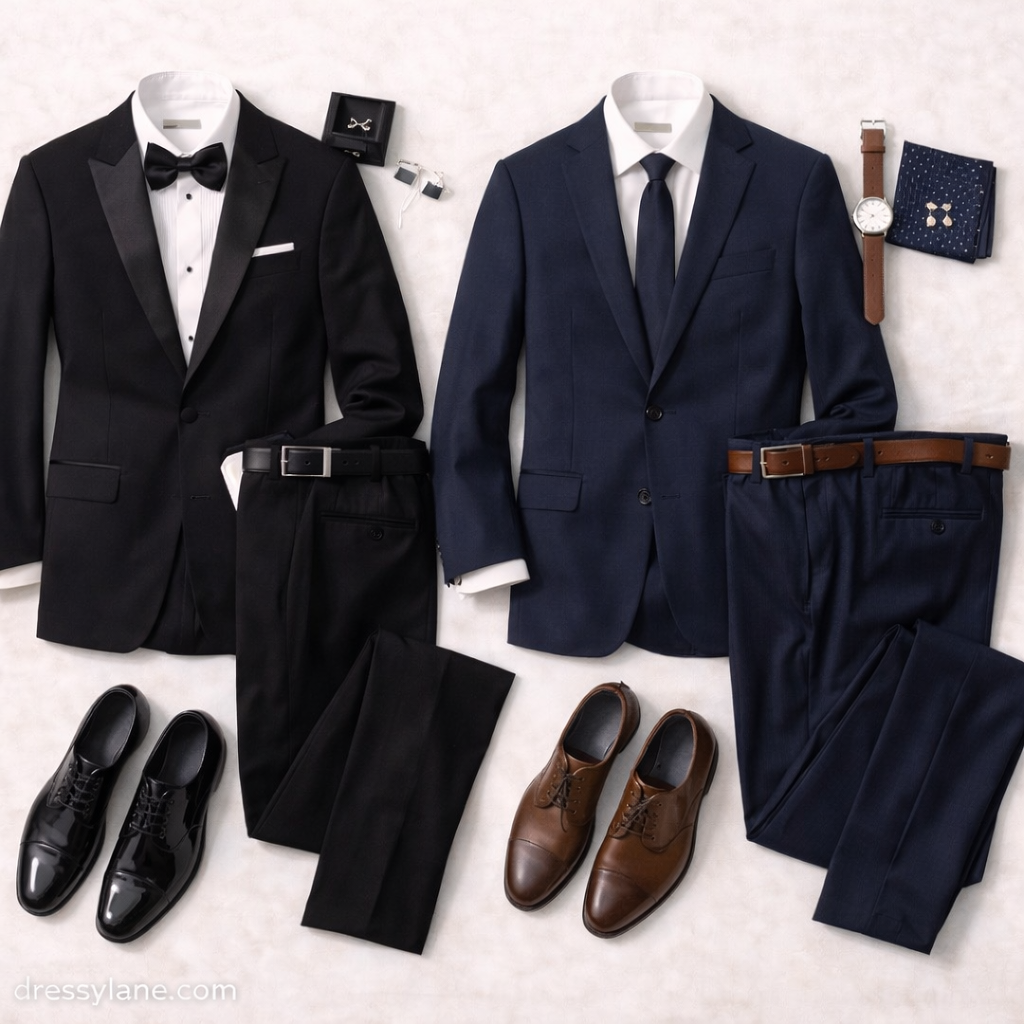
For men, a tuxedo is the traditional choice for a black-tie gala.
A classic black tuxedo with satin or grosgrain lapels, matching formal trousers, a white dress shirt, and a black bow tie is difficult to get wrong.
A midnight-blue tuxedo is another established eveningwear option.
Complete the outfit with polished black formal shoes and a coordinating cummerbund or waistcoat if desired.
When Is a Dark Suit Appropriate?
If the invitation says black tie optional, a well-tailored dark suit is acceptable.
A charcoal or midnight-navy wool suit with a crisp white dress shirt, dark silk tie, and polished black Oxford shoes creates a suitable alternative.
I’d avoid trying to make an ordinary black business suit look like a tuxedo by simply adding a bow tie. The formal lapels, trouser detailing, and overall construction are what distinguish a tuxedo from a standard suit.
If you don’t own a tuxedo and the invitation specifically requires black tie, renting one is a practical option.
Fit matters more than unnecessary embellishment. The jacket should sit naturally across the shoulders, the sleeves should reveal a small amount of shirt cuff, and the trousers should fall cleanly over your shoes.
Choosing the Right Colors and Fabrics
Black remains a classic gala color, but it’s far from the only appropriate choice.
For women, midnight blue, emerald, burgundy, plum, and deep chocolate brown can look particularly elegant in evening fabrics. Champagne and metallic tones also work well, especially for celebrations with a festive atmosphere.
Men can introduce subtle variation through a midnight-blue tuxedo, textured bow tie, or understated pocket square.
Fabric deserves just as much consideration as color.
Silk, satin, structured crepe, velvet, and chiffon are commonly used in eveningwear because they create elegant silhouettes and drape well.
For men, fine wool is a dependable choice for formal suits and tuxedos.
Consider the season, too. A heavy velvet gown might be beautiful for a winter fundraiser but uncomfortable at a summer gala with an outdoor cocktail reception.
Accessories That Complete a Gala Outfit
Accessories are an opportunity to introduce personality without changing the overall formality of your outfit.
For women, a pair of statement earrings can be enough to finish a simple gown. If your dress already features beading, sequins, or an elaborate neckline, smaller jewelry may create a more balanced look.
Choose a clutch or compact evening bag that holds your phone, keys, and essential makeup.
For men, a classic watch, cufflinks, and a neatly folded pocket square can complement formalwear.
One detail I’d pay attention to is outerwear. A tailored wool coat or elegant evening wrap looks considerably more cohesive over formal clothing than a casual everyday jacket.
Dressing for Different Types of Galas
The event’s purpose can influence your styling choices, even when the dress code remains formal.
Charity and Fundraising Galas
Traditional eveningwear is a dependable choice for a fundraising dinner held in a ballroom or luxury hotel.
A floor-length gown or classic tuxedo fits the atmosphere of a seated dinner, auction, and formal program.
Corporate and Awards Galas
These events often favor polished eveningwear.
Women might choose a structured gown or sophisticated formal dress, while men can wear a tuxedo or dark suit according to the invitation.
Creative or Themed Galas
An arts fundraiser or themed celebration may encourage more expressive clothing.
A sculptural gown, colorful tuxedo jacket, or distinctive accessories can work when the dress code permits them.
If the invitation includes a theme, follow its specific instructions rather than assuming traditional black tie is the only option.
What Not to Wear to a Formal Gala
A formal gala generally isn’t the place for everyday cocktail clothing unless the invitation specifically allows it.
Avoid:
- Casual sundresses or office dresses.
- Denim, chinos, and casual blazers.
- Athletic sneakers or everyday sandals.
- Poorly fitted or visibly wrinkled formalwear.
- Outfits that don’t meet the stated dress code.
That doesn’t mean your clothing has to be plain or conservative. A bold color, dramatic silhouette, or interesting accessory can be entirely appropriate.
The important distinction is whether the outfit looks intentionally designed for eveningwear.
Don’t Forget the Practical Details
Gala events often involve more standing and walking than expected. You may spend an hour at a cocktail reception before sitting down for dinner, followed by speeches, an auction, or dancing.
Choose shoes that can handle the schedule.
If you’re wearing a gown, check that the hem doesn’t catch beneath your heels. If you’re wearing a tuxedo, make sure the jacket and trousers remain comfortable when seated.
Keep fragrance light, particularly for a crowded dining room.
It’s also worth checking whether the venue offers a coat check. Carrying a bulky coat throughout a formal reception can become inconvenient.
Final Thoughts
Knowing what to wear to a formal gala starts with the invitation. Black tie calls for traditional eveningwear, while black-tie-optional and other formal dress codes allow more flexibility.
For women, a well-fitted evening gown in silk, satin, crepe, or velvet is a dependable choice. For men, a properly tailored tuxedo or dark formal suit provides the foundation, depending on the dress code.
Before the event, try on your complete outfit, including shoes, accessories, and outerwear. Make sure everything fits comfortably and works for the entire evening.
The right gala outfit should feel special when you arrive and comfortable enough that you can focus on the celebration once you’re there.