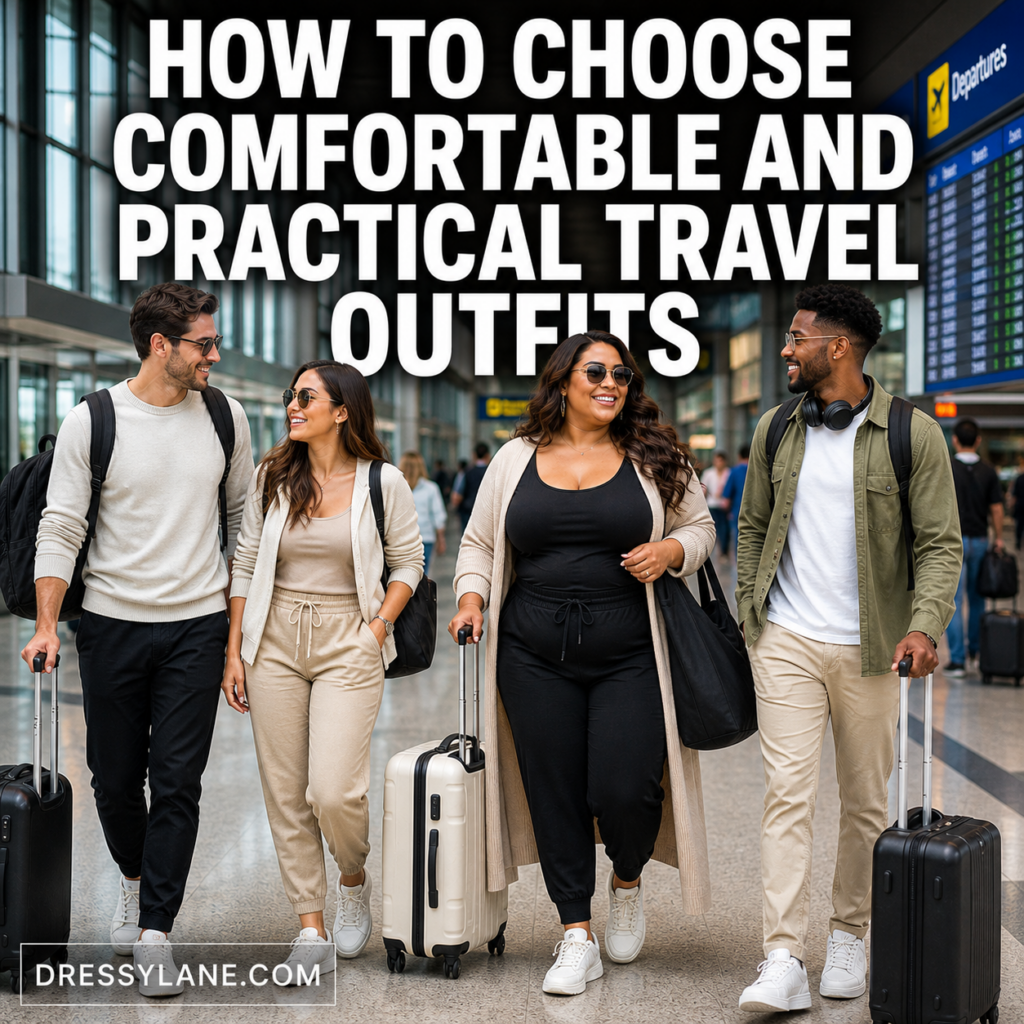
The best travel outfit isn’t simply the most comfortable thing in your closet. It needs to handle sitting, walking, luggage, temperature changes, unpredictable plans, and potentially many hours of wear without becoming annoying.
A good travel wardrobe works the same way.
Instead of packing a separate outfit for every day, build around comfortable pieces that can be layered, reworn, and combined in different ways. You’ll carry less luggage, spend less time deciding what to wear, and still have appropriate clothing when a sightseeing day turns into dinner or the weather changes unexpectedly.
This guide covers what to wear on planes and long travel days, how to pack light, what fabrics and shoes work best, hot- and cold-weather travel, sightseeing, international trips, overnight journeys, changing time zones, special events, short trips, long stays, and how to look put together without sacrificing comfort.
What Makes a Good Travel Outfit?
A useful travel outfit usually does five things well:
- Feels comfortable for hours
- Allows you to walk and move easily
- Handles temperature changes
- Works with other clothes you’ve packed
- Still looks presentable when plans change
You don’t need specialized “travel clothes” to accomplish this.
A pair of stretch trousers, cotton T-shirt, merino sweater, lightweight jacket, and comfortable sneakers can be more useful than clothing designed specifically for travel.
The key is choosing pieces based on what you’ll actually be doing.
Start With Comfort—but Don’t Ignore Structure
Comfort should be the starting point for a travel outfit, especially when you’ll be sitting for several hours.
Look for clothing with:
- Soft waistbands
- Room through the hips and shoulders
- Breathable fabrics
- A small amount of stretch
- Nonrestrictive layers
- Shoes you’ve already walked in
That doesn’t mean everything needs to be oversized or resemble loungewear.
A straight-leg stretch trouser with a knit top can feel nearly as comfortable as sweatpants while being considerably easier to wear to a restaurant after arriving.
For men, chinos with 2–3% elastane, a cotton T-shirt, overshirt, and sneakers make an equally useful combination.
The difference between comfortable and sloppy often comes down to fit and condition rather than softness.
The Best Fabrics for Travel
Fabric matters enormously when clothing needs to survive a full day of sitting, walking, sweating, layering, and being stuffed into luggage.
Merino Wool
Merino is particularly useful for travel because it regulates temperature well and can often be reworn before washing.
It works well for:
- T-shirts
- Sweaters
- Socks
- Base layers
It’s especially useful on longer trips where laundry access is limited.
Cotton
Cotton is breathable, familiar, and comfortable.
Cotton jersey works well for T-shirts, while cotton poplin makes a lightweight button-down.
The downside is that 100% cotton can hold moisture and wrinkle more easily than some blends.
Linen and Linen Blends
Linen is excellent for hot climates.
Try:
- Linen shirts
- Linen trousers
- Linen dresses
- Linen-cotton blends
- Linen-viscose blends
Pure linen wrinkles quickly, which isn’t necessarily a problem on vacation. If you prefer a neater appearance, a blend tends to recover better.
Technical and Stretch Fabrics
Nylon, polyester, elastane, and blended performance fabrics can be useful when you need:
- Quick drying
- Stretch
- Wrinkle resistance
- Lightweight packing
Choose breathable versions rather than thick synthetics that trap heat.
Wool Blends
Lightweight wool trousers are surprisingly good travel clothing. Wool resists wrinkles and odors better than many people expect and can move easily between sightseeing, restaurants, and professional situations.
Dress in Layers for Travel Days
Airports, airplanes, train stations, cars, and outdoor destinations rarely stay at the same temperature.
Layers solve this better than one heavy garment.
A useful system is:
Base: T-shirt, blouse, polo, or breathable long-sleeve shirt
Mid-layer: cardigan, merino sweater, overshirt, or hoodie
Outer layer: light jacket, blazer, trench, or weather-resistant shell
You can add or remove pieces as conditions change.
Avoid making every layer bulky. Three lightweight pieces usually provide more flexibility than one huge sweatshirt.
What to Wear on a Plane
Airplane clothing should accommodate long periods of sitting and potentially cool cabin temperatures.
A dependable women’s outfit could be:
Stretch trousers + cotton or merino T-shirt + cardigan + sneakers
Another option:
Relaxed trousers + knit top + lightweight jacket + loafers
For men:
Stretch chinos + T-shirt + overshirt + sneakers
or:
Travel trousers + polo + merino sweater + comfortable leather sneakers
Avoid restrictive waistbands, extremely tight jeans, complicated footwear, and anything that becomes uncomfortable after several hours of sitting.
The outfit you wear onto the plane also provides an opportunity to carry bulky items. Wear your jacket and largest pair of shoes rather than using valuable suitcase space for them.
Dressing for Long Travel Days
A two-hour flight and a 16-hour travel day are very different.
For long journeys, prioritize:
- Stretch
- Breathability
- Easy layering
- Comfortable socks
- Supportive shoes
- Wrinkle-resistant fabrics
Bring a layer even if you’re departing from a warm climate. Airports and airplanes can be unexpectedly cold.
I also avoid wearing anything on a long travel day that I haven’t already worn for several hours. A waistband, bra strap, shoe seam, or shirt collar that feels slightly irritating at home can become maddening eight hours into a trip.
Reliability beats novelty on travel days.
What to Wear for Overnight Travel
Overnight flights, sleeper trains, and late-night bus trips require another level of comfort.
Choose soft pieces without bulky hardware.
Good options include:
- Stretch trousers
- Soft jogger-style trousers with a clean cut
- Merino leggings with a longer top or jacket
- Soft T-shirts
- Fine-knit sweaters
- Zip cardigans
- Comfortable socks
Avoid large belt buckles, stiff jackets, heavy jewelry, or trousers with rigid waistbands.
If you need to look polished immediately after arrival, keep a fresh shirt or top accessible in your personal item rather than buried in checked luggage.
Dressing Across Different Time Zones
Time zones can create an unusual wardrobe problem: you may leave at night and arrive somewhere in the middle of the working day.
Choose an outfit that doesn’t visually depend on the time of day.
Neutral trousers, a simple top, a cardigan or overshirt, and clean shoes work at 10 p.m. in an airport and still look reasonable at 10 a.m. after arrival.
Pack sunglasses, basic toiletries, and a fresh layer where you can reach them.
The goal isn’t to look immaculate after a long-haul flight. It’s to be able to refresh yourself without unpacking your entire suitcase.
How to Pack Light Without Looking Repetitive
Packing light doesn’t require wearing exactly the same outfit every day.
The trick is to repeat individual pieces rather than complete outfits.
Suppose you pack:
- 3 tops
- 2 bottoms
- 1 sweater
- 1 jacket
Those pieces can already create numerous combinations.
For example:
Day 1: black trousers + white shirt
Day 2: chinos + knit top
Day 3: black trousers + knit top + jacket
Day 4: chinos + white shirt + sweater
You’re repeating clothes without necessarily repeating the whole look.
A limited color palette makes this dramatically easier.
Navy, cream, gray, black, olive, tan, denim, and white are easy starting points, but your palette doesn’t have to be neutral if you prefer color. The important part is compatibility.
For a more deliberate packing system, see How to Build a Travel Capsule Wardrobe.
Packing for Short Trips
For a weekend or three-day trip, resist packing for hypothetical situations.
Start with the itinerary.
If you’re doing:
- One travel day
- One sightseeing day
- One dinner
- One casual morning
you probably don’t need four completely separate outfits.
One pair of trousers may work for travel and dinner. Your sightseeing shoes may also be your travel shoes. A jacket can work with everything.
For short trips, every extra item should solve a real problem.
Packing for Long Stays
Long trips don’t require proportionally larger wardrobes.
Once you’re traveling for more than a week or two, laundry becomes more useful than additional clothing.
Build around roughly a week’s worth of mix-and-match clothes and plan to wash them.
Choose items that:
- Dry reasonably quickly
- Can be reworn
- Don’t require specialized cleaning
- Coordinate with several other pieces
A three-week trip doesn’t require three weeks of outfits.
Living Out of a Suitcase
When you’re moving between hotels or destinations, organization matters almost as much as clothing.
Use a wardrobe with a clear purpose:
- Travel outfit
- Everyday tops
- Everyday bottoms
- Warm layer
- Weather layer
- Dressier option
- Walking shoes
Keep frequently worn pieces accessible.
If you repeatedly unpack 20 items to reach the one shirt you want, you’ve probably packed too much.
What to Pack When You’re Packing Last Minute
Last-minute packing is not the time to create new outfits.
Pack clothing combinations you already know work.
Start with:
- Shoes
- Bottoms
- Tops that work with those bottoms
- Layers
- Underwear and socks
- Activity-specific clothing
Then check the weather and itinerary.
This is faster and safer than throwing favorite individual garments into a suitcase and hoping they coordinate later.
Traveling With One Pair of Shoes
If you want to travel with one pair of shoes, the itinerary determines whether it’s realistic.
The ideal single travel shoe should be:
- Comfortable for several miles of walking
- Broken in
- Weather-appropriate
- Neutral enough for multiple outfits
- Presentable enough for casual restaurants
A simple leather sneaker, supportive minimalist sneaker, loafer, or walking-friendly ankle boot may work depending on the trip.
If you’re hiking, attending a formal event, visiting a beach, or dealing with snow, one pair may simply be impractical.
Shoes consume significant luggage space, so choose them carefully. See What Shoes Are Best for Travel? for a deeper breakdown.
What to Wear for Sightseeing All Day
Sightseeing outfits need to work harder than they appear to.
You may walk several miles, climb stairs, sit outdoors, enter museums, visit religious sites, and stop at a restaurant—all in one day.
Start with footwear.
Then choose clothing that allows movement:
Warm weather: linen-blend trousers or shorts + breathable shirt + walking shoes
Moderate weather: jeans or chinos + T-shirt + overshirt + sneakers
Cool weather: trousers + merino base layer + sweater + weather-resistant jacket + walking shoes
A crossbody bag or secure day bag can also be more practical than repeatedly carrying a large tote.
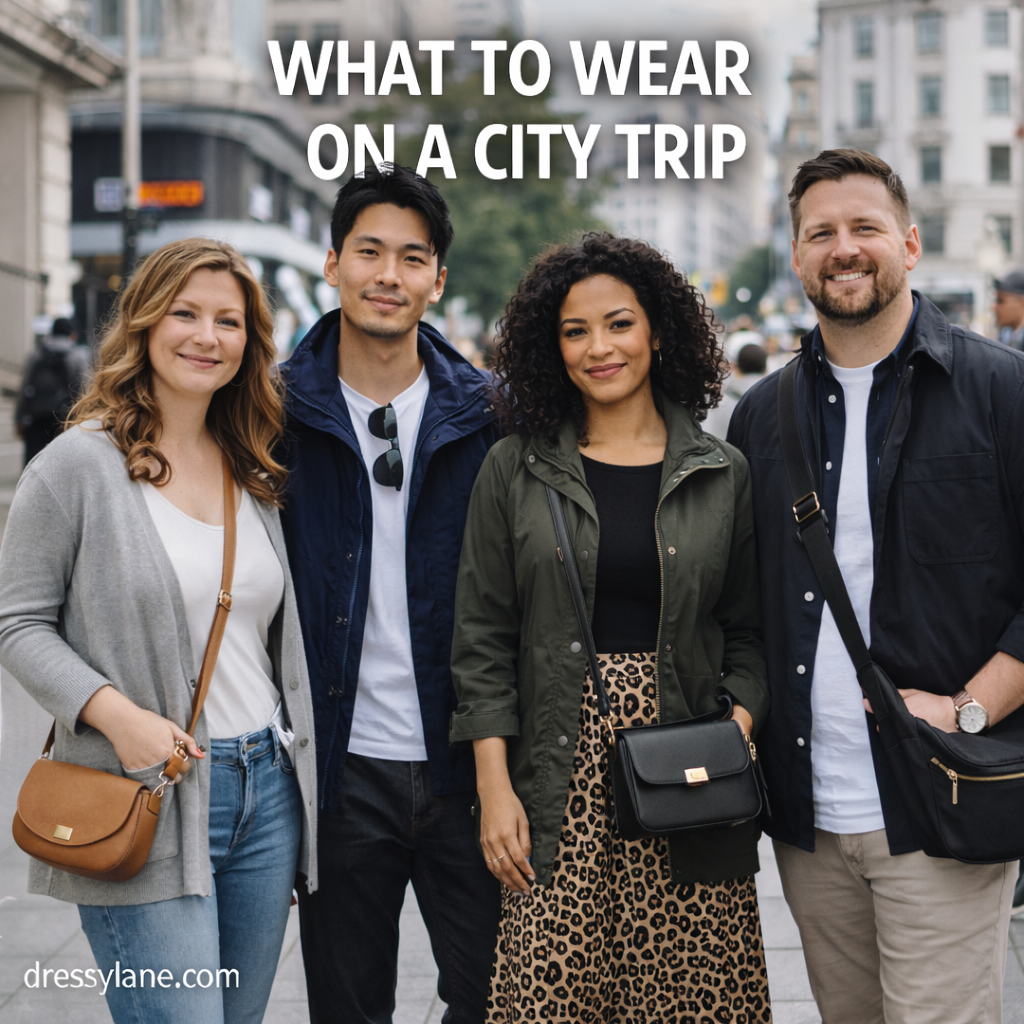
For a trip centered around urban exploring, see What to Wear on a City Trip.
Dressing for Mixed Activities
Many trips combine sightseeing, restaurants, shopping, outdoor activities, and social events.
Instead of packing separate wardrobes, identify pieces that can cross categories.
A midi dress might work for sightseeing with sneakers and dinner with flats.
Chinos can work during the day with a T-shirt and at night with a button-down.
A lightweight blazer can upgrade simple trousers immediately.
This is where versatile pieces earn their suitcase space.
When a Travel Day Turns Into an Event
Sometimes you land and head almost directly to dinner, a meeting, a party, or another event.
Build your travel outfit around a presentable foundation.
For example:
Women: relaxed tailored trousers + knit top + cardigan + sneakers
After arrival, change into loafers or flats, add a blazer or jewelry, and you’re ready for dinner.
Men: chinos + polo or button-down + overshirt + sneakers
Swap the overshirt for a blazer or add more formal shoes if necessary.
Keep the pieces needed for the transition in your carry-on.
Dressing for Social and Serious Events While Traveling
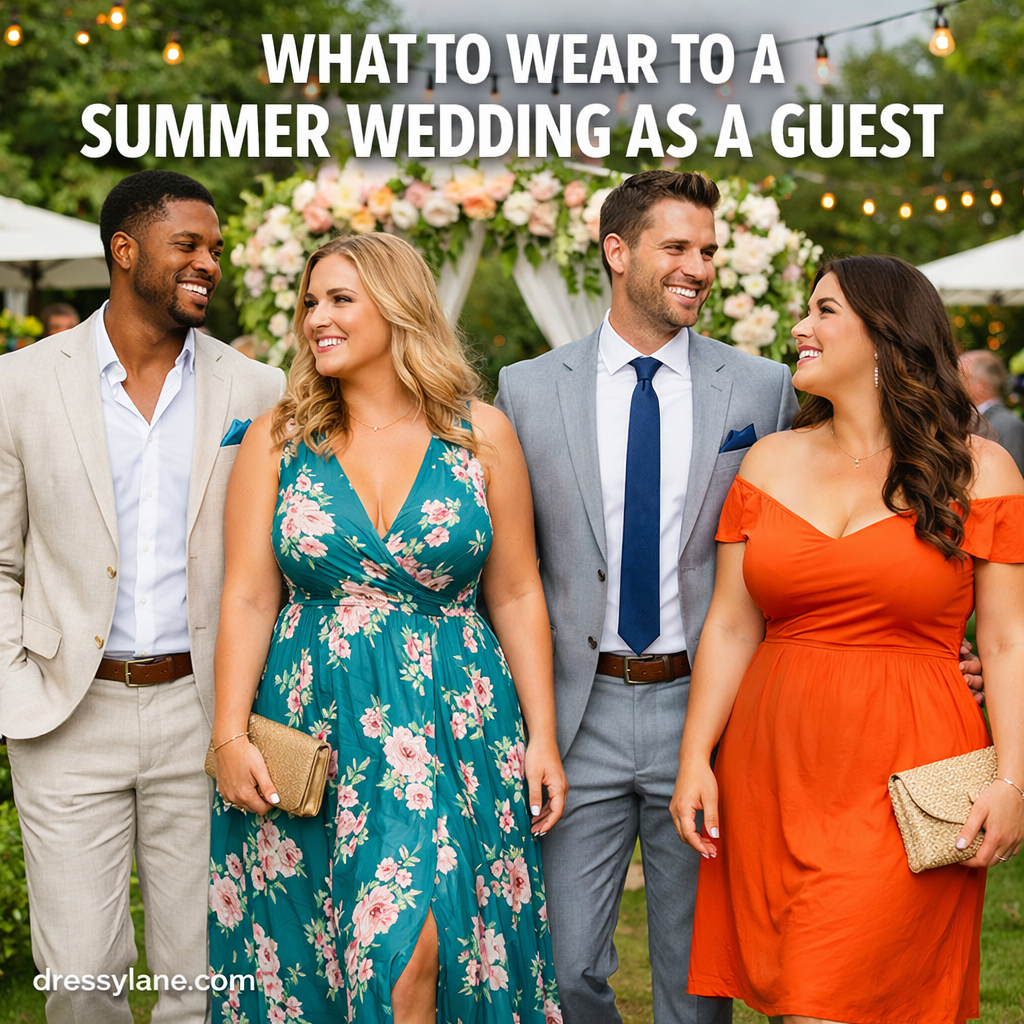
Weddings, funerals, ceremonies, business meetings, and formal dinners require more planning than ordinary vacation activities.
Don’t assume your everyday travel capsule can stretch far enough.
For serious or formal occasions, pack the appropriate clothing deliberately and protect it during travel.
That might mean:
- A dark suit
- A simple formal dress
- Tailored trousers and blazer
- Dress shirt
- Appropriate formal shoes
For social events, a simple dress, polished separates, or a collared shirt with tailored trousers can often cover several situations.
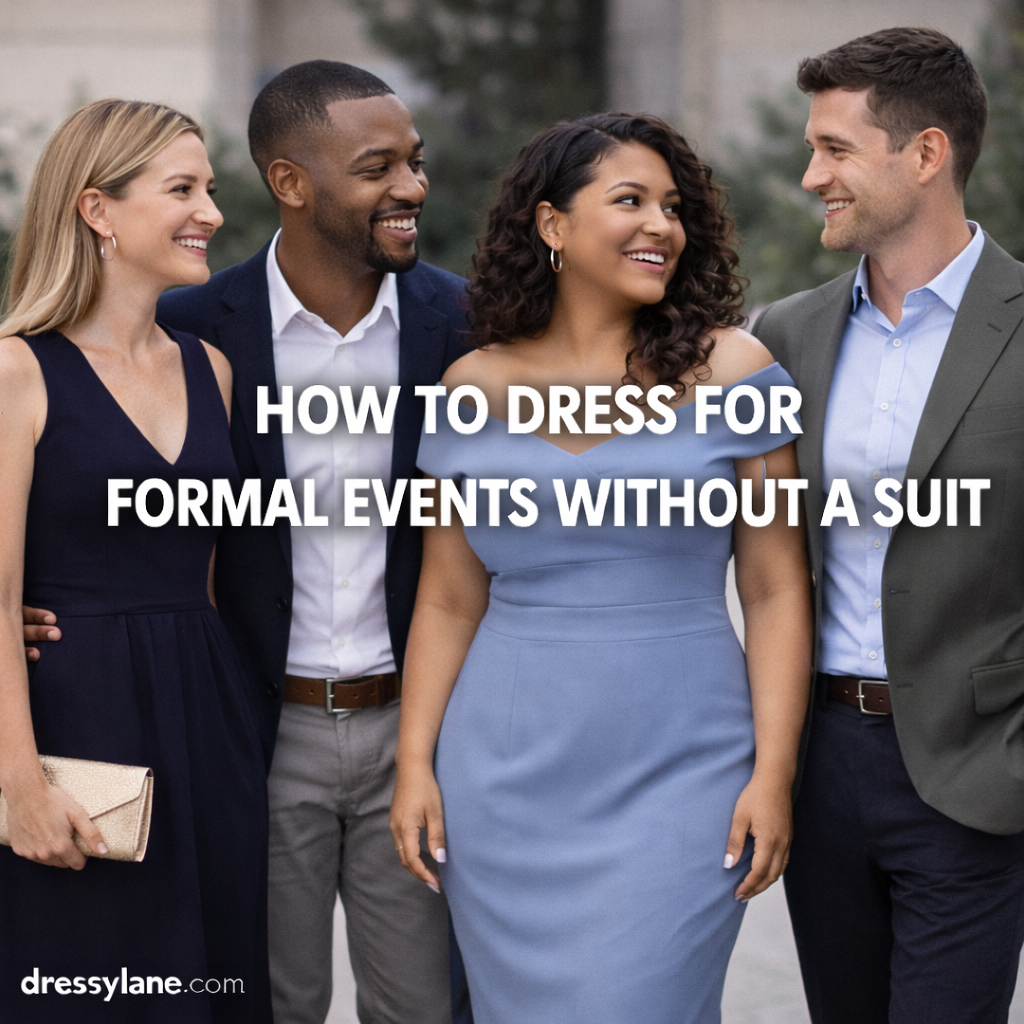
If you’re uncertain about an event’s expected formality, How to Dress for Different Occasions: Complete Guide can help you judge the dress code.
International Travel and Local Expectations
International travel adds cultural context.
Research your destination before packing, particularly if you’ll visit:
- Religious buildings
- Rural or conservative areas
- Government buildings
- Upscale restaurants
- Business settings
Some destinations or sites may expect covered shoulders, longer hems, or trousers rather than shorts.
A lightweight scarf, overshirt, cardigan, or packable pair of trousers can solve many modesty requirements without changing your entire wardrobe.
Also remember that “casual” doesn’t look identical everywhere. Clothing that feels completely normal at home may stand out elsewhere.
Dressing for Hot-Weather Travel
For hot climates, prioritize airflow and moisture management.
Useful fabrics include:
- Linen
- Linen blends
- Cotton poplin
- Seersucker
- Lightweight rayon or viscose
- Lightweight technical fabrics
Choose looser silhouettes rather than extremely tight clothing.
Good options include:
- Linen trousers
- Relaxed shorts where appropriate
- Breezy midi dresses
- Camp-collar shirts
- Loose button-downs
- Lightweight skirts
Sun protection also matters. Hats, sunglasses, and lightweight long sleeves can sometimes be more comfortable than leaving skin exposed all day.
For especially hot conditions, breathable fabrics and loose fits matter more than trying to layer. If you’re planning a warm-weather getaway, What to Wear on a Beach Vacation covers beach-specific needs.
Dressing for Cold-Weather Travel
Cold climates require strategic layering because winter clothing takes up enormous amounts of suitcase space.
Use:
Base layer: merino or thermal top
Mid-layer: sweater or fleece
Outer layer: insulated or weather-resistant coat
Add:
- Warm socks
- Gloves
- Hat
- Scarf
- Weather-appropriate footwear
Wear your coat and boots while traveling rather than packing them when practical.
For very cold destinations, warmth and traction should take priority over squeezing every outfit into a particular aesthetic.
Traveling When You Get Cold Easily
If you’re usually the coldest person in the room, don’t rely on the airline or hotel to provide enough warmth.
Keep a light merino sweater or cardigan in your personal item even when traveling somewhere warm.
A scarf can also provide useful warmth without occupying much luggage space.
Thin thermal layers are especially useful because they can be worn invisibly underneath ordinary clothes.
Traveling When You Overheat Easily
If you run hot, make each layer independently wearable.
Instead of a thick sweater over an undershirt you wouldn’t want to wear alone, choose a breathable T-shirt or blouse as your base and a lightweight removable layer.
Avoid trapping yourself in:
- Thick synthetic fabrics
- Heavy lined jackets
- Non-breathable tops
- Excessive layering
A lightweight overshirt or cardigan gives you temperature control without much bulk.
Dressing for Changing Weather
Check the forecast, but don’t build your entire wardrobe around one prediction.
For variable conditions, pack:
- A light waterproof shell or trench
- A mid-layer
- Shoes that tolerate some moisture
- A compact umbrella if useful
- Tops that can be worn alone
The goal is modularity.
You should be able to add or subtract one piece rather than needing a completely different outfit every time the weather changes.
Seasonal Travel Without Overpacking
For spring and fall trips, layers do most of the work.
For winter, concentrate your warmth in one good coat plus thin insulating layers.
For summer, choose lightweight garments that can be washed and dried easily.
If you’re crossing seasons—such as leaving winter weather for a tropical destination—wear the bulky cold-weather clothing during transit and pack the lighter destination wardrobe.
Don’t fill half your suitcase with a coat you’re only wearing to the airport.
How to Rewear Clothes Without Feeling Like You’re Repeating Outfits
Rewearing is one of the easiest ways to reduce luggage.
The trick is to avoid wearing every piece on the same schedule.
For example, wear the same trousers with:
- T-shirt and sneakers
- Button-down and loafers
- Sweater and boots
Accessories and layers also change the overall appearance.
Most people you encounter while traveling will neither know nor care that you wore the same navy trousers two days earlier.
Prioritize clothes that remain fresh, hold their shape, and coordinate easily.
Looking Stylish Without Sacrificing Comfort
Travel style doesn’t require complicated outfits.
A coordinated color palette, good proportions, clean shoes, and one intentional layer usually accomplish more than adding accessories or uncomfortable clothing.
For example:
Wide-leg trousers + fitted T-shirt + cropped jacket + sneakers
looks considered without being difficult to wear.
So does:
Chinos + knit polo + overshirt + leather sneakers.
If an outfit only looks good when you’re standing still in front of a mirror, it probably isn’t a great travel outfit.
Travel clothes need to work while you’re sitting on a train, carrying a suitcase, walking six miles, and eating dinner.
Building a Reliable Travel Wardrobe
Frequent travelers benefit from having a small group of proven pieces ready to go.
That might include:
- Comfortable travel trousers
- 2–3 reliable T-shirts
- Button-down or blouse
- Merino sweater
- Lightweight jacket
- Comfortable walking shoes
- Simple dressier option
Reliability reduces packing stress.
You already know how the clothes fit, whether they wrinkle, how long you can walk in the shoes, and which pieces coordinate.
That’s far more useful than buying a new “vacation wardrobe” before every trip.
Travel Outfits Should Make the Trip Easier
The best travel wardrobe is almost boring in how well it works.
You shouldn’t spend the day:
- Pulling up your waistband
- Adjusting straps
- Treating blisters
- Carrying a jacket that’s too heavy
- Worrying about wrinkles
- Wondering what matches
- Regretting the shoes you packed
When clothes disappear into the background and let you enjoy the trip, they’re doing their job.
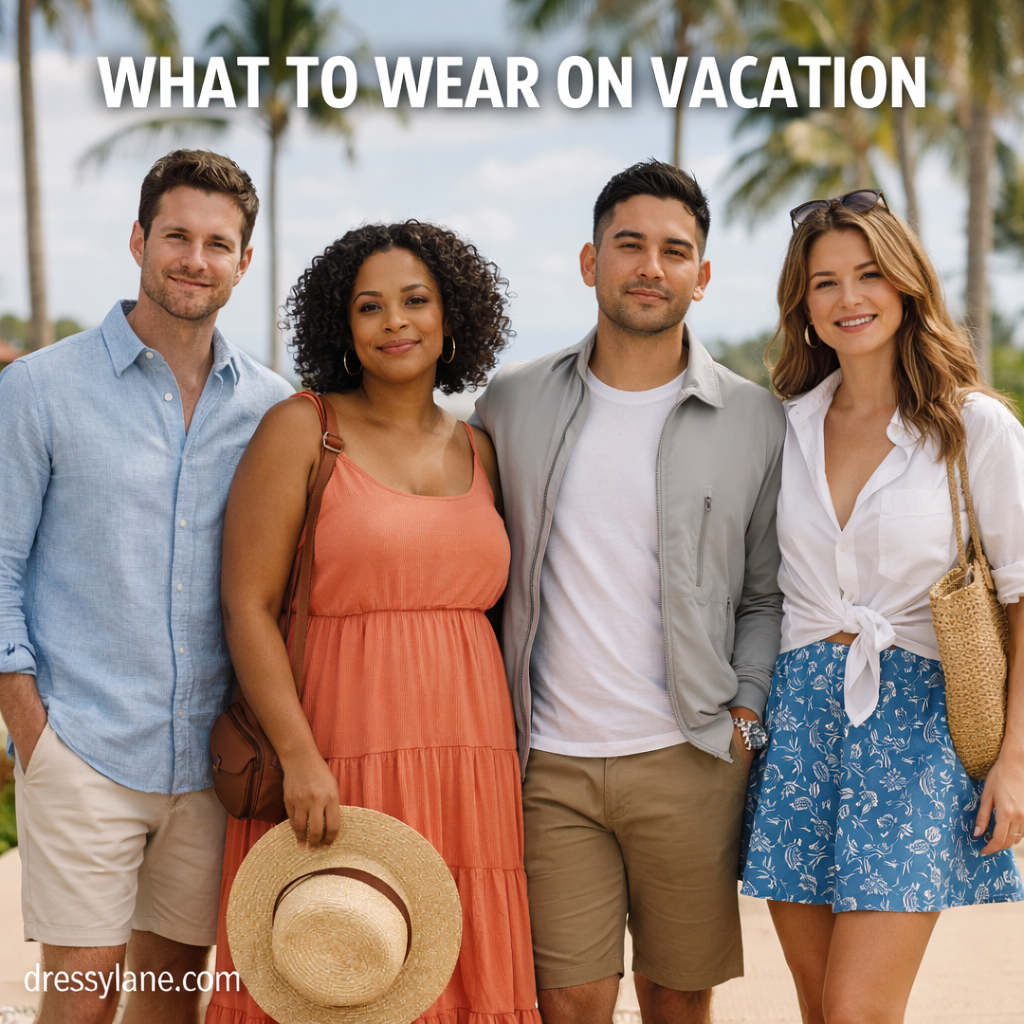
For destination-specific inspiration beyond the travel day itself, see What to Wear on Vacation. If your itinerary includes days at sea and different onboard dress codes, What to Wear on a Cruise covers that situation separately.
Frequently Asked Questions
What is the best outfit to wear while traveling?
A dependable formula is comfortable trousers, a breathable top, a removable sweater or jacket, and broken-in walking shoes. Adjust the fabrics and layers for your destination.
What should I wear on a plane?
Choose soft trousers or stretch chinos, a T-shirt or knit top, a light sweater, and comfortable shoes. Avoid restrictive waistbands and complicated clothing that becomes uncomfortable after several hours.
How can I look put together while traveling comfortably?
Focus on fit, coordination, and clean shoes rather than formality. Structured trousers, a simple knit top, and sneakers can look polished while remaining comfortable.
How do I pack light and still look good?
Use a limited color palette and choose pieces that work in multiple combinations. Repeat individual garments rather than entire outfits.
How do I pack without repeating outfits?
You don’t necessarily need to. Repeating individual pieces is efficient and usually goes unnoticed. Change the top, layer, shoes, or accessories to create a different overall combination.
What should I wear when sightseeing all day?
Start with comfortable walking shoes, then choose breathable clothing that allows easy movement. Add a light layer and weather protection based on the forecast.
Can I travel with only one pair of shoes?
Yes, if your itinerary doesn’t include activities requiring specialized footwear. Choose a broken-in shoe comfortable enough for extensive walking and polished enough for your planned restaurants and activities.
What should I wear for overnight travel?
Choose soft, nonrestrictive clothing with minimal hardware, such as stretch trousers, a T-shirt, fine-knit sweater, and comfortable socks. Keep a fresh top in your carry-on if you need to look polished after arrival.
What should I wear if I get cold easily?
Carry a lightweight merino sweater, cardigan, or scarf even when traveling to a warm destination. Airplanes, airports, restaurants, and hotels can be much colder than the outdoor temperature.
What if I overheat easily?
Use lightweight, breathable base layers and make sure each layer can be removed independently. Linen blends, cotton, merino, and breathable technical fabrics are useful options.
How should I pack for changing weather?
Build outfits in layers and bring one compact weather-resistant outer layer. Avoid packing separate wardrobes for every possible forecast.
How should I dress for international travel?
Prioritize comfort during transit, but research cultural expectations at your destination. Bring an easy coverage layer if you’ll visit religious, formal, or conservative locations.
What should I pack for a short trip?
Pack for your actual itinerary rather than hypothetical situations. One or two bottoms, several interchangeable tops, a layer, and appropriate shoes may cover an entire weekend.
What should I pack for a long trip?
Pack roughly enough clothing for a week and plan to do laundry. Longer trips benefit more from washable, rewearable clothing than from simply packing more outfits.
What if I’m packing at the last minute?
Use combinations you’ve already worn successfully. Choose your shoes and bottoms first, add coordinating tops and layers, then check the weather and itinerary for anything you’ve missed.
What should I wear when living out of a suitcase?
Choose durable, interchangeable clothes that resist wrinkles and can be worn multiple times. Keep your wardrobe compact enough that you don’t need to unpack everything whenever you change outfits.
How can I dress confidently while traveling?
Wear pieces you’ve already tested. Knowing that your trousers remain comfortable after hours of sitting and that your shoes can handle a full sightseeing day removes much more uncertainty than wearing something new simply because it looks like a “travel outfit.”
Final Thoughts
Comfortable travel dressing isn’t about choosing between practicality and style.
The most useful travel clothes do both.
Start with comfortable shoes and nonrestrictive clothing. Choose breathable, rewearable fabrics. Use lightweight layers to handle temperature changes, and build your suitcase around pieces that coordinate rather than individual outfits.
Then adapt that foundation to the trip.
A hot-weather city vacation might call for linen trousers, cotton shirts, dresses, and breathable walking shoes. A winter trip needs thermal layers, merino wool, weather-resistant footwear, and a good coat. A business trip may require tailored trousers and a blazer, while a beach vacation can be considerably more relaxed.
Above all, pack for your real itinerary, not every situation you can imagine happening.
A smaller wardrobe of clothes you know are comfortable, versatile, and reliable will usually serve you better than an overstuffed suitcase full of options.
When your clothes can handle the flight, the weather, the walking, the restaurant, and the occasional change of plans without demanding much thought, you’ve built a travel wardrobe that actually works.