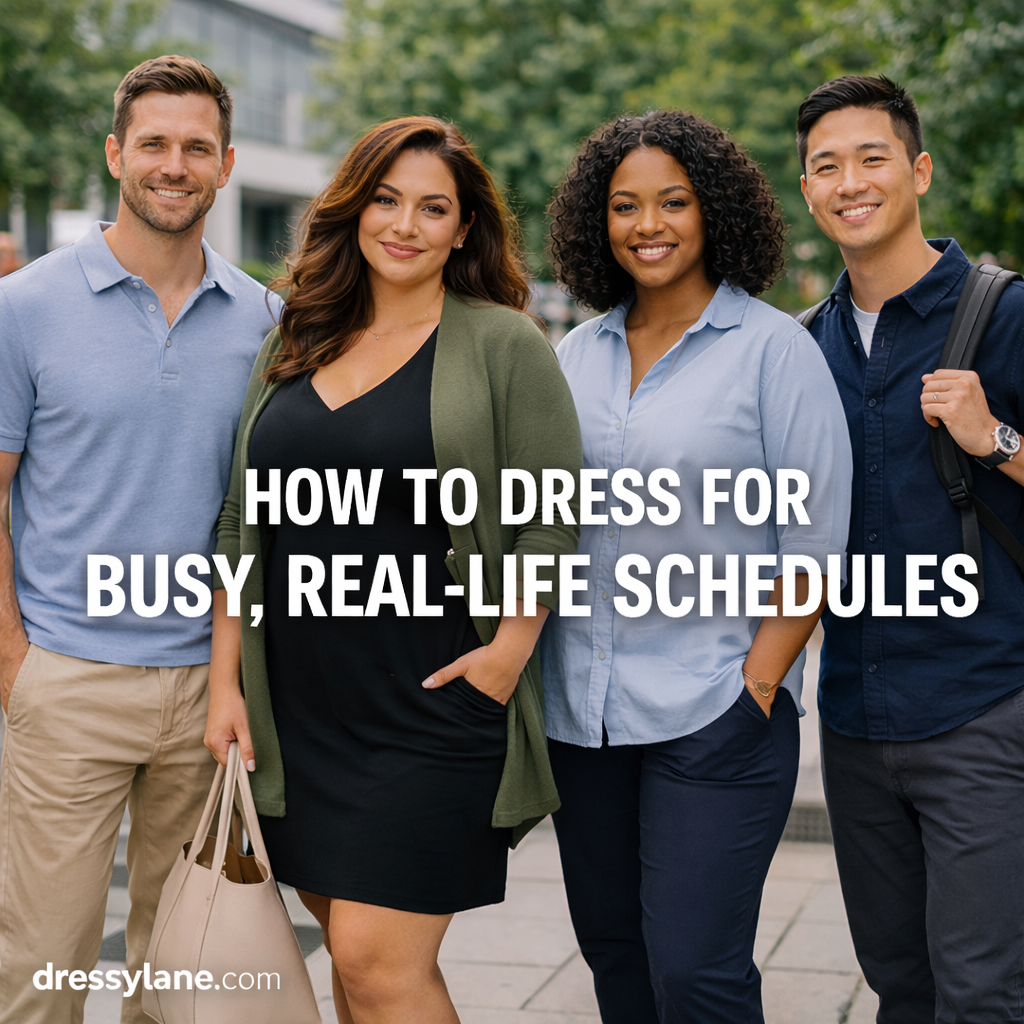
Modern life moves fast. Between work, errands, family responsibilities, social plans, and unexpected schedule changes, most people don’t have time to change outfits multiple times a day. Dressing for busy, real-life schedules means choosing clothing that works across settings, stays comfortable for long hours, and still looks put-together with minimal effort.
This guide focuses on practical, everyday style strategies that help both women and men get dressed quickly, confidently, and efficiently — without sacrificing comfort or personal style.
What “Busy-Life Dressing” Really Means
Busy-life dressing is about versatility and reliability. The goal isn’t perfection — it’s reducing friction in your day.
Key characteristics of busy-life outfits include:
- Comfortable enough for long wear
- Polished enough for public and professional settings
- Easy to mix and match
- Low-maintenance and durable
- Adaptable from morning to evening
When your clothes support your schedule, you save time, mental energy, and stress.
Core Principles for Dressing on a Tight Schedule
Before building outfits, it helps to follow a few universal rules.
Prioritize Comfort First
If an outfit isn’t comfortable, it becomes a distraction.
- Choose breathable fabrics
- Avoid overly tight or restrictive pieces
- Make sure shoes can handle long periods of walking or standing
Stick to a Reliable Color Palette
A cohesive color palette speeds up outfit decisions.
- Neutral bases like black, navy, beige, gray, or olive
- One or two accent colors you enjoy
- Fewer colors = easier mixing
Choose Pieces That Layer Easily
Layering allows one outfit to serve multiple situations.
- Light jackets
- Cardigans or overshirts
- Neutral outer layers that work with many outfits
Reduce Decision Fatigue
The fewer choices you have to make in the morning, the better.
- Build go-to outfit formulas
- Repeat outfits without guilt
- Keep essentials visible and accessible
Dressing for Busy Schedules: Women’s Guide
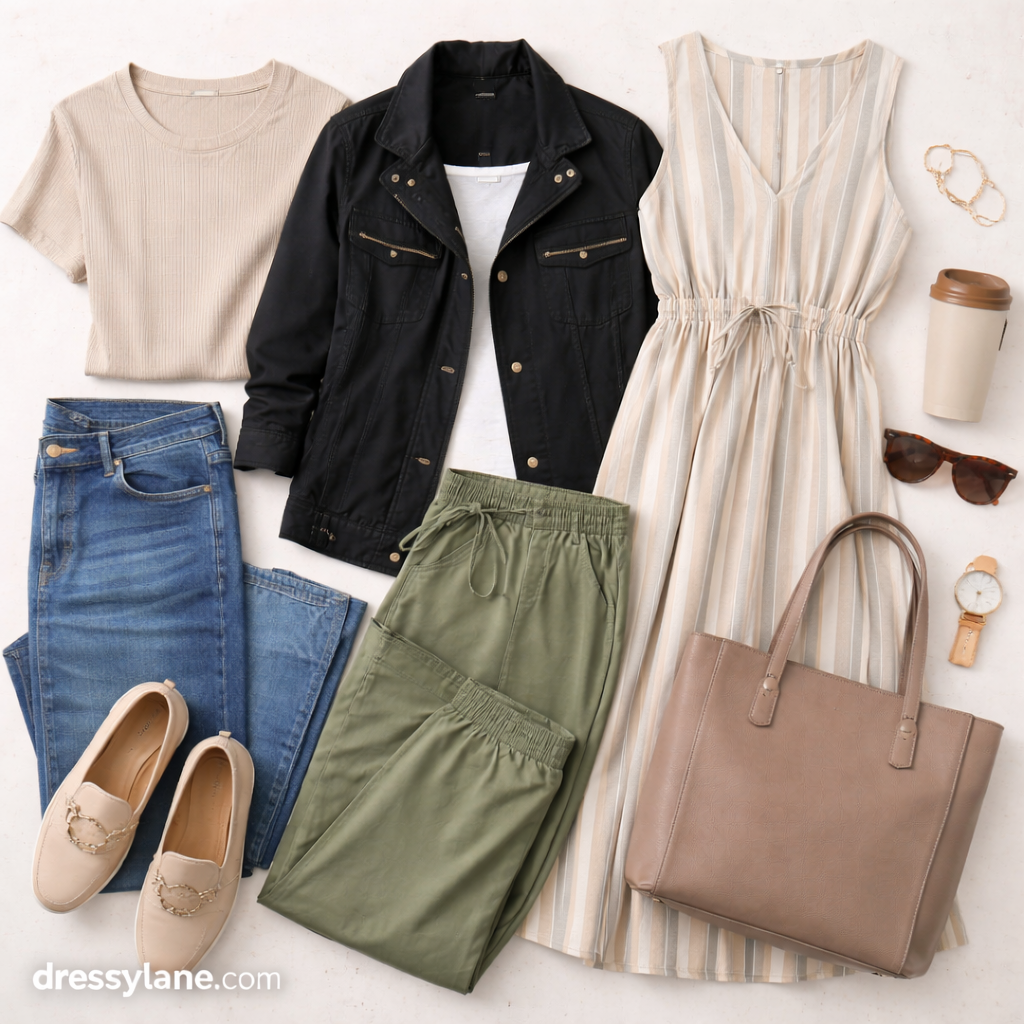
Women often juggle multiple roles in a single day, which makes versatile clothing essential.
Everyday Outfit Foundations
- Soft, structured tops that don’t wrinkle easily
- Stretch-friendly pants or skirts
- Dresses that can be dressed up or down
- Comfortable layers for temperature changes
A simple base outfit should feel appropriate whether you’re running errands, working, or meeting someone casually.
Easy Outfit Formulas
- Comfortable dress + cardigan + sneakers or flats
- Soft blouse + stretch pants + low-profile shoes
- Knit top + relaxed jeans + lightweight jacket
These combinations work across environments without requiring changes.
Time-Saving Style Tips
- Keep a neutral shoe you can wear all day
- Choose wrinkle-resistant fabrics
- Avoid delicate pieces that need constant adjusting
- Stick with hairstyles and accessories that stay put
Shoes and Accessories That Keep Up
- Cushioned flats, clean sneakers, or low block heels
- Lightweight bags with hands-free options
- Minimal jewelry that doesn’t tangle or snag
Dressing for Busy Schedules: Men’s Guide
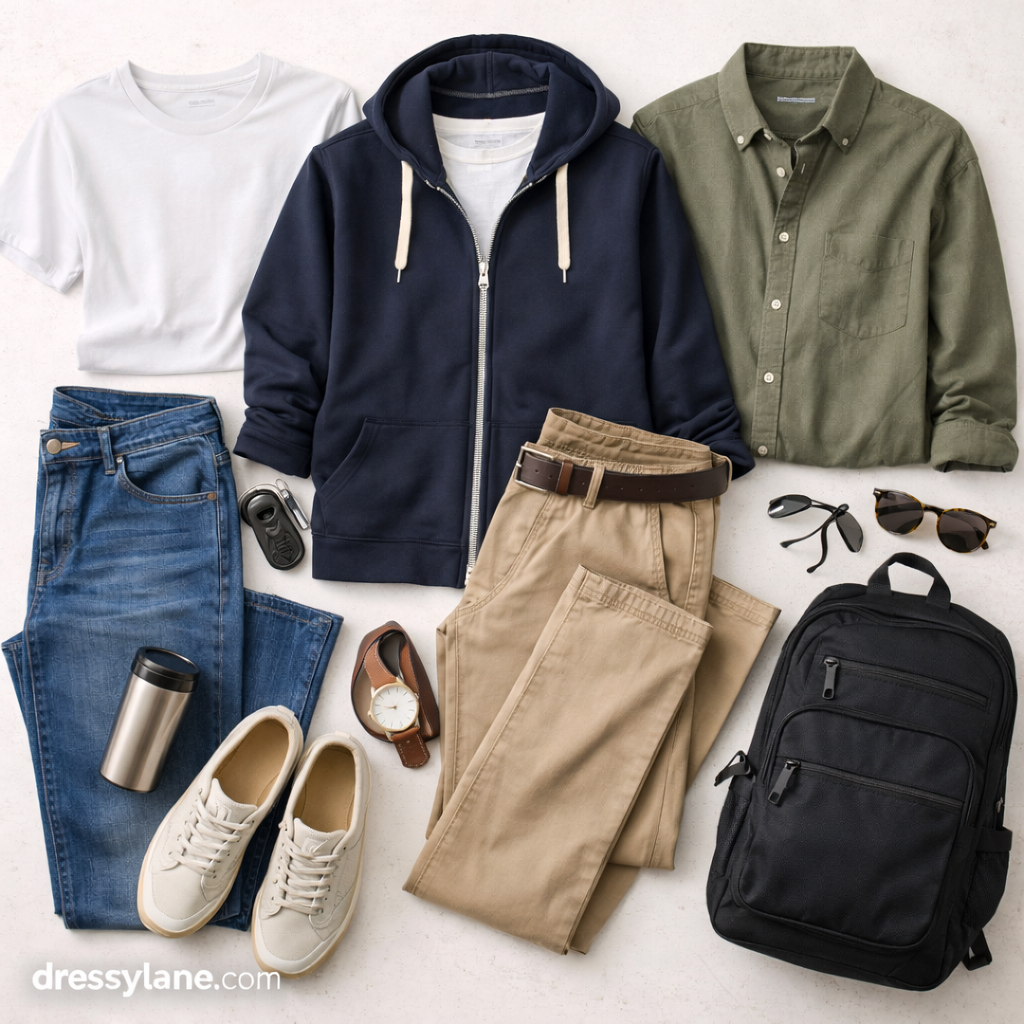
Men’s busy schedules benefit from simple, repeatable outfit systems.
Reliable Daily Basics
- Soft t-shirts or polos with structure
- Button-downs that don’t feel stiff
- Stretch chinos or relaxed-fit pants
- Lightweight layers for flexibility
The goal is clothing that looks intentional without feeling formal.
Efficient Outfit Combinations
- T-shirt or polo + chinos + clean sneakers
- Button-down + stretch jeans + casual jacket
- Lightweight sweater + comfortable pants
These outfits transition well from work to personal time.
Practical Style Shortcuts
- Keep shoes versatile and neutral
- Avoid high-maintenance fabrics
- Choose layers that can be added or removed easily
- Stick to fits that allow movement
Accessories That Add Function
- Comfortable belts with flexibility
- Watches instead of multiple accessories
- Lightweight jackets with pockets
Building a Weekday-Ready Wardrobe
A wardrobe that supports a busy lifestyle is intentional, not excessive.
Focus on Fewer, Better Pieces
- Items you can wear multiple times per week
- Pieces that work in different combinations
- Clothing that feels good after hours of wear
Create Outfit “Uniforms”
Uniforms don’t mean boring — they mean efficient.
- 2–3 outfit formulas you rely on
- Slight variations in color or fabric
- Confidence in knowing what works
Prep Ahead When Possible
- Plan outfits the night before
- Group complete outfits together
- Keep frequently worn items within reach
Common Style Mistakes That Slow You Down
Busy schedules make inefficiency more noticeable.
Avoid these common pitfalls:
- Owning clothes that only work in one setting
- Choosing style over comfort
- Wearing shoes that limit mobility
- Keeping items that require constant maintenance
- Overloading outfits with unnecessary accessories
When clothing causes delays or discomfort, it’s not serving your lifestyle.
Final Thoughts
Dressing for busy, real-life schedules isn’t about lowering standards — it’s about aligning your wardrobe with how you actually live. When your clothes are comfortable, versatile, and easy to wear, you move through your day with more confidence and less stress.
The best everyday style supports your life, not the other way around.