Starting a new job comes with enough unknowns without having to worry about your outfit. You might know the company’s official dress code, but that doesn’t always tell you what people actually wear. Business casual, for example, could mean blazers and tailored trousers at one office and jeans with button-down shirts at another.
Your first-day outfit should be comfortable enough for a full day of introductions, onboarding, and possibly a commute you’ve never made before.
The simplest approach is to choose something slightly more polished than you expect the everyday dress code to be. Once you’ve spent a day or two observing your coworkers, you can adjust.
Here’s how to put together a first-day outfit that feels appropriate without looking like you’re still dressed for the job interview.
Figure Out the Dress Code Before Your First Day
If your new employer hasn’t explained the dress code, it’s perfectly reasonable to ask your recruiter or HR contact.
A simple question like, “Is there a particular dress code I should follow for my first day?” can save you a lot of guessing.
You can also look at employee photos on the company’s website or LinkedIn. Pay attention to what people wear in ordinary office photos rather than formal headshots or company events.
If you’re still unsure, business casual is a practical starting point for many office environments.
Think tailored trousers, a button-down shirt or blouse, and polished shoes. A blazer is an easy addition if the workplace leans more formal.
One thing I’d avoid is buying an entirely new outfit before you’ve seen the office. You might spend money on a suit only to discover that everyone wears chinos and sneakers. Start with versatile pieces you already own whenever possible.
What Women Should Wear on Their First Day at Work
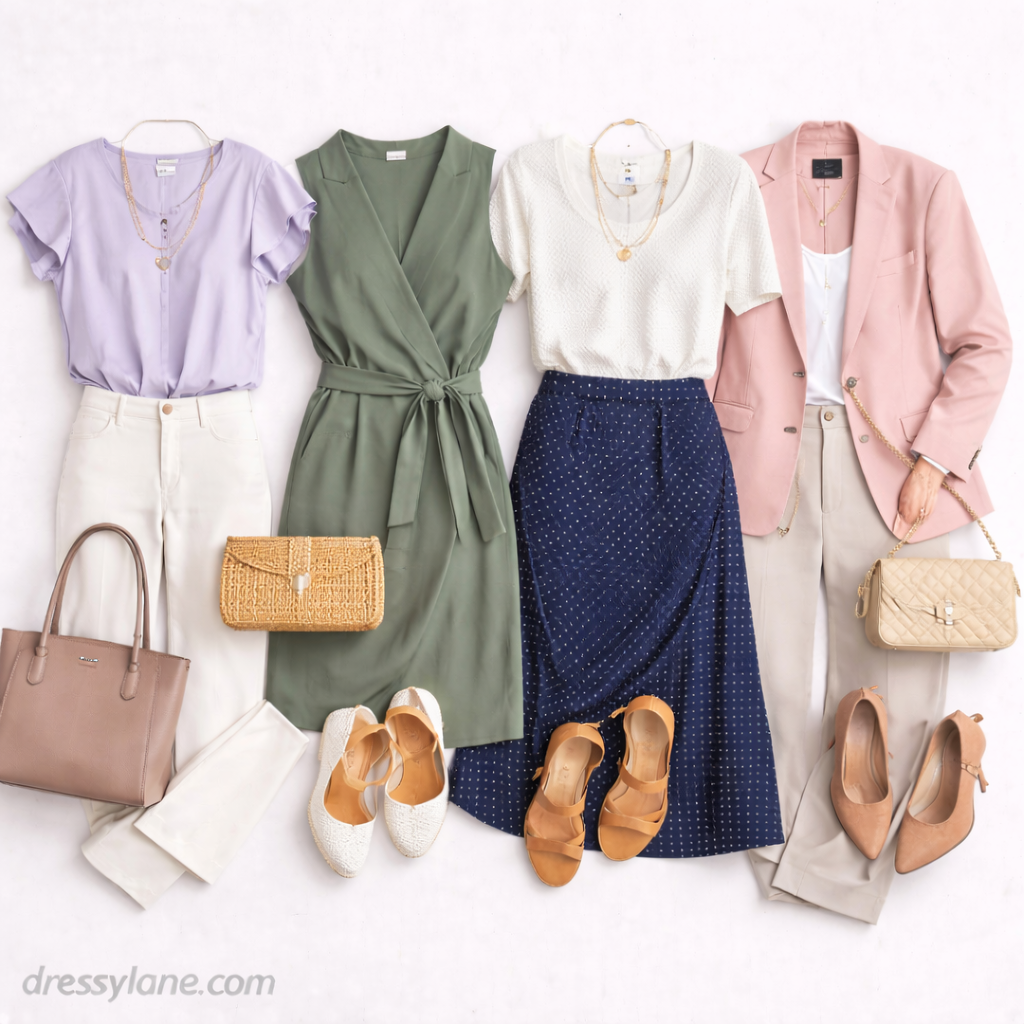
For most business casual offices, a pair of tailored trousers and a blouse makes an easy first-day combination.
Black, navy, or charcoal straight-leg trousers work with almost anything. Pair them with a cream blouse, a fine-gauge knit top, or a crisp cotton button-down.
A blazer can make the outfit feel more structured, but it doesn’t need to match your trousers.
For example, navy trousers with a white blouse, beige blazer, and brown leather loafers create a polished look without feeling overly formal.
Dresses and Skirts
If you prefer dresses, choose a silhouette that allows you to move comfortably.
A knee-length sheath dress, A-line midi dress, or simple shirt dress can work well, depending on the workplace.
Avoid choosing a dress that requires constant adjustment when sitting or walking. You’ll probably spend part of your first day filling out paperwork, attending orientation, or moving between meeting rooms.
For skirts, a straight-cut midi skirt paired with a tucked-in blouse or lightweight sweater is another reliable option.
Shoes and Accessories
Leather loafers, ballet flats, and low block heels are practical choices.
I’d personally skip brand-new heels on the first day. Even if they look perfect with your outfit, you don’t know how much walking you’ll be doing around the building.
Carry a structured tote or medium-sized handbag with enough room for your phone, wallet, notebook, and any onboarding documents.
Keep jewelry simple if that’s your preference, but there’s no need to remove every bit of personality from your outfit.
What Men Should Wear on Their First Day at Work
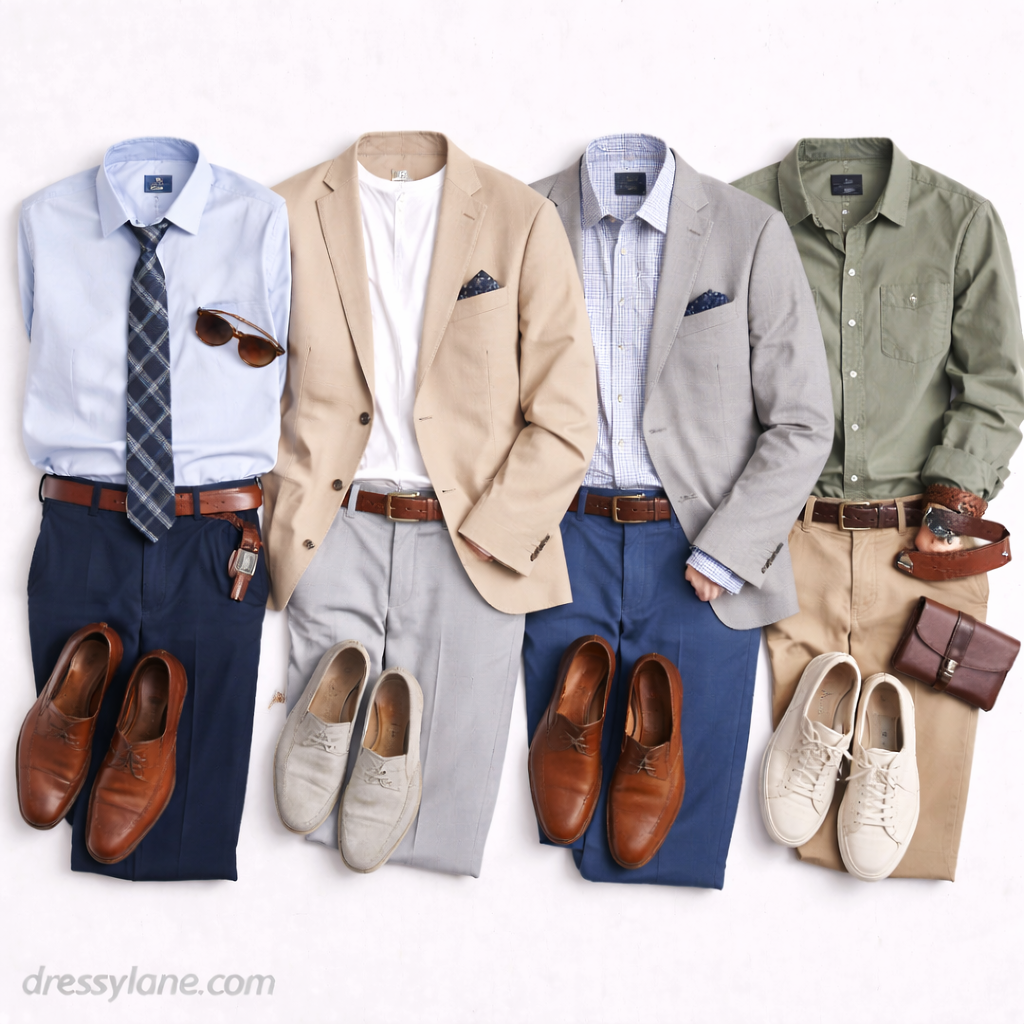
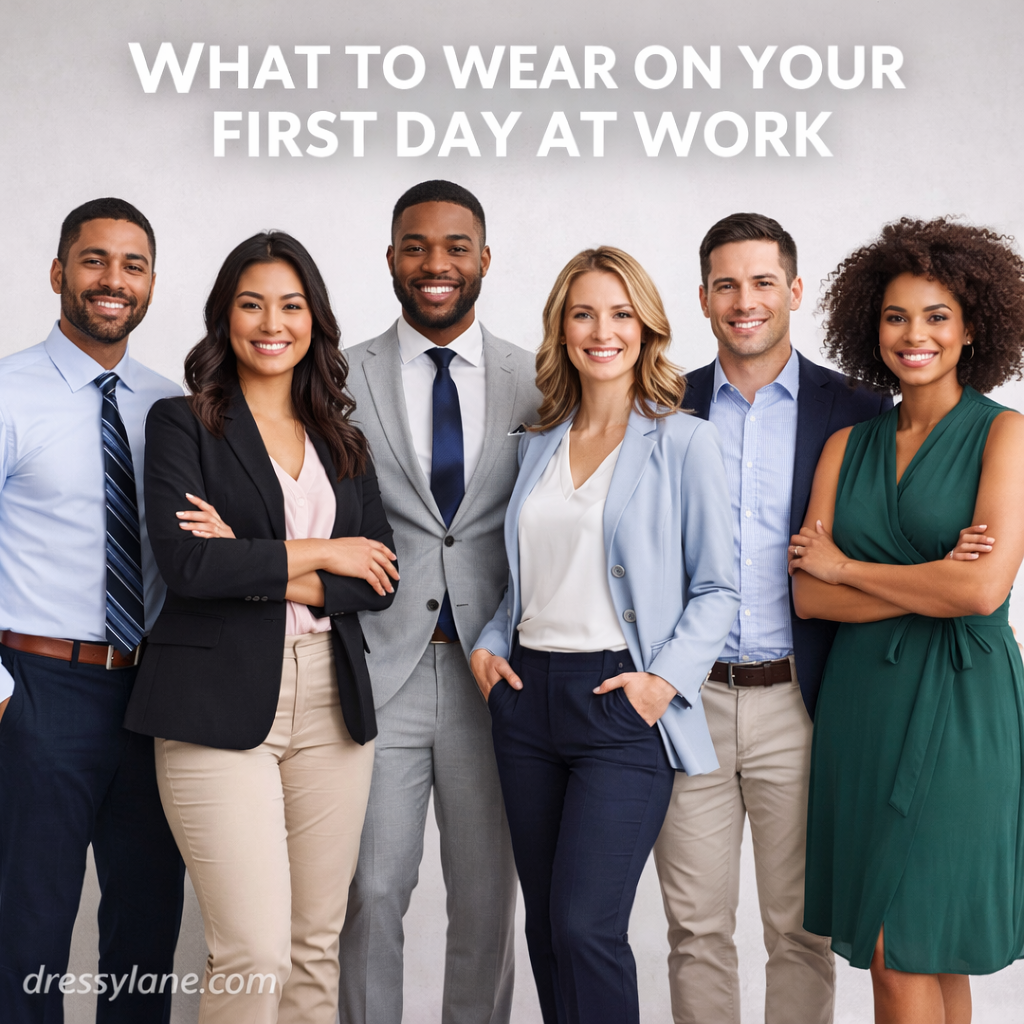
For men, chinos and a button-down shirt are one of the easiest combinations to adapt to different office environments.
Navy or stone-colored chinos paired with a light blue Oxford shirt and brown leather loafers work particularly well for business casual settings.
If the office appears more formal, swap the chinos for wool-blend dress trousers and add a navy blazer.
A tie usually isn’t necessary unless the company has a business professional dress code.
Getting the Fit Right
Pay attention to how your clothes fit when you’re sitting, not just standing in front of a mirror.
Your shirt shouldn’t pull across the chest or bunch excessively around the waist. Trousers should allow you to sit comfortably without feeling tight through the thighs.
For a more relaxed workplace, a fine-knit sweater over a collared shirt is a good alternative to a blazer.
A polo can also work in a casual office, particularly one made from substantial cotton rather than thin athletic fabric.
Shoes and Finishing Details
Leather loafers, Derby shoes, and simple lace-up dress shoes are dependable options.
Clean, minimalist leather sneakers may be appropriate in a casual workplace, but I’d wait until you’ve confirmed that sneakers are part of the office dress code.
Match your belt to your shoes where practical, and make sure your footwear is clean. Scuffed shoes can make an otherwise well-put-together outfit look less considered.
Adjust Your Outfit to the Type of Workplace
Not every first-day outfit needs to look the same.
Here’s how I’d approach three common office environments.
Corporate or Formal Office
A coordinated suit is appropriate for workplaces with a traditional business professional dress code.
Women might choose a navy pantsuit with a cream blouse and leather flats. Men could wear a charcoal suit, white dress shirt, and polished Oxford shoes.
If the office requires ties, wear one. Otherwise, check with HR rather than assuming.
Business Casual Office
This is where separates are especially useful.
Women can wear tailored trousers with a blouse and blazer, while men can pair chinos or dress trousers with an Oxford shirt.
Loafers and other polished, comfortable shoes complete either outfit.
Casual or Creative Office
You have more flexibility, but I’d still avoid arriving in your most relaxed weekend clothes.
Dark, straight-leg jeans without distressing can work with a crisp shirt, structured cardigan, or blazer.
For example, black jeans, a white button-down, and leather loafers create a casual outfit that still feels appropriate for meeting a new team.
Check whether the company has specific requirements before wearing jeans or sneakers.
Dress for the Day You’ll Actually Have
Your first day might involve more than sitting at a desk.
You could be touring a large office, meeting several departments, attending training sessions, or standing while someone shows you around.
This is why comfort deserves as much attention as appearance.
Choose breathable fabrics such as cotton, lightweight wool blends, or structured knits. Avoid stiff clothing that restricts your movement or fabrics that wrinkle dramatically during your commute.
Bring a cardigan or lightweight jacket if you’re unsure about the office temperature. Air-conditioned offices can feel surprisingly cold, even in summer.
And if you’ll be commuting by train or walking several blocks, choose shoes that can handle the journey.
What Not to Wear on Your First Day
Unless the company has a specific casual dress code, it’s worth avoiding a few items until you understand the workplace.
These include:
- Distressed jeans or clothing with visible wear.
- Graphic T-shirts with large slogans.
- Flip-flops or athletic slides.
- Wrinkled shirts and poorly fitting trousers.
- Shoes that are uncomfortable or difficult to walk in.
- Strong fragrance in shared office spaces.
These aren’t universal workplace rules. A graphic T-shirt might be completely normal at a design studio, while jeans could be inappropriate at a corporate law firm.
The point is to learn the environment before testing its boundaries.
Prepare Your Outfit the Night Before
Don’t leave everything until the morning.
Try on your complete outfit, including your shoes and any layers. Sit down, walk around, and check whether anything feels restrictive.
Steam or iron your clothes if necessary, inspect your shoes, and pack your bag.
It’s also worth checking the weather and planning your commute. A wool blazer might look great, but it won’t feel particularly comfortable during a long walk on a hot afternoon.
Having everything ready means one less decision to make before an already busy day.
How to Adjust Your Style After Day One
Your first day gives you a much clearer picture of the workplace than any dress code description.
Notice whether coworkers wear jeans, how often people wear blazers, and what types of shoes are common.
You don’t need to copy anyone’s outfit exactly. Use what you observe to understand the level of formality.
If everyone wears sneakers and relaxed trousers, you can gradually introduce more casual pieces. If most employees wear tailored clothing, keep your wardrobe closer to business casual or business professional.
The goal is to find a comfortable balance between workplace expectations and your own style.
Final Thoughts
Knowing what to wear on your first day at work doesn’t require an expensive new wardrobe.
Start with well-fitting pieces you already own, choose comfortable shoes, and dress according to what you know about the company.
When the dress code is unclear, a polished business casual outfit is a useful starting point for many office jobs.
Once you’ve settled in and seen how your coworkers dress, you’ll have a much better idea of what works for the rest of your workweek.