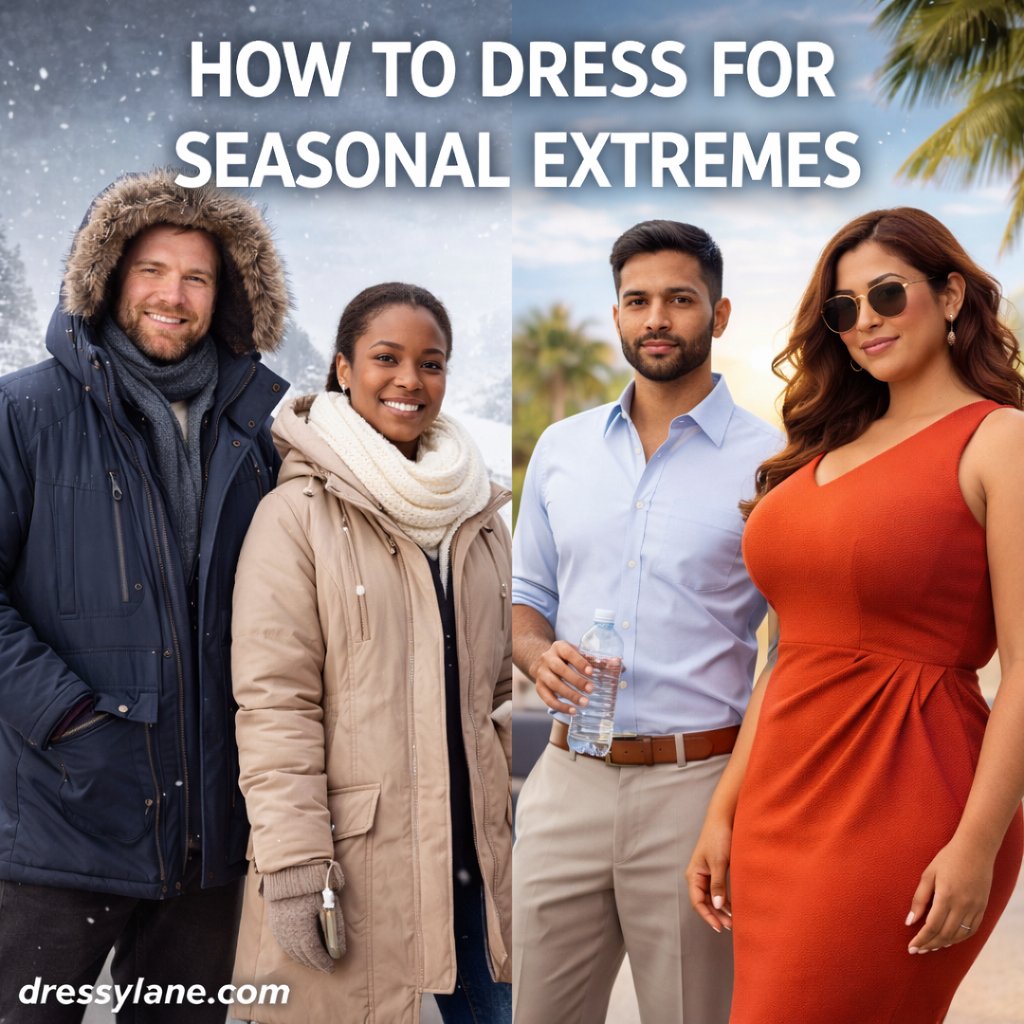
Dressing comfortably throughout the year isn’t about owning more clothes—it’s about understanding how fabrics, layers, and fit work together as the seasons change. When your wardrobe aligns with the weather, you stay comfortable, confident, and prepared without constant outfit stress.
This guide explains how to dress for seasonal comfort, with practical clothing strategies and outfit ideas for both women and men.
Why Seasonal Dressing Matters
Seasonal comfort affects more than just temperature—it impacts confidence, mobility, and overall well-being.
Dressing with the season in mind helps you:
- Regulate body temperature naturally
- Avoid overheating or feeling chilled
- Reduce clothing discomfort throughout the day
- Build a more functional, long-term wardrobe
- Adapt easily to unpredictable weather shifts
Comfortable clothing supports your lifestyle instead of working against it.
Core Principles of Dressing for Seasonal Comfort
No matter the season, a few fundamentals apply year-round:
- Choose breathable, season-appropriate fabrics
- Focus on layering rather than bulk
- Prioritize fit that allows movement
- Adjust colors and textures with the season
- Prepare for temperature changes indoors and outdoors
Understanding these basics makes seasonal transitions smoother.
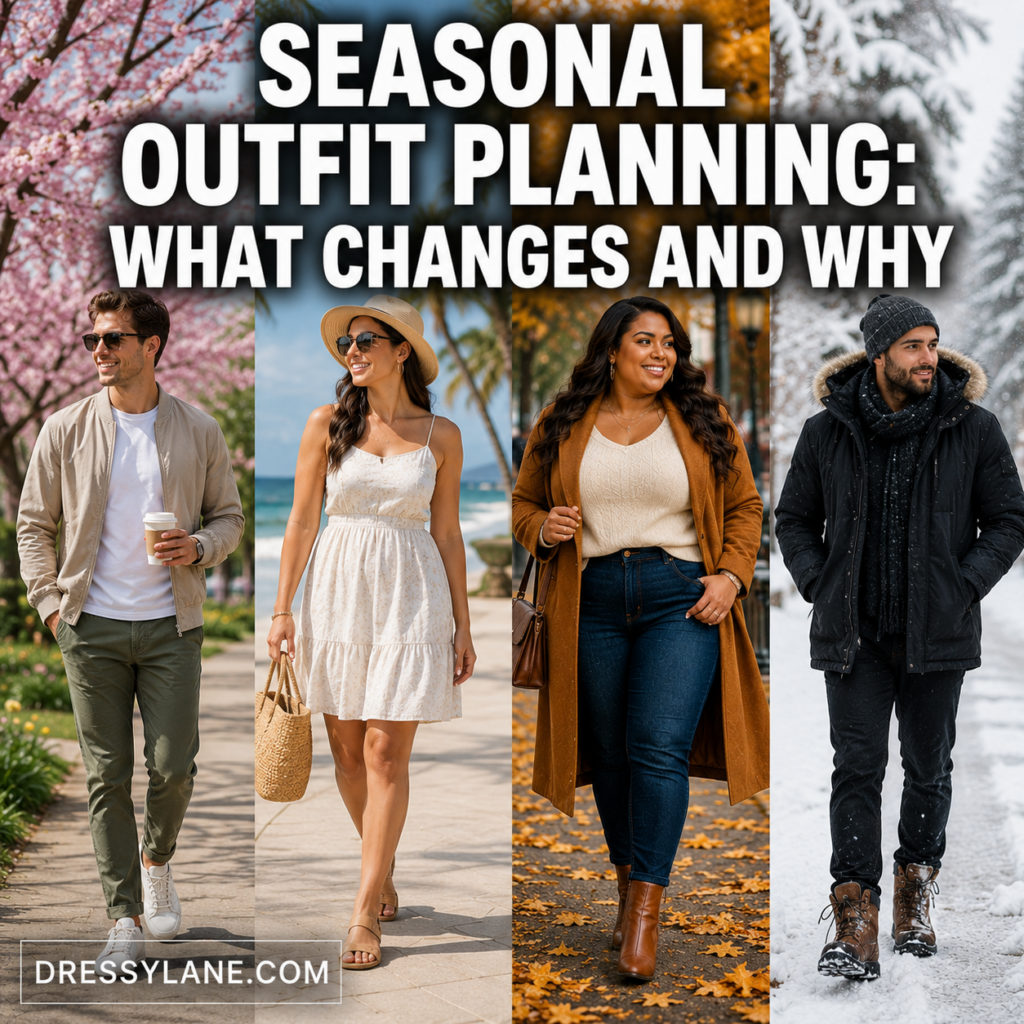
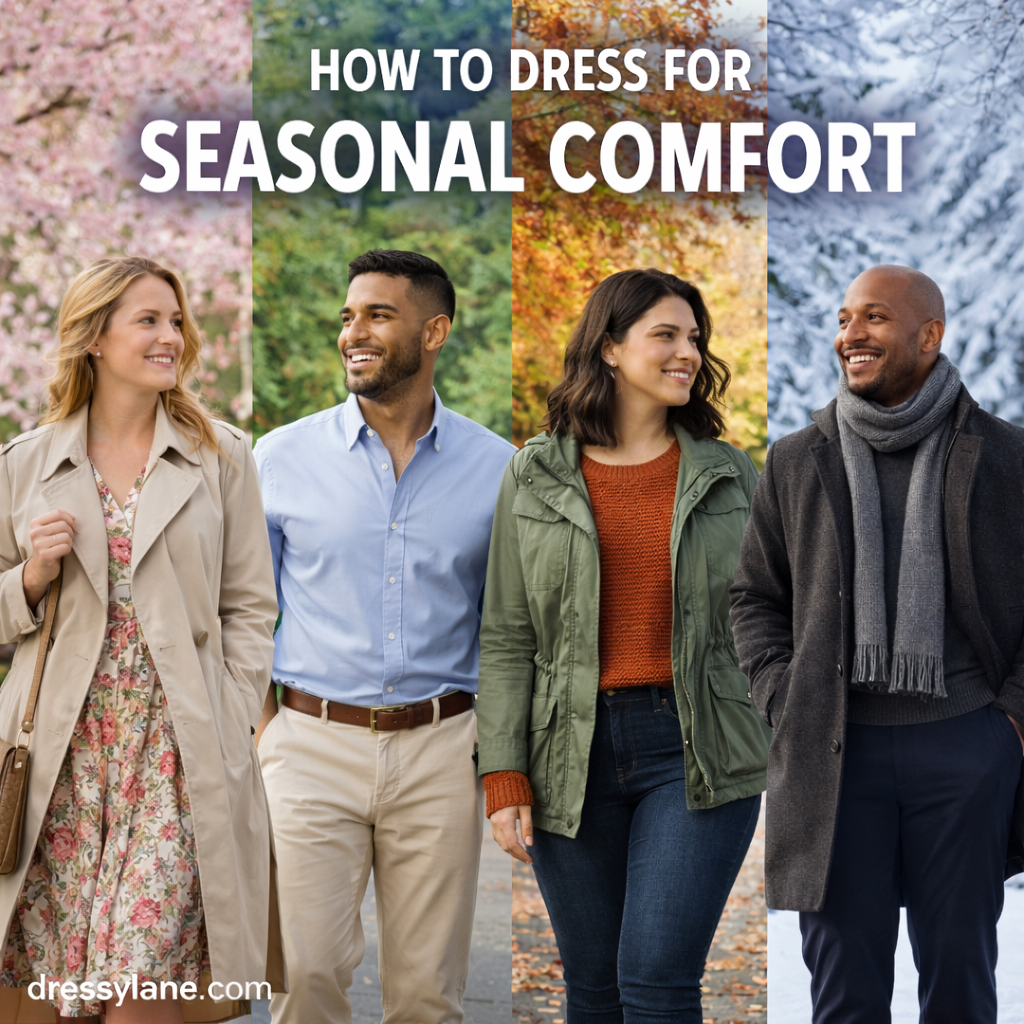
Spring: Light Layers and Breathability
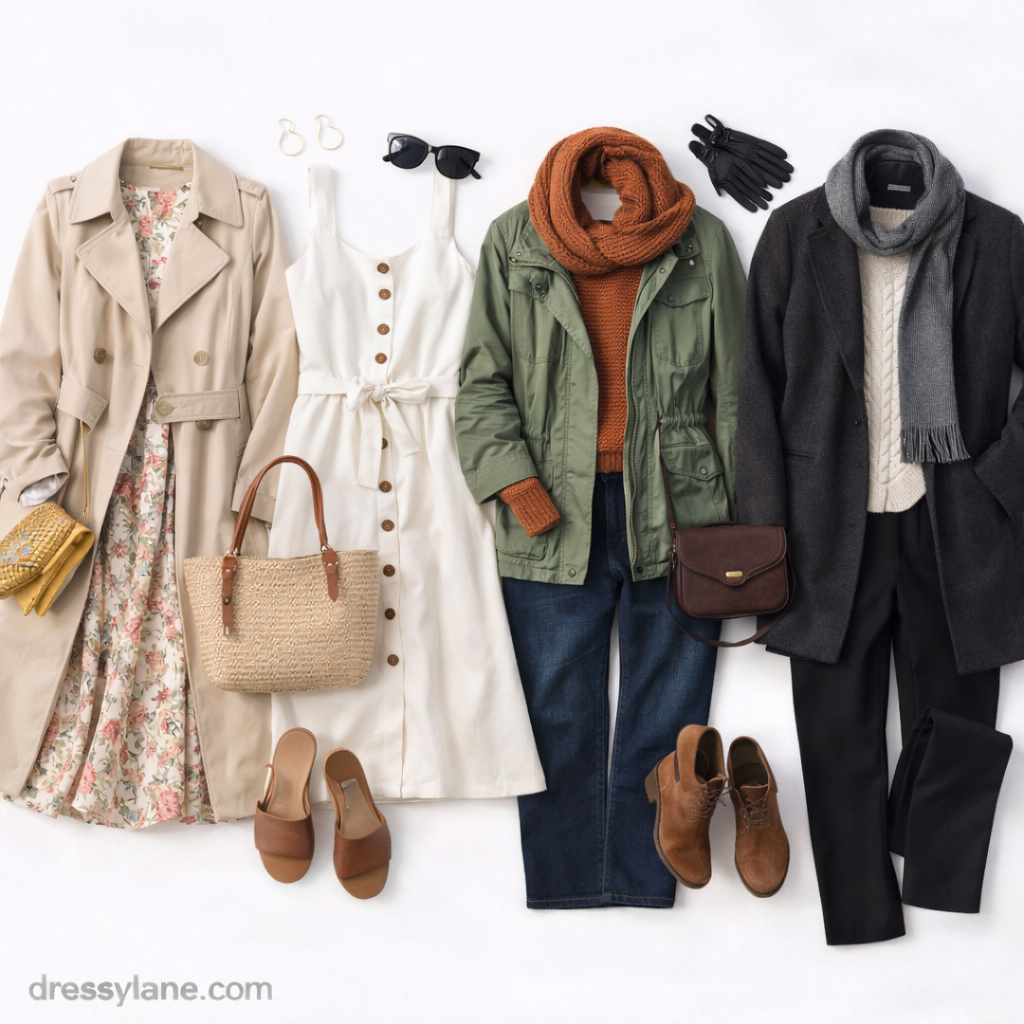
Spring weather is often unpredictable, with cool mornings and warmer afternoons.
What Women Can Wear
- Lightweight jackets or trench coats
- Midi dresses with cardigans
- Breathable blouses and ankle-length pants
- Loafers, flats, or low boots
What Men Can Wear
- Light jackets or unlined blazers
- Button-down shirts in breathable fabrics
- Chinos or lightweight trousers
- Casual leather shoes or loafers
Layering is key—choose pieces you can easily remove or add.
Summer: Staying Cool Without Sacrificing Style
Hot weather calls for airflow, moisture control, and minimal layering.
Women’s Summer Comfort
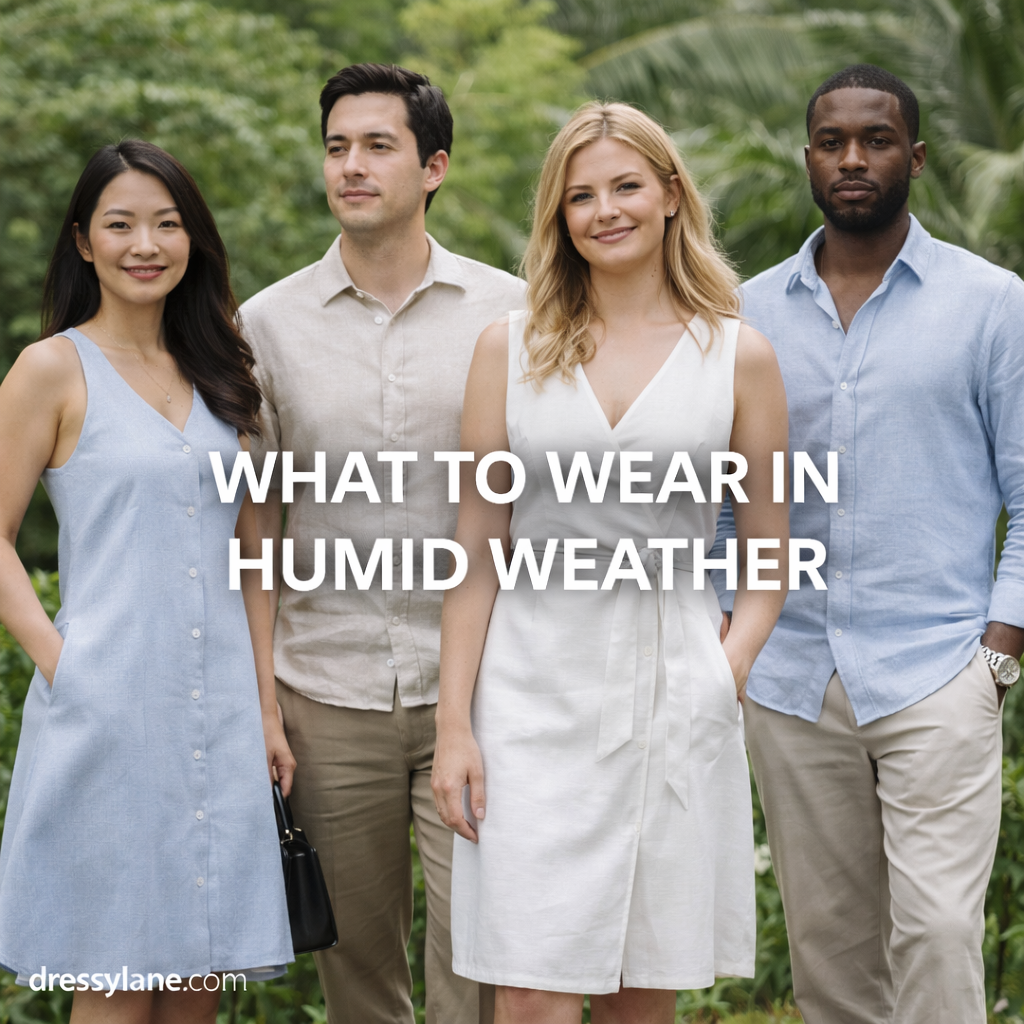
- Linen or cotton dresses
- Loose-fitting tops and skirts
- Breathable sandals or flats
- Light colors that reflect heat
Men’s Summer Comfort
- Short-sleeve button-downs or polos
- Lightweight trousers or tailored shorts
- Breathable shoes or loafers
- Natural fabrics like cotton or linen
Avoid heavy synthetics that trap heat and moisture.
Fall: Transitional Dressing Made Easy
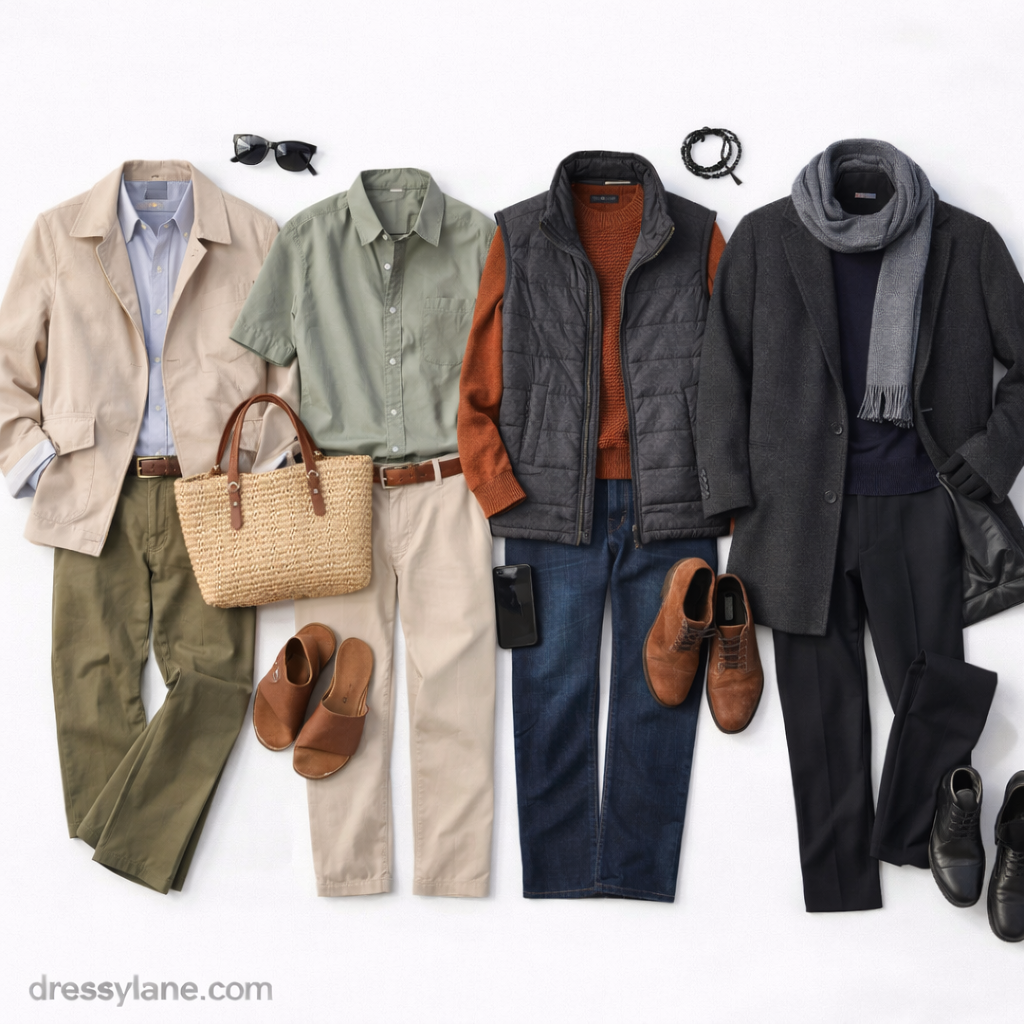
Fall brings cooler temperatures and the return of layering.
For Women
- Sweaters and lightweight knits
- Jackets, scarves, and boots
- Layered dresses with tights
- Rich, warm color palettes
For Men
- Knitwear layered over shirts
- Jackets or vests
- Darker trousers or denim
- Closed-toe shoes and boots
Fall is ideal for mixing comfort with texture and structure.
Winter: Warmth Without Bulk
Cold weather dressing should focus on insulation while maintaining mobility.
Women’s Winter Essentials
- Thermal layers under outfits
- Structured coats with insulation
- Boots with traction and warmth
- Accessories like scarves and gloves
Men’s Winter Essentials
- Insulated coats or wool overcoats
- Layered knits and thermal tops
- Warm trousers or lined pants
- Weather-appropriate footwear
Choose quality outerwear—it does most of the seasonal work.
Dressing for Indoor vs Outdoor Temperatures
Many seasonal discomforts come from temperature changes throughout the day.
Tips to manage fluctuations:
- Wear removable layers
- Choose breathable base layers
- Avoid overly heavy fabrics indoors
- Carry lightweight outerwear when needed
A well-planned outfit adapts without constant adjustments.
Building a Seasonally Comfortable Wardrobe
A thoughtful wardrobe supports comfort year-round.
Helpful strategies:
- Invest in versatile layering pieces
- Rotate fabrics by season
- Store off-season clothing properly
- Prioritize comfort when choosing staples
- Replace worn items that affect fit or warmth
Quality basics outperform trend-driven pieces when it comes to comfort.
Common Seasonal Dressing Mistakes
Avoid these frequent issues:
- Dressing for the calendar instead of the weather
- Wearing heavy fabrics in warm seasons
- Skipping layers in transitional weather
- Choosing style over comfort
- Ignoring indoor climate differences
Awareness prevents discomfort before it starts.
Final Thoughts
Dressing for seasonal comfort is about listening to your body and dressing with intention. When you understand how fabrics, layers, and fit interact with the weather, you can move through every season feeling comfortable, confident, and prepared.
A seasonally smart wardrobe makes everyday life easier—no matter the forecast.