It’s 85 degrees outside, but you’re sitting at your desk with freezing hands and wishing you’d brought a sweater. If your office runs its air conditioning aggressively, you’ve probably experienced this more than once.
Dressing for a cold office is tricky because you still have to account for the weather outside. A thick winter sweater might keep you comfortable at your desk but leave you overheating during your commute or lunch break.
The solution is to build an outfit around lightweight, insulating layers that look appropriate for work and can be removed easily.
Here’s what to wear to work in cold offices, including practical outfit ideas for women and men, fabrics that provide warmth without bulk, and a few useful pieces worth keeping at your desk.
Why Your Office Feels Cold Even in Summer
Office temperatures can vary considerably depending on where you sit.
You might be directly beneath an air-conditioning vent, near a drafty window, or in a large open-plan space where the temperature is controlled centrally.
The conference room might feel comfortable while your desk area stays cold all afternoon.
Instead of dressing for the outdoor temperature alone, think about how much time you actually spend in the coldest part of the building.
If you’re sitting at a desk for seven or eight hours, a lightweight sweater and warmer footwear may be more useful than a heavy jacket you only wear during your commute.
Start With a Base Layer That Works on Its Own
The most practical cold-office outfit begins with clothing you can comfortably wear outside the building.
For example, a cotton button-down shirt with tailored trousers is a reasonable starting point during summer.
Add a fine-gauge merino sweater or cardigan once you reach the office.
This approach lets you remove the warmer layer when you head outside without having to change your entire outfit.
I’d avoid wearing a thick thermal shirt beneath your regular work clothes during hot weather. You may feel comfortable at your desk, but the extra insulation can become uncomfortable during your commute.
Instead, keep most of your warmth in removable layers.
For particularly cold workplaces, a thin merino undershirt or camisole can provide additional insulation without adding much bulk, provided it remains comfortable outdoors.
Choose Fabrics That Provide Warmth Without Bulk
Not every sweater is suitable for an office.
Chunky cable knits can be warm, but they may feel bulky beneath a blazer and take up considerable space in your bag.
Fine-gauge merino wool is one of the most practical choices for cold offices because it provides insulation in a relatively thin layer.
Other useful fabrics include:
- Cashmere blends: Soft, lightweight insulation for cardigans and sweaters.
- Wool-blend trousers: A warmer alternative to thin summer chinos or lightweight dress pants.
- Substantial cotton knits: Comfortable for moderately cool offices, although they generally provide less warmth for their weight than wool.
- Ponte fabric: Useful for structured trousers and dresses, particularly in thicker weights.
Pay attention to fabric construction rather than assuming every garment labeled wool or cotton will feel the same.
A thin cotton cardigan may offer little protection beneath a strong air-conditioning vent, while a dense merino knit can provide more warmth without looking heavy.
What to Wear to Work in Cold Offices as a Woman
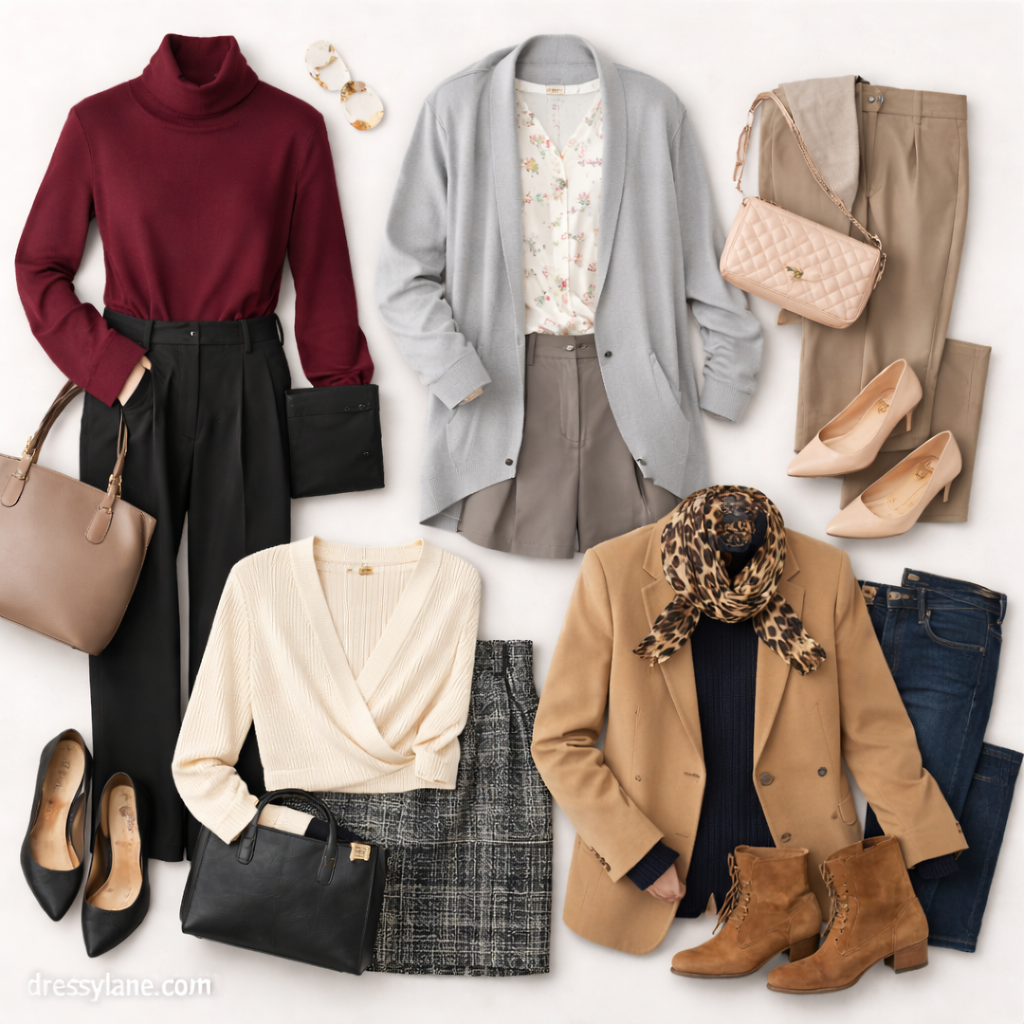
For women, the most versatile approach is to combine comfortable office basics with one or two warmer pieces that don’t make the outfit look overly layered.
A cardigan, structured jacket, or fine-knit sweater can work with trousers, dresses, and skirts.
Comfortable Cold-Office Outfit Ideas
Try these combinations:
- Charcoal wool-blend trousers, a cream blouse, a navy merino cardigan, and leather loafers.
- A long-sleeve knit midi dress with opaque tights and ankle boots.
- Straight-leg ponte trousers, a fine-gauge sweater, and a lightweight blazer.
- A midi skirt with a tucked-in knit top, tights, and closed-toe flats.
If you regularly wear sleeveless dresses during summer, keep a coordinating cardigan at your desk.
I’d choose a hip-length cardigan with a relatively close fit rather than an oversized, chunky style. It’s easier to wear over dresses and blouses without overwhelming the outfit.
Pay Attention to Your Legs and Feet
If your office has cold floors, bare ankles and thin-soled shoes can make the temperature feel particularly uncomfortable.
Closed-toe loafers, ankle boots, and flats with substantial soles are useful alternatives to sandals.
For skirts and dresses, tights can add warmth without requiring a completely different outfit.
If you prefer trousers, choose a full-length style rather than cropped pants that leave your ankles exposed.
A pair of discreet socks can also make a noticeable difference, especially when you’re sitting for long periods.
What to Wear to Work in Cold Offices as a Man

For men, layering a fine-knit sweater over a collared shirt is one of the simplest ways to stay warm without looking bundled up.
The combination works particularly well in business casual offices where a full suit isn’t required.
Comfortable Cold-Office Outfit Ideas
Consider these combinations:
- Light blue Oxford shirt, navy merino crew-neck sweater, charcoal trousers, and brown leather loafers.
- White dress shirt, fine-gauge V-neck sweater, wool-blend trousers, and Derby shoes.
- Cotton chinos, a knit polo, an unstructured wool blazer, and leather shoes.
- Tailored trousers, a lightweight cardigan, and a button-down shirt.
If you wear a blazer regularly, choose one with enough room to accommodate a thin sweater without pulling across the shoulders.
A lightweight wool jacket can provide more insulation than an unlined cotton blazer, depending on its construction.
Don’t Forget Your Socks
Thin no-show socks may work well during summer, but they aren’t particularly useful when your office feels cold.
Switch to crew-length socks in a cotton-wool blend or lightweight merino wool.
They provide additional coverage without requiring heavier footwear.
I’d also avoid relying on a thick hoodie beneath a blazer unless your workplace is very casual. A fine-gauge sweater provides a cleaner silhouette and is generally easier to wear in meetings.
The Best Layer to Keep at Your Desk
If your office is consistently cold, keeping one dedicated layer at work is more convenient than carrying it home every evening.
My first choice would be a neutral merino cardigan.
It works over a dress shirt, blouse, knit top, or simple dress, and you can put it on without disturbing the rest of your outfit.
Choose navy, charcoal, camel, or another color that coordinates with most of your wardrobe.
If your workplace is more formal, a structured wool-blend blazer may be a better option.
For casual offices, a fine-knit zip cardigan or lightweight sweater can work just as well.
I’d skip keeping a bulky winter coat at your desk. It’s awkward to wear while sitting, can restrict your arms, and usually looks out of place indoors.
A dedicated office sweater is much more practical.
Small Accessories That Help in Cold Offices
Sometimes an additional sweater isn’t enough, particularly if your hands or feet get cold while sitting.
A few small accessories can make your desk area more comfortable.
A lightweight wool scarf can provide warmth around your neck without requiring another jacket.
Warm socks are useful if your office has cold flooring, while a thin lap blanket may be appropriate if your workplace permits one.
If you use fingerless gloves for desk work, choose a thin knit that doesn’t interfere with typing.
It’s also worth checking whether an air-conditioning vent can be adjusted or whether facilities staff can address an unusually cold workstation. You shouldn’t have to rely entirely on clothing if the temperature is consistently uncomfortable.
Common Cold-Office Dressing Mistakes
The biggest mistake is dressing exclusively for the office and forgetting about the temperature outside.
A few other problems are worth avoiding:
- Wearing a thick sweater during a hot commute: Carry a removable layer instead.
- Choosing bulky clothing: Fine-gauge knits are easier to wear beneath blazers and jackets.
- Ignoring footwear: Bare ankles and thin shoes can leave you feeling cold even when your upper body is warm.
- Relying on a winter coat indoors: A cardigan or lightweight wool jacket is usually more comfortable for desk work.
- Wearing too many tight layers: Make sure your shirt, sweater, and jacket allow you to move comfortably.
Before leaving home, consider whether your outfit will still work when you remove the warmest layer.
That simple check can prevent you from overheating outdoors or feeling awkwardly dressed when you step away from your desk.
Final Thoughts
Knowing what to wear to work in cold offices is mostly about choosing the right layers rather than wearing heavier clothing everywhere.
Start with an outfit appropriate for the outdoor weather, then add a fine-gauge sweater, cardigan, or wool-blend blazer once you’re inside.
Pay attention to trousers, socks, and footwear as well. Keeping your legs and feet covered can be just as important as adding another layer over your shirt.
If your office is consistently chilly, leave one versatile sweater at your desk so you’re always prepared.
The goal is to stay comfortable through the workday without having to choose between freezing at your desk and overheating the moment you step outside.