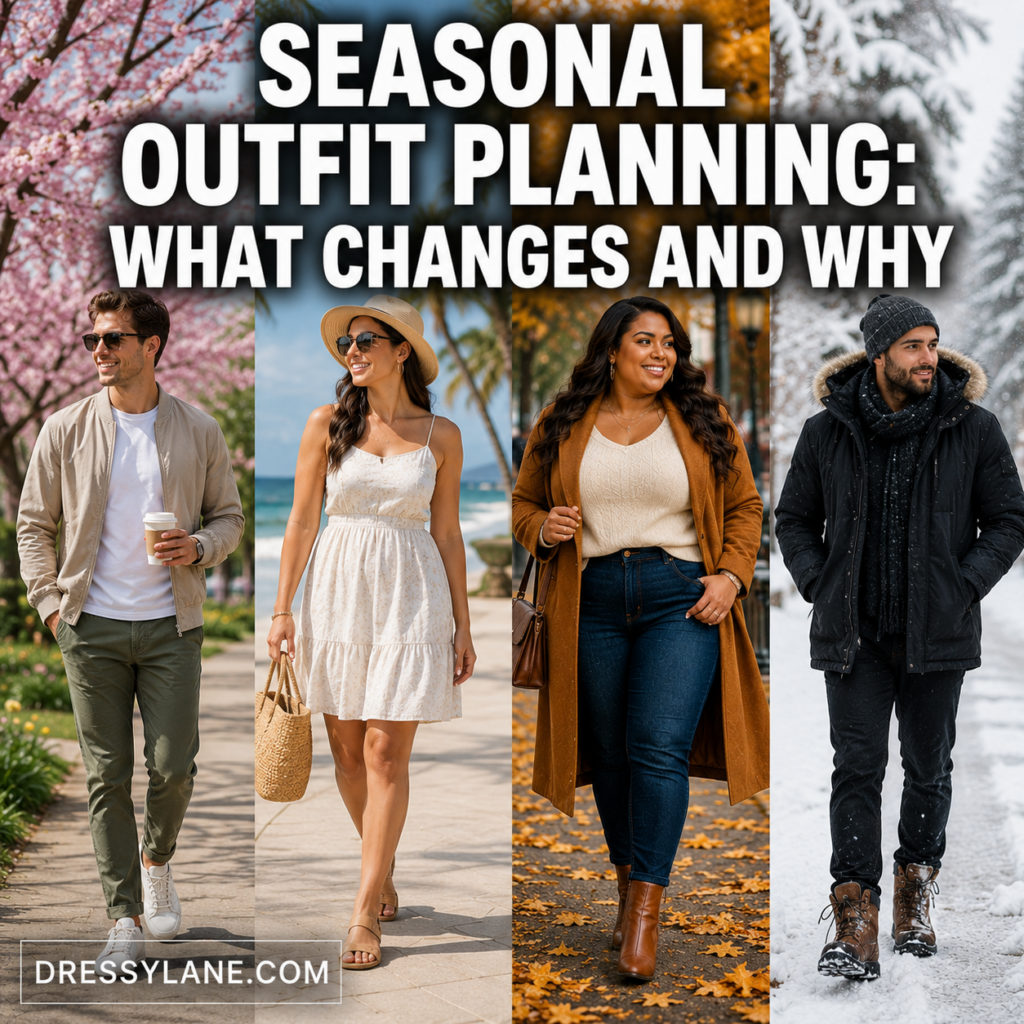
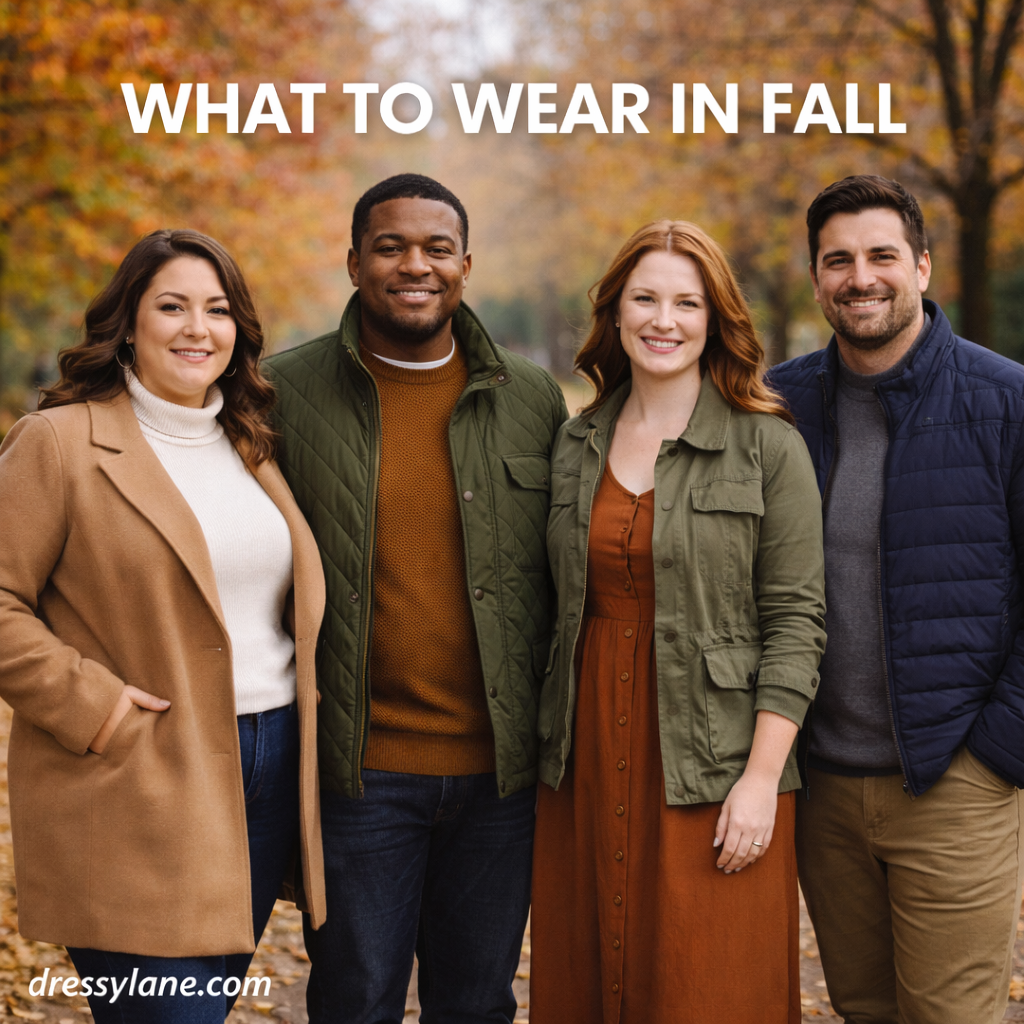
Fall is less about suddenly switching wardrobes and more about gradually changing the weight and texture of what you wear. Early in the season, a T-shirt with jeans and a light jacket may be enough. Several weeks later, the same jeans might be paired with a merino sweater, boots, and a wool coat.
That’s what makes fall relatively easy to dress for: layers can do most of the work.
The challenge is temperature variation. A 50°F morning can turn into a 70°F afternoon, and a sunny day can become surprisingly cold once the sun goes down. The best fall clothes give you enough warmth when you need it without leaving you stuck in a heavy outfit for the rest of the day.
Start With an Outfit That Works Without the Jacket
One of the most useful fall dressing habits is building the outfit from the inside out.
Your shirt, sweater, pants, and shoes should make sense together before you add outerwear.
For example:
White T-shirt + straight-leg jeans + leather sneakers + olive field jacket
works because you can remove the jacket during a warm afternoon.
The same applies to:
Oxford shirt + chinos + loafers + lightweight wool jacket.
I’d avoid making the coat or jacket responsible for the entire outfit. If removing it leaves you with a base layer you wouldn’t actually want to wear by itself, the outfit becomes inconvenient as soon as the temperature changes.
Use Medium-Weight Fabrics Before Reaching for Winter Clothes
Early fall rarely requires your heaviest sweaters and coats.
This is when medium-weight fabrics become particularly useful:
- Cotton twill
- Denim
- Fine-gauge merino
- Corduroy
- Brushed cotton
- Lightweight wool
- Suede
- Cotton knitwear
These materials add more warmth and texture than typical summer fabrics without immediately pushing the outfit into winter territory.
A merino crewneck, for example, fits easily underneath a jacket. A chunky cable-knit sweater may look appropriately autumnal, but it can become uncomfortable when the afternoon warms up.
I generally save the really heavy knitwear until I can wear it for most of the day without regretting it.
What Women Can Wear in Fall
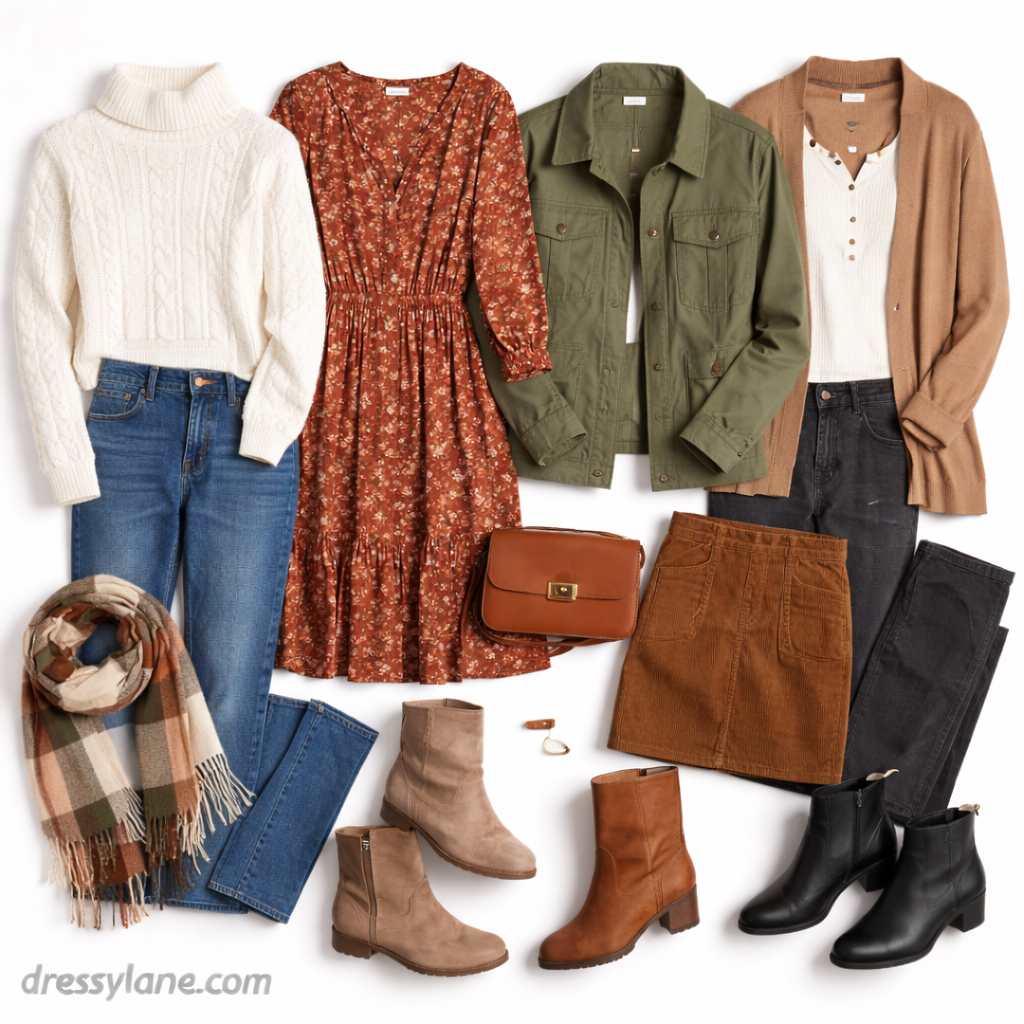
For women, fall is a good time to keep summer dresses and skirts in rotation rather than immediately replacing them.
A cotton or jersey midi dress can be worn with ankle boots and a denim jacket in early fall. Later, add tights and replace the denim jacket with a cardigan or wool coat.
For everyday outfits, try:
- Straight-leg jeans + fine-gauge sweater + ankle boots
- Midi skirt + fitted knit + loafers
- Wide-leg trousers + tucked button-down + blazer
- Midi dress + cropped jacket + boots
- Dark jeans + T-shirt + cardigan + leather sneakers
Pay attention to proportions when layering.
If you’re wearing wide-leg trousers or a full midi skirt, a more fitted sweater or shorter jacket often creates a cleaner shape. With straight-leg jeans or narrow trousers, there’s more room for a relaxed sweater or oversized button-down.
I’d also skip stacking every fall piece into the same outfit. You don’t need a sweater, blazer, scarf, and trench simply because all four are technically appropriate for autumn.
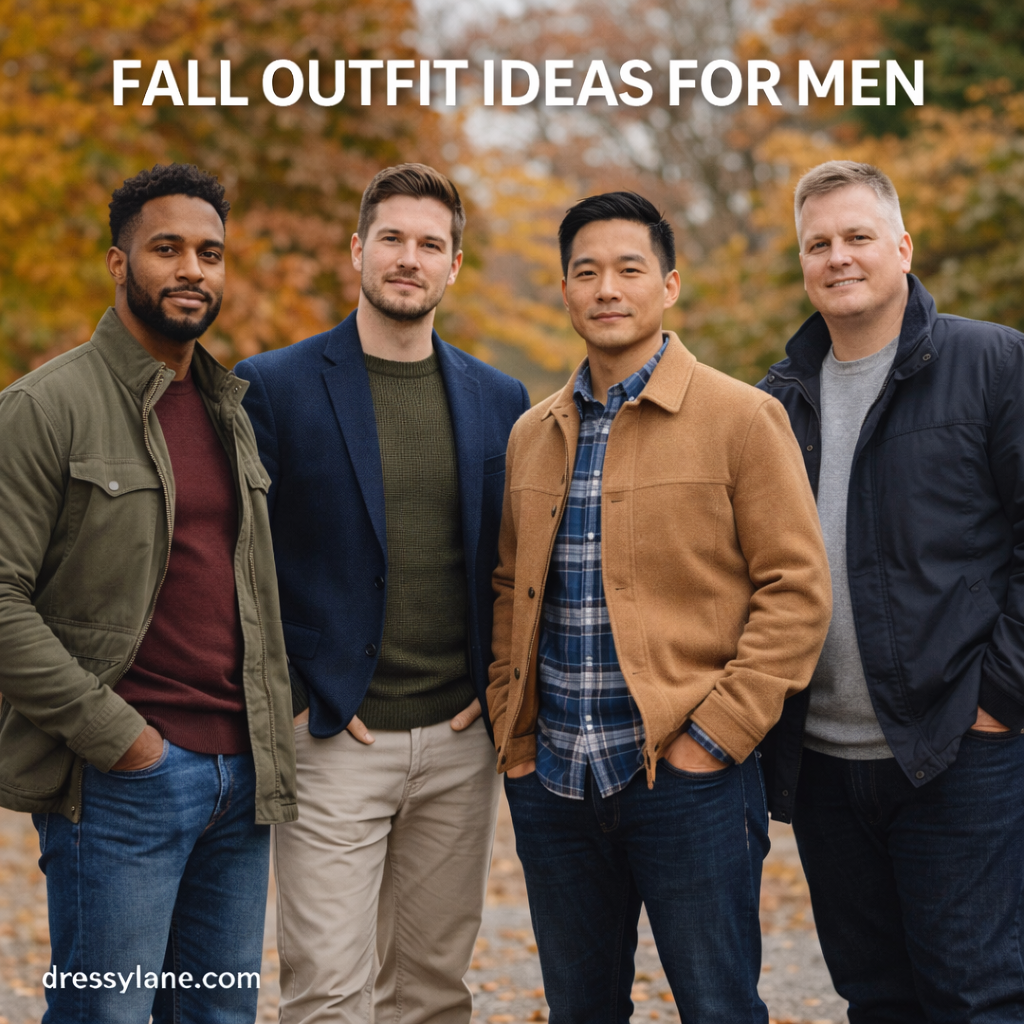
What Men Can Wear in Fall
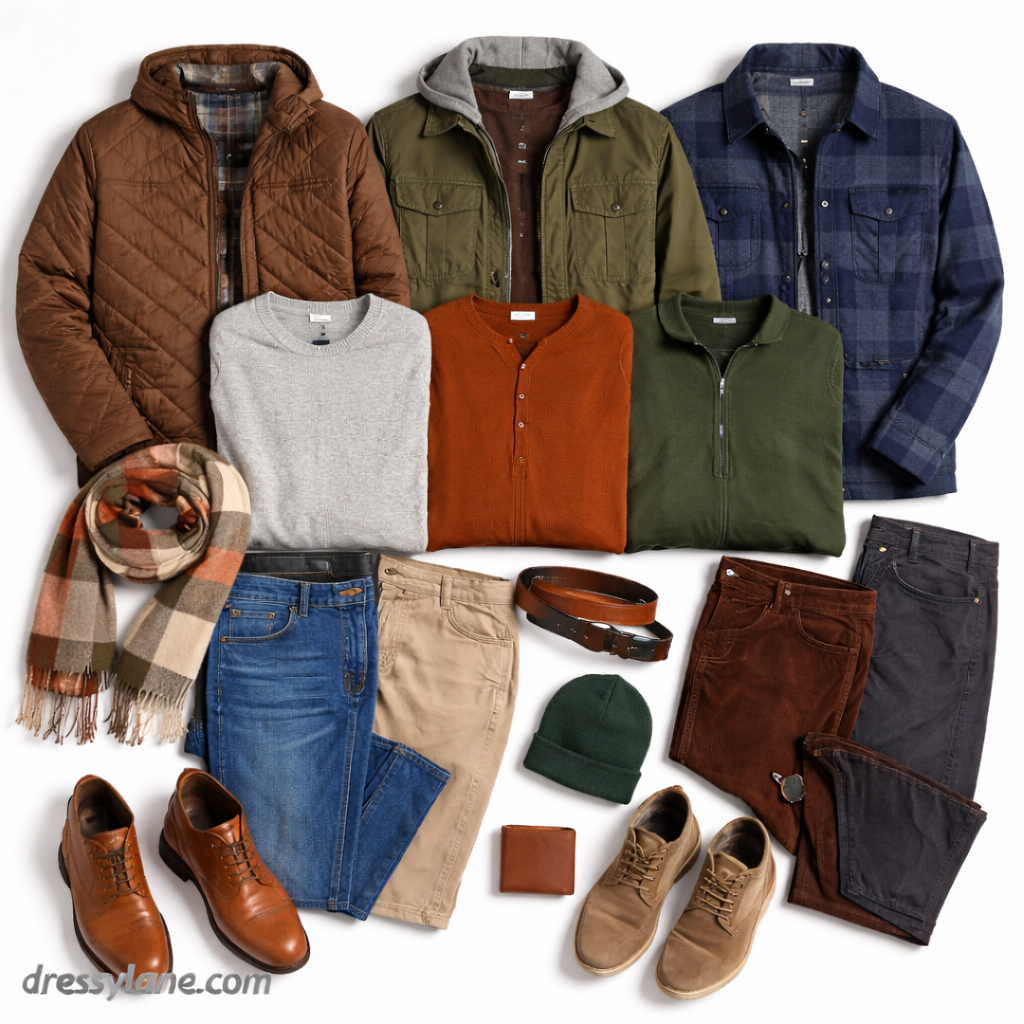
Men can get a lot of mileage from an overshirt during fall.
A cotton-twill, corduroy, brushed-cotton, or lightweight wool overshirt works over a T-shirt early in the season and underneath a heavier jacket later.
Try:
- T-shirt + dark jeans + overshirt + sneakers
- Oxford shirt + chinos + merino sweater + loafers
- Crewneck sweater + wool trousers + Chelsea boots
- Polo + field jacket + chinos + leather sneakers
- Button-down + textured blazer + tailored trousers + Derby shoes
For casual outfits, dark indigo denim and medium-weight chinos are particularly useful because they work with sneakers, loafers, and boots.
A fine-gauge crewneck also gives you more flexibility than an extremely thick sweater. It can be worn alone, over a shirt, or underneath a jacket without making the sleeves feel cramped.
Fall Outerwear Should Match the Actual Temperature
There’s usually a point every fall when people start wearing winter coats simply because the calendar says it’s autumn.
I’d wait.
For mild and moderately cool weather, a denim jacket, bomber, trench, field jacket, overshirt, or unlined wool jacket usually provides enough coverage.
As temperatures drop, move into heavier wool coats, insulated jackets, and other winter outerwear.
Whatever jacket you choose, try it on over your typical fall sweater. A jacket that fits beautifully over a T-shirt but becomes tight across the shoulders when you add knitwear isn’t going to be particularly useful.
You Don’t Need an Entirely “Fall” Color Palette
Burgundy, rust, olive, camel, forest green, chocolate brown, navy, and charcoal all work naturally in fall.
But there’s no reason to abandon the colors you normally wear.
A black-and-white outfit can feel completely appropriate for autumn when you introduce wool, leather, denim, or suede. Likewise, blue jeans and a white shirt become more seasonal when paired with a brown corduroy jacket.
I prefer using one fall color or texture at a time rather than dressing head to toe in brown, rust, mustard, and olive.
For example:
Navy trousers + cream sweater + brown suede loafers
already has plenty of autumn character without relying on obvious seasonal colors.
Shoes Make a Bigger Difference Than You Might Expect
Early fall doesn’t require boots every day.
Loafers, leather sneakers, flats, and casual dress shoes can continue working while conditions remain mild and dry.
As temperatures fall, ankle boots, Chelsea boots, knee-high boots, and sturdier lace-up styles become more practical.
Check the outsole as well as the upper material. Wet leaves and rainy sidewalks make traction increasingly important.
Suede looks particularly good with fall fabrics, but smooth leather is usually easier to manage during wet weather.
If you’re going to be walking a lot, I’d choose based on conditions first and the outfit second. Cold, wet feet can ruin an otherwise perfectly good fall outfit.
Don’t Forget About Wind and Rain
Temperature isn’t the only thing that changes in fall.
A windy 58°F day can feel considerably colder than a calm one, particularly if you’re wearing an open-knit sweater that lets air pass straight through.
A tightly woven jacket or lightweight shell can sometimes provide more practical warmth than adding another sweater.
For rainy days, a trench, water-resistant field jacket, or simple rain shell can be more useful than a thick wool coat.
Scarves also become helpful as temperatures drop, but they don’t need to be enormous. A medium-weight wool or cashmere-blend scarf tucked inside a coat can block cold air around the neck without overwhelming the rest of the outfit.
Transition Gradually as Fall Gets Colder
What you wear in September shouldn’t necessarily be what you wear in November.
Think of fall dressing as a progression.
Early fall: T-shirts, button-downs, lightweight trousers, jeans, loafers, sneakers, and light jackets.
Mid-fall: Fine-gauge sweaters, corduroy, denim, overshirts, ankle boots, blazers, and medium-weight jackets.
Late fall: Heavier knitwear, wool trousers, tights, boots, scarves, and warmer coats.
The exact timing depends on your climate rather than the calendar.
That’s why I wouldn’t pack away every summer piece or unpack every winter piece on the first official day of fall. Keeping both ends of your wardrobe accessible for a few weeks makes changing weather much easier to handle.
Final Thoughts
Knowing what to wear in fall is mostly about managing changing temperatures.
Start with outfits that work on their own, then add a removable jacket, sweater, or coat as needed. Bring in medium-weight fabrics such as denim, cotton twill, merino wool, corduroy, and suede before reaching for your heaviest winter clothes.
Women can extend dresses and skirts with knitwear, tights, jackets, and boots, while men can build around overshirts, Oxford shirts, sweaters, chinos, and textured outerwear.
And don’t feel obligated to look like an autumn color chart. Often, one textured layer, a pair of boots, or a richer neutral is enough to make clothes you already own work naturally for the season.
The best fall wardrobe isn’t the one with the most layers. It’s the one that lets you add or remove them without having to rethink the entire outfit.