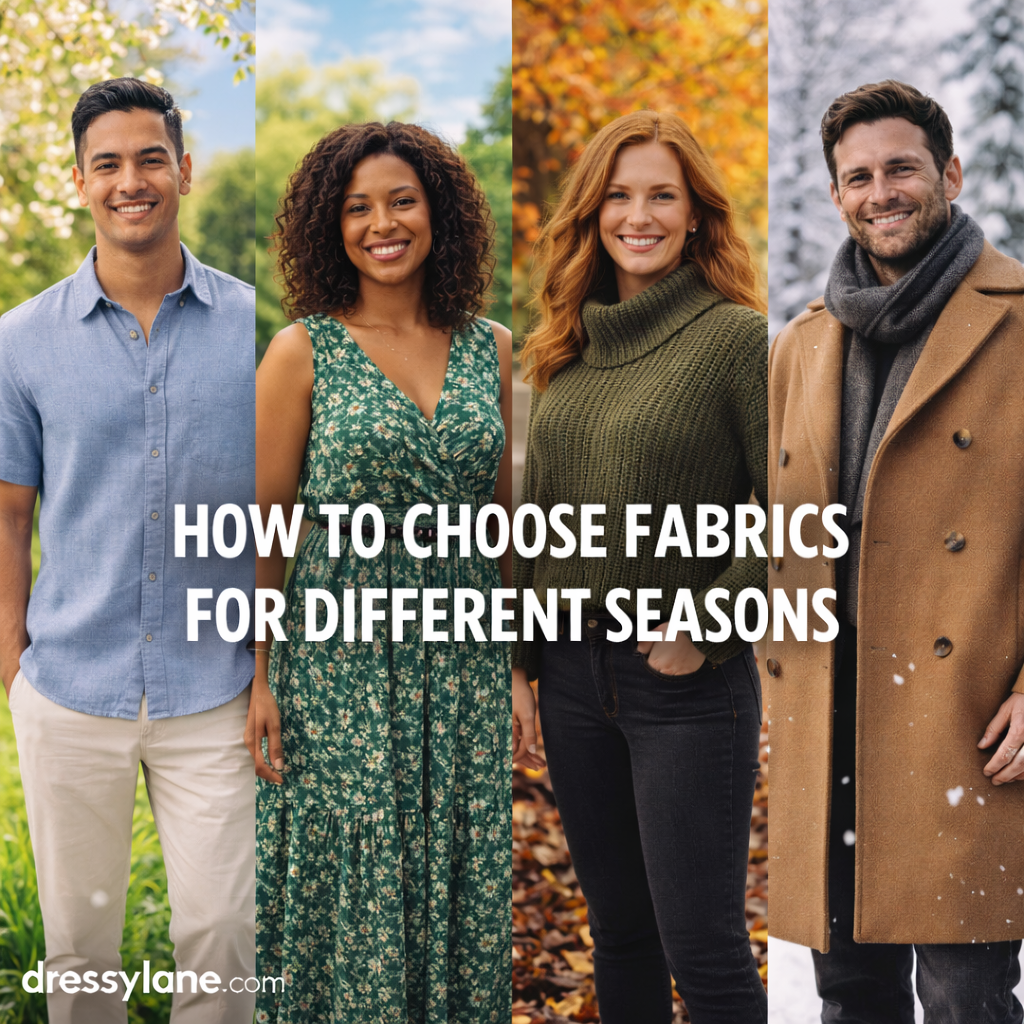
Choosing the right fabric can make or break an outfit—especially when the weather changes. The same cut or style can feel comfortable and polished in one season, then unbearable in another, simply because of fabric choice. Understanding how different materials behave in heat, cold, humidity, and transitional weather helps you dress smarter, feel better, and extend the life of your wardrobe.
This guide breaks down the best fabrics for each season and explains how both women and men can choose materials that work with the weather—not against it.
Why Fabric Choice Matters More Than You Think
Fabric affects:
- Breathability and airflow
- Temperature regulation
- Moisture absorption
- Comfort over long wear
- How polished or casual an outfit looks
Season-appropriate fabrics help you stay comfortable while maintaining a clean, intentional appearance.
Best Fabrics for Warm Weather (Spring and Summer)
Warm-weather dressing is all about breathability, lightness, and moisture control.
Top Fabrics for Hot or Humid Conditions
The most reliable warm-weather fabrics include:
- Cotton
- Linen
- Rayon
- Tencel (Lyocell)
- Chambray
These fabrics allow air to circulate and help prevent overheating.
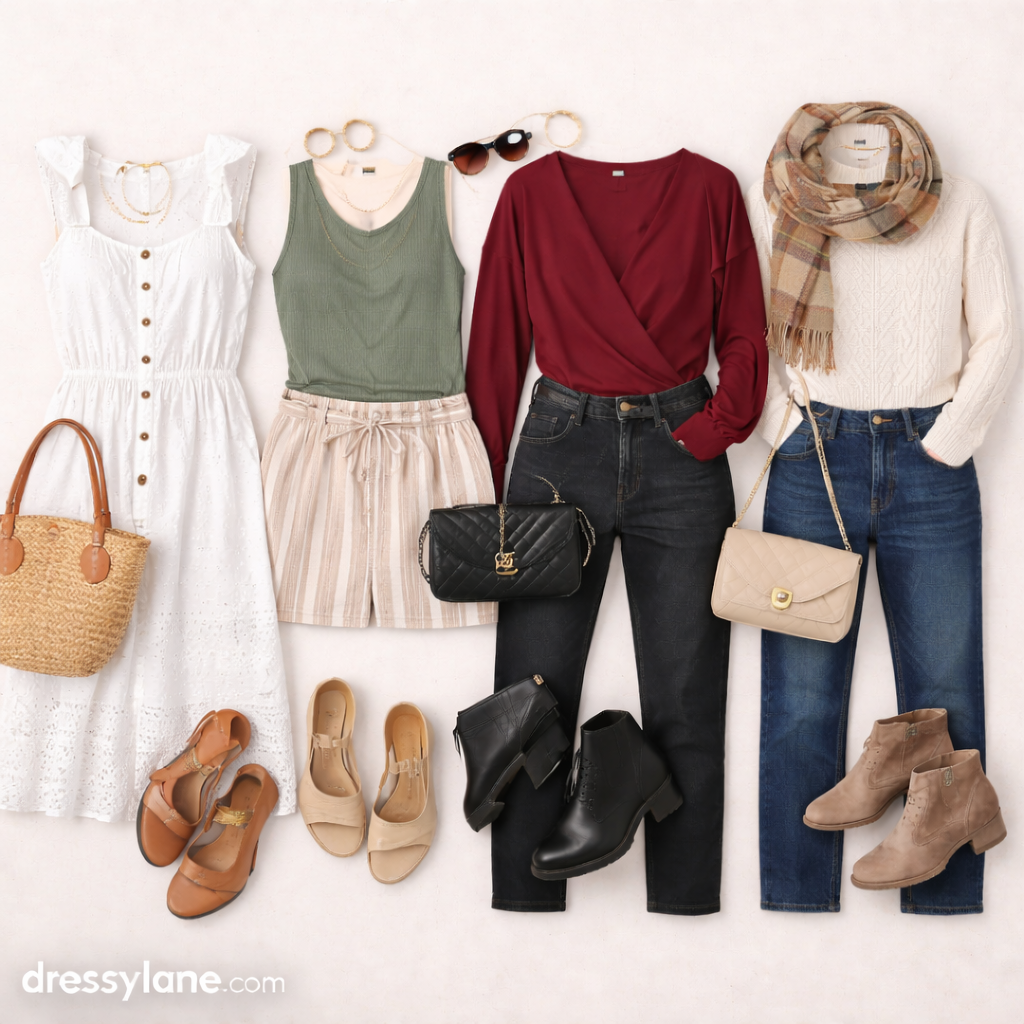
What Women Should Look For in Warm Weather Fabrics
Women’s warm-weather outfits benefit from fabrics that drape well without clinging.
Best choices include:
- Lightweight cotton dresses and blouses
- Linen pants, skirts, and relaxed blazers
- Rayon or Tencel tops that feel soft and cool
- Cotton-poplin shirts for structure without heaviness
Avoid:
- Thick polyester
- Heavy denim
- Tight synthetic blends that trap heat
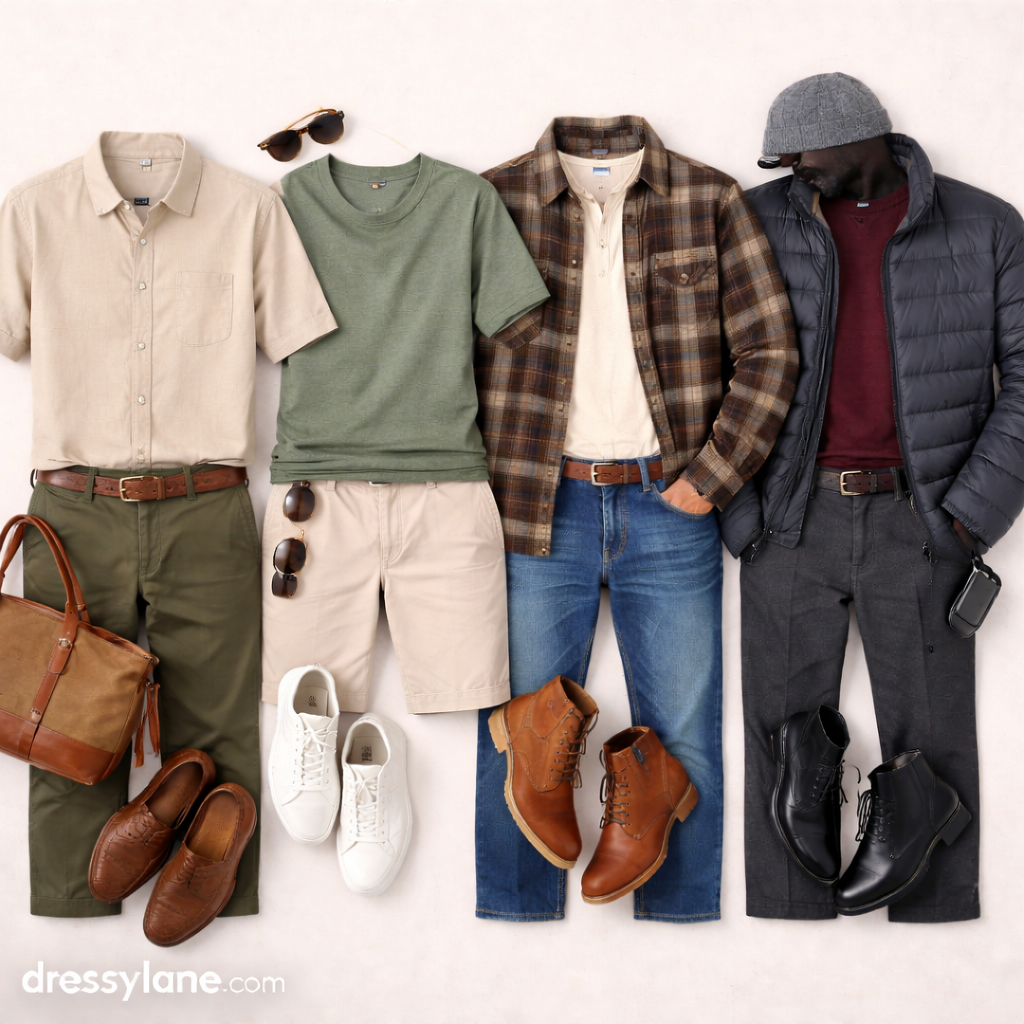
What Men Should Look For in Warm Weather Fabrics
Men should focus on breathable fabrics that still hold shape.
Good options include:
- Cotton button-downs
- Linen or cotton-linen blend shirts
- Lightweight chinos
- Summer-weight wool for dressier occasions
Avoid:
- Thick synthetics
- Heavy twill fabrics
- Non-breathable blends in hot weather
Best Fabrics for Cool Weather (Fall)
Fall calls for fabrics that provide warmth without feeling bulky.
Ideal Fabrics for Transitional Weather
Look for:
- Cotton twill
- Lightweight wool
- Flannel
- Corduroy
- Denim
These materials provide insulation while remaining breathable.
Fall Fabric Tips for Women
Women can layer effectively using medium-weight fabrics.
Good choices include:
- Knit tops and dresses
- Wool-blend skirts or trousers
- Soft flannel shirts
- Light sweaters made from merino wool
Layering allows flexibility as temperatures fluctuate throughout the day.
Fall Fabric Tips for Men
Men benefit from fabrics that layer well and maintain structure.
Best options include:
- Flannel shirts
- Wool-blend sweaters
- Denim or twill pants
- Lightweight jackets with lining
Fall is an ideal time to experiment with texture while staying comfortable.
Best Fabrics for Cold Weather (Winter)
Winter fabrics should prioritize insulation, heat retention, and layering ability.
Warmest Fabrics for Cold Conditions
The most effective cold-weather fabrics include:
- Wool
- Cashmere
- Fleece
- Heavy knits
- Down or insulated linings
These materials trap warmth while allowing moisture to escape.
Winter Fabric Choices for Women
Women’s winter outfits work best with a layered approach.
Recommended fabrics:
- Wool coats and trousers
- Cashmere or wool sweaters
- Thermal cotton base layers
- Knit dresses paired with tights
Avoid relying on thin synthetics that provide little warmth on their own.
Winter Fabric Choices for Men
Men should focus on insulation and durability.
Best winter fabrics include:
- Wool suits and coats
- Heavy flannel shirts
- Knit sweaters
- Thermal undershirts for layering
Quality winter fabrics reduce the need for excessive layering.
Best Fabrics for Transitional Seasons (Spring and Early Fall)
Transitional seasons require adaptable fabrics that can handle temperature swings.
Smart Fabric Choices for Unpredictable Weather
Look for:
- Cotton blends
- Lightweight knits
- Merino wool
- Layer-friendly fabrics
These materials help regulate temperature without adding bulk.
Fabrics to Be Careful With Year-Round
Some fabrics require extra consideration depending on climate and use.
Be cautious with:
- Polyester (can trap heat and odor)
- Acrylic (often lacks breathability)
- Thick synthetics in warm weather
Blends can work well, but natural fibers usually perform better across seasons.
How to Read Fabric Labels Before Buying
Always check fabric content tags when shopping.
Look for:
- Percentage of natural vs synthetic fibers
- Fabric weight or weave
- Care instructions that fit your lifestyle
Understanding labels helps you avoid uncomfortable purchases.
Common Fabric Mistakes to Avoid
Even stylish outfits can fail if the fabric is wrong for the season.
Avoid:
- Choosing style over comfort
- Wearing heavy fabrics in warm weather
- Ignoring breathability
- Assuming all natural fibers feel the same
Comfort is the foundation of good style.
Final Thoughts
Choosing the right fabric for each season is one of the simplest ways to improve how you dress and feel year-round. By prioritizing breathability in warm months, insulation in colder seasons, and adaptable fabrics during transitions, you create a wardrobe that works with your environment—not against it.
When fabric choice becomes intentional, getting dressed becomes easier, more comfortable, and far more effective.