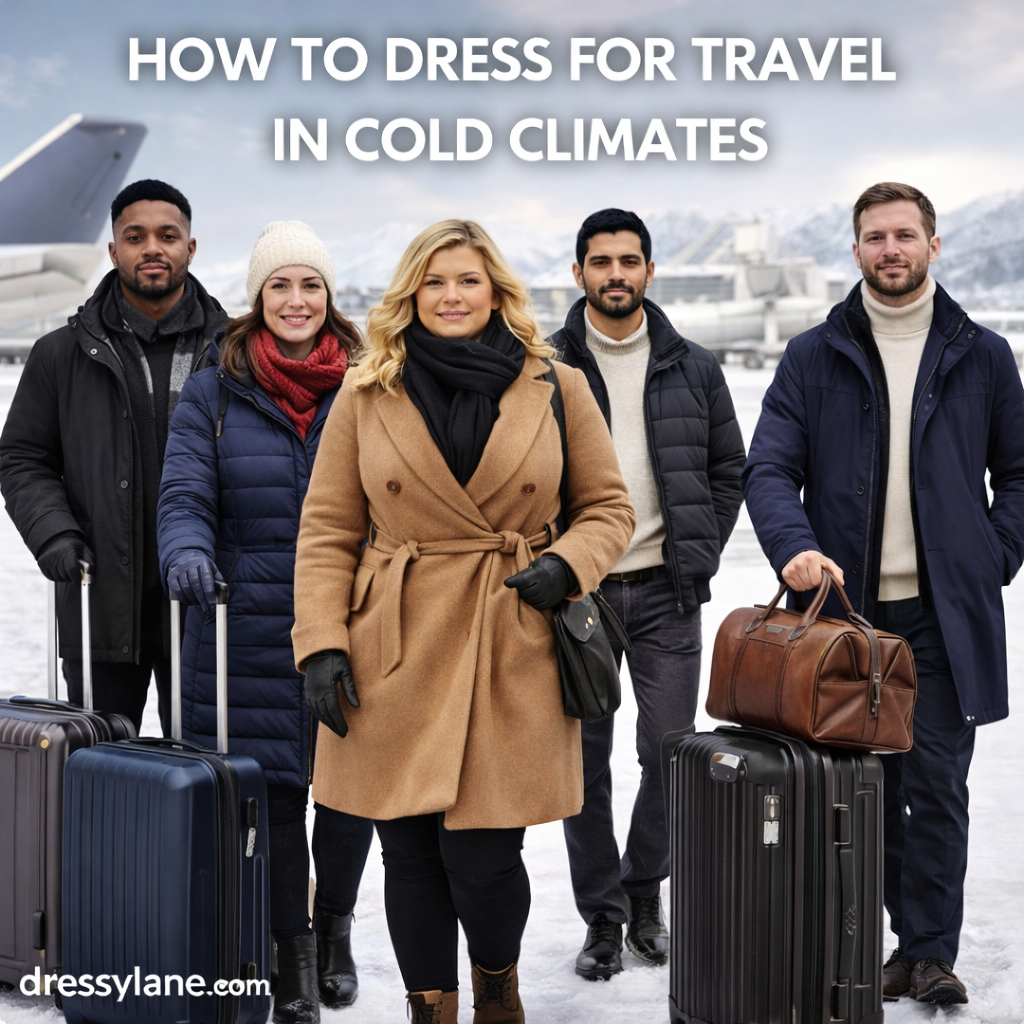
Traveling to cold climates can be exciting, but dressing for freezing temperatures, wind, snow, and long days outdoors requires thoughtful planning. The right clothing keeps you warm, comfortable, and mobile without feeling weighed down by bulky layers.
This guide explains how to dress for travel in cold climates with practical layering strategies, fabric recommendations, and outfit ideas for both men and women—so you can focus on the experience, not the cold.
Why Cold-Climate Travel Requires Special Planning
Cold-weather travel often involves more exposure than everyday winter life. You may spend hours walking outdoors, moving between heated and unheated spaces, or dealing with unpredictable weather.
Common challenges include:
- Staying warm during long outdoor periods
- Managing layers when moving indoors
- Avoiding bulky or restrictive outfits
- Packing efficiently for cold conditions
A strategic approach to layering solves most of these problems.
Core Principles for Dressing in Cold Climates
Before choosing specific outfits, these foundational rules apply to most cold destinations.
Layering Is Essential
Layering traps heat and allows flexibility as temperatures change.
An effective layering system includes:
- A base layer for warmth and moisture control
- A mid-layer for insulation
- An outer layer for wind and weather protection
Avoid relying on one thick layer alone.
Choose High-Performance Fabrics
Fabric choice makes a huge difference in cold climates.
Best fabric options include:
- Merino wool
- Thermal blends
- Down or modern synthetic insulation
- Fleece for insulation
Avoid heavy cotton, which holds moisture and loses warmth.
Prioritize Fit and Mobility
Clothes should allow movement while maintaining warmth.
Look for:
- Slim but comfortable base layers
- Insulating mid-layers that aren’t bulky
- Outerwear that accommodates layers without restricting movement
How Men Should Dress for Travel in Cold Climates
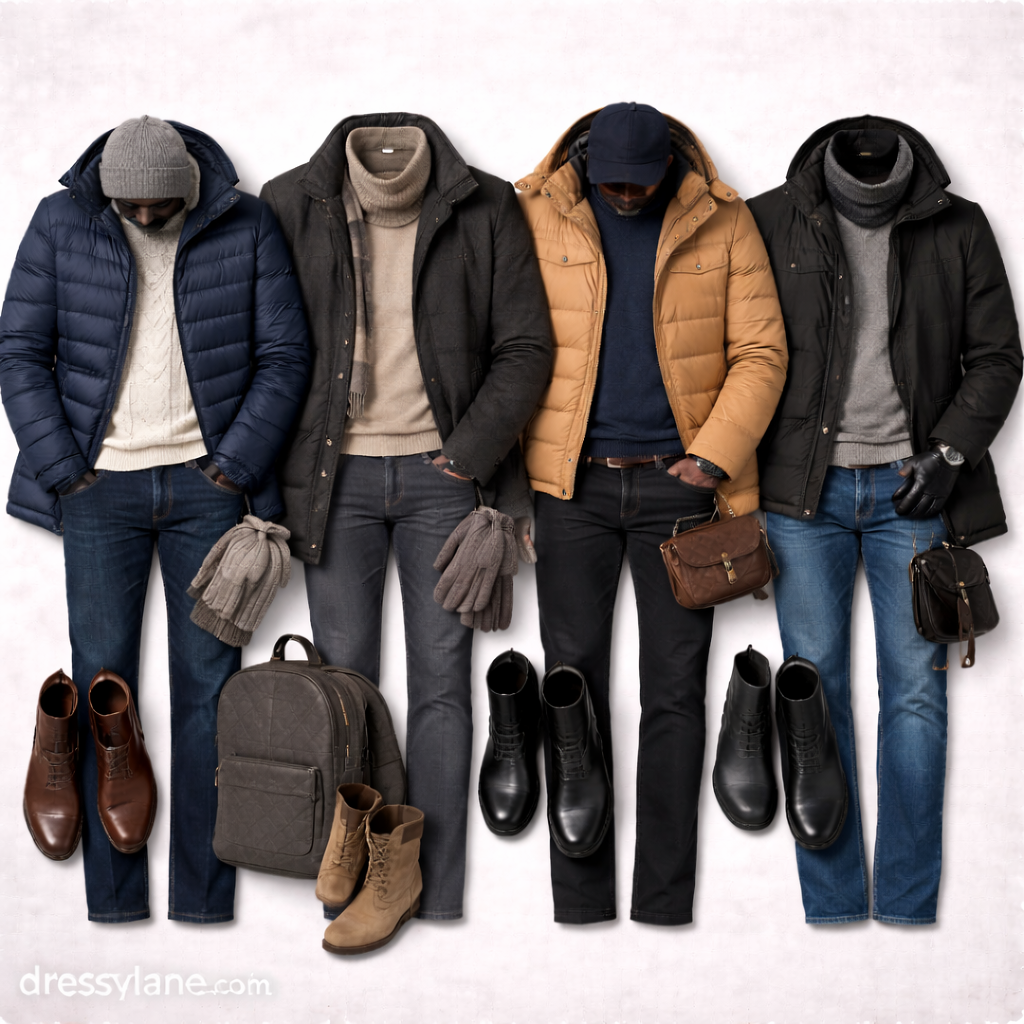
Men’s cold-weather travel outfits should balance insulation, mobility, and versatility.
Base Layers
- Thermal tops and bottoms
- Merino wool or moisture-wicking fabrics
These layers should fit close to the body.
Mid-Layers
- Lightweight sweaters
- Fleece jackets
- Quilted vests
Vests add warmth without restricting arm movement.
Outerwear
- Insulated jackets or parkas
- Waterproof and wind-resistant shells
- Coats designed for extended outdoor wear
Choose outerwear suitable for the coldest expected conditions.
Bottoms
- Lined trousers
- Thermal leggings under pants for extreme cold
Footwear and Accessories
- Insulated, waterproof boots
- Warm socks
- Gloves, scarves, and hats
Accessories play a major role in heat retention.
How Women Should Dress for Travel in Cold Climates
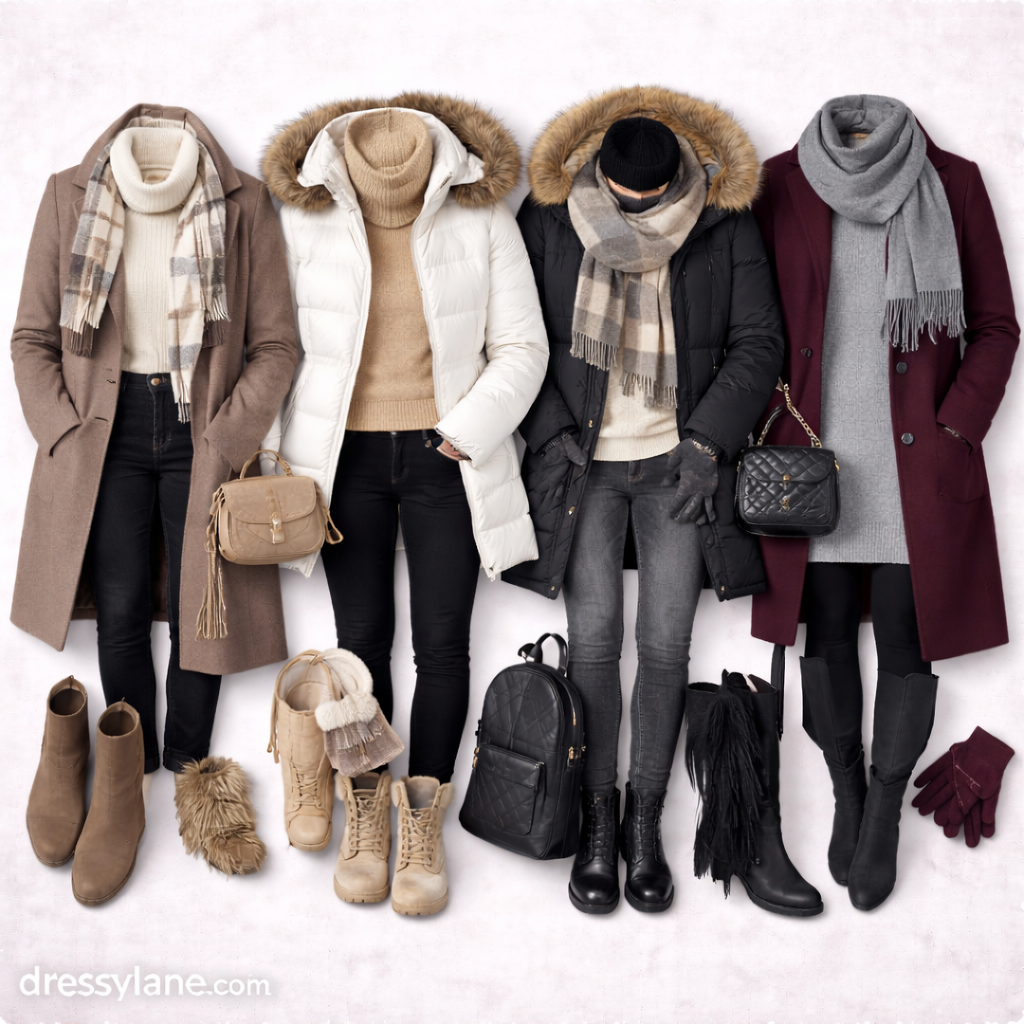
Women can stay warm while maintaining comfort and flexibility with smart layering.
Base Layers
- Thermal tops and leggings
- Moisture-wicking fabrics for warmth and dryness
Mid-Layers
- Lightweight sweaters
- Fleece or insulated jackets
- Soft knits that layer easily
Outerwear
- Structured coats with insulation
- Lightweight puffers for travel days
- Weather-resistant outer layers
Bottoms
- Fleece-lined leggings
- Wool pants
- Jeans with thermal layers underneath
Footwear and Accessories
- Insulated boots with traction
- Thick but breathable socks
- Scarves, gloves, and hats
Dressing for Airplanes and Transit
Travel days often involve temperature swings.
For planes and trains:
- Wear removable layers
- Choose comfortable fabrics
- Avoid overly bulky outerwear that’s hard to stow
A lightweight jacket or mid-layer works well during transit.
Packing Tips for Cold-Climate Travel
Packing smart keeps luggage manageable.
Helpful tips:
- Pack layers instead of bulky items
- Stick to a neutral color palette
- Choose versatile pieces
- Wear heavier items during transit
- Use compression packing techniques
Fewer, better pieces create more outfit options.
Common Mistakes to Avoid
Cold-weather travel outfits can fail without planning.
Avoid:
- Underestimating cold temperatures
- Overpacking bulky layers
- Wearing cotton as a base layer
- Forgetting accessories
- Wearing untested footwear
Testing outfits before traveling prevents discomfort.
Final Thoughts
Dressing for travel in cold climates is about preparation, not excess. By layering strategically, choosing high-performance fabrics, and packing versatile pieces, you can stay warm, comfortable, and mobile throughout your trip.
The right cold-weather outfits support your travel experience—allowing you to explore, relax, and enjoy the destination without distraction.