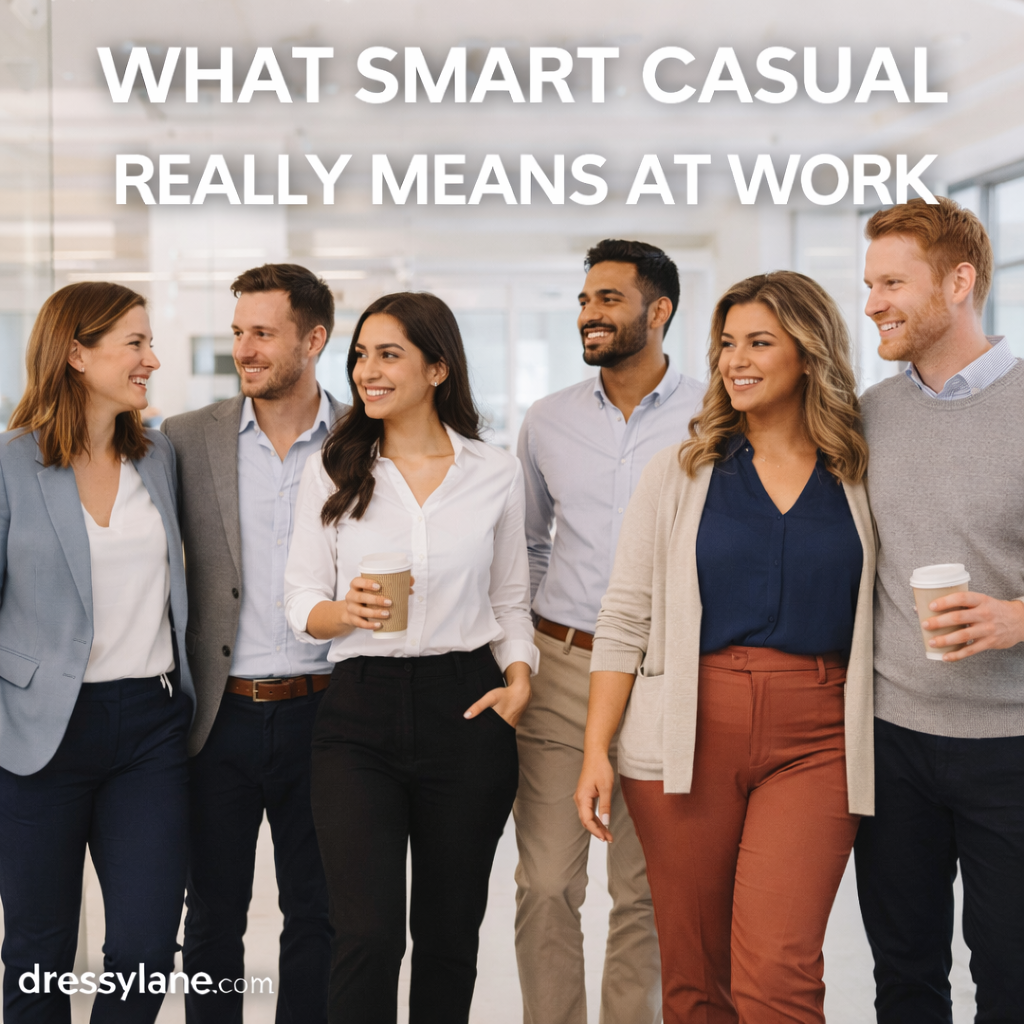
When an office dress code says smart casual, it usually means you can leave the matching suit at home without dressing as though it’s the weekend. Think navy chinos with a textured knit polo and suede loafers, or dark straight-leg jeans with a fine-gauge sweater and an unstructured blazer.
The tricky part is knowing how relaxed you can go. Some workplaces welcome sneakers and denim, while others expect tailored trousers and leather shoes even when they describe their dress code as smart casual.
Here’s how to interpret smart casual at work, choose the right pieces, and put together outfits that feel comfortable without looking out of place.
What Is Smart Casual at Work?
Smart casual at work combines refined everyday clothing with relaxed professional pieces.
It typically includes chinos, tailored trousers, simple knitwear, collared shirts, blouses, and polished footwear. Dark jeans and minimalist sneakers may also qualify if your employer permits them.
The key is to balance the outfit.
For example, dark jeans look more office-appropriate with a cotton Oxford shirt and leather loafers than with a faded graphic T-shirt and running shoes.
Likewise, tailored trousers can feel less formal when paired with a knit polo instead of a dress shirt and tie.
Smart casual doesn’t require a blazer every day. It does require clothing that fits the workplace and looks suitable for the tasks on your calendar.
Smart Casual vs. Business Casual at Work
The two dress codes overlap, but business casual generally draws more heavily from traditional office clothing.
| Business Casual | Smart Casual |
|---|---|
| Dress trousers and chinos are standard | Tailored trousers, chinos, and sometimes dark jeans |
| Collared shirts and blouses are common | Knit polos, refined T-shirts, and relaxed shirts may work |
| Loafers and dress shoes are dependable choices | Loafers, boots, and sometimes minimalist sneakers |
| Blazers and structured layers are common | Softer jackets and knitwear offer more flexibility |
A pale blue dress shirt, charcoal trousers, and brown derby shoes make a straightforward business casual outfit.
Swap the shirt for a cream merino sweater and the derbies for suede loafers, and the same trousers take on a more relaxed smart casual appearance.
These aren’t fixed rules. Your company’s actual policy matters more than the label.
Start With One Relaxed Piece
The easiest way to build a smart casual work outfit is to begin with one casual item and balance it with something more structured.
If you’re wearing jeans, add a crisp shirt, fine-knit sweater, or tailored jacket.
If you’re wearing dress trousers, you can relax the outfit with a knit polo or clean leather sneakers, provided sneakers are allowed.
I’d avoid combining dark jeans, a hoodie, and athletic sneakers just because each item is individually permitted. Together, they can look closer to weekend clothing than office attire.
Pay attention to fabric, too. Cotton twill, Oxford cloth, fine-gauge merino, crepe, and structured denim tend to hold their shape better than thin, worn jersey.
Fit matters just as much. Trousers should fall neatly over your shoes, and jackets should allow you to move without pulling across the shoulders.
Smart Casual Work Outfits for Men
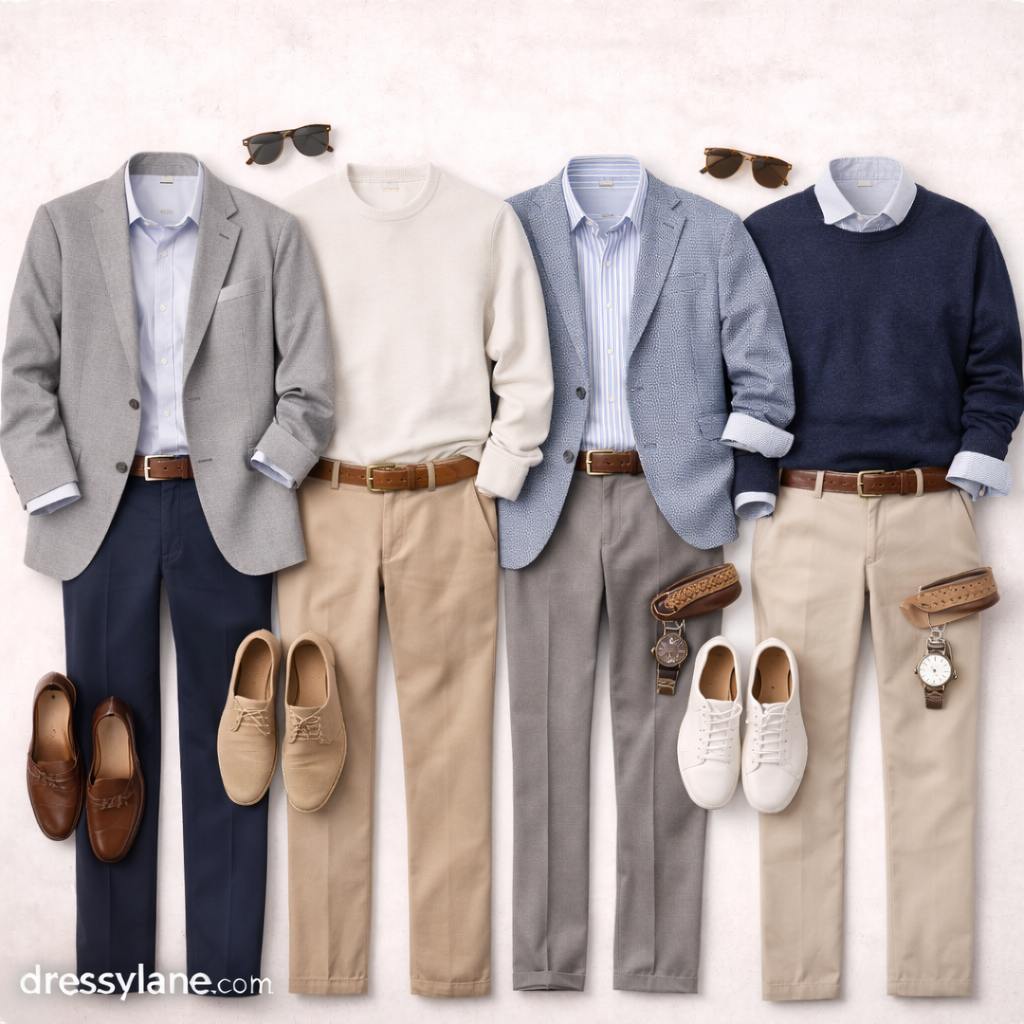
Men’s smart casual clothing works particularly well when traditional office basics are paired with softer textures.
Outfit 1: Chinos and a Knit Polo
Try navy cotton-twill chinos with a cream knit polo and brown suede loafers.
The polo is more relaxed than a dress shirt, but its collar and textured fabric keep the outfit polished.
Add an unstructured charcoal blazer if you have a meeting.
Outfit 2: Dark Denim and an Oxford Shirt
Pair dark indigo straight-leg jeans with a white Oxford shirt, an olive cotton overshirt, and brown Chelsea boots.
This combination suits a relaxed office that explicitly allows denim.
Choose jeans without distressing or heavy fading, and avoid trousers that bunch excessively around the ankles.
For footwear, leather loafers, desert boots, and minimalist leather sneakers are useful options. I’d skip bulky performance running shoes when wearing tailored trousers—the technical mesh and thick soles often clash with more refined fabrics.
Smart Casual Work Outfits for Women
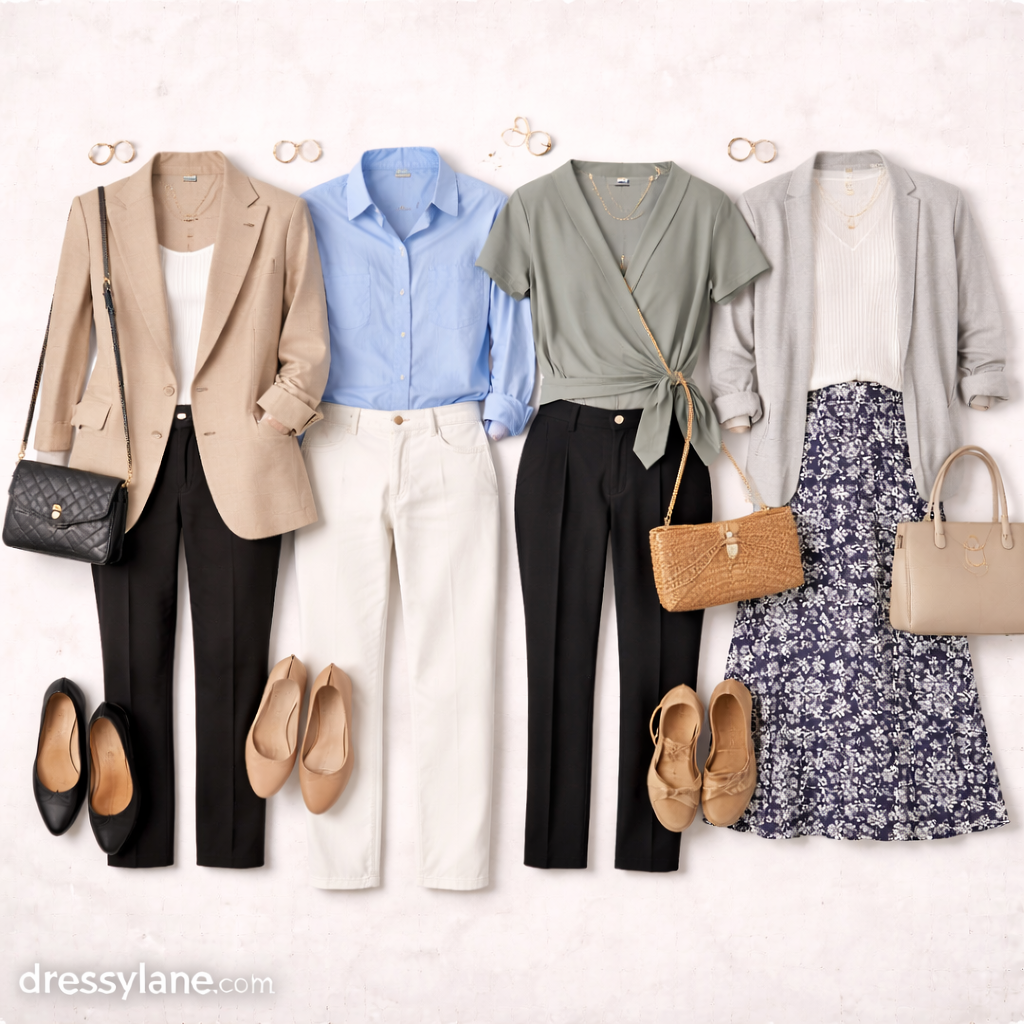
Women’s smart casual outfits can incorporate tailored separates, knitwear, dresses, and denim without relying on a matching suit.
Outfit 1: Tailored Trousers and Knitwear
Combine black straight-leg trousers with an ivory fine-gauge sweater, camel cardigan, and leather loafers.
Wool-blend or crepe trousers provide a clean drape, while the knitwear keeps the outfit comfortable for a full workday.
A structured tote completes the combination.
Outfit 2: Midi Skirt and a Relaxed Jacket
Try a navy A-line midi skirt with a fitted cotton knit top, cropped jacket, and black ankle boots.
The fitted top balances the skirt’s volume, while the jacket adds structure without looking overly formal.
For offices that permit jeans, dark straight-leg denim with a crepe blouse and loafers is another practical option.
I’d prioritize trouser and skirt lengths that work with the shoes you actually wear. A wide-leg trouser that looks perfect with heels may drag on the floor when paired with flats.
Are Jeans and Sneakers Smart Casual at Work?
They can be, but don’t assume they’re automatically included in the dress code.
Dark indigo or black jeans with minimal fading are generally easier to style for work than ripped or heavily distressed denim.
For sneakers, look for clean, low-profile leather or quality faux-leather designs in white, cream, black, or navy.
A pair of white leather sneakers can work with charcoal trousers and a fine-knit sweater in a relaxed workplace.
However, if your office regularly hosts conservative clients or specifies leather dress shoes, loafers or ankle boots may be more appropriate.
A useful tip: Keep a blazer and a pair of polished shoes at work if your everyday outfit includes jeans or sneakers. You can adjust quickly when an unexpected client meeting comes up.
Adjust Your Outfit to the Workday
Smart casual should reflect what you’re doing, not just where you work.
For an ordinary desk day, chinos, a knit polo, and loafers may be enough.
For a presentation to senior leadership, add a blazer or choose tailored trousers instead of denim.
In a creative studio, a refined T-shirt beneath an unstructured jacket might fit the culture. In a more traditional office, a collared shirt is a safer starting point.
If you’re new to the company, check the written dress code and observe what colleagues in similar roles wear during regular workdays. Don’t rely solely on what people wear on casual Fridays.
Common Smart Casual Mistakes
A few details can make an otherwise suitable outfit look less polished:
- Wearing heavily distressed jeans when the office expects neat denim.
- Combining several very casual pieces in one outfit.
- Choosing trousers that are too long or jackets that pull when buttoned.
- Wearing dirty sneakers or visibly worn shoes.
- Assuming a blazer makes any outfit workplace-appropriate.
You don’t need to avoid color or personality. A burgundy sweater, olive chinos, or patterned blouse can work well when the overall combination suits the office.
Final Thoughts
Smart casual at work means combining comfortable everyday pieces with enough structure to suit a professional environment.
Chinos, tailored trousers, quality knitwear, Oxford shirts, blouses, and polished shoes provide a dependable foundation. Dark jeans and minimalist sneakers can add flexibility where the dress code allows them.
My recommendation is to build two or three reliable outfit combinations around your workplace’s expectations before experimenting with more casual pieces. Once you know which trousers, tops, and shoes work together, getting dressed becomes easier—and you’re less likely to feel underdressed when the day’s plans change.