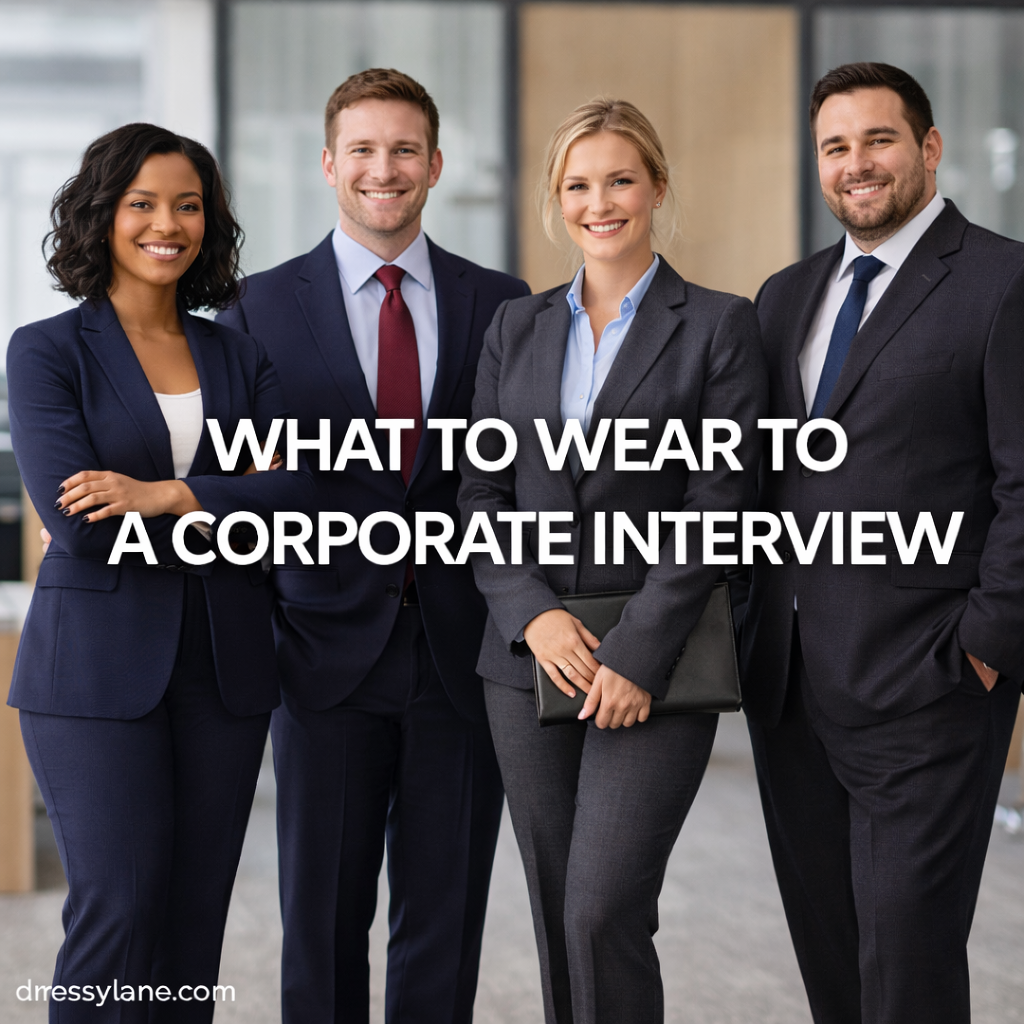
A corporate interview usually calls for a more polished outfit than an ordinary day at the office. Even if employees wear business casual, showing up in a well-fitted suit or tailored separates is a sensible choice for a first interview.
For positions in finance, law, consulting, and corporate management, classic business professional attire remains a reliable starting point. Think navy suits, crisp shirts, structured blazers, and polished leather shoes.
The goal isn’t to look expensive or overly formal. It’s to choose clothing that fits properly, suits the company’s environment, and lets you concentrate on the interview rather than adjusting your outfit.
Start With the Company’s Dress Code
Before deciding what to wear to a corporate interview, take a few minutes to research the company.
Look at its careers page, employee photographs, or recruitment materials. A traditional law firm may expect a matching suit, while a corporate technology company might have a more relaxed approach.
If the dress code isn’t clear, a navy or charcoal suit is a dependable option for a formal corporate interview.
I’d avoid buying an entirely new outfit just because you have an interview. A suit you already own that fits well and has been professionally cleaned will generally look better than an expensive new one with sleeves that are too long or trousers that bunch around your shoes.
What Women Should Wear to a Corporate Interview
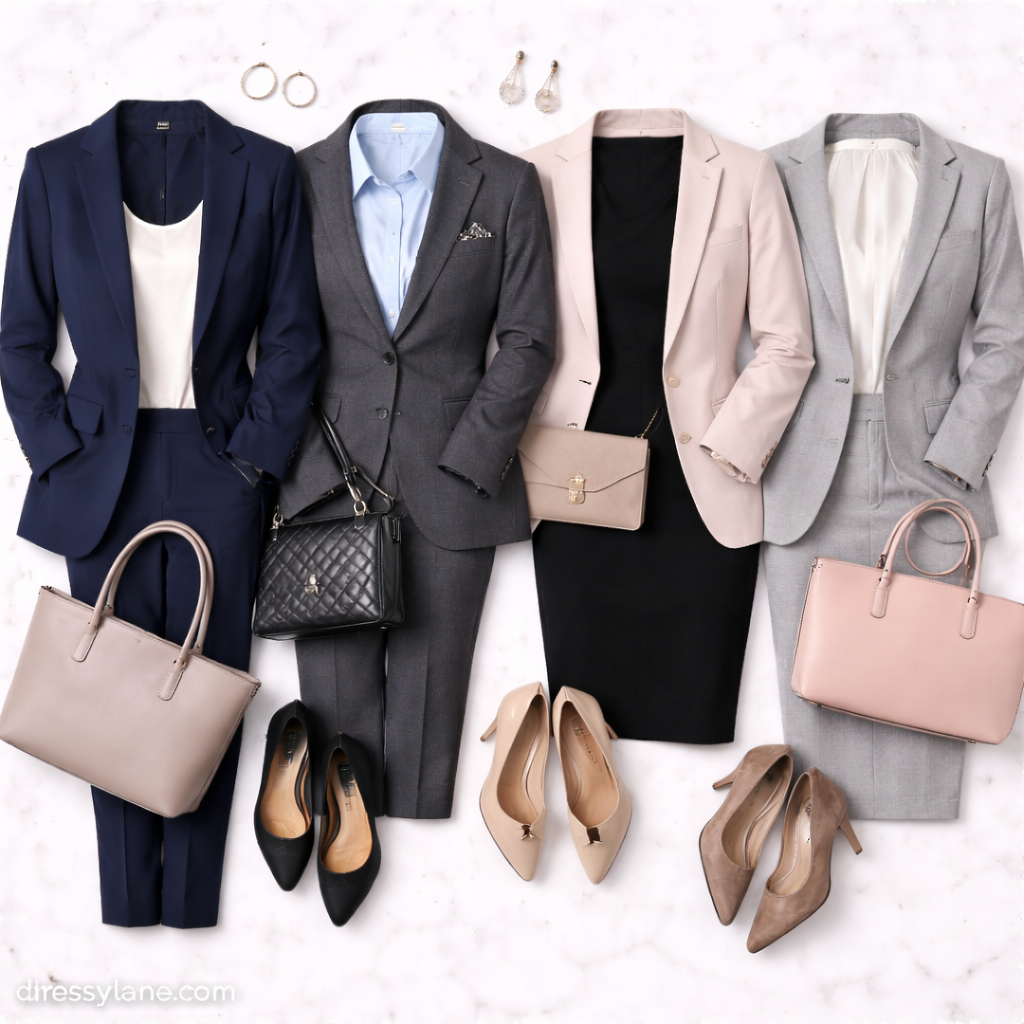
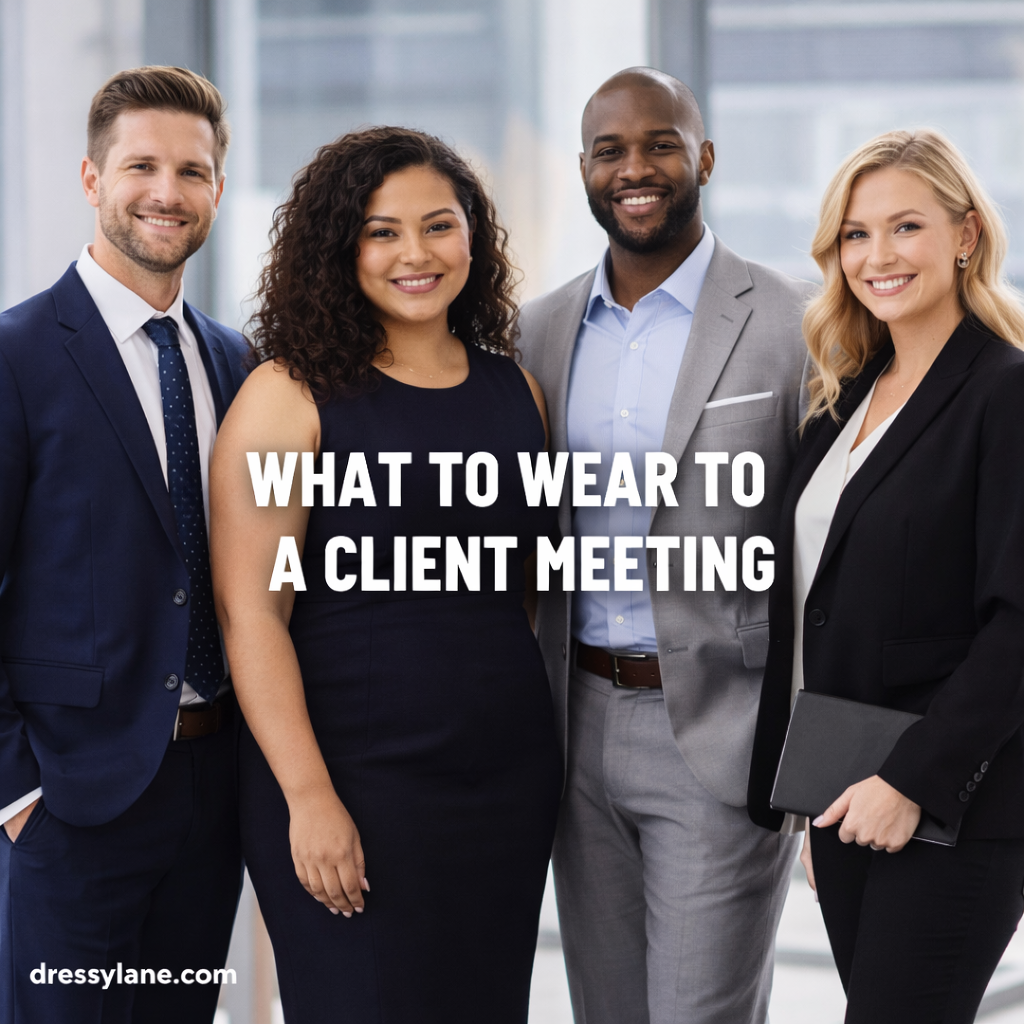
For women, a tailored pantsuit is one of the easiest ways to put together a professional interview outfit.
A navy single-breasted blazer with matching straight-leg trousers and a cream blouse creates a clean, coordinated look. Wool-blend suiting is particularly useful because it tends to hold its shape better than lightweight linen.
Other appropriate combinations include:
- A charcoal skirt suit with a simple silk or matte polyester blouse.
- A knee-length or midi sheath dress with a coordinating blazer.
- Matching tailored trousers and a structured jacket over a fine-knit shell.
Pay attention to how your clothing fits when seated. A skirt that rides up considerably or a blazer that pulls across the shoulders can become uncomfortable during a lengthy interview.
For shoes, leather loafers, pointed-toe flats, and low block heels are all practical choices. There’s no need to wear high heels if you aren’t comfortable in them.
Keep jewelry simple enough that it doesn’t interfere with movement. Small earrings, a delicate necklace, or a classic watch are easy finishing touches.
A structured tote that holds your résumé, notebook, and other essentials completes the outfit.
What Men Should Wear to a Corporate Interview
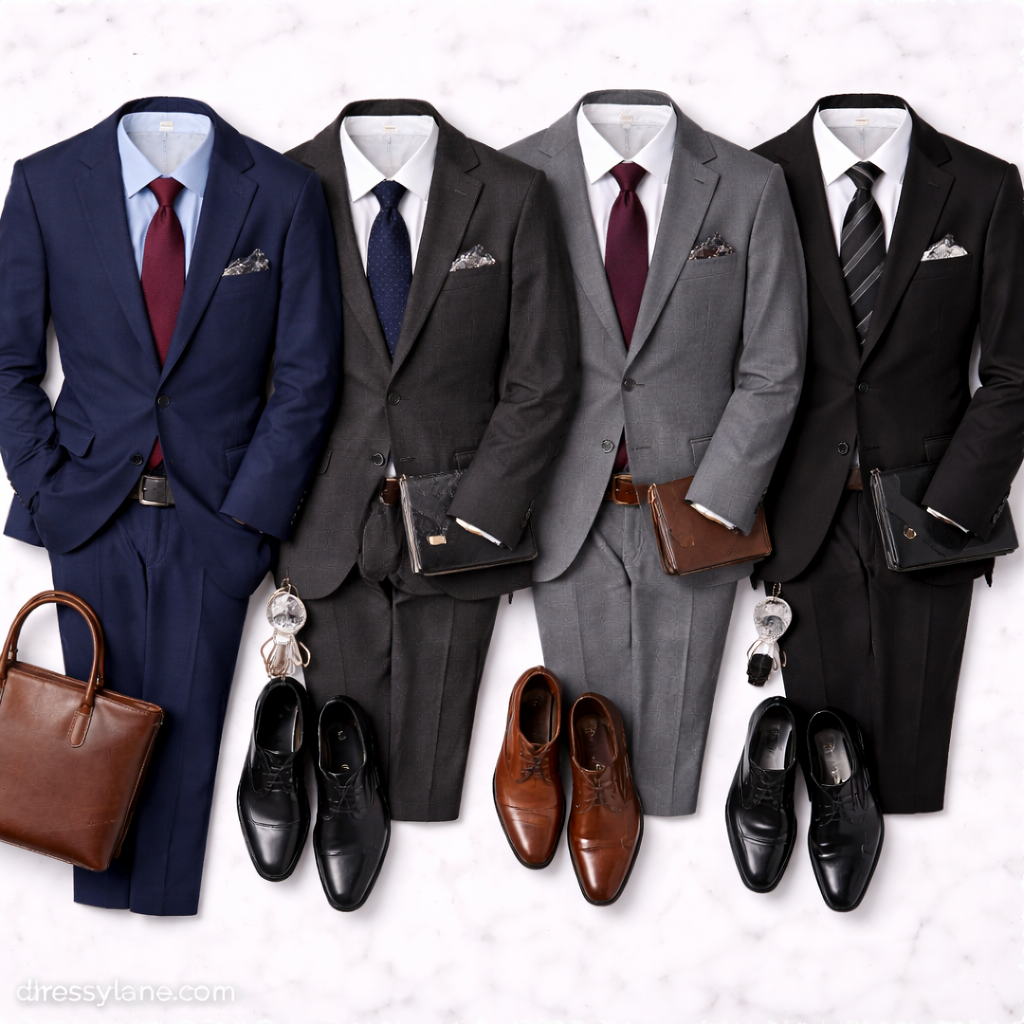
For a traditional corporate interview, I’d recommend a two-piece suit in navy or charcoal. Both colors are versatile, photograph well, and work with several shirt and tie combinations.
A particularly reliable outfit consists of a navy wool-blend suit, white cotton dress shirt, burgundy tie, and dark brown Oxford shoes.
If you’re interviewing at a conservative law firm or financial institution, a charcoal suit with black leather shoes is another classic combination.
Get the suit fit right
The jacket should sit smoothly across your shoulders without pulling when buttoned. Your shirt cuffs should extend slightly beyond the jacket sleeves, and your trousers should fall neatly over your shoes.
Avoid trousers that pool around your ankles or jackets with excessively long sleeves.
For ties, solid burgundy, navy, or a small geometric pattern works well. Skip novelty prints and overly shiny fabrics.
Finish with a leather belt that coordinates with your shoes and a simple watch if you normally wear one.
The Best Colors and Fabrics for Interview Clothing
You don’t need an entirely black outfit to look professional.
Navy and charcoal are particularly versatile for suits, while white, pale blue, cream, and soft gray work well for shirts and blouses.
Fabric deserves just as much attention as color.
Lightweight wool and wool blends are excellent for suits because they drape neatly and resist some of the creasing associated with linen. Cotton poplin works well for dress shirts, while crepe can provide a smooth finish for women’s blouses and dresses.
I’d skip very thin, clingy polyester blouses that become uncomfortable under a blazer. A slightly more substantial fabric often sits better and requires less adjusting.
Subtle pinstripes and small patterns can work, but a solid-colored outfit is easier to coordinate when you’re unsure about the company’s expectations.
Don’t Forget the Commute
One detail that’s easy to overlook is how your outfit will look after traveling to the interview.
If you’re driving for an hour, sitting in a suit jacket can leave creases across the back. Consider removing it during the drive and putting it on before entering the building.
For a long walk from a parking garage or train station, comfortable leather flats or loafers may be more practical than unfamiliar heels.
Check the weather, too. A lightweight trench coat over a suit looks more coordinated than arriving with a soaked jacket after an unexpected downpour.
Whatever you choose, try on the complete outfit at least a day before the interview.
Sit down, stand up, and walk around. Make sure nothing pulls, slips, or needs constant adjustment.
Grooming and Accessories: Keep Things Simple
Small details can make an otherwise polished outfit look unfinished.
Before leaving, check that your shirt is pressed, your shoes are clean, and your jacket is free of lint. Pay particular attention to dark suits, which can show dust and pet hair easily.
Style your hair in a way that feels neat and comfortable. If you wear facial hair, make sure it’s maintained.
Keep fragrance light or skip it entirely, particularly if the interview takes place in a small conference room.
For bags, choose something clean and practical that accommodates your documents without looking overstuffed.
What Not to Wear to a Corporate Interview
Unless the company specifically advises otherwise, leave jeans, distressed clothing, graphic T-shirts, and athletic sneakers out of a traditional corporate interview outfit.
I’d also avoid wearing brand-new shoes for the first time. Blisters and uncomfortable footwear are unnecessary distractions when you’re already concentrating on answering questions.
Oversized jackets, excessively tight trousers, and heavily wrinkled fabrics can make an outfit look less intentional, regardless of its price.
You don’t need designer labels. A properly fitted suit, clean shoes, and a pressed shirt are more useful than expensive accessories.
Final Thoughts
Knowing what to wear to a corporate interview starts with understanding the company’s environment and choosing clothing that fits the occasion.
For traditional corporate roles, a navy or charcoal suit, understated accessories, and polished shoes are dependable choices. Focus on fit, fabric, and comfort rather than trying to make a fashion statement.
Prepare your outfit the night before, check it in natural light, and make sure you can move comfortably.
Once you’re in the interview room, your clothes should be the last thing you need to think about.