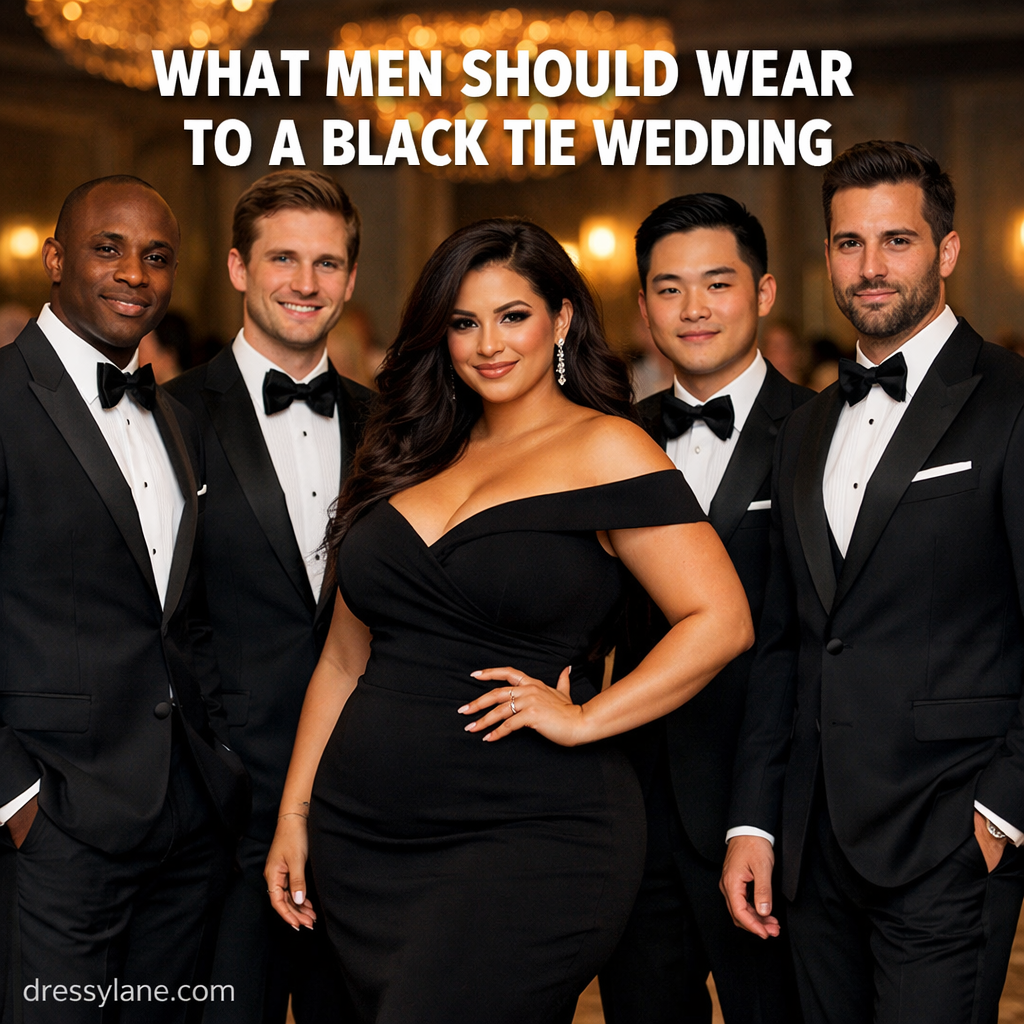
A black tie wedding calls for more than a dark suit and a nice pair of shoes. It’s one of the few occasions where traditional menswear rules still matter, and getting the details right makes a noticeable difference.
The good news? You don’t need an expensive designer tuxedo or a complicated collection of accessories. A properly fitted tuxedo, a crisp white shirt, a black bow tie, and polished shoes will handle almost any traditional black tie wedding.
Here’s how to put everything together, including which details are worth paying attention to and where you can keep things simple.
What Does Black Tie Mean for Men?
When a wedding invitation says “black tie,” the expectation is a tuxedo.
A regular black suit, even an expensive one, isn’t quite the same. The difference comes down to the details: tuxedo jackets have satin or grosgrain lapels, the trousers typically feature a matching stripe along the outer seam, and the outfit is finished with formal accessories.
For a traditional black tie wedding, your outfit should include:
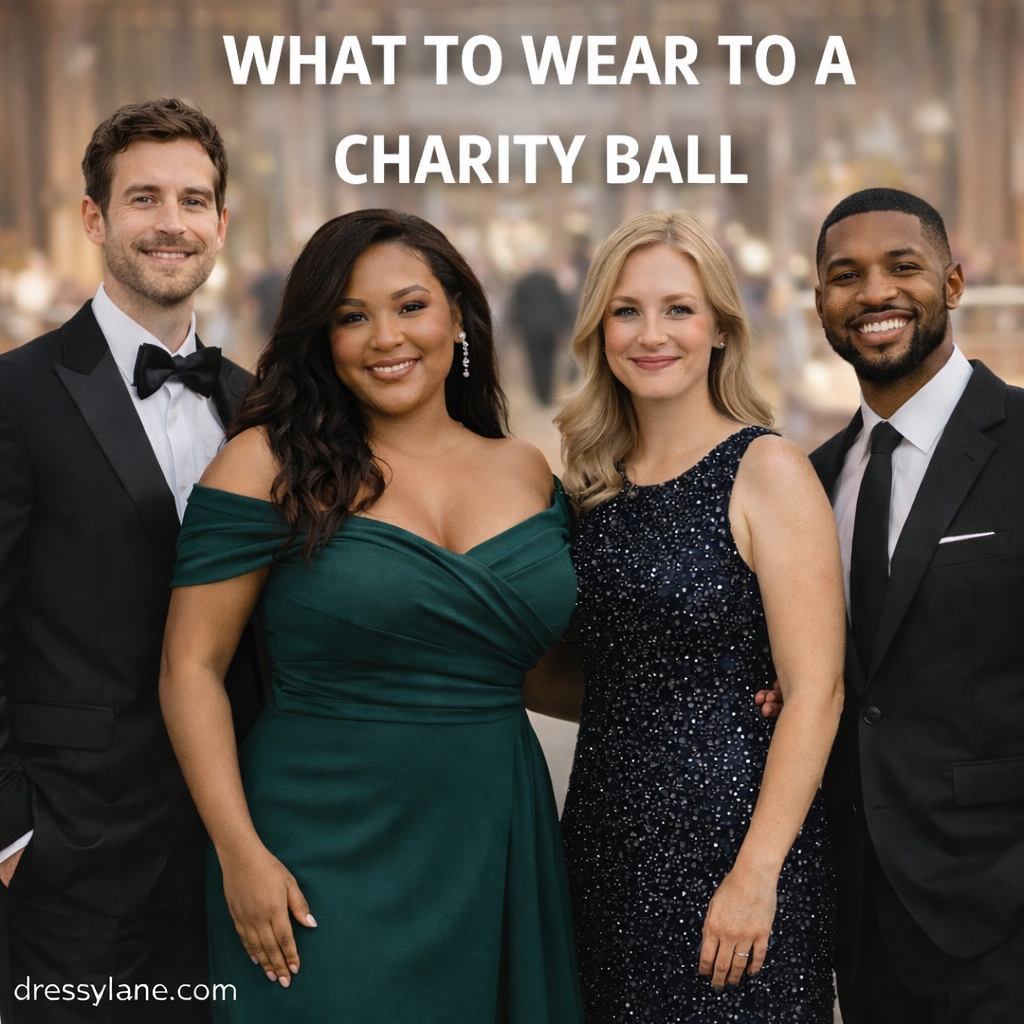
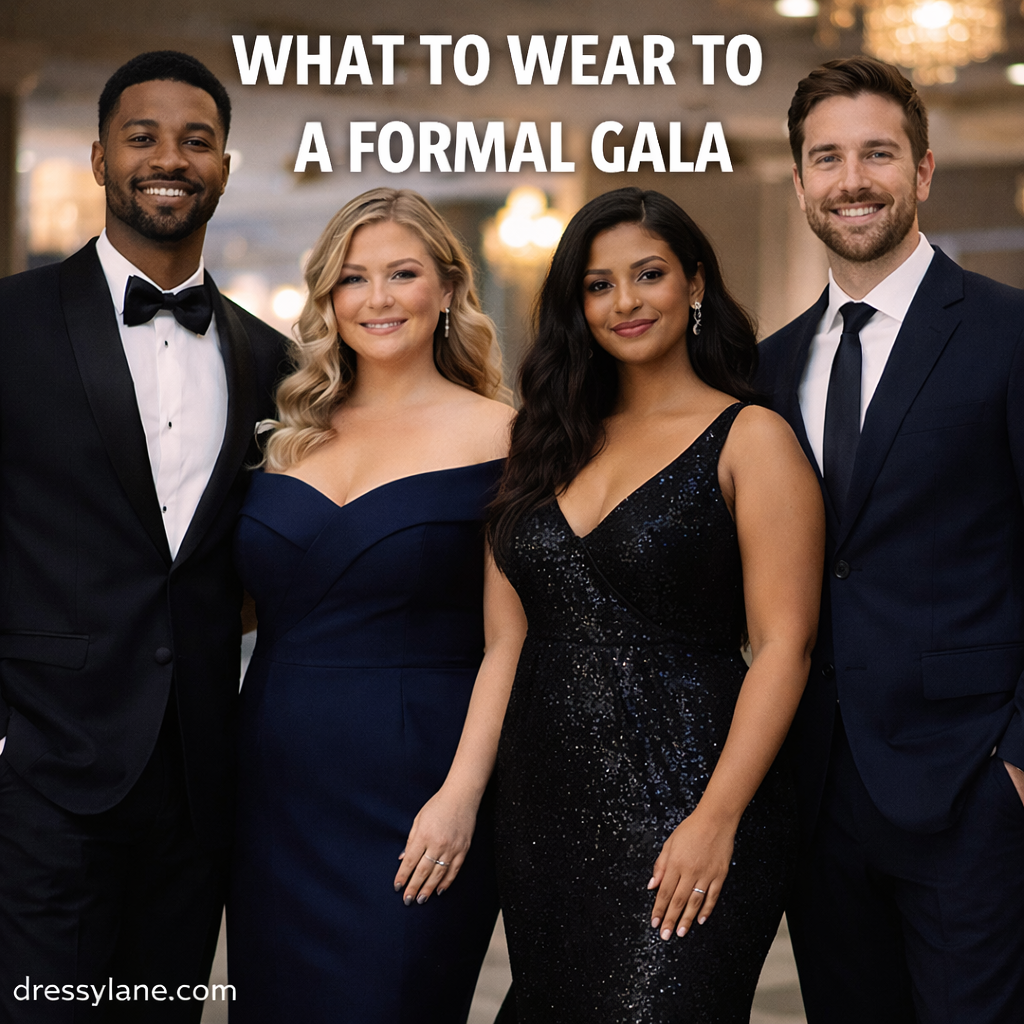
- A black or midnight blue tuxedo
- A white formal dress shirt
- A black bow tie
- Black formal shoes
- A cummerbund or low-cut waistcoat, when appropriate
If the invitation says “black tie optional,” you have more flexibility. A dark, well-tailored suit is acceptable, although a tuxedo remains appropriate.
For an invitation that simply says “black tie,” stick with the tuxedo unless the couple provides different instructions.
Start With a Properly Fitted Tuxedo
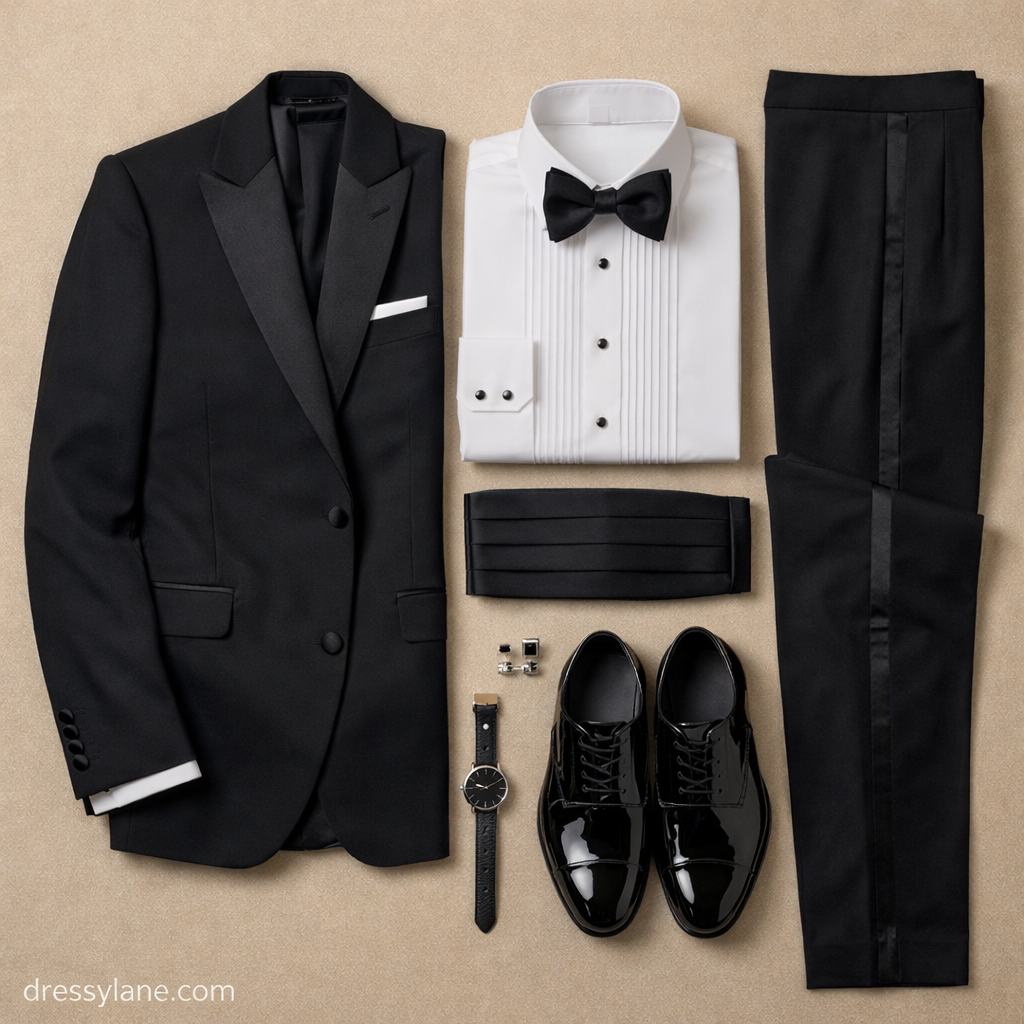
The tuxedo is the foundation of the entire outfit, and fit matters more than the label inside the jacket.
A classic black tuxedo is the safest choice. Midnight blue is equally traditional and can look particularly rich under evening lighting.
Choosing the Right Jacket
Look for a jacket with either peak lapels or a shawl collar.
Peak lapels create a slightly sharper, more structured appearance. They’re particularly flattering on men who want to emphasize their shoulders.
A shawl collar has a smooth, continuous curve that gives the jacket a softer, elegant look.
Both are appropriate for black tie.
For fabric, lightweight or midweight worsted wool is a dependable choice. It drapes cleanly, holds its shape, and works across different seasons. A wool-mohair blend can also provide a crisp silhouette with a subtle sheen.
My recommendation: Choose a single-breasted, one-button tuxedo with peak lapels if you’re buying your first one. It’s versatile enough for weddings, formal dinners, and future black tie events without looking tied to a particular trend.
Avoid overly short jackets, extremely narrow lapels, and trousers that cling tightly to the legs. Classic proportions tend to look better in wedding photographs years later.
Getting the Trousers Right
Tuxedo trousers should match the jacket and traditionally feature a satin or grosgrain stripe along each outer seam.
They generally have no belt loops. Instead, the waist is secured with side adjusters or suspenders.
The trousers should sit comfortably at the waist and fall cleanly over your shoes without excessive fabric bunching around the ankles.
When trying on a rental tuxedo, sit down, walk around, and check the trouser length while wearing your actual wedding shoes. A fit that looks fine while standing still can feel surprisingly uncomfortable during a long reception.
The White Shirt Makes a Bigger Difference Than You Think
A white formal shirt provides the clean contrast that makes black tie attire so distinctive.
For most weddings, I’d choose a white cotton shirt with a traditional turndown collar and either a pleated front or a smooth piqué bib.
A turndown collar is particularly easy to wear because it frames the bow tie neatly and looks natural with both shawl and peak lapels.
French cuffs with understated cufflinks are a classic finishing touch. Some formal shirts also accommodate decorative studs instead of ordinary front buttons.
Avoid button-down collars, colored shirts, and heavily textured casual fabrics.
One detail worth checking before the wedding: make sure the shirt doesn’t pull across your chest or create large folds around your waist. Even a beautiful tuxedo can look untidy when the shirt underneath fits poorly.
Wear a Black Bow Tie, Not a Regular Necktie
The black bow tie is one of the defining elements of traditional black tie attire.
Choose one in black silk satin or grosgrain, ideally with a finish that coordinates with your jacket lapels.
A self-tied bow tie is the traditional choice. Its slightly irregular shape often looks more natural than a perfectly symmetrical pre-tied version.
However, if you’ve never tied one before, practice several days ahead rather than attempting it for the first time ten minutes before leaving for the ceremony.
I’d skip novelty shapes, oversized bows, and colored bow ties unless the couple has specifically requested a creative interpretation of black tie.
A classic black butterfly or semi-butterfly shape is all you need.
What Shoes Should You Wear to a Black Tie Wedding?
Black patent leather oxfords are a traditional choice, but they’re not your only option.
Highly polished black calfskin oxfords are also appropriate and often more practical if you want shoes you’ll wear again.
For the cleanest appearance, choose a plain-toe style with minimal visible detailing.
Traditional opera pumps are another option, although they’re less commonly worn today.
Complete the look with thin black over-the-calf dress socks. They prevent bare skin from showing when you sit down or cross your legs.
Avoid brown shoes, chunky soles, casual boots, and heavily brogued designs.
A practical tip: If you’re buying new shoes, wear them around the house before the wedding. Between the ceremony, photographs, cocktail hour, and dancing, you’ll likely spend several hours on your feet.
Keep the Accessories Simple
Black tie accessories should complement the tuxedo rather than compete with it.
For a single-breasted tuxedo, a black cummerbund or a low-cut formal waistcoat can cover the waistband and create a more continuous silhouette.
Choose one, not both. A double-breasted tuxedo generally doesn’t need either because the jacket remains buttoned.
Other appropriate accessories include simple silver or mother-of-pearl cufflinks, formal shirt studs if your shirt requires them, and a neatly folded white linen pocket square.
A slim dress watch can work, although going without one is perfectly traditional.
I’d avoid colorful pocket squares, oversized watches, and elaborate lapel accessories. When the jacket, shirt, and bow tie already create a strong visual contrast, extra decoration rarely improves the outfit.
What If You’re the Groom Rather Than a Guest?
The groom and guests can follow the same black tie dress code, but the groom may choose a few subtle details that distinguish his outfit.
A custom-tailored tuxedo, midnight blue fabric, or a particularly well-fitted waistcoat can create a distinctive appearance without departing from tradition.
A boutonniere is another classic way to identify the groom, particularly when it coordinates with the wedding flowers.
Guests should prioritize a polished, appropriate outfit rather than trying to create the most eye-catching look in the room.
If you’re uncertain about an unusual jacket color or statement accessory, a conventional black tuxedo is the more dependable choice.
Dressing for Summer and Winter Black Tie Weddings
The dress code doesn’t disappear when the weather changes, but fabric selection can make a significant difference in comfort.
For a summer wedding, look for lightweight worsted wool, a breathable shirt, and a jacket with a lighter construction. Avoid assuming that linen is automatically the answer; a linen suit doesn’t replace a tuxedo for traditional black tie.
For winter, a slightly heavier wool tuxedo works well. A dark formal overcoat is useful when traveling between the ceremony and reception.
Velvet dinner jackets can be appropriate in certain evening settings, but I wouldn’t choose one for a wedding unless the invitation or venue suggests a more creative approach.
If the ceremony is outdoors, check whether you’ll be walking on grass, gravel, or another uneven surface. This can influence your footwear choice without requiring you to abandon formal styling.
Five Black Tie Mistakes Worth Avoiding
Most black tie mistakes aren’t dramatic. They’re small details that make an otherwise good outfit look slightly off.
- Wearing a regular black suit. A suit may look formal, but it lacks the distinctive construction and finishing of a tuxedo.
- Choosing an excessively slim fit. Trousers that pull across the thighs or a jacket that strains when buttoned won’t look elegant, regardless of price.
- Skipping the proper shirt. A casual white shirt with a button-down collar changes the appearance of the entire outfit.
- Overdoing the accessories. Colored bow ties, bright pocket squares, and flashy jewelry can undermine the restrained look black tie is meant to achieve.
- Leaving alterations until the last minute. Even rental tuxedos may need adjustments, especially around the trouser length and jacket sleeves.
If you’re renting, schedule your fitting early enough to allow for corrections. Bring your shoes and shirt to the fitting whenever possible so you can see how everything works together.
The Bottom Line
For a black tie wedding, you don’t need to reinvent formalwear.
A black or midnight blue tuxedo with classic proportions, a well-fitting white formal shirt, a black bow tie, and polished black shoes will get the important details right.
If you’re deciding where to spend extra money, prioritize alterations over decorative accessories. A moderately priced tuxedo that fits properly will generally look more refined than an expensive one with sleeves that are too long or trousers pooling around the shoes.
Keep the styling restrained, pay attention to comfort, and make sure the outfit looks just as good when you’re sitting at dinner as it does when you’re standing for photographs.
That’s the real advantage of getting black tie right: once everything fits and works together, you can stop thinking about your clothes and enjoy the wedding.