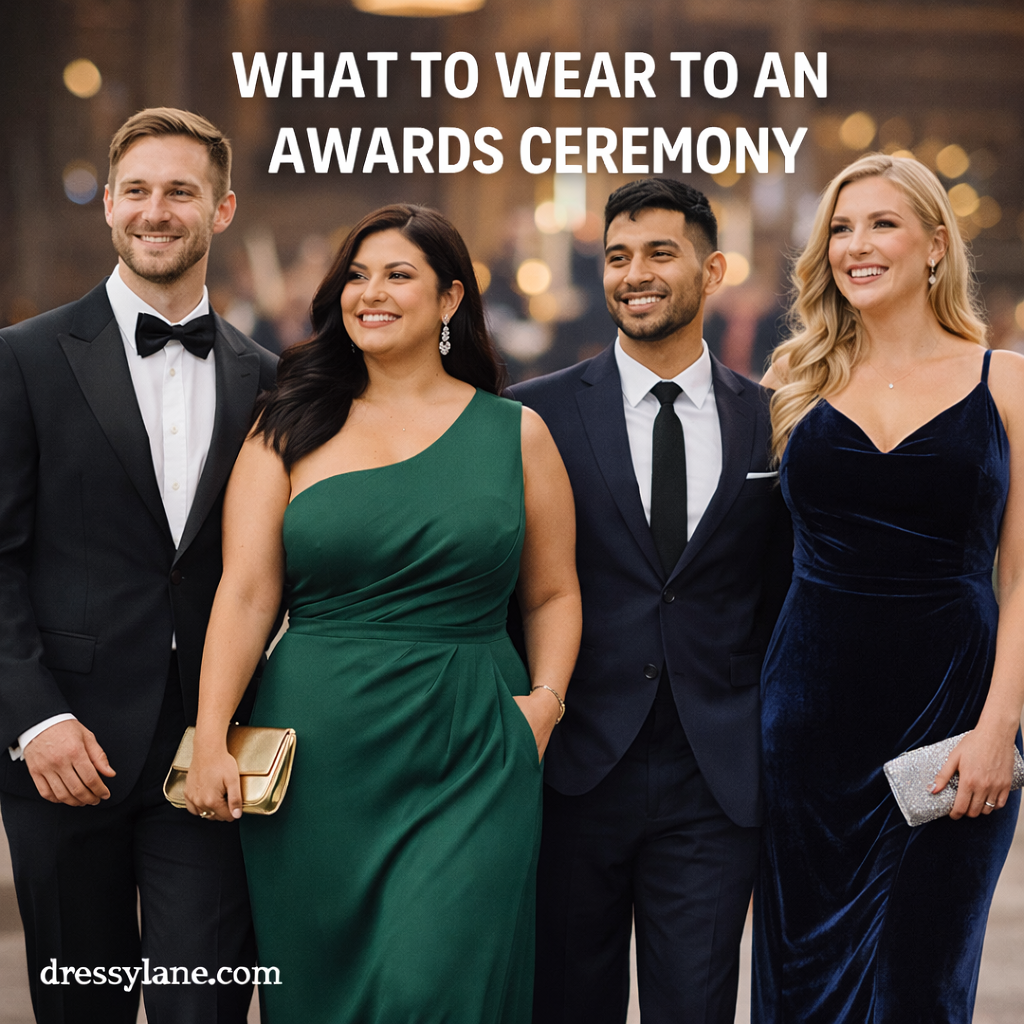
An awards ceremony is one of those occasions where your outfit needs to work in several settings: arriving at the venue, sitting through presentations, posing for photographs, and possibly walking onto a stage.
A black-tie gala at a luxury hotel calls for something very different from an afternoon industry awards luncheon. The key is understanding the event’s dress code before choosing your outfit.
Whether you’re attending as a nominee, presenter, guest, or plus-one, here’s how to dress appropriately without looking overdressed or feeling uncomfortable halfway through the evening.
Start With the Invitation
Awards ceremonies vary considerably in formality. Some have a red carpet and formal dinner, while others take place in conference centers or hotel ballrooms during the afternoon.
Check the invitation, event website, or photographs from previous ceremonies before deciding what to wear.
Common dress codes include:
- Black tie: A tuxedo or formal evening gown.
- Formal: A dark suit, evening gown, or appropriately elevated formal ensemble.
- Cocktail: A tailored suit, cocktail dress, or dressy jumpsuit.
- Semi-formal: A polished suit, elegant midi dress, or tailored separates.
- Creative black tie: Traditional formalwear with room for more expressive colors, textures, or accessories.
If no dress code is listed, consider the venue and time of day. An evening awards dinner at a five-star hotel generally calls for more formal attire than a midday corporate recognition event.
What Women Should Wear to an Awards Ceremony
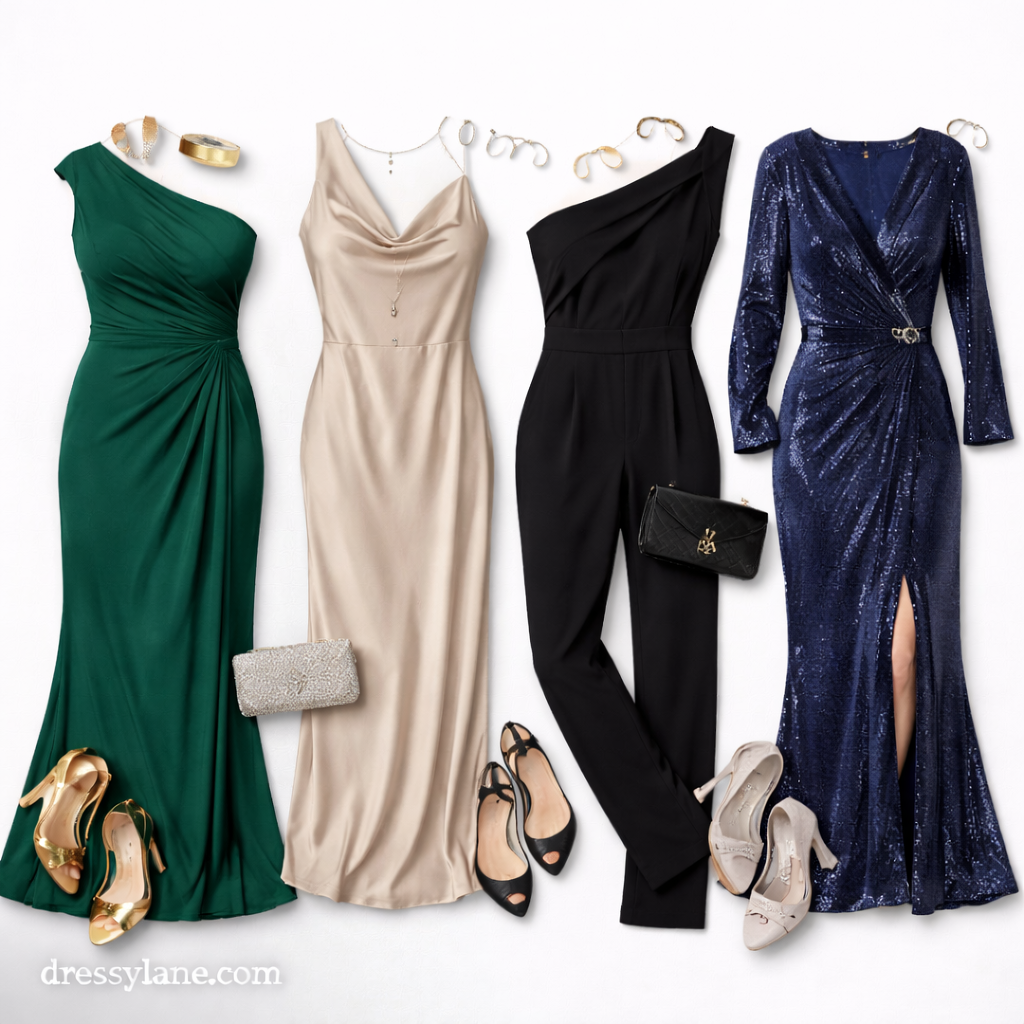
For a black-tie ceremony, a floor-length evening gown is a dependable choice. Look for a silhouette that feels elegant but allows you to sit, stand, and walk comfortably.
A navy crepe column gown with a defined waist, for example, looks refined without requiring elaborate embellishments.
Other suitable combinations include:
- An emerald satin gown with metallic heels and a compact clutch.
- A burgundy velvet evening dress with delicate gold earrings.
- A black one-shoulder gown with a structured silhouette and simple accessories.
- A deep blue silk-blend dress with a softly draped neckline.
For cocktail or semi-formal ceremonies, a midi dress is often more appropriate than a full-length gown.
A black crepe midi dress with pointed-toe pumps and sculptural earrings works particularly well for an industry awards dinner.
Alternatives to Evening Dresses
A tailored jumpsuit can look just as elegant as a dress when the fabric and construction are right.
Choose a wide-leg design in substantial crepe with a defined waist or structured neckline. Pair it with dressy heels and a small evening bag.
A women’s tuxedo or coordinated trouser suit is another option, particularly for cocktail, formal, or creative dress codes. For a strict black-tie event, choose a genuinely formal interpretation rather than an ordinary office suit.
I’d skip a heavily embellished gown if you’re attending a relatively small corporate awards dinner. A beautifully fitted midi dress often feels more appropriate, and you’ll be more comfortable moving between dinner tables and networking conversations.
What Men Should Wear to an Awards Ceremony
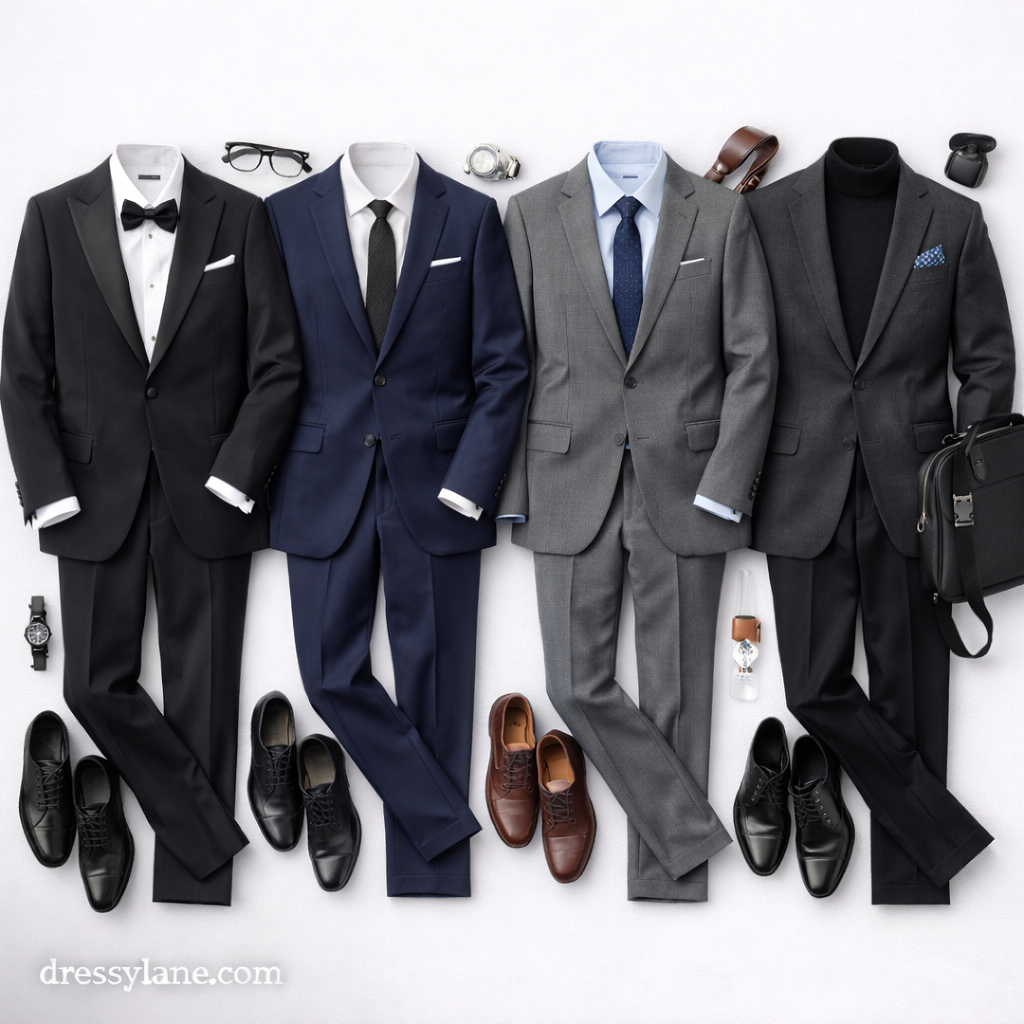
For a black-tie awards ceremony, traditional formalwear is the most reliable option.
A black or midnight-blue tuxedo with satin lapels, a white formal shirt, black bow tie, and polished black dress shoes creates a classic look.
Pay particular attention to the fit of the jacket. The shoulders should sit neatly without pulling, and the sleeves should allow a small amount of shirt cuff to show.
For cocktail or semi-formal events, a well-tailored suit is generally sufficient.
Consider these combinations:
- A charcoal suit with a white dress shirt, black leather Oxfords, and a burgundy tie.
- A navy suit with a pale blue shirt and dark brown Derby shoes.
- A black suit with a white shirt and understated silk tie for an evening ceremony.
A pocket square can add personality, but it doesn’t need to match your tie exactly.
For creative dress codes, a velvet dinner jacket or subtly patterned formal jacket may be appropriate. Just make sure the event genuinely allows that flexibility.
Choose Fabrics and Colors That Photograph Well
Awards ceremonies often involve professional photography, bright lighting, and group pictures.
Black, navy, emerald, burgundy, and deep plum are dependable colors for evening events. Metallic shades can also work beautifully, especially in satin or fabrics with a subtle sheen.
For men, smooth wool suiting and formal fabrics tend to maintain a clean silhouette.
For women, crepe, velvet, silk blends, and quality satin offer different levels of structure and movement.
One detail I’d pay attention to is how shiny fabric looks under direct light. Very thin satin can highlight wrinkles and pull across the body, particularly when seated. A heavier satin or matte crepe often photographs more smoothly.
Try your complete outfit under bright lighting before the event, especially if you’ll be photographed onstage.
Dress for the Possibility of Going on Stage
If you’re a nominee or presenter, your outfit needs to work beyond the red carpet.
You may have to climb stairs, stand at a podium, accept an award, or walk across a brightly lit stage.
For women, avoid excessively long trains or hemlines that catch under your shoes. If you’re wearing a floor-length gown, practice walking and climbing a few steps in it.
For men, check that your jacket doesn’t pull when you raise your arms or reach forward.
My recommendation is to do a complete movement test at home: sit down, stand up, walk across the room, and reach forward as though accepting an award.
It’s a simple way to catch problems that aren’t obvious when you’re standing still in front of a mirror.
Shoes and Accessories: Keep Them Practical
Awards ceremonies can involve considerably more standing than expected, particularly during receptions and photo sessions.
Women can choose pointed-toe pumps, refined block heels, or elegant formal flats. A heel height you can comfortably manage for several hours is preferable to one that only looks good in photographs.
For men, polished Oxfords or other dress shoes appropriate to the dress code are reliable choices. Patent leather is particularly suitable for traditional black-tie attire.
Keep bags compact. A small clutch or structured evening bag should hold your phone, identification, and a few essentials without becoming cumbersome.
Jewelry can be more expressive at an awards ceremony than at a conservative business event. Statement earrings or a distinctive necklace can work beautifully, provided they complement the outfit rather than compete with every other detail.
Grooming and Final Preparation
Even an expensive outfit can look unfinished if it hasn’t been properly prepared.
Steam or press your clothing before the event, polish your shoes, and check for loose threads or visible lint.
For men, make sure shirt collars sit neatly and trouser hems fall correctly over the shoes.
For women, consider how your hairstyle works with the neckline of your dress. An updo can highlight an interesting neckline, while softly styled hair may complement a simpler gown.
If you’re wearing makeup, check how it looks in both natural and artificial lighting.
Bring a small emergency kit if you’re attending as a nominee or presenter. Fashion tape, a safety pin, and a stain-removal wipe can be useful when there’s little time to fix a wardrobe problem.
What Not to Wear to an Awards Ceremony
Unless the event specifically encourages casual or unconventional attire, avoid jeans, athletic sneakers, graphic T-shirts, and everyday office clothing that feels too relaxed for the occasion.
Don’t assume that every awards ceremony requires a tuxedo or elaborate gown, either. Overdressing for a daytime recognition luncheon can feel just as out of place as arriving underdressed at a black-tie gala.
I’d also avoid wearing an entirely new outfit without testing it first. Shoes that pinch, a jacket that restricts movement, or a dress that constantly needs adjusting can become distracting during a long ceremony.
Final Thoughts
The right awards ceremony outfit starts with the event’s dress code and takes your role into account.
For black-tie events, traditional formalwear is a dependable choice. Cocktail and semi-formal ceremonies offer more flexibility, from tailored suits and elegant midi dresses to dressy jumpsuits.
Choose quality fabrics, pay attention to fit, and consider how your outfit will look and feel while seated, standing, and being photographed.
A well-chosen outfit should let you enjoy the ceremony and celebrate the occasion without spending the evening worrying about what you’re wearing.