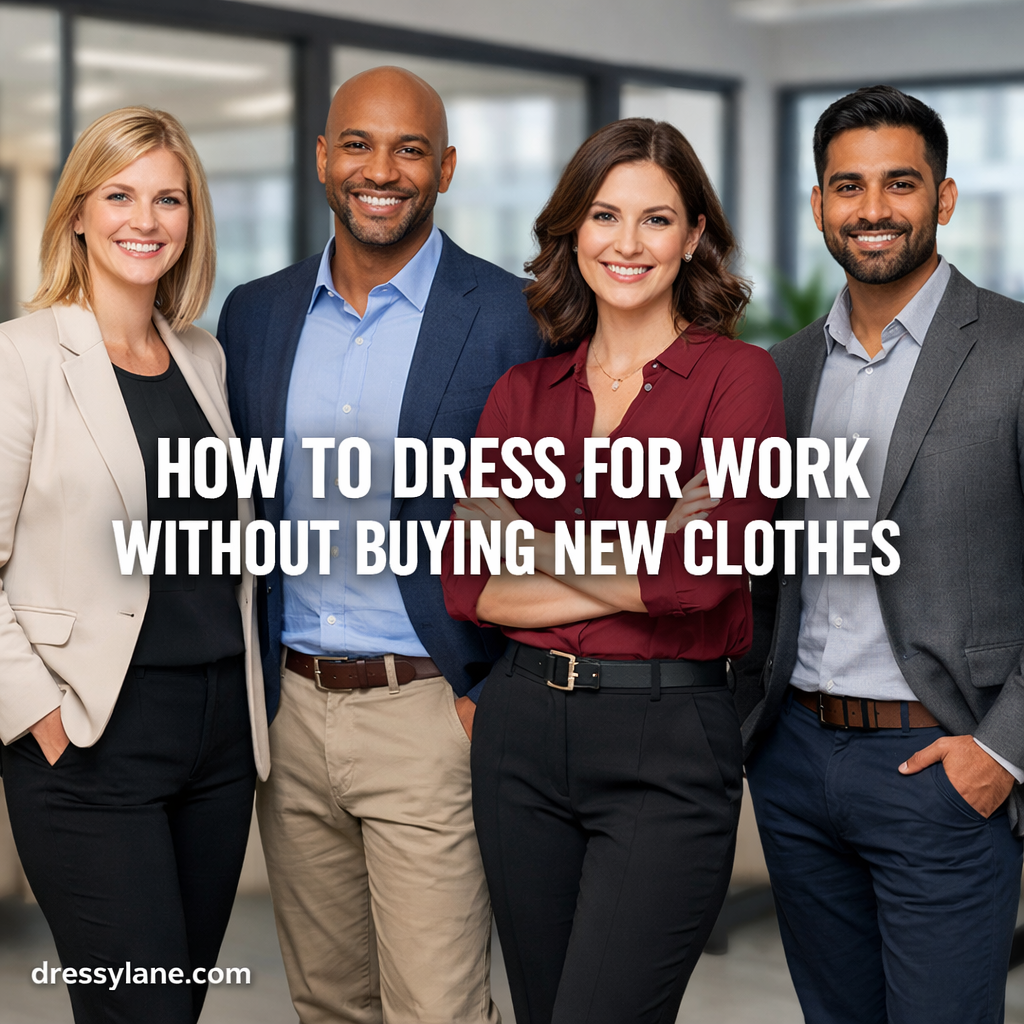
Looking professional at work doesn’t require a constant stream of new outfits. In fact, most people already own enough clothing to create polished, work-appropriate looks—they just haven’t been styling them strategically. By rethinking how you combine, layer, and present what’s already in your closet, you can refresh your work wardrobe without spending a dollar.
This guide walks through practical, realistic ways to dress for work using only what you already own, whether you work in an office, hybrid environment, or business-casual setting.
Start With a Closet Reset
Before styling anything, take stock of what you actually have. A quick reset helps you see possibilities instead of limitations.
- Pull out everything you’d realistically wear to work
- Set aside items that fit well and feel comfortable
- Group clothing by category (tops, bottoms, layers, shoes)
- Remove distractions like worn lounge or weekend-only pieces
Seeing your work-appropriate clothes together makes it easier to spot combinations you’ve overlooked.
Build Around Neutral Foundations
Neutral colors are the backbone of a flexible work wardrobe. They allow you to mix and match without outfits feeling repetitive.
Common work-friendly neutrals include:
- Black
- Navy
- Gray
- White
- Beige
- Brown
If most of your pieces fall into this range, you already have a strong base. Even a few neutral bottoms can support dozens of outfit combinations.
Rework Outfits With Simple Swaps
Small changes can completely shift how an outfit reads at work.
Try these easy swaps:
- Trade sneakers for loafers or clean flats
- Swap a hoodie for a cardigan or structured jacket
- Tuck in a shirt you normally wear loose
- Roll sleeves neatly instead of pushing them up
These minor adjustments elevate familiar pieces without making them feel stiff or uncomfortable.
Use Layering to Create “New” Looks
Layering adds structure, interest, and variety—especially in workplaces with variable temperatures.
Work-friendly layers include:
- Blazers
- Cardigans
- Lightweight sweaters
- Button-downs worn open over tees
- Structured vests
Rotating layers over the same base outfit instantly creates multiple professional looks from the same core items.
Pay Attention to Fit and Proportion
Fit matters more than trends when it comes to looking polished at work.
Focus on:
- Clean shoulder lines on tops and jackets
- Pants that skim the body without pulling
- Sleeves and hems that don’t bunch or drag
- Balanced proportions (looser top with fitted bottom, or vice versa)
Even inexpensive or older clothing looks intentional when it fits well.
How Men Can Dress for Work Without Buying New Clothes
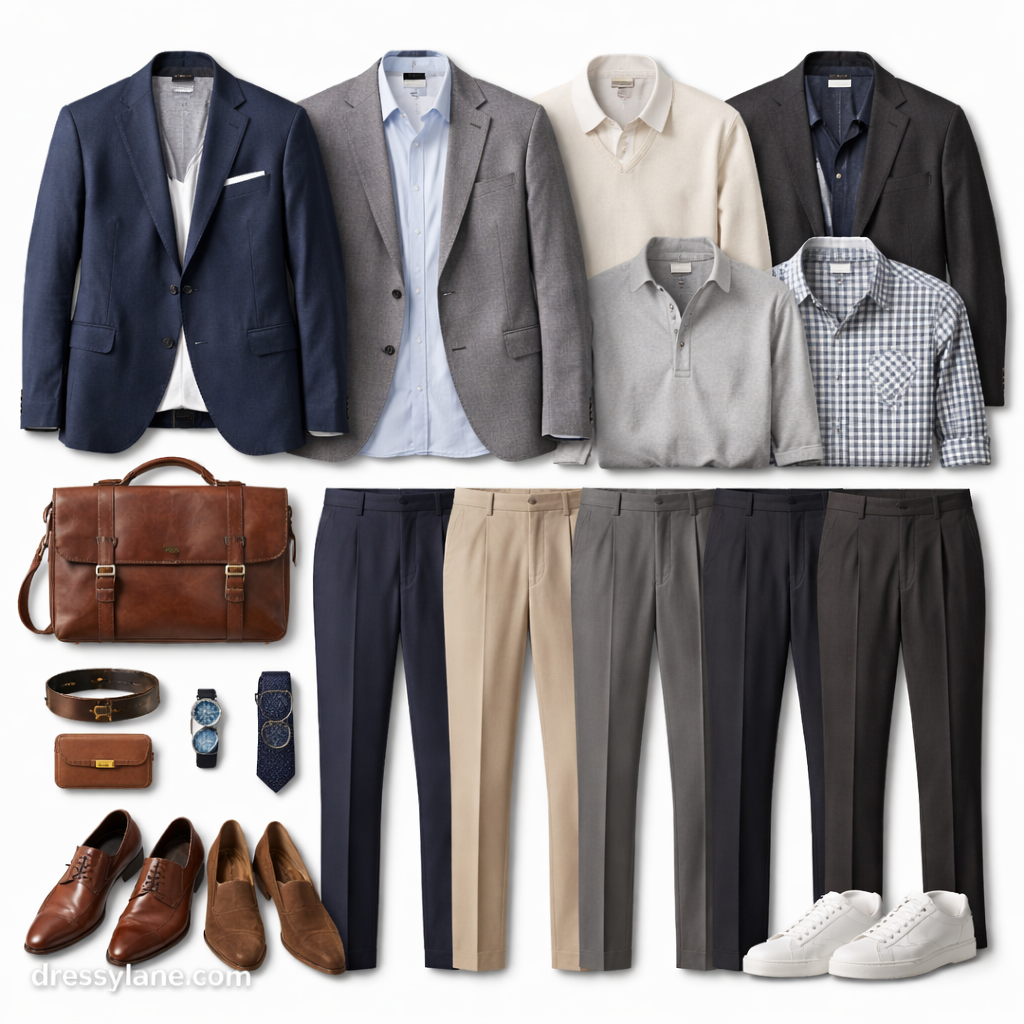
Men often have more versatility in their closets than they realize.
Ways to refresh work outfits using existing pieces:
- Wear a button-down under a sweater instead of alone
- Pair chinos with a different belt or shoe style
- Roll pant cuffs slightly for a modern look (if appropriate)
- Use one blazer across multiple outfits instead of reserving it for meetings
Rotating shoes—such as alternating between dress shoes, loafers, and clean boots—can make the same outfit feel different throughout the week.
How Women Can Dress for Work Without Buying New Clothes
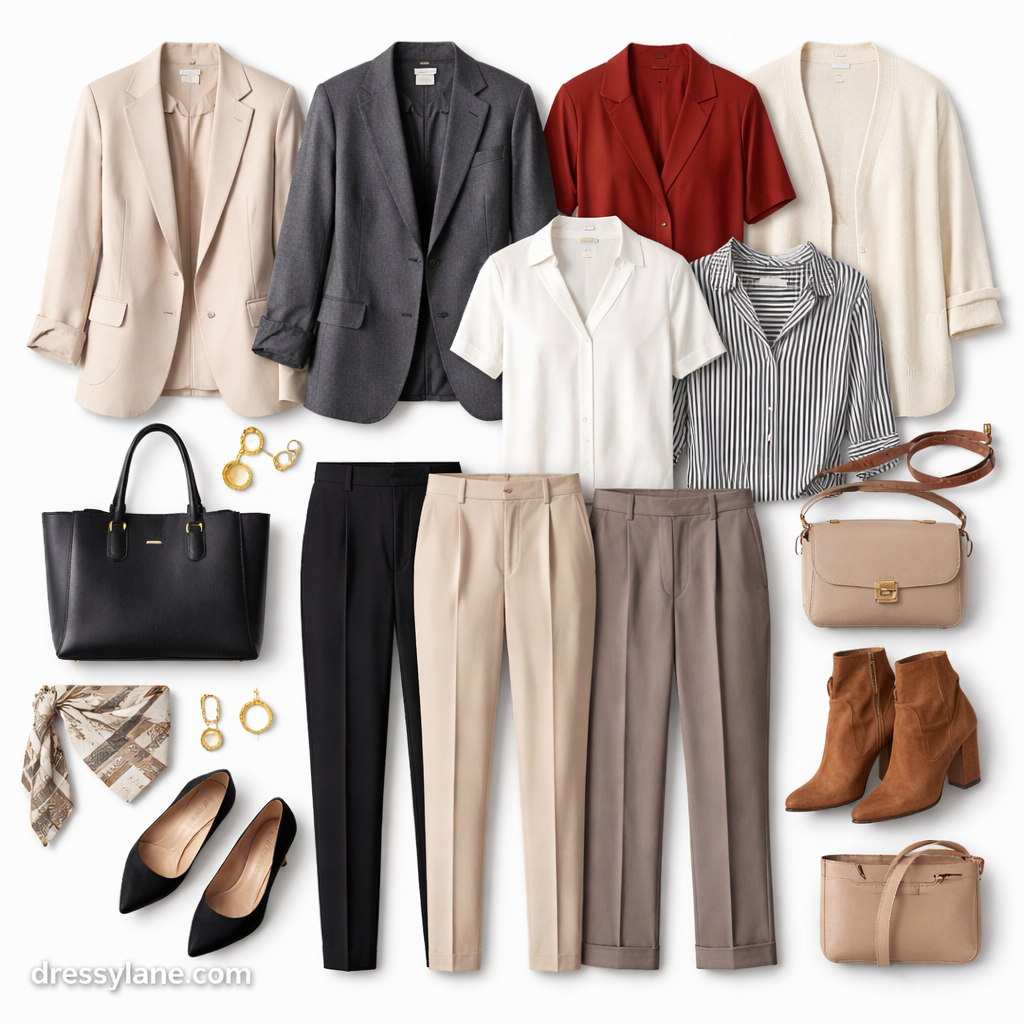
Women’s wardrobes often offer even more styling flexibility through layering and accessories.
Easy ways to create new looks:
- Layer a blouse under a sleeveless dress
- Add a belt to define the waist on looser pieces
- Switch between flats, heels, and ankle boots
- Tie a scarf or use subtle jewelry for variety
Even changing how you style your hair or roll sleeves can make a familiar outfit feel refreshed and work-ready.
Make Grooming and Presentation Work for You
Looking professional isn’t just about clothing—it’s also about presentation.
Focus on:
- Clean, pressed clothing
- Polished shoes
- Simple grooming routines
- Intentional outfit planning the night before
When everything looks cared for, even basic outfits come across as professional and confident.
Create a Weekly Outfit Rotation
Instead of reinventing outfits daily, create a small rotation you can reuse.
A simple system:
- Choose 5–7 core outfits you like
- Rotate layers and shoes each week
- Adjust based on meetings or workdays at home
This reduces decision fatigue and ensures you always have something appropriate to wear.
Final Thoughts
Dressing well for work isn’t about buying more—it’s about using what you already have more effectively. With thoughtful layering, strategic swaps, and attention to fit, you can look professional, confident, and put-together without spending money or overhauling your wardrobe.
A smarter approach to styling saves time, reduces stress, and proves that a great work wardrobe is built through intention—not constant shopping.