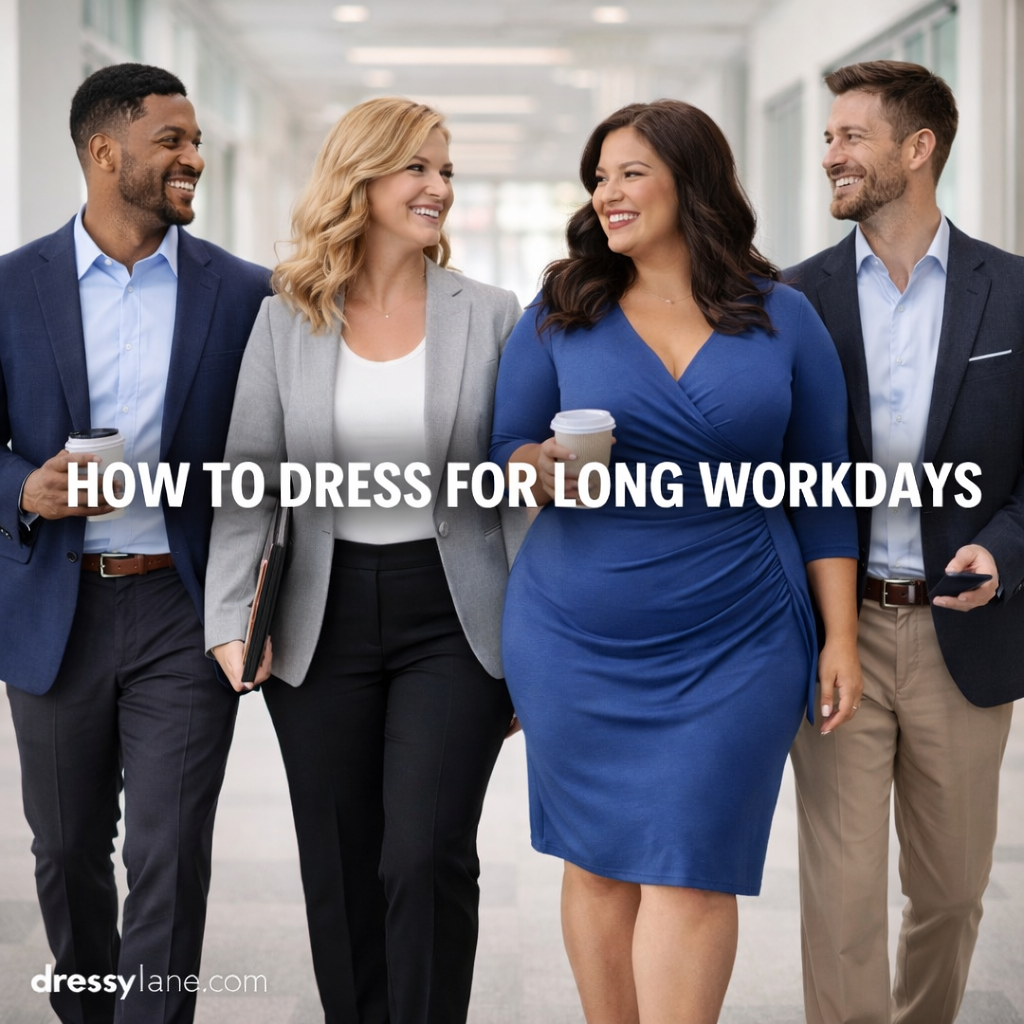
Long workdays demand more from your clothing than short meetings or casual errands. When you’re spending eight, ten, or even twelve hours at work, what you wear affects your comfort, confidence, and productivity. The goal is to look professional while staying comfortable from morning to evening.
This guide breaks down how to dress for long workdays with smart fabric choices, flexible styling, and practical outfit strategies for both men and women.
Why Dressing for Long Workdays Requires a Different Approach
Long workdays expose weaknesses in clothing choices.
Common problems include:
- Fabrics that wrinkle or lose shape
- Shoes that become uncomfortable after a few hours
- Tight or restrictive clothing
- Layers that don’t adapt to temperature changes
- Outfits that feel stiff or heavy by midday
Planning ahead helps prevent discomfort and fatigue.
Start With Comfort-First Fabrics
Fabric choice matters more than most people realize.
Look for materials that offer:
- Breathability
- Stretch or flexibility
- Wrinkle resistance
- Moisture control
- Lightweight structure
Blends with natural fibers often perform better than stiff or overly synthetic materials.
Choose Polished but Flexible Silhouettes
Comfort doesn’t mean sloppy.
Aim for silhouettes that:
- Allow movement
- Sit comfortably when seated
- Don’t cling or pinch
- Maintain a clean shape throughout the day
Tailored-but-relaxed pieces work best for extended wear.
Layer Strategically for Changing Temperatures
Offices can shift from cold mornings to warm afternoons.
Smart layering includes:
- Lightweight blazers
- Cardigans or knit jackets
- Breathable undershirts
- Removable outer layers
Avoid bulky layers that are hard to manage once removed.
Prioritize Supportive Footwear
Shoes make or break long workdays.
Choose footwear that:
- Offers cushioning and arch support
- Has stable soles
- Fits well without pressure points
- Matches your professional environment
Rotating shoes throughout the week can also reduce fatigue.
Build Outfits That Transition Through the Day
Long workdays often include meetings, desk work, and after-hours tasks.
Versatile outfit strategies:
- Neutral base outfits with adjustable layers
- Pieces that look polished without constant readjusting
- Shoes and accessories that work beyond the office
- Clothing that doesn’t require frequent maintenance
Your outfit should work for the entire day, not just the morning.
Dressing for Long Workdays: Men’s Tips
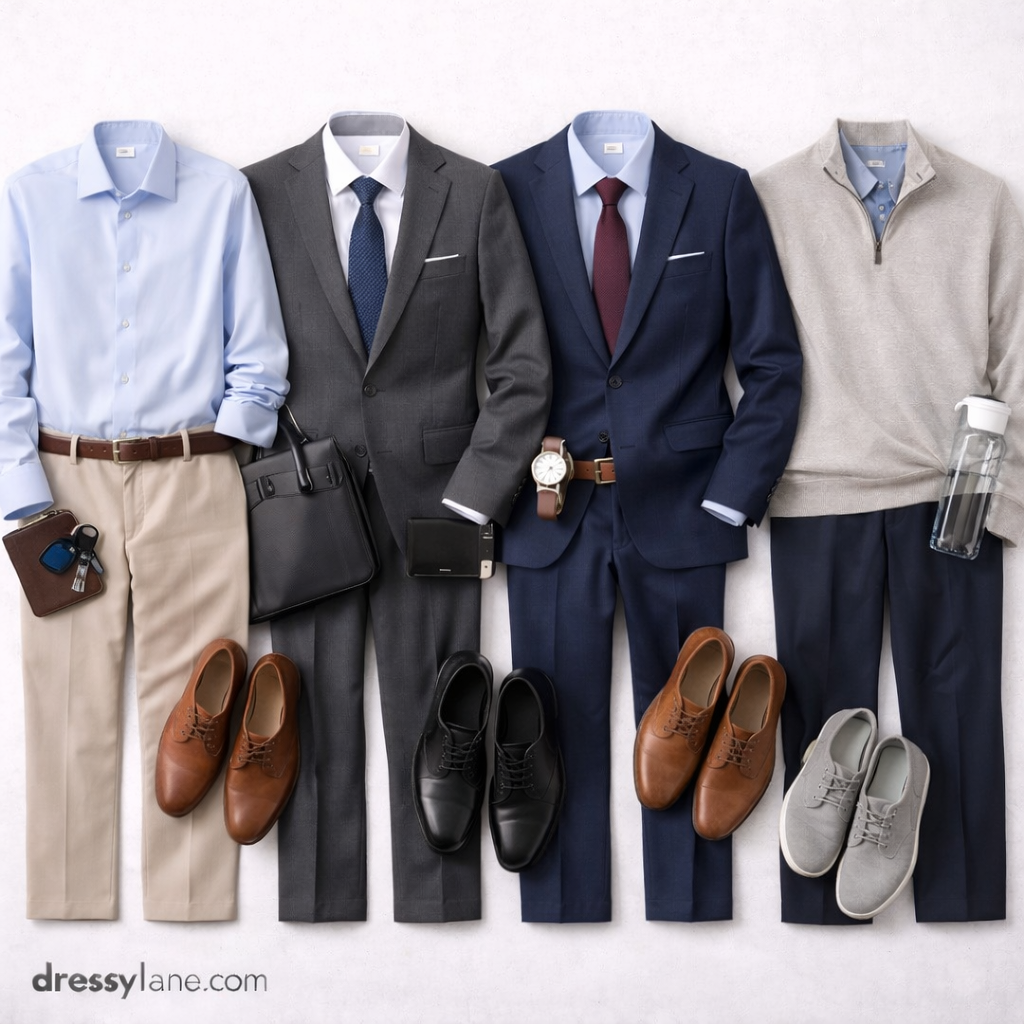
Men benefit from structure with flexibility.
Effective choices include:
- Stretch dress shirts or polos
- Tailored trousers with stretch
- Lightweight blazers
- Breathable undershirts
- Cushioned dress shoes or professional sneakers
Avoid overly stiff fabrics or shoes with thin soles.
Dressing for Long Workdays: Women’s Tips
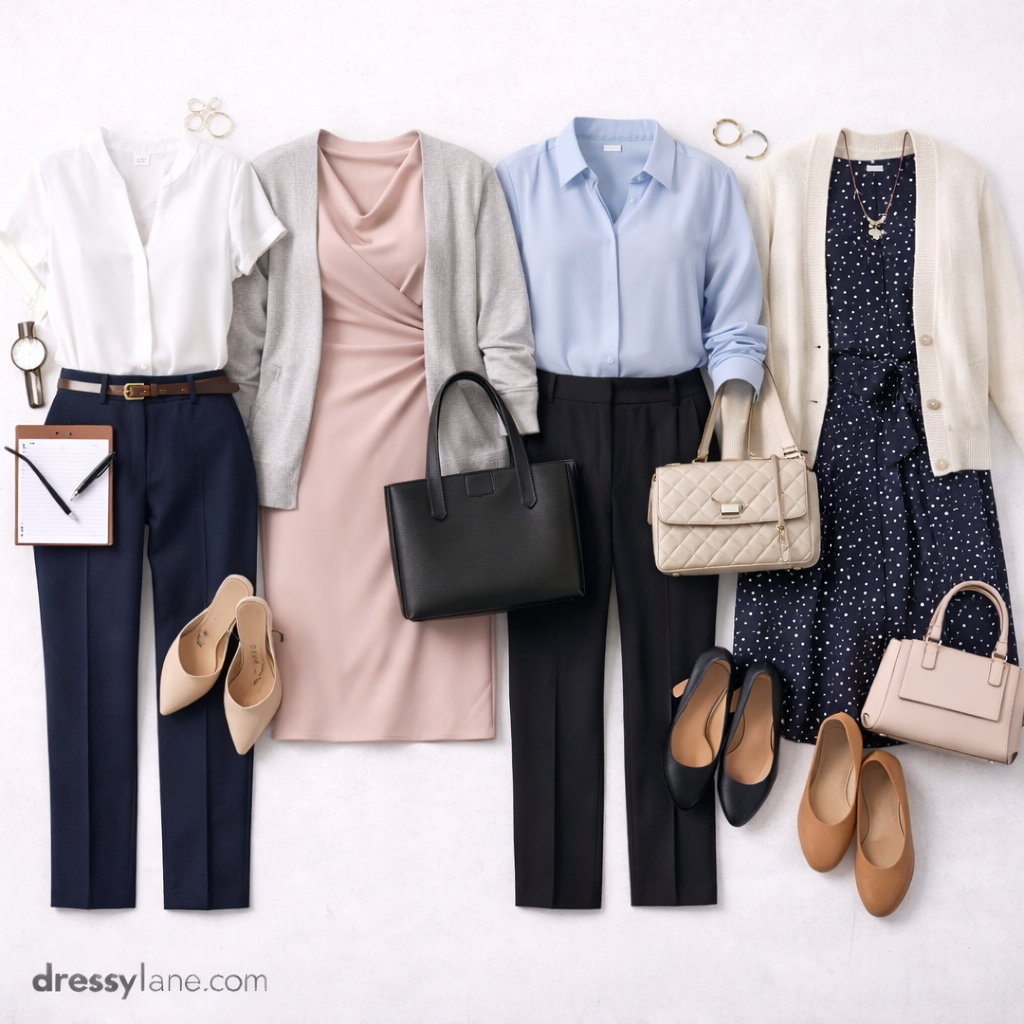
Women’s workwear should balance comfort and structure.
Helpful strategies include:
- Dresses or tops with stretch
- Pants or skirts that allow movement
- Low or block heels, or polished flats
- Layering pieces that don’t restrict arms or shoulders
- Fabrics that remain comfortable when seated
Comfort-focused choices prevent end-of-day discomfort.
Accessories That Support Long Days
Accessories should enhance comfort, not distract.
Choose:
- Lightweight belts
- Minimal jewelry
- Structured bags with comfortable straps
- Breathable hosiery or socks
Avoid heavy accessories that become annoying over time.
Grooming and Fabric Care Considerations
Long days can reveal fabric and grooming issues.
Helpful habits:
- Choose wrinkle-resistant fabrics
- Carry a lint roller
- Opt for breathable grooming products
- Avoid materials that show sweat easily
Looking put-together helps maintain confidence throughout the day.
Common Mistakes to Avoid
Avoid these pitfalls:
- Wearing new shoes on long days
- Choosing overly tight or heavy clothing
- Ignoring temperature changes
- Dressing only for appearance, not comfort
- Wearing fabrics that lose shape quickly
Preparation prevents discomfort.
Final Thoughts
Dressing for long workdays is about strategic choices, not sacrificing style. By prioritizing comfort-first fabrics, flexible silhouettes, supportive footwear, and adaptable layers, you can stay professional and comfortable from start to finish.
When your clothing works with you—not against you—long days feel more manageable, productive, and confident.