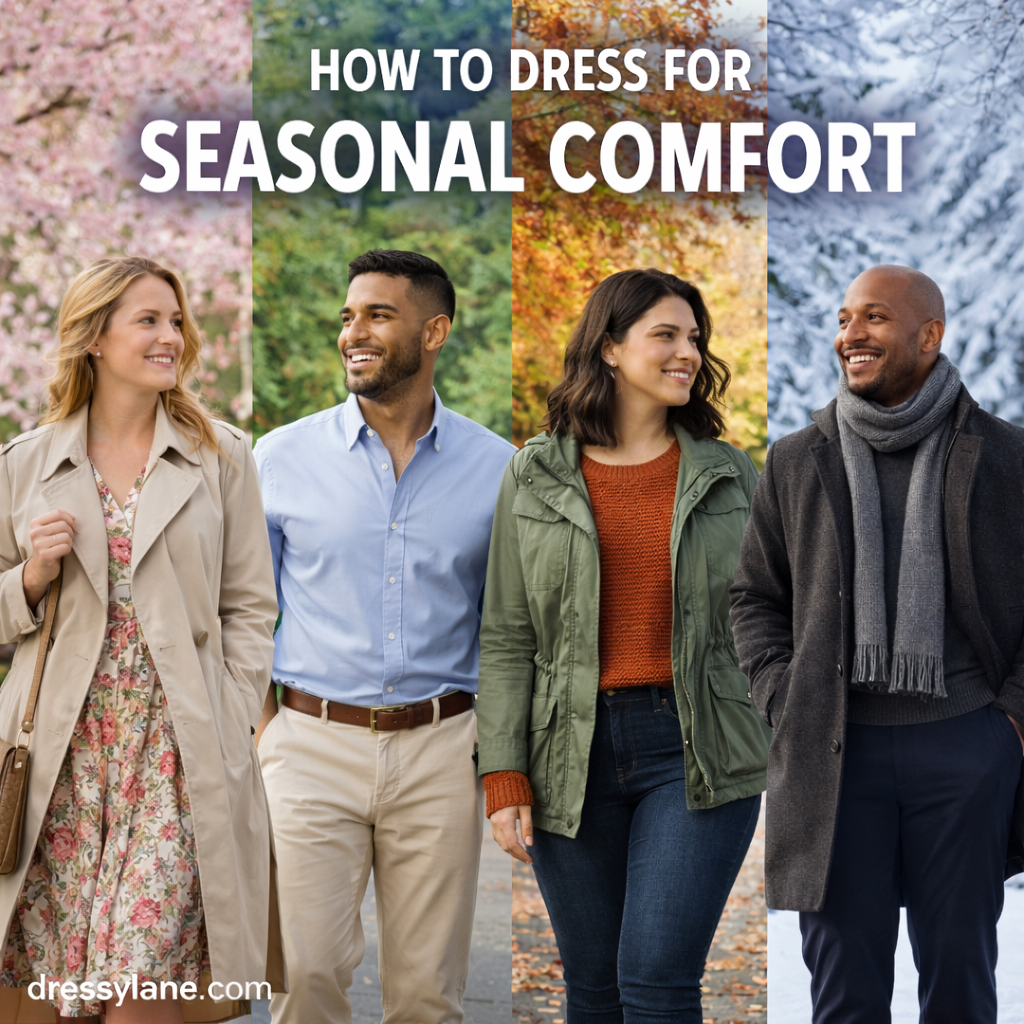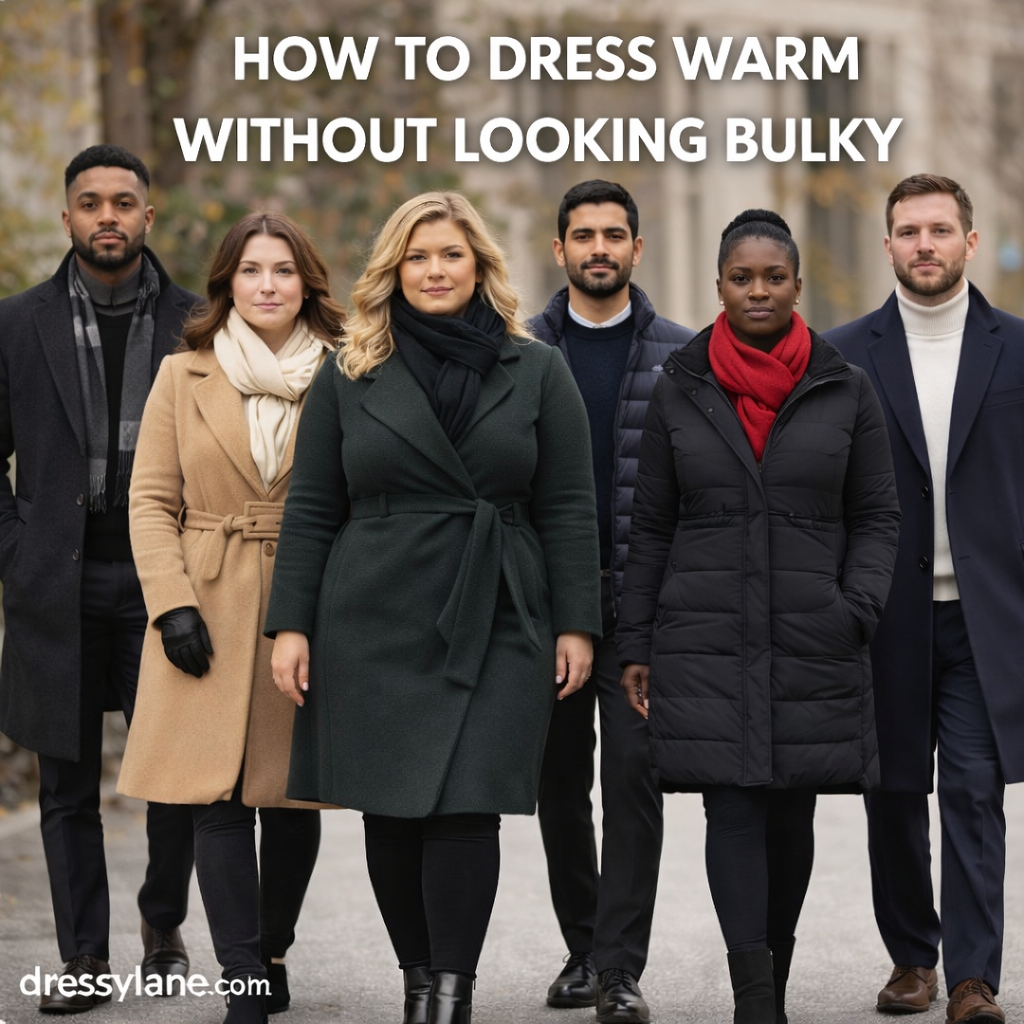
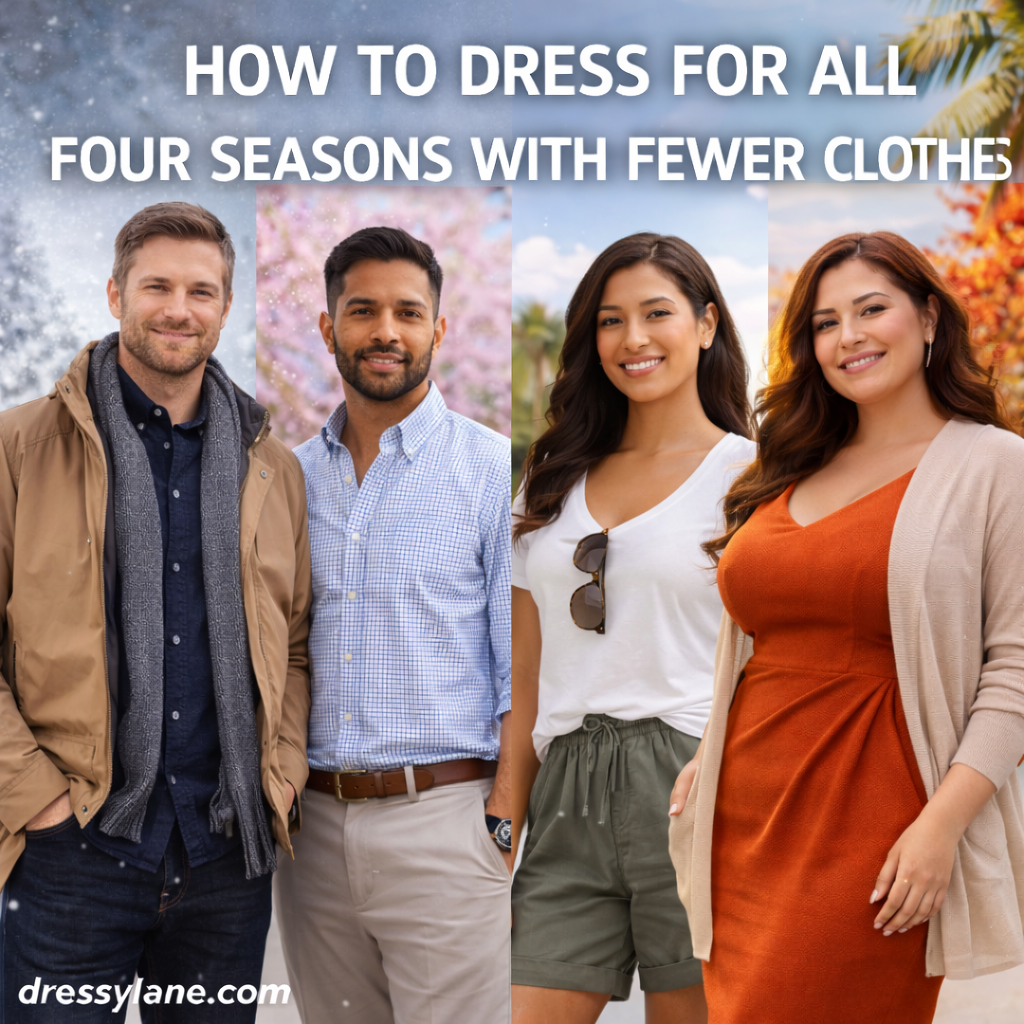
Building a wardrobe that works year-round doesn’t require endless options or constant shopping. In fact, the most versatile wardrobes often belong to people who own fewer, better-chosen pieces. By focusing on layering, adaptable fabrics, and thoughtful combinations, you can dress comfortably in all four seasons without overcrowding your closet.
This guide explains how to dress for all four seasons with fewer clothes, offering practical strategies for men and women who want simplicity, flexibility, and comfort year-round.
Why Fewer Clothes Can Work Better
A smaller wardrobe encourages smarter choices and better outfit planning.
Benefits of dressing with fewer clothes include:
- Less decision fatigue
- Easier packing and storage
- Better outfit consistency
- Reduced waste and spending
- More confidence in what you own
Versatility—not volume—is what makes a wardrobe functional.
Choose Multi-Season Core Pieces
The foundation of a minimal seasonal wardrobe is clothing that works in more than one climate.
Ideal Core Pieces
- Neutral-colored tops and bottoms
- Lightweight sweaters
- Breathable button-down shirts
- Comfortable trousers or skirts
- Shoes suitable for walking and layering with socks
These items transition easily when paired with different layers.
Master the Art of Layering
Layering allows the same outfit to function across seasons.
Smart Layering Structure
- Base layer for comfort and temperature regulation
- Mid-layer for insulation or warmth
- Outer layer for weather protection
When layers are thin and breathable, you can add or remove them without bulk.
Fabric Choice Is Everything
The right fabrics expand seasonal usefulness.
Best Multi-Season Fabrics
- Cotton
- Merino wool
- Linen blends
- Tencel or modal
- Lightweight denim
These materials adapt well to temperature changes and can be layered easily.
How to Dress for All Four Seasons With Fewer Clothes as a Woman
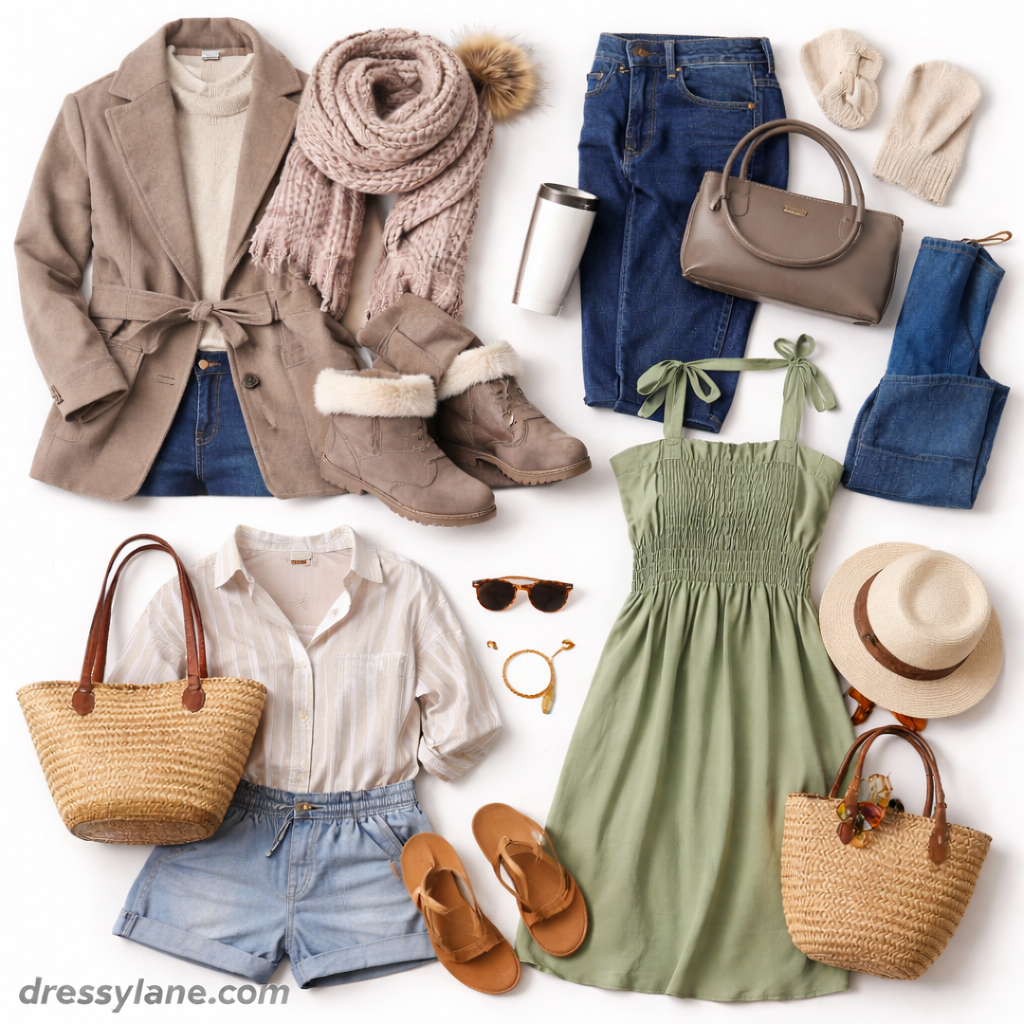
Women often benefit from pieces that layer smoothly and maintain shape.
Practical Strategies for Women
- Choose dresses that work with tights, boots, or sandals
- Invest in neutral cardigans or blazers
- Use scarves for warmth and style variation
- Stick to shoes that adapt with socks or insoles
A single dress can work in summer alone or winter with layers.
How to Dress for All Four Seasons With Fewer Clothes as a Man
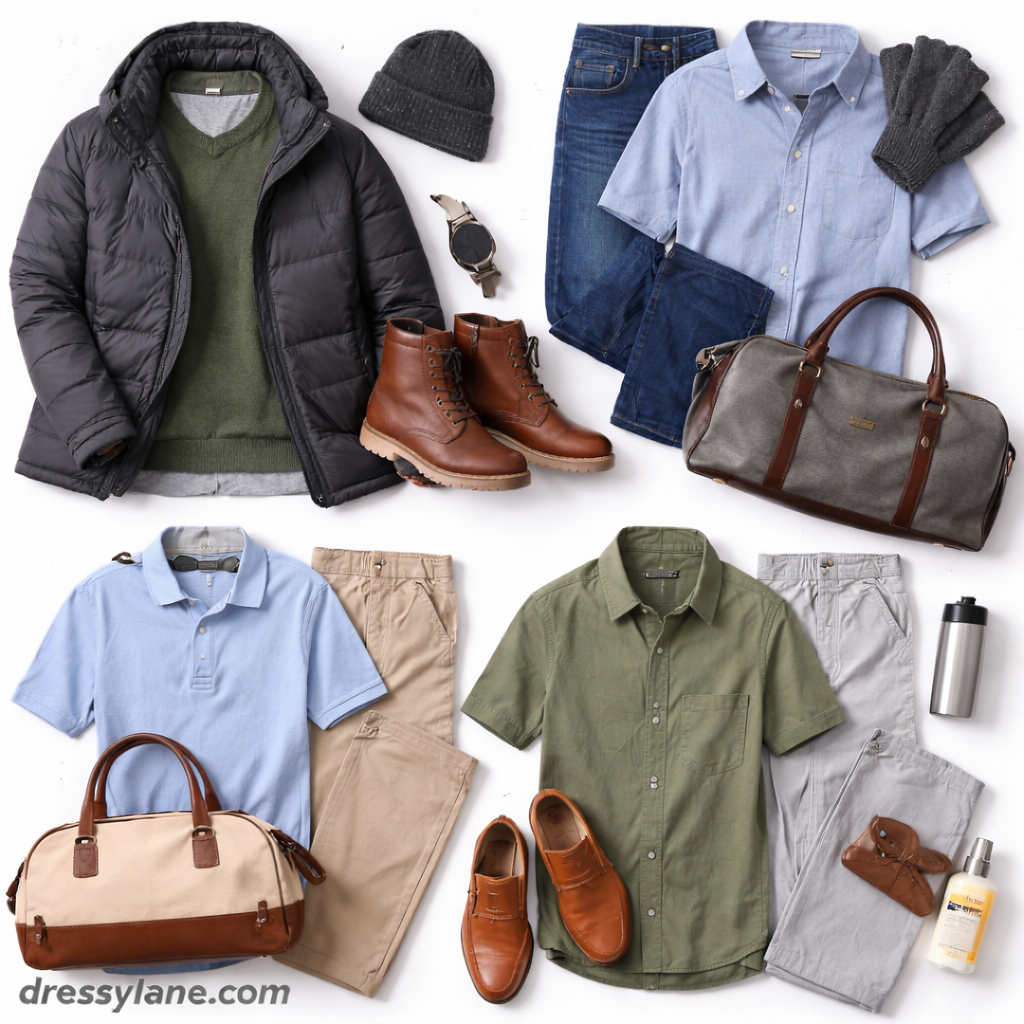
Men’s clothing naturally lends itself to layering and repetition.
Practical Strategies for Men
- Use button-down shirts as base or mid-layers
- Choose sweaters that fit under jackets
- Invest in versatile outerwear
- Stick to neutral trousers year-round
A few well-fitted pieces can rotate endlessly with small adjustments.
Transitioning the Same Outfit Across Seasons
One outfit can work all year with simple changes.
Seasonal Adjustments
- Summer: Wear base pieces alone
- Fall: Add lightweight layers
- Winter: Layer with insulation and coats
- Spring: Remove heavier layers gradually
The base outfit stays the same—the layers change.
Use Accessories to Expand Outfits
Accessories allow variation without buying new clothing.
Useful multi-season accessories include:
- Scarves
- Belts
- Socks of different thicknesses
- Lightweight hats
- Neutral bags
Accessories take up little space but offer big flexibility.
Limit Your Color Palette
A tight color palette makes mixing and matching easier.
Helpful color strategies:
- Stick to 2–3 neutral colors
- Add 1–2 accent shades
- Choose colors that layer well together
When everything coordinates, fewer pieces create more outfits.
Common Mistakes When Trying to Own Less
Avoid these pitfalls:
- Buying single-season items only
- Choosing impractical fabrics
- Ignoring layering potential
- Over-accessorizing
- Keeping clothing that doesn’t fit comfortably
A smaller wardrobe works best when every piece earns its place.
Final Thoughts
Learning how to dress for all four seasons with fewer clothes is about intention, not limitation. By choosing versatile fabrics, mastering layering, and building around neutral core pieces, both men and women can stay comfortable year-round without clutter.
When your wardrobe is flexible and thoughtful, getting dressed becomes easier—and owning less starts to feel like a freedom rather than a compromise.