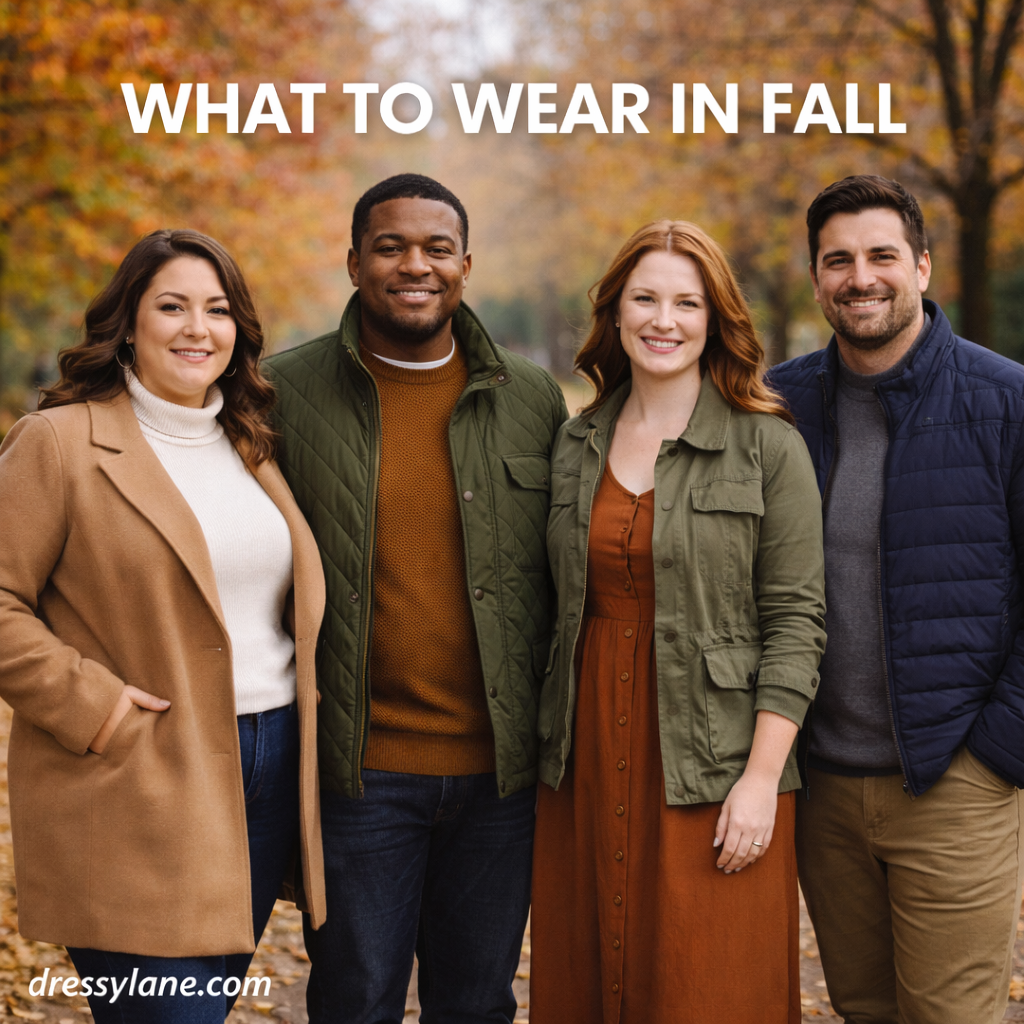
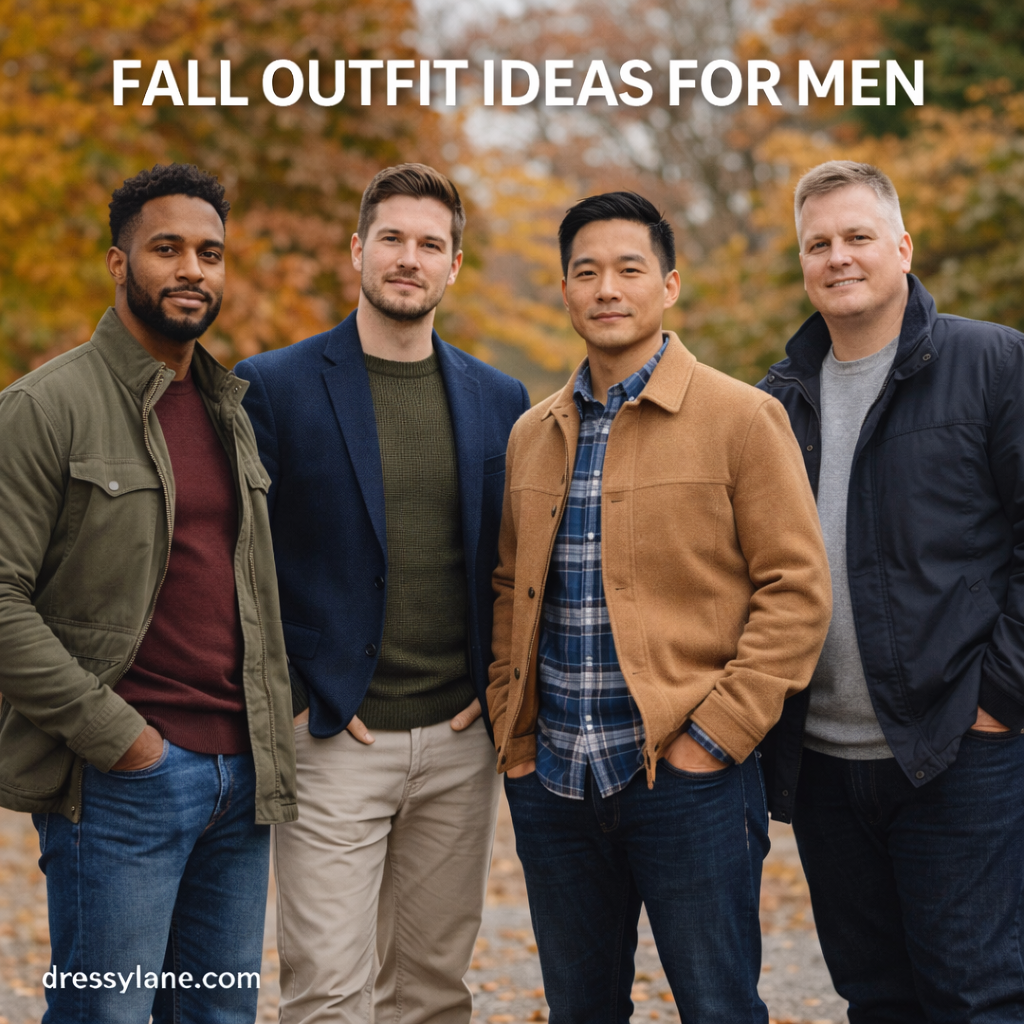
Fall is one of the easiest seasons for men to dress well because you can finally add layers without needing a heavy winter coat. A T-shirt under an overshirt, an Oxford shirt under a sweater, or a lightweight jacket over both can turn basic pieces into an outfit that looks considered without feeling overdressed.
The best fall outfits for men also account for the awkward part of the season: a morning that starts at 50°F can easily turn into a 70°F afternoon.
Rather than dressing heavily from the start, build fall outfits around mid-weight fabrics and removable layers. You’ll get more use from your clothes and won’t spend the afternoon carrying a bulky sweater you wish you’d left at home.
Start With a Reliable Fall Formula
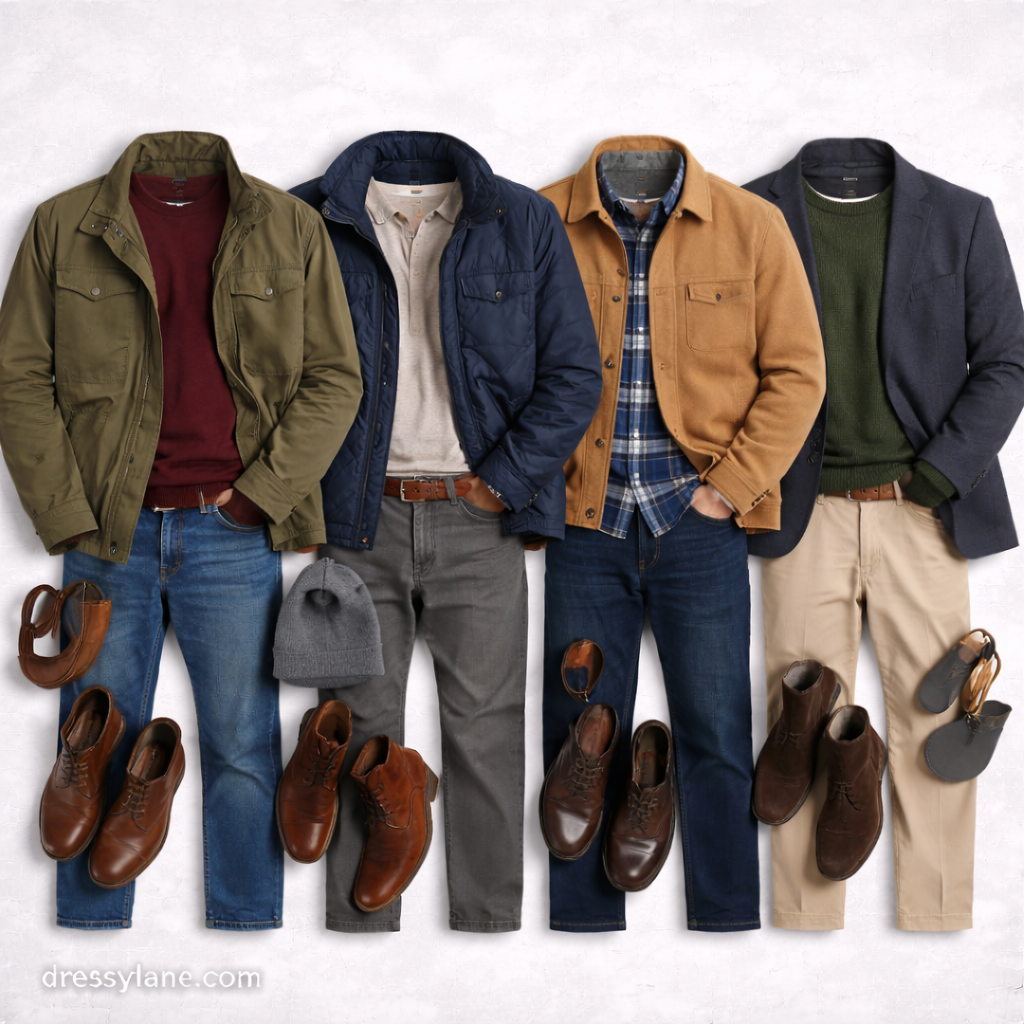
One of the simplest fall outfits is also one of the most useful:
T-shirt + overshirt + straight-leg jeans or chinos + sneakers or boots.
The overshirt does most of the work. Look for cotton twill, brushed cotton, corduroy, or a medium-weight wool blend rather than a thin summer shirt. Olive, navy, brown, charcoal, and tan are particularly easy to combine with clothes you probably already own.
On warmer afternoons, wear it open like a jacket. When the temperature drops, button it up.
I prefer this approach to immediately reaching for a thick flannel shirt. Heavy flannel can be great later in the season, but a structured overshirt gives you a wider temperature range and doesn’t automatically make every outfit look like cold-weather workwear.
Casual Fall Outfit Ideas for Men
You don’t need complicated layering for an everyday fall outfit.
Try dark indigo jeans with a heather-gray crewneck sweatshirt, brown suede sneakers, and an olive field jacket. The colors are distinctly autumnal without looking like you’re deliberately trying to match the leaves.
Another easy combination is:
- White or cream T-shirt
- Navy or brown corduroy overshirt
- Straight-leg chinos
- Leather sneakers
For something more rugged, swap the sneakers for lace-up boots and the chinos for dark denim.
A hoodie can work too. The key is giving it some structure elsewhere. A plain gray hoodie under a denim, canvas, or bomber jacket looks much more intentional than piling an oversized hoodie underneath an equally oversized coat.
The Sweater-and-Trouser Combination
A crewneck sweater with trousers is one of my favorite fall combinations because you can change its formality almost entirely through footwear.
Start with a fine-gauge merino or cotton-wool crewneck and straight or gently tapered trousers.
Wear it with clean leather sneakers and you have an easy weekend outfit. Switch to loafers or Chelsea boots and the same basic combination works for dinner or a casual office.
Charcoal trousers with a camel, forest green, navy, or burgundy sweater are particularly easy combinations.
Pay attention to sweater thickness. A chunky knit looks appropriately autumnal, but it limits what you can put over it. A medium or fine-gauge sweater fits underneath a blazer, field jacket, or coat and will usually get far more wear.
Smart Casual Fall Outfit Ideas for Men
Fall is especially good for smart casual dressing because texture can replace formality.
Instead of a standard dress shirt and blazer, try a light blue Oxford shirt, brown or olive chinos, a textured navy blazer, and dark brown loafers.
For a date or dinner, a knit polo under a suede or wool-blend jacket works particularly well. Add tailored trousers and Chelsea boots and you have an outfit that’s polished without looking like office clothing.
Another combination worth trying is a button-down shirt underneath a crewneck sweater with only the collar showing. Keep the shirt relatively trim so excess fabric doesn’t bunch underneath the knit.
I’d avoid stacking a shirt, thick sweater, scarf, and jacket just because it’s fall. If you can barely move your arms comfortably, you’ve added one layer too many.
Fall Work Outfits for Men
Business-casual offices give you plenty of room to use fall fabrics.
A dependable combination is:
Oxford shirt + merino sweater + wool trousers + loafers.
Keep a blazer at work or add one when you need another level of formality.
Chinos also work well in less formal offices. Try navy chinos with a pale blue shirt, gray quarter-zip or crewneck sweater, and brown leather shoes.
For offices that require more traditional business clothing, fall is a good time for textured tailoring. Flannel trousers and hopsack, tweed, or brushed-wool jackets add visual interest without requiring unusual colors or patterns.
Just don’t confuse heavier with better. Indoor heating can make thick wool uncomfortable surprisingly quickly, so lighter wool layers are often more practical for an entire workday.
Your Jacket Usually Sets the Tone
A few good jackets can create most of your fall wardrobe.
A denim jacket works naturally with chinos, cords, and casual trousers. If you’re wearing jeans too, use noticeably different denim shades rather than trying to create a near-match.
A field or utility jacket is useful when you want something casual but more substantial than an overshirt.
A bomber jacket creates a cleaner, slightly sportier silhouette and works particularly well with T-shirts, polos, and lightweight sweaters.
Later in fall, a wool topcoat can go over both office clothes and casual outfits. A charcoal, navy, camel, or dark brown version will generally be easier to use than a highly distinctive color.
Whatever style you choose, make sure you can comfortably fit a sweater underneath it. A jacket that fits perfectly over a T-shirt but pulls across the shoulders over knitwear isn’t much of a fall jacket.
Shoes Can Make the Same Outfit Look Completely Different
You don’t need an enormous fall footwear collection.
Clean leather sneakers cover casual outfits. Chelsea boots can handle jeans, chinos, and trousers. Brown suede or leather loafers are excellent when you want something smarter without wearing formal dress shoes.
For wetter weather, check the outsole rather than assuming every boot is practical. A slick leather sole on wet pavement isn’t particularly useful just because the upper reaches your ankle.
This is also when very lightweight canvas sneakers start becoming less practical, especially once mornings get damp and temperatures fall.
Use Fall Colors Without Wearing All of Them at Once
Olive, rust, burgundy, mustard, brown, camel, forest green, navy, and charcoal all suit fall, but they don’t need to appear in the same outfit.
Start with colors you already wear.
If your wardrobe is mostly navy, gray, white, and denim, add one warmer shade—perhaps an olive jacket or brown sweater. If you already wear earth tones, burgundy or dark green knitwear can add variation.
A particularly easy formula is two neutrals plus one fall color: charcoal trousers, a white Oxford, and an olive jacket, for example.
Don’t Forget Texture
Texture is one reason men’s fall outfits can look interesting even when the colors are simple.
Corduroy, brushed cotton, suede, denim, merino wool, flannel, and textured knits all look different next to one another.
A navy sweater with charcoal trousers might sound basic, but make the sweater merino, the trousers wool flannel, and the shoes brown suede and the outfit has considerably more depth without adding another color or pattern.
Build Around Clothes You’ll Actually Layer
You don’t need a separate wardrobe for fall.
A practical starting point is two or three sweaters, a couple of button-down shirts, jeans and chinos or trousers, an overshirt, and one or two jackets. Add sneakers plus boots or loafers and you can build a large number of outfits from a relatively small group of clothes.
The important part is making sure the pieces physically work together.
Try your sweater underneath your jacket. Check whether your trouser opening sits naturally over your boots. Make sure the overshirt still looks good when worn open over a T-shirt.
Those small details are what make layering look intentional rather than simply looking like you’re wearing more clothes.
Final Thoughts
The best fall outfit ideas for men aren’t complicated. They rely on good combinations: an Oxford under a merino sweater, a T-shirt beneath a structured overshirt, dark denim with a field jacket, or wool trousers paired with a textured knit.
Use medium-weight fabrics such as cotton twill, denim, corduroy, merino wool, and flannel, and choose outer layers you can remove when the afternoon warms up.
Most importantly, don’t feel obligated to dress in head-to-toe brown and rust because it’s fall. Start with the neutral clothes you already wear, introduce texture and one or two seasonal colors, and let the extra layer do most of the work.