

The shoes you wear with a dress can change the entire character of the outfit.
Take a simple black midi dress. Wear it with white leather sneakers and it becomes an everyday outfit. Add loafers and it can work for the office. Switch to a slim slingback or strappy sandal and the same dress is suddenly ready for dinner.
That’s why choosing shoes for a dress is less about memorizing which footwear “goes” with each hemline and more about looking at the dress itself: its length, fabric, shape, formality, and where you’re actually going.
And comfort matters. The perfect heel isn’t particularly useful if you’ll spend half the evening looking for somewhere to sit.
Start With the Weight and Shape of the Dress
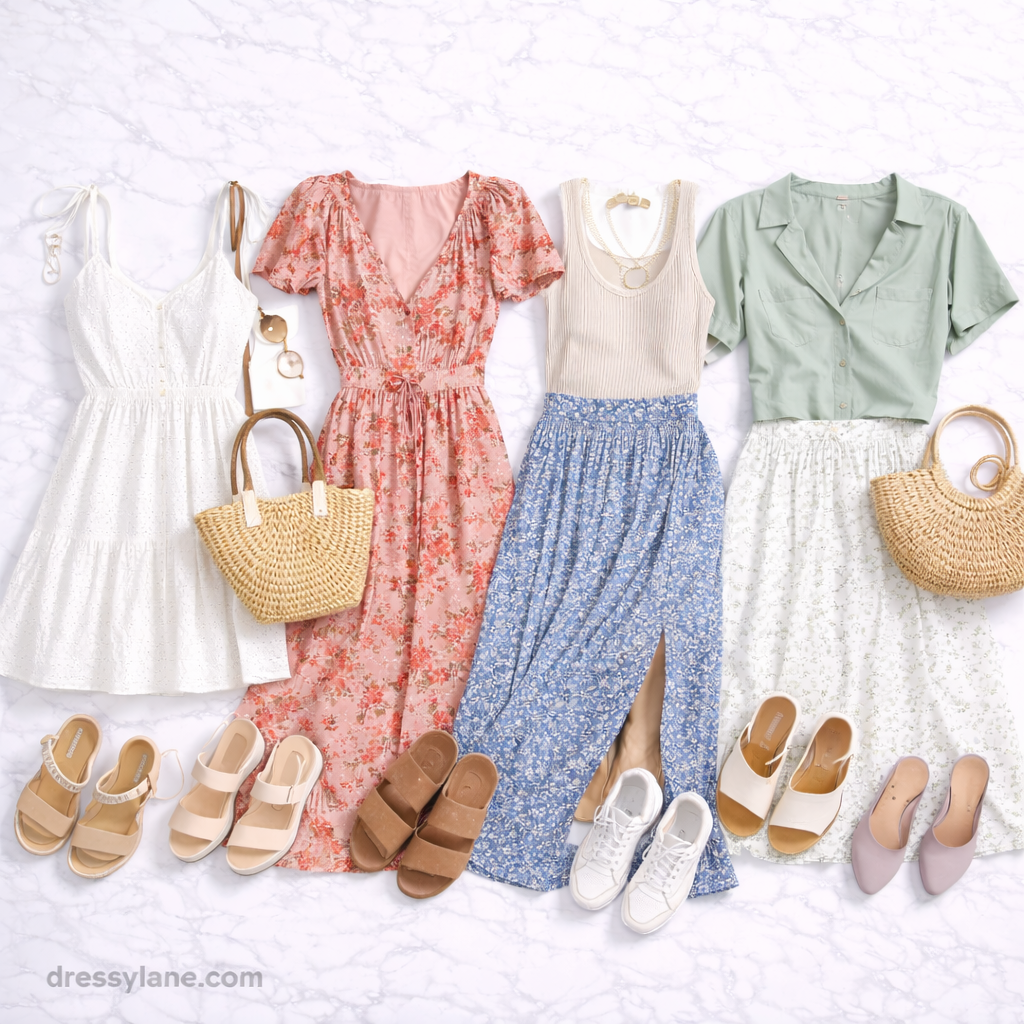
Before worrying about color, look at the visual weight of the dress.
A floaty chiffon midi and a structured denim midi may have exactly the same hem length, but I wouldn’t automatically put them with the same shoes.
Lighter dresses tend to work naturally with:
- Slim sandals
- Ballet flats
- Slingbacks
- Low-profile sneakers
- Espadrilles
More substantial fabrics such as denim, corduroy, heavy cotton, ponte, or wool can support heavier footwear:
- Loafers
- Ankle boots
- Knee-high boots
- Chunkier sneakers
- Platform sandals
You can deliberately create contrast—a delicate floral dress with substantial boots can look great—but it should feel like a styling choice rather than an accident.
What Shoes Go With Mini Dresses?
Mini dresses leave more of the leg visible, so they can handle a surprisingly wide range of shoes.
For a casual cotton or linen mini dress, try simple leather sandals, low-profile sneakers, or espadrilles.
A more structured mini can work with loafers, ballet flats, ankle boots, or knee-high boots depending on the season.
For evening, a slim heeled sandal or pointed slingback makes the outfit noticeably dressier without requiring an extremely high heel.
One combination I’d be careful with is a very short dress plus an extremely high platform heel when you’re already unsure about the proportions. It can make the entire outfit feel more dramatic than you intended.
If that’s not the effect you want, try a lower heel, flat, or streamlined boot instead.
What Shoes Go With Midi Dresses?
Midi dresses are where people tend to overthink footwear.
You don’t need a heel just because the hem reaches your calf.
Ballet flats, loafers, sneakers, slingbacks, sandals, ankle boots, and knee-high boots can all work with a midi.
The dress shape matters more.
A fitted knit midi looks sharp with a slim boot or slingback. A loose cotton shirtdress can take a loafer or clean sneaker. A flowing pleated midi works nicely with a simple sandal because the lighter shoe doesn’t compete with the movement of the skirt.
If a midi dress seems to make your lower half look visually heavy, try a shoe with a lower vamp—meaning more of the top of your foot is visible. A ballet flat, pump, or open sandal can create a longer uninterrupted line.
That’s an option, though, not a requirement.
What Shoes Go With Maxi Dresses?
With maxi dresses, the first consideration is practical: where does the hem actually fall once your shoes are on?
A floor-skimming dress fitted while you’re barefoot may suddenly become too short with a three-inch heel. A maxi hemmed for heels may drag on the pavement when you switch to flats.
Try the dress on with the actual shoe height you’re planning to wear.
For casual maxis, flat leather sandals, minimal sneakers, espadrilles, and slides can all work.
For dressier maxis, try:
- Strappy heeled sandals
- Low block heels
- Dressy flats
- Slingbacks
- Metallic sandals
A heavier knit or sweater dress can also work beautifully with boots.
And don’t worry if the shoes barely show. With a full-length dress, comfort and appropriate heel height matter more than finding elaborate footwear that will remain hidden for most of the evening.
The Easiest Shoes for Casual Dresses
For everyday dresses, I usually start with the shoes I’m genuinely willing to walk in.
A cotton T-shirt dress with clean sneakers makes sense for errands or a day involving a lot of walking. A linen sundress with flat leather sandals works naturally in hot weather. A denim shirtdress with loafers or ankle boots gives you more structure.
Useful combinations include:
- Cotton midi dress + leather sneakers
- Linen dress + flat sandals
- Knit dress + loafers
- Denim dress + ankle boots
- Floral sundress + espadrilles
- Shirtdress + ballet flats
I’d rather wear a genuinely comfortable flat than spend an ordinary afternoon struggling in heels because they supposedly make the dress look better.
Footwear should match your day as well as your dress.
What Shoes Go With Formal Dresses?
Formal dresses usually benefit from shoes with cleaner, more refined lines, but that doesn’t automatically mean stilettos.
A pointed flat can look elegant with a cocktail dress. So can a low slingback or kitten heel.
For weddings, dinners, and formal events, consider:
- Slim heeled sandals
- Slingback pumps
- Kitten heels
- Pointed-toe flats
- Low block heels
- Refined metallic sandals
Satin, suede, smooth leather, and subtle metallic finishes generally read dressier than rubber soles or heavily athletic details.
One practical tip: think about the venue before choosing the heel.
For an outdoor garden wedding, I’d skip a needle-thin stiletto that will sink into grass. A block heel, wedge, flat, or wider-based sandal is much easier to manage.
That’s the kind of decision that matters much more after two hours than it does in a bedroom mirror.
What Shoes Go With Dresses for Work?
Office footwear needs to survive more than the walk from your desk to the elevator.
Loafers are one of my favorite options because they work with sheath dresses, shirtdresses, and many midi silhouettes without automatically making the outfit look formal.
Other practical choices include:
- Ballet flats
- Pointed flats
- Low block heels
- Slingbacks
- Kitten heels
- Simple ankle boots in cooler weather
For a navy sheath dress, try black or cognac loafers. A camel knit dress can work with dark-brown boots. A printed midi dress often looks better with a simple solid-color shoe than something equally patterned.
If you commute on foot or public transportation, there’s also nothing wrong with wearing comfortable walking shoes during the commute and changing at work.
Boots and Dresses Work Better Than Many People Think
Boots shouldn’t be reserved for jeans.
Knee-high boots work particularly well underneath midi dresses because they avoid the awkward strip of exposed leg that can occur between an ankle boot and a longer hem in cold weather.
Ankle boots are easier with mini dresses and shorter midis, although proportions vary depending on the shaft height.
For fall, try a floral midi dress with brown suede boots. In winter, a ribbed knit dress with knee-high leather boots creates warmth without requiring complicated layering.
Add tights when you need them rather than treating bare legs as part of the required look.
How to Choose a Shoe Color
You don’t have to match the shoes to the dress.
In fact, exact matching can sometimes look more forced than choosing a complementary neutral.
Black shoes are useful with darker dresses, jewel tones, prints, and many evening outfits. Brown, cognac, and tan work naturally with denim, cream, olive, rust, navy, and earthy prints.
Cream and white shoes can lighten spring and summer dresses.
Metallics are especially useful for events. Gold, silver, pewter, and bronze can function almost like neutrals when the finish isn’t overwhelmingly reflective.
And “nude” doesn’t mean one universal beige. If you’re choosing a shoe specifically to visually continue the line of your leg, look for a shade reasonably close to your skin tone.
You Can Wear Colorful Shoes With a Colorful Dress
The dress does not always have to be the only focal point.
A floral dress containing red can look excellent with red shoes. A cobalt dress can work with an orange sandal if you’re deliberately going for strong color contrast.
The easiest approach with a patterned dress is to pull one color from the print and repeat it in the shoes.
For example, if a floral midi contains burgundy, cream, and green, a burgundy flat can look more connected to the dress than a generic beige shoe.
I’d only simplify the footwear when the outfit starts feeling visually crowded—not because there’s a rule saying the shoes aren’t allowed to be interesting.
Don’t Buy Shoes for a Dress Without Walking in Them
This is the fitting-room test I’d use before any event.
Put on the dress and shoes together, then actually walk.
Walk across a hard floor if possible. Sit down. Stand up. Go up and down a few steps.
Pay attention to whether your toes slide forward, your heel lifts out of the shoe, a strap rubs, or you’re already changing your stride.
If you’re uncomfortable after five minutes at home, you probably won’t become more comfortable after three hours at a wedding.
Also check the hem while you’re moving. Long dresses can catch underneath heels or drag behind flats in ways that aren’t obvious when you’re standing still.
Final Thoughts
So, what shoes go with dresses?
Sneakers, sandals, ballet flats, loafers, boots, slingbacks, espadrilles, and heels can all work. The right choice depends less on the fact that you’re wearing a dress and more on what kind of dress you’re wearing and what you’re doing in it.
Start with the fabric and silhouette. Consider the hem length and season. Then think realistically about the venue, how much you’ll walk, and how long you’ll be standing.
A linen sundress may call for flat leather sandals. A wool midi might look better with knee-high boots. A cocktail dress can work with a slim heel, metallic sandal, or pointed flat.
And if two pairs look equally good, I’d choose the one you can comfortably walk in.
The best shoe-and-dress combination is the one that still feels like a good decision several hours after you leave the house.