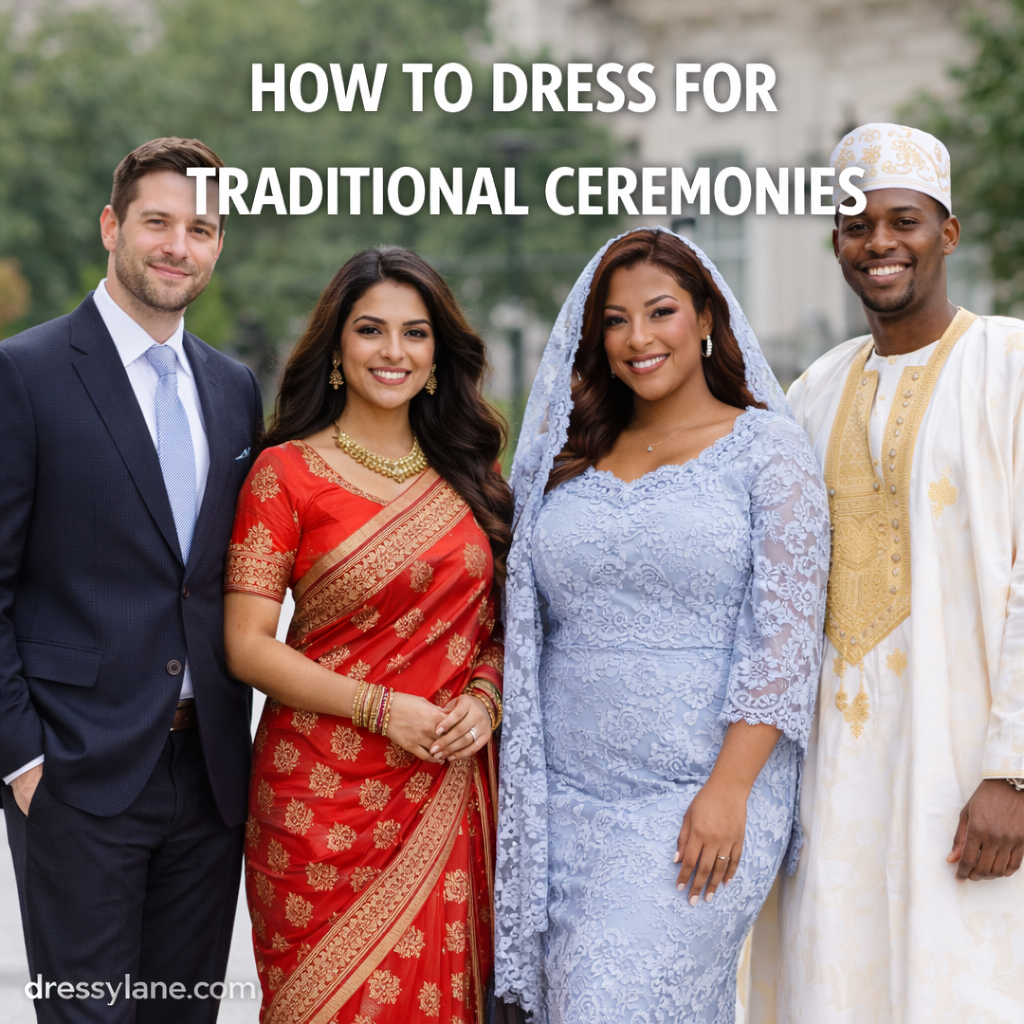
Traditional ceremonies often come with deep cultural meaning, long-standing customs, and specific expectations around attire. Whether you’re attending a religious wedding, cultural celebration, or formal rite of passage, dressing appropriately shows respect while helping you feel confident and comfortable.
This guide explains how to dress for traditional ceremonies, with thoughtful outfit guidance for both men and women across a range of settings.
Why Dressing Appropriately Matters at Traditional Ceremonies
Traditional ceremonies are rooted in history, symbolism, and community values. Clothing often plays a role in honoring those traditions.
Dressing thoughtfully helps you:
- Show respect for cultural or religious customs
- Avoid unintentionally offending hosts or families
- Blend seamlessly into the ceremony environment
- Feel confident and prepared for formal expectations
When in doubt, modesty and elegance are always safe choices.
Understand the Ceremony’s Cultural and Religious Context
Before selecting an outfit, learn as much as you can about the ceremony.
Important factors to consider:
- Religious requirements or guidelines
- Cultural expectations for guests
- Color symbolism or restrictions
- Modesty standards for shoulders, legs, or head coverings
If an invitation includes attire guidance, follow it closely.
General Style Principles for Traditional Ceremonies
Regardless of culture, certain principles apply across most traditional events.
Keep these guidelines in mind:
- Choose refined, formal silhouettes
- Avoid revealing or overly trendy clothing
- Opt for neutral or culturally appropriate colors
- Keep accessories understated
- Prioritize clean, well-fitted garments
Timeless elegance always outperforms fashion statements in these settings.
How Men Can Dress for Traditional Ceremonies
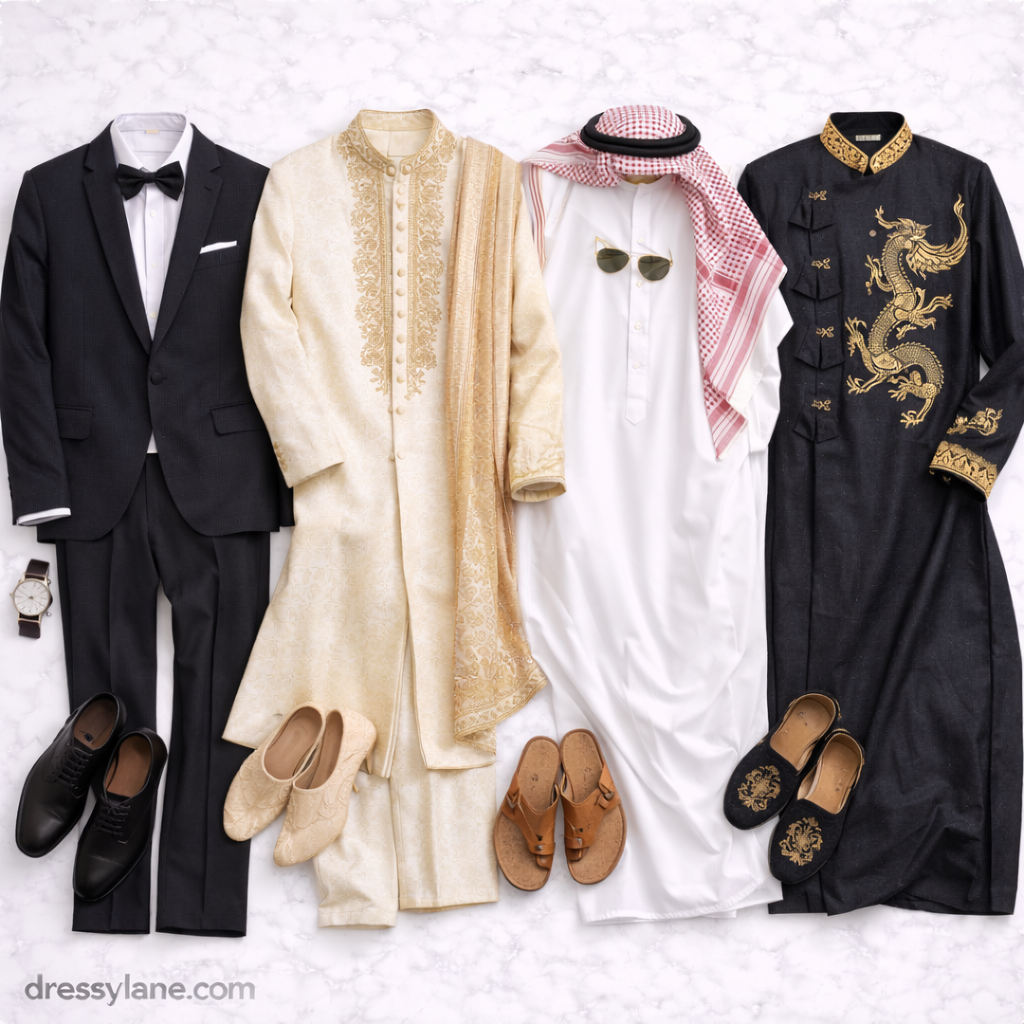
Men’s attire should feel polished, respectful, and appropriate to the formality of the event.
Appropriate Outfit Choices for Men
- Suits or traditional formal garments
- Dress shirts with long sleeves
- Tailored trousers
- Closed-toe dress shoes or formal footwear
In some cultures, traditional garments may be encouraged or expected—embrace them respectfully when appropriate.
Colors and Details to Consider
- Dark or neutral tones are usually safest
- Avoid loud patterns or flashy accessories
- Keep grooming neat and understated
- Remove casual items like sneakers or hats
A clean, classic look signals respect.
How Women Can Dress for Traditional Ceremonies
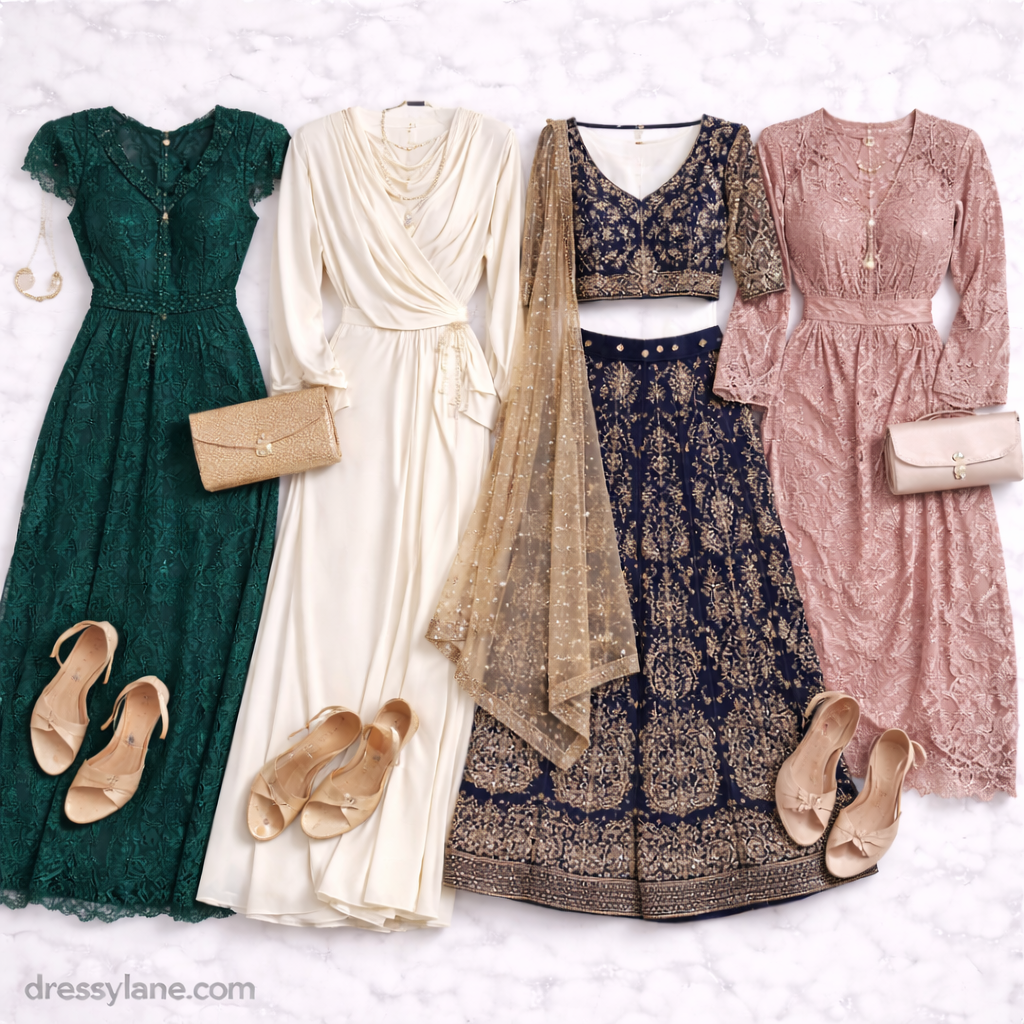
Women’s outfits should balance elegance, modesty, and cultural awareness.
Appropriate Outfit Choices for Women
- Long dresses, midi dresses, or formal skirts
- Structured blouses with sleeves when required
- Elegant wraps, shawls, or jackets
- Closed-toe shoes or refined sandals
Modest silhouettes are often preferred, especially in religious or elder-centered settings.
Fabric, Color, and Styling Tips
- Choose flowing or structured fabrics over clingy materials
- Avoid overly bright or symbolic colors unless appropriate
- Keep makeup and jewelry refined
- Secure hair neatly or follow head-covering customs if required
When unsure, covering more is better than risking underdressing.
Dressing for Different Types of Traditional Ceremonies
Not all traditional ceremonies share the same expectations.
Religious Ceremonies
- Follow modesty rules closely
- Avoid sleeveless or short garments
- Bring layers for coverage
Cultural Weddings
- Respect traditional colors and garments
- Avoid wearing colors reserved for the couple
- Ask hosts if traditional attire is encouraged
Formal Ancestral or Family Ceremonies
- Dress conservatively and formally
- Avoid experimental fashion
- Choose timeless pieces
Research and preparation prevent discomfort.
Common Mistakes to Avoid
Even well-intended outfits can miss the mark.
Avoid:
- Wearing revealing or casual clothing
- Ignoring cultural or religious customs
- Over-accessorizing
- Treating the event like a modern party
Respect should always guide style decisions.
How to Feel Confident at Traditional Ceremonies
Confidence comes from knowing you dressed appropriately.
Helpful tips:
- Ask questions in advance
- Choose outfits you feel comfortable wearing for hours
- Keep grooming polished but natural
- Prioritize respect over trends
Feeling aligned with the occasion allows you to fully enjoy the experience.
Final Thoughts
Dressing for traditional ceremonies is about honoring the moment, the culture, and the people hosting the event. By choosing modest, elegant, and culturally respectful outfits, you show thoughtfulness while feeling confident and prepared. When style meets respect, you never feel out of place.