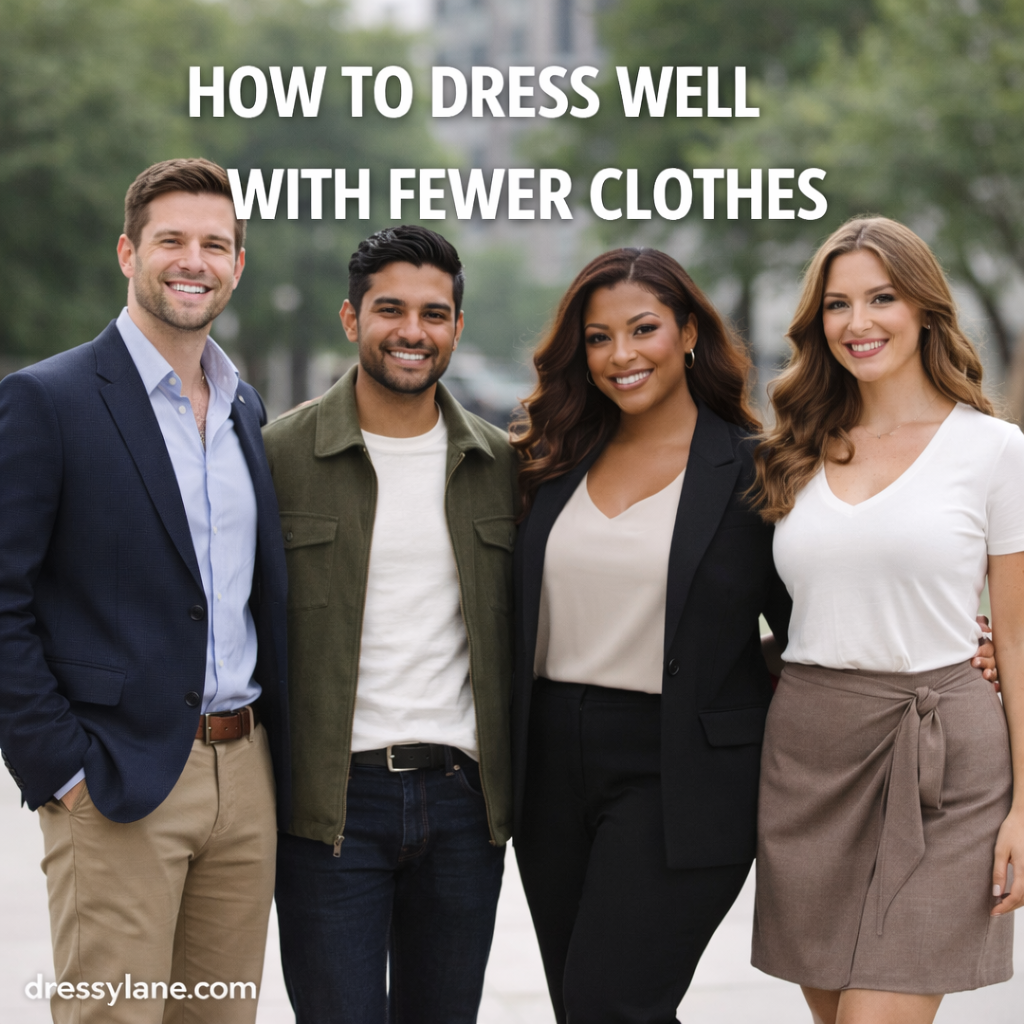
Dressing well doesn’t require a packed closet. In fact, many of the most stylish people rely on a smaller, thoughtfully chosen wardrobe. By focusing on versatility, fit, and consistency, you can create polished outfits with fewer pieces—saving time, money, and decision fatigue.
This guide explains how to dress well with fewer clothes, with practical strategies for both men and women.
Why Less Clothing Can Mean Better Style
A smaller wardrobe encourages intentional choices. When every piece earns its place, outfits come together more easily.
Benefits of dressing with fewer clothes include:
- Faster outfit decisions
- More consistent personal style
- Less clutter and waste
- Better use of what you already own
- Smarter shopping habits
Style improves when options are focused.
Start With Versatile Core Pieces
Core pieces form the foundation of a streamlined wardrobe.
Focus on items that:
- Work across multiple settings
- Layer easily
- Pair with several other pieces
- Fit your lifestyle and climate
Quality basics do more work than trendy extras.
How Men Can Dress Well With Fewer Clothes
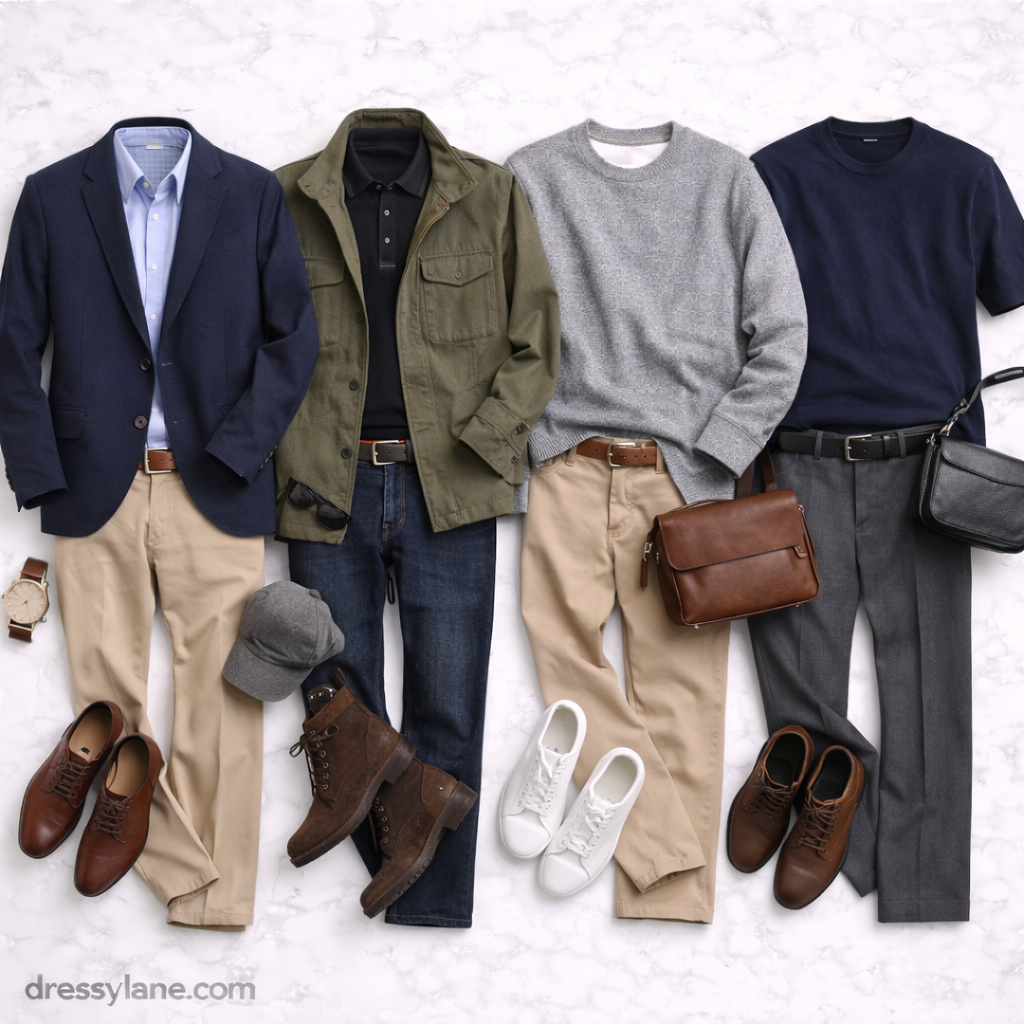
Men can build strong wardrobes with a small number of reliable items.
Essential Pieces for Men
- Neutral button-down shirts
- Well-fitted T-shirts or polos
- Versatile trousers or chinos
- One structured jacket or blazer
- Comfortable, clean shoes
Neutral colors allow for more combinations with fewer items.
How Women Can Dress Well With Fewer Clothes
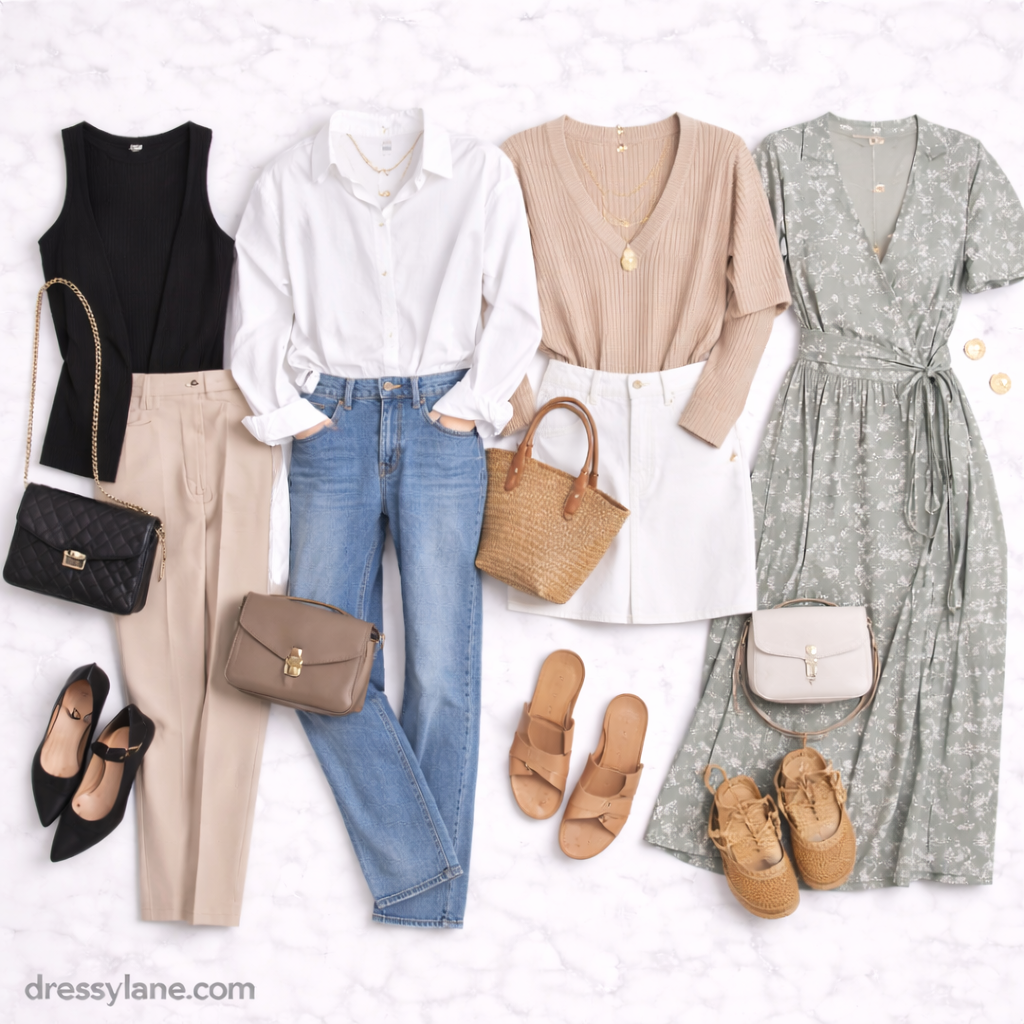
Women benefit from flexible pieces that adapt to different occasions.
Essential Pieces for Women
- Neutral tops in flattering cuts
- Tailored pants or skirts
- Versatile dresses
- Layering pieces like cardigans or blazers
- Comfortable, stylish footwear
Simple silhouettes create room for creativity.
Focus on Fit Over Quantity
Fit makes even basic clothing look elevated.
Ways to improve fit:
- Tailor key items
- Choose cuts that flatter your body
- Replace worn-out basics
- Avoid holding onto ill-fitting pieces
A few great-fitting items outperform many mediocre ones.
Stick to a Cohesive Color Palette
A consistent color palette maximizes outfit options.
Helpful guidelines:
- Choose 2–3 core neutrals
- Add 1–2 accent colors
- Avoid buying items that don’t match your palette
- Mix textures instead of adding colors
A unified palette simplifies dressing.
Use Layers to Multiply Outfits
Layering increases outfit variety without adding bulk.
Examples include:
- Shirts under sweaters
- Dresses with jackets or cardigans
- Scarves for seasonal variation
- Light outerwear for transitions
One piece can serve multiple roles.
Avoid Common Minimal-Wardrobe Mistakes
Minimal doesn’t mean restrictive.
Avoid:
- Removing variety entirely
- Buying only trendy basics
- Ignoring comfort
- Sacrificing personal style
A small wardrobe should still feel like you.
Shop With Intention
Every addition should earn its place.
Smart shopping habits:
- Buy for gaps, not impulses
- Prioritize quality over quantity
- Choose timeless designs
- Think in outfits, not individual items
Intentional purchases prevent clutter.
Maintain Your Wardrobe
Care keeps clothes looking their best.
Maintenance tips:
- Store clothing properly
- Follow care instructions
- Repair items instead of replacing them
- Rotate pieces regularly
Well-cared-for clothing lasts longer.
Final Thoughts
Dressing well with fewer clothes is about clarity, not limitation. By focusing on fit, versatility, and thoughtful choices, you can build a wardrobe that works harder with less. A smaller wardrobe doesn’t restrict style—it refines it, helping you feel confident, consistent, and effortlessly put together every day.