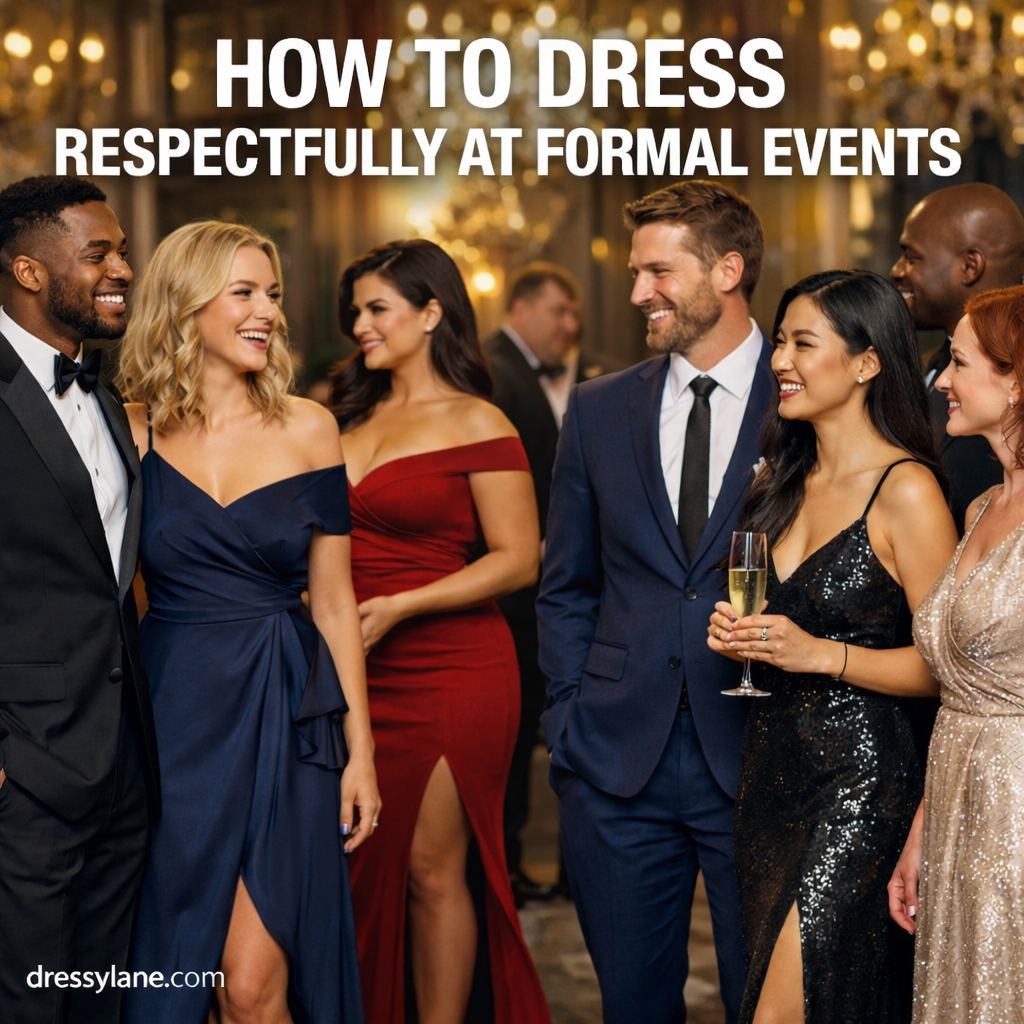
Dressing respectfully for formal events isn’t about suppressing your personal style — it’s about understanding the occasion, honoring the hosts, and presenting yourself in a way that fits the social setting. Whether you’re attending a wedding, gala, charity dinner, awards night, or black-tie celebration, your outfit sends a message before you say a word.
This guide breaks down what “respectful” formal dressing really means, how to avoid common mistakes, and how men and women can strike the perfect balance between elegance, confidence, and appropriateness.
What Dressing Respectfully Actually Means
Respectful formal dressing is rooted in three key principles:
- Awareness of the event’s dress code
- Consideration for cultural, religious, or family traditions
- Polished presentation without drawing inappropriate attention
It doesn’t require expensive clothing or rigid conformity. It simply means showing that you made a thoughtful effort to match the tone of the event.
Understand the Dress Code First
Before choosing an outfit, identify the dress code. Misinterpreting this is the most common reason people feel underdressed or overdressed.
Common formal dress codes include:
- Black Tie
- Black Tie Optional
- Formal or Evening Wear
- Cocktail Attire
- Semi-Formal
If the invitation isn’t clear, check the event website, ask the host discreetly, or observe how similar past events were styled. When in doubt, slightly overdressing is usually more respectful than underdressing.
General Rules for Dressing Respectfully at Formal Events
These universal guidelines apply regardless of gender or event type.
Choose polish over trends
Trendy pieces can work, but timeless silhouettes and classic fabrics are safer for formal settings.
Prioritize fit and grooming
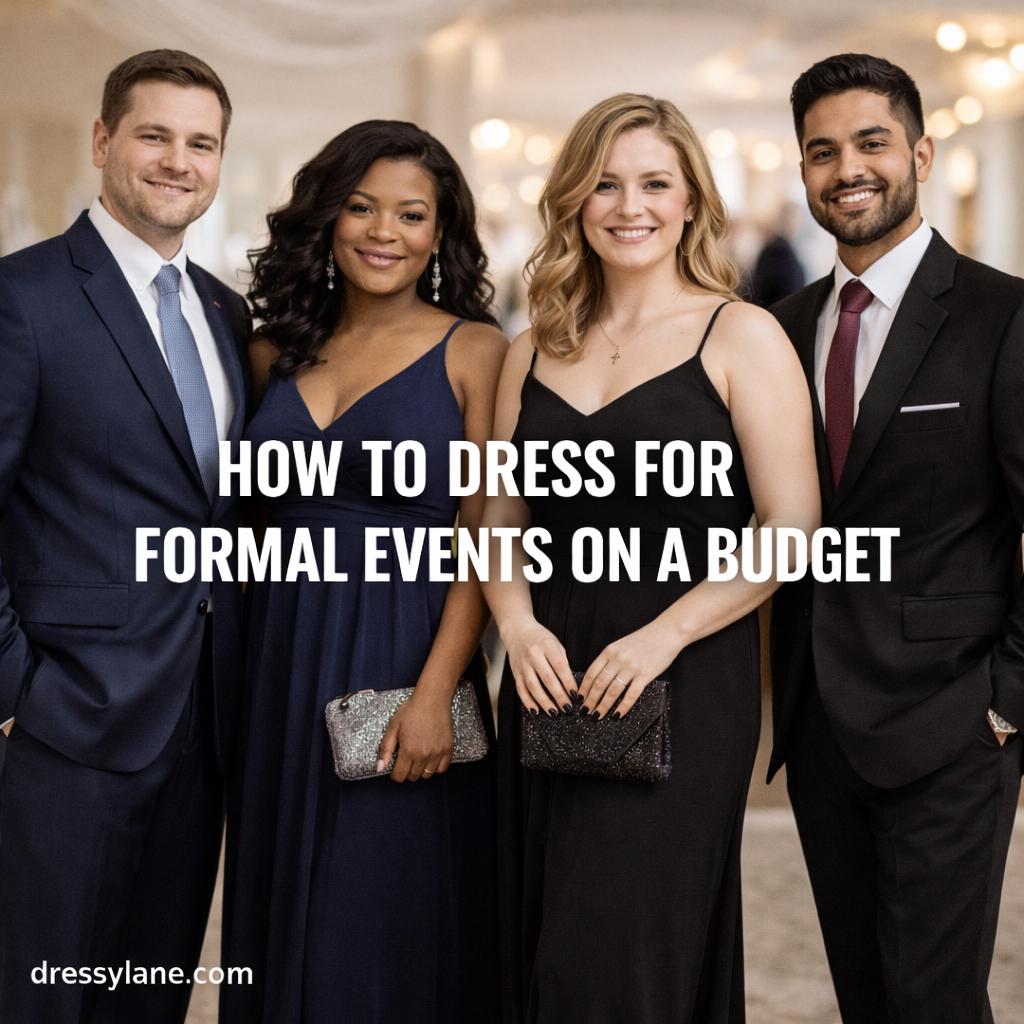
An affordable outfit that fits well looks more respectful than an expensive one that doesn’t.
Avoid attention-stealing choices
Overly revealing cuts, extremely loud colors, novelty prints, or excessive accessories can distract from the purpose of the event.
Respect the host’s role
At weddings especially, guests should never compete visually with the couple.
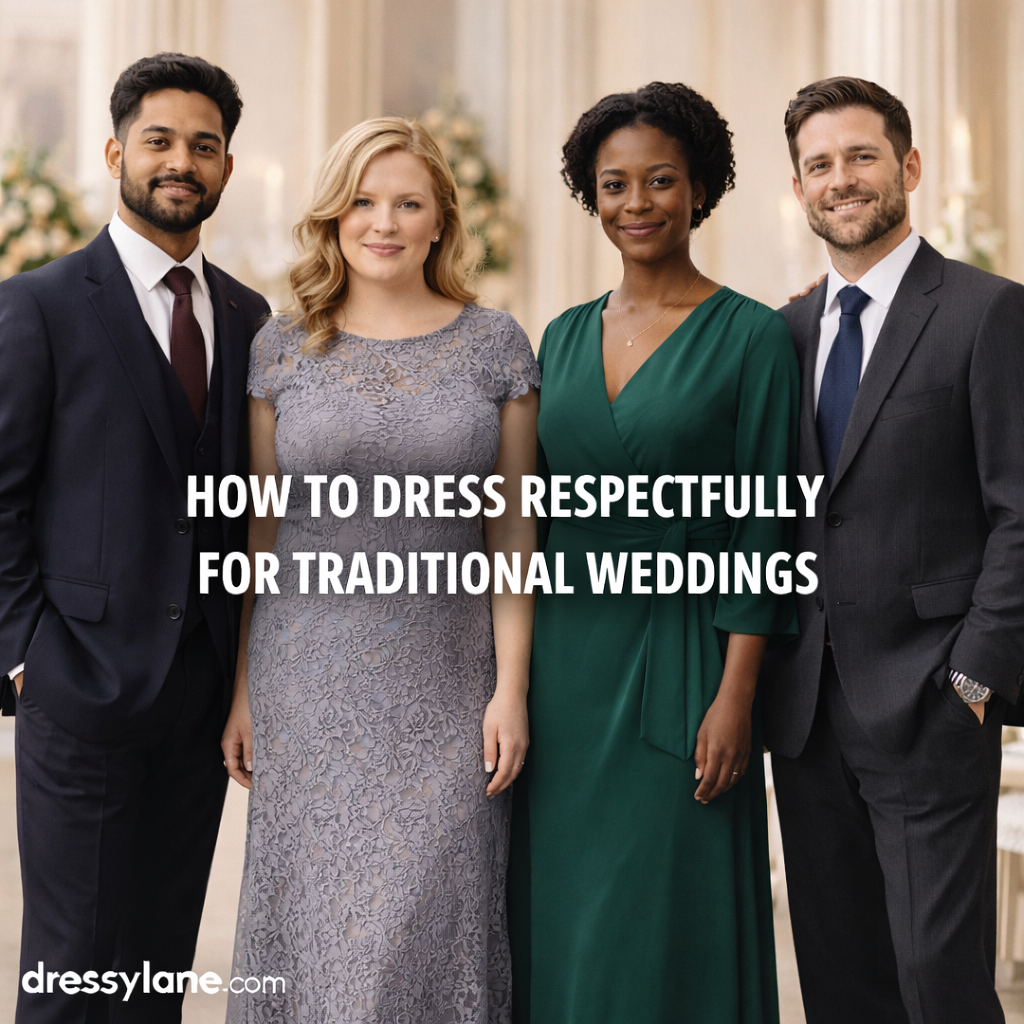
Dressing Respectfully at Weddings
Weddings often come with unspoken etiquette rules beyond the dress code.
Key wedding-specific considerations:
- Avoid white, ivory, or anything easily mistaken for bridal wear
- Skip overly dramatic outfits unless the dress code explicitly calls for it
- Be mindful of religious venues that may require covered shoulders or knees
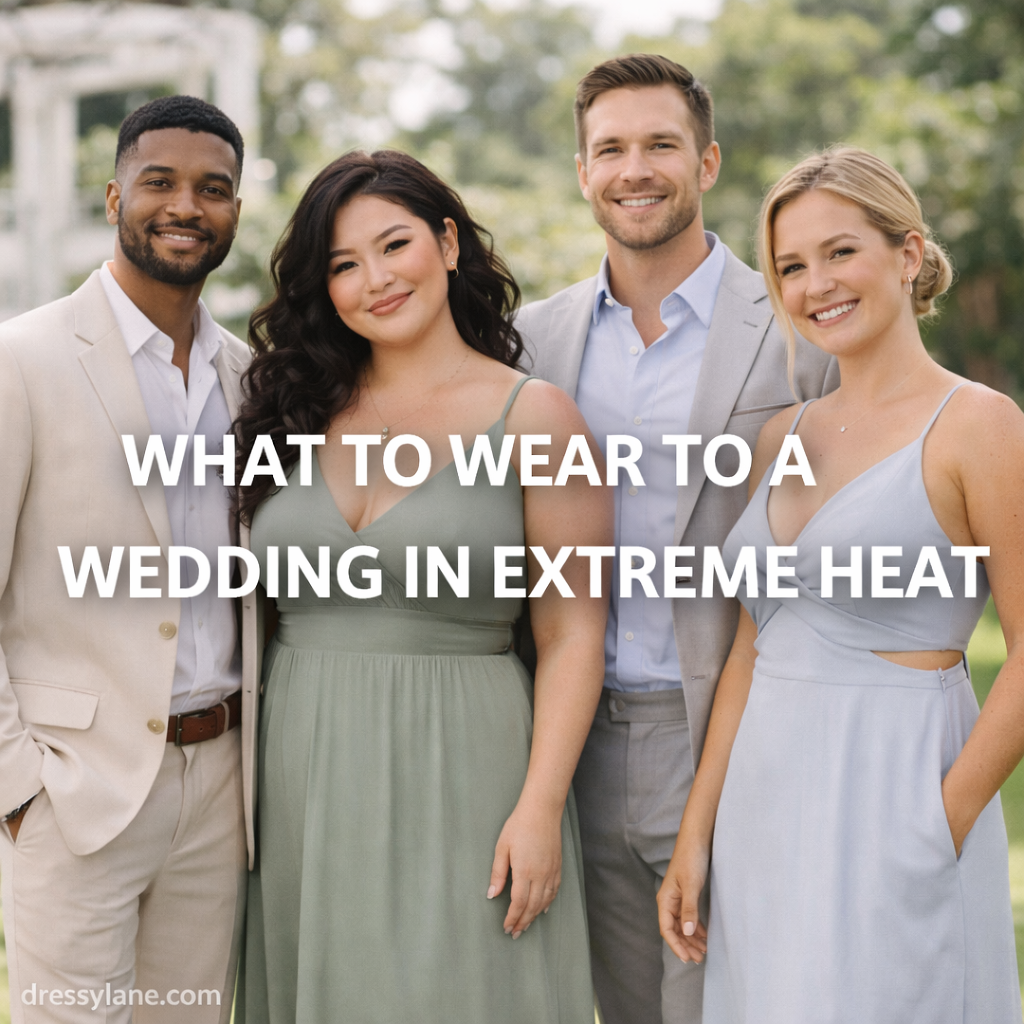
- Daytime weddings typically call for lighter fabrics and softer colors
- Evening weddings allow for richer tones and more formal materials
What Men Should Wear to Formal Events
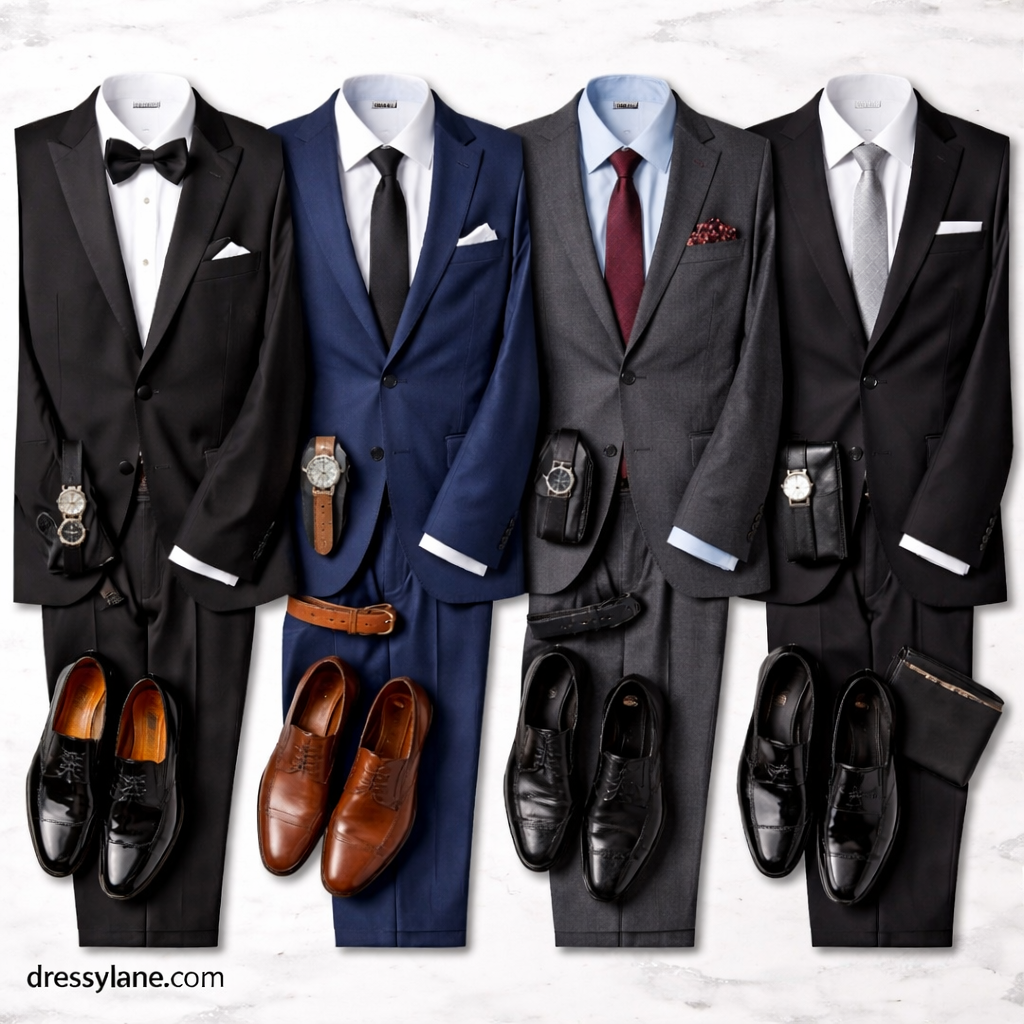
Men’s formalwear focuses on structure, simplicity, and refinement.
Suits and Tuxedos
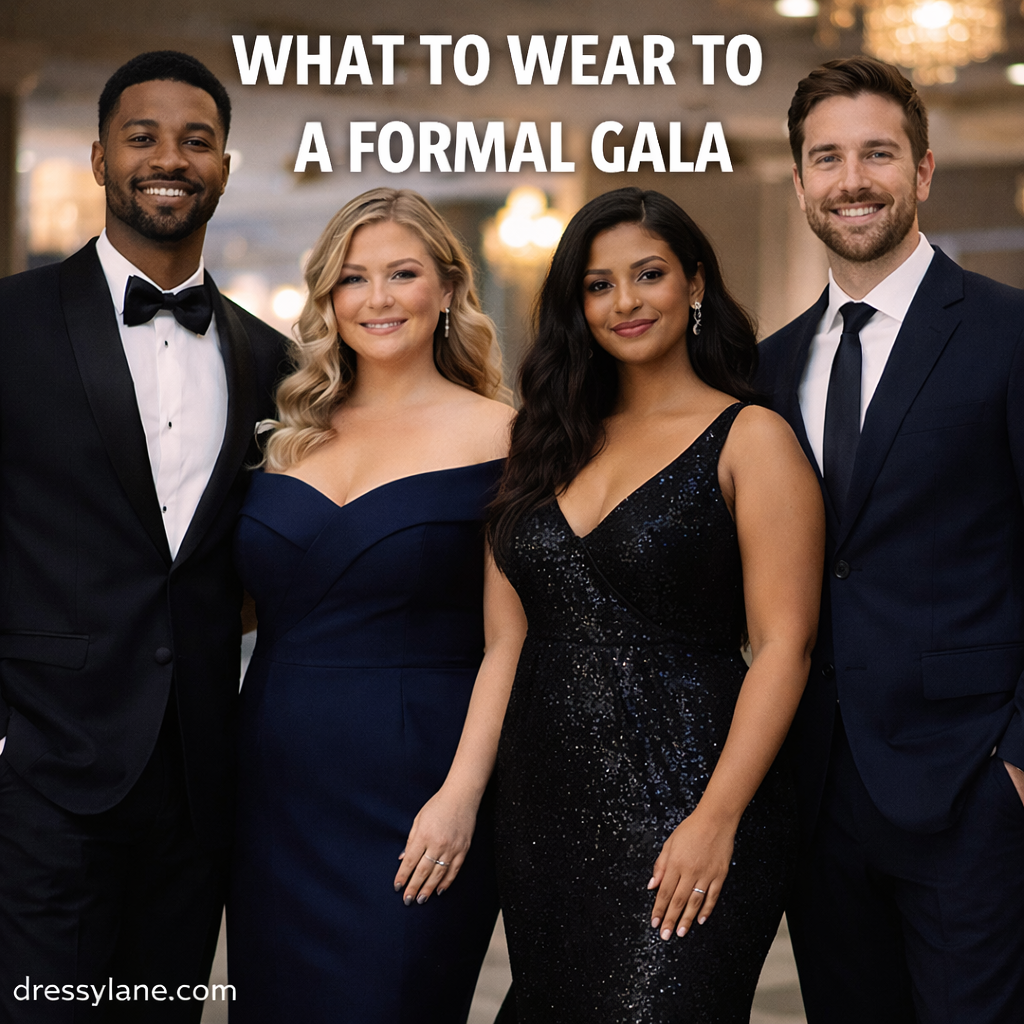
For black-tie events, a tuxedo with a bow tie is the standard. For other formal occasions, a well-tailored suit is perfectly acceptable.
Best practices:
- Stick to classic colors like black, navy, charcoal, or deep gray
- Ensure jacket shoulders fit cleanly and trousers break properly
- Avoid casual fabrics like linen or cotton unless the event is explicitly relaxed
Shirts, Shoes, and Accessories
Small details matter in formalwear.
Choose:
- Crisp dress shirts in white or light neutral tones
- Polished leather shoes such as oxfords or loafers
- Minimal accessories like a watch, pocket square, or cufflinks
Avoid:
- Athletic shoes or casual boots
- Loud ties or novelty patterns
- Unbuttoned shirts or rolled sleeves
What Women Should Wear to Formal Events
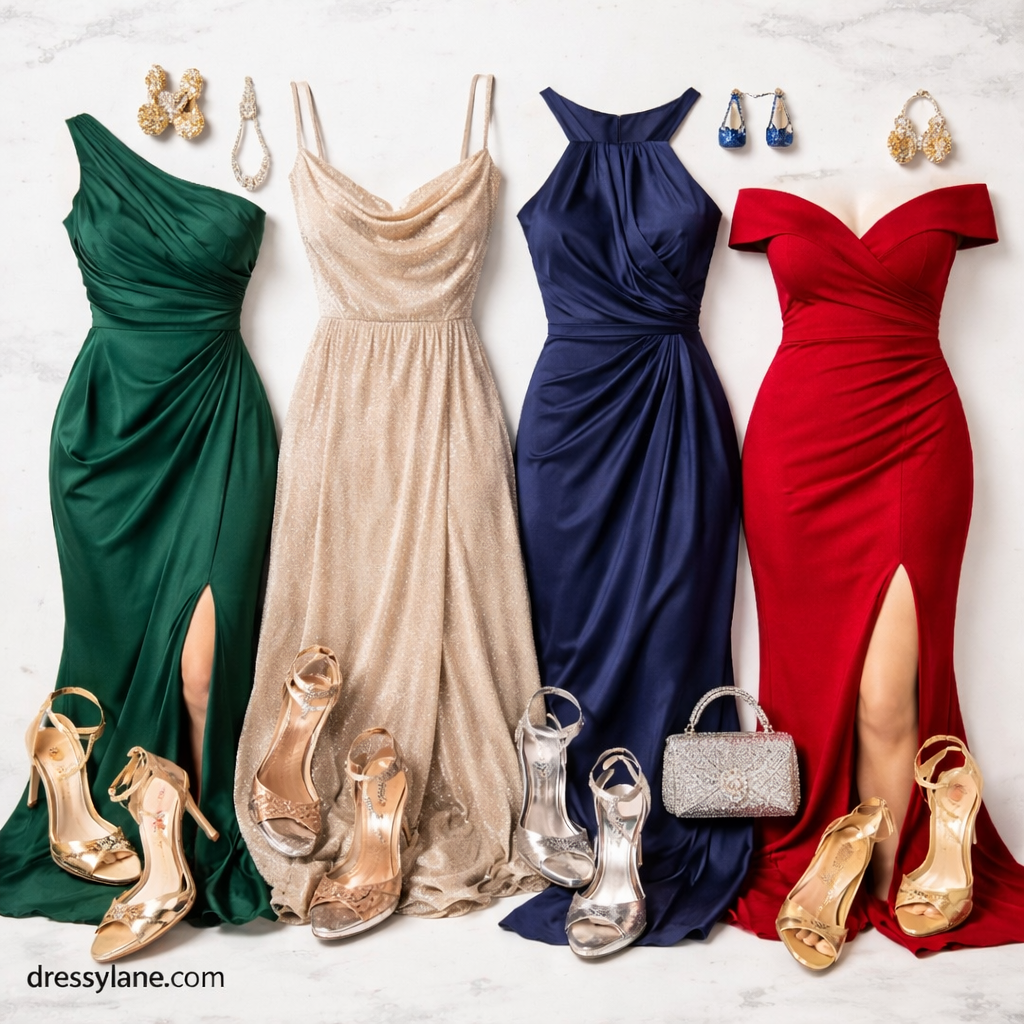
Women’s formalwear allows for more variety, but respectful dressing still hinges on balance.
Dresses and Gowns
The right dress feels elegant without being excessive.
Guidelines to follow:
- Floor-length gowns for black-tie events
- Midi or refined cocktail dresses for semi-formal settings
- Necklines, slits, and cutouts should feel intentional, not extreme
- Structured tailoring often looks more formal than flowy casual styles
Fabrics, Fit, and Styling
Fabric choice greatly affects formality.
Formal-appropriate materials include:
- Satin
- Silk
- Chiffon
- Velvet
- Crepe
Complete the look with:
- Clean, understated heels or formal flats
- Tasteful jewelry rather than statement overload
- Hair and makeup that align with the event’s tone
Cultural and Religious Considerations
Some formal events have specific expectations tied to culture or faith.
Examples include:
- Covering shoulders, arms, or legs in religious spaces
- Avoiding certain colors associated with mourning or symbolism
- Wearing traditional attire when appropriate
When attending events outside your own cultural norms, choosing modesty and simplicity is always a respectful default.
Common Mistakes to Avoid
Even well-intentioned outfits can miss the mark.
Watch out for:
- Treating formal events like fashion showcases
- Ignoring the venue’s formality level
- Wearing overly casual outerwear over formal attire
- Forgetting that photos will last long after trends fade
Dressing Respectfully Without Losing Personal Style
Respectful doesn’t mean boring.
You can express personality through:
- Texture instead of bold prints
- Tailoring instead of skin exposure
- Subtle color accents rather than loud palettes
- Thoughtful accessories that enhance, not overpower
Confidence paired with appropriateness is always the most elegant choice.
Final Thoughts
Dressing respectfully at formal events is ultimately about consideration — for the hosts, the setting, and the significance of the occasion. When your outfit aligns with the event’s tone, you not only look polished, but you also feel more comfortable and confident.
A respectful outfit doesn’t demand perfection. It simply shows that you cared enough to show up thoughtfully, appropriately, and with intention.