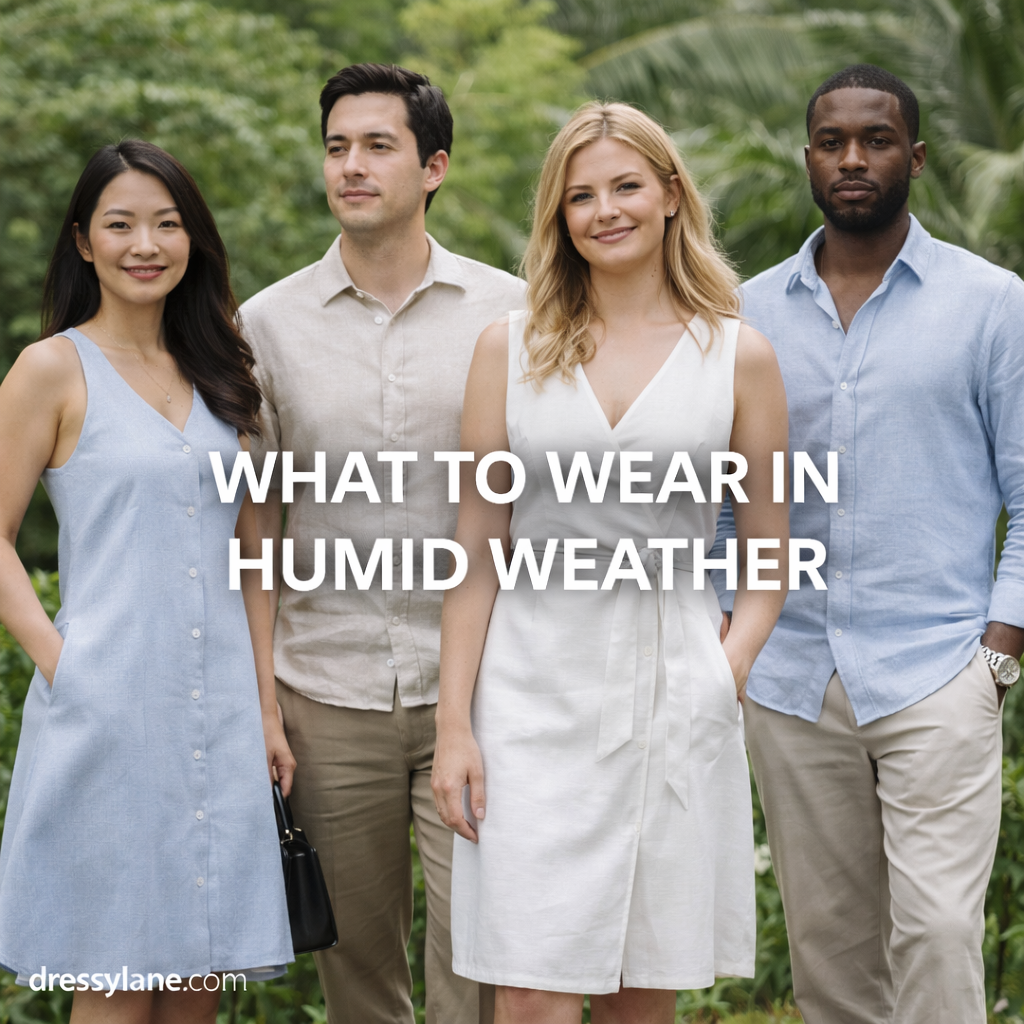
Humid weather can make even the best outfits feel uncomfortable. When the air is heavy with moisture, clothing choices matter more than trends. The right fabrics, fits, and styling decisions can help you stay cool, dry, and comfortable without sacrificing style.
This guide explains what to wear in humid weather, with practical tips for both women and men, plus fabric recommendations, outfit ideas, and common mistakes to avoid.
Why Humidity Makes Dressing Tricky
Humidity prevents sweat from evaporating efficiently, which means your body struggles to cool itself. The wrong clothing can trap heat and moisture, leading to discomfort, chafing, and excessive sweating.
When dressing for humid conditions, your goal should be:
- Breathability
- Moisture control
- Loose airflow
- Lightweight construction
Best Fabrics to Wear in Humid Weather
Fabric choice is the single most important factor in humid climates.
Fabrics That Work Well
- Cotton (lightweight or gauze)
- Linen
- Bamboo
- Tencel / Lyocell
- Chambray
- Moisture-wicking performance fabrics
These materials allow airflow and absorb or move moisture away from the skin.
Fabrics to Avoid
- Polyester (unless moisture-wicking)
- Nylon (non-athletic styles)
- Rayon blends that trap heat
- Thick denim
- Heavy knits
Synthetic fabrics without ventilation tend to cling and amplify heat.
What Women Should Wear in Humid Weather
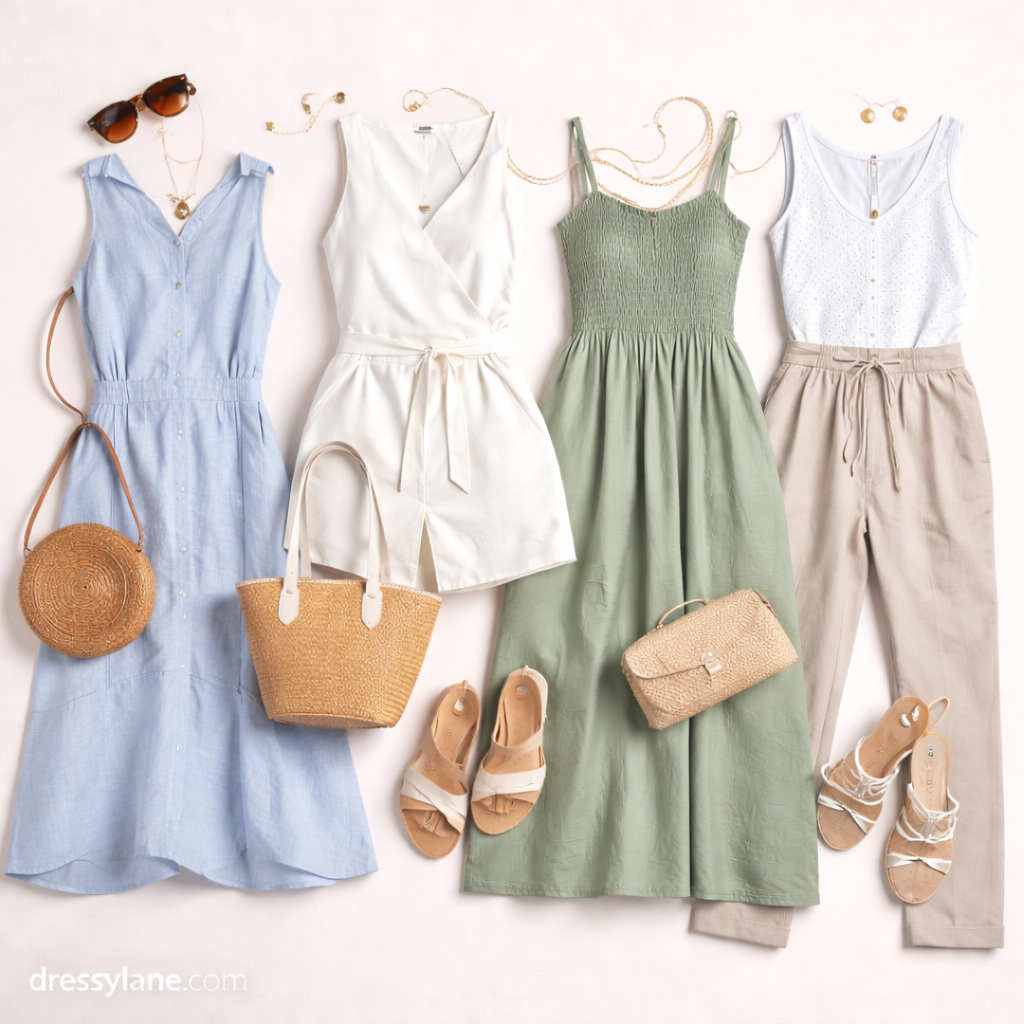
Women benefit from choosing breathable silhouettes and fabrics that allow airflow.
Tops
- Loose-fitting cotton or linen blouses
- Sleeveless or short-sleeve tops with breathable weaves
- Lightweight button-down shirts
Bottoms
- Linen trousers or wide-leg pants
- Flowy midi skirts
- Lightweight cotton shorts
Dresses
- Shift dresses
- A-line or wrap dresses
- Maxi dresses made from breathable fabrics
Avoid body-hugging styles that restrict airflow.
Shoes and Accessories
- Sandals or breathable flats
- Minimal jewelry to reduce skin contact
- Lightweight bags instead of heavy leather totes
What Men Should Wear in Humid Weather
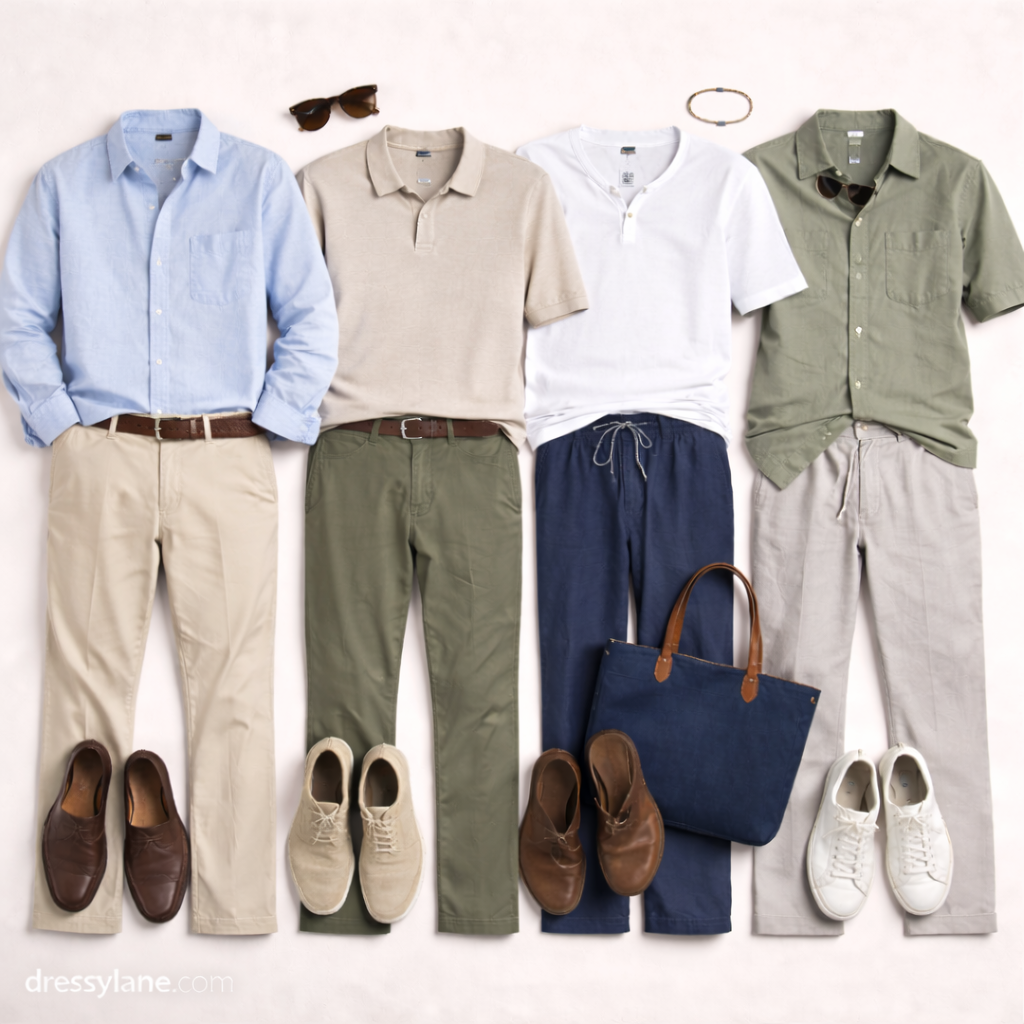
Men can stay comfortable by prioritizing airflow and relaxed structure.
Shirts
- Linen button-down shirts
- Lightweight cotton tees
- Short-sleeve shirts with breathable weaves
Bottoms
- Linen or cotton chinos
- Lightweight trousers
- Tailored shorts in breathable fabrics
Avoid heavy jeans or tight pants when possible.
Layers and Outerwear
- Unlined blazers
- Lightweight overshirts
- Skip jackets entirely if possible
Shoes and Accessories
- Loafers or breathable sneakers
- Moisture-wicking socks
- Minimal accessories
Color Choices That Help in Humidity
Color impacts how much heat your clothing absorbs.
Best color choices include:
- White
- Cream
- Light gray
- Soft beige
- Pastels
- Light blues and greens
Darker colors absorb more heat and show sweat more easily.
How Fit Affects Comfort in Humid Weather
Tight clothing traps heat and moisture against your skin.
Look for:
- Relaxed or straight fits
- Cropped or ankle-length pants
- Sleeves with room for airflow
Avoid:
- Skinny jeans
- Tight synthetic tops
- Heavy layering
A slightly looser fit almost always feels cooler.
Common Mistakes to Avoid in Humid Weather
Avoid these common dressing mistakes when humidity is high:
- Wearing heavy or synthetic fabrics
- Choosing tight, body-hugging clothes
- Layering unnecessarily
- Wearing dark colors that show sweat
- Ignoring breathable footwear
Comfort should guide every outfit decision in humid conditions.
Dressing for Humidity at Work vs Casual Settings
Work or Office Environments
- Linen or cotton trousers
- Breathable blouses or button-downs
- Unlined blazers if required
- Closed-toe shoes with ventilation
Casual or Outdoor Settings
- Shorts, skirts, and dresses
- Sleeveless or relaxed tops
- Sandals or breathable sneakers
- Minimal accessories
Always adapt your outfit to both the weather and the setting.
Final Thoughts
Knowing what to wear in humid weather can transform how you feel throughout the day. Lightweight fabrics, breathable fits, and smart color choices help your body regulate temperature while keeping your style intact.
Whether you’re dressing for work, travel, or everyday life, prioritizing comfort in humidity isn’t about dressing down—it’s about dressing smarter.