Traditional weddings often come with cultural, religious, or family expectations that go beyond standard dress codes. Whether the ceremony is religious, cultural, or rooted in long-standing customs, dressing respectfully shows consideration for the couple, their families, and the meaning behind the event.
This guide explains how both women and men can choose wedding outfits that are appropriate, polished, and respectful—without sacrificing personal style.
What “Dressing Respectfully” Really Means
Dressing respectfully doesn’t mean dressing boring or outdated. It means understanding context and avoiding choices that could feel distracting or inappropriate.
Respectful wedding attire generally means:
- Covering shoulders, chest, and legs when appropriate
- Avoiding attention-grabbing or revealing pieces
- Choosing elegant, modest silhouettes
- Following cultural or religious guidelines when known
When in doubt, modesty and simplicity are always safe.
Pay Attention to the Ceremony Setting
The wedding venue often provides the biggest clue about expectations.
Consider:
- Religious buildings (church, temple, mosque, synagogue)
- Cultural ceremonies with traditional customs
- Formal family-led events
- Conservative or multi-generational guest lists
If the ceremony is religious or cultural, attire should lean more conservative than a typical modern wedding.
Colors to Choose and Colors to Avoid
Color plays a big role in traditional weddings.
Generally safe color choices:
- Navy
- Burgundy
- Emerald
- Taupe
- Gray
- Soft pastels (depending on season)
Colors to be cautious with:
- White or ivory (unless explicitly allowed)
- Extremely bright neons
- Loud patterns or novelty prints
In some cultures, certain colors carry symbolic meaning—when unsure, neutral tones are safest.
What Women Should Wear to Traditional Weddings
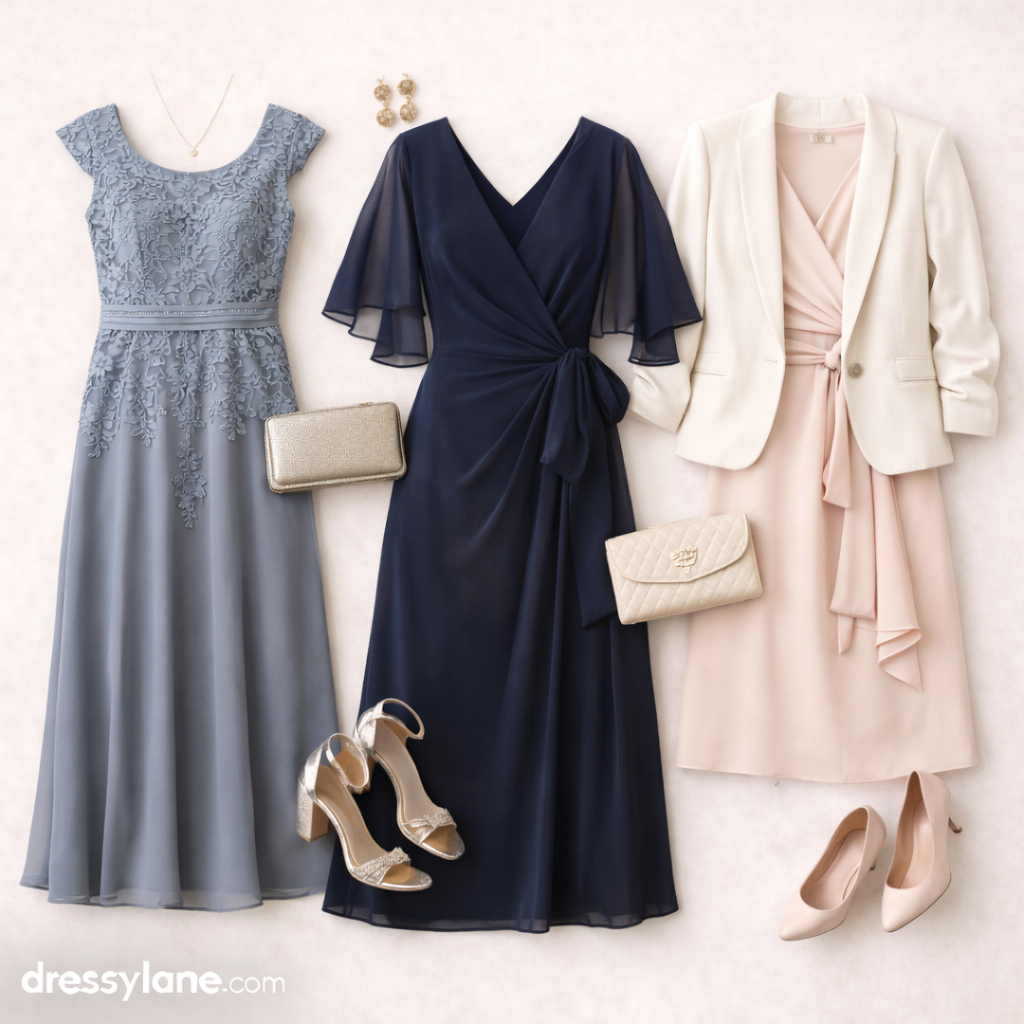
Women often have the widest range of options, but also the most rules to navigate.
Modest and Elegant Dress Options
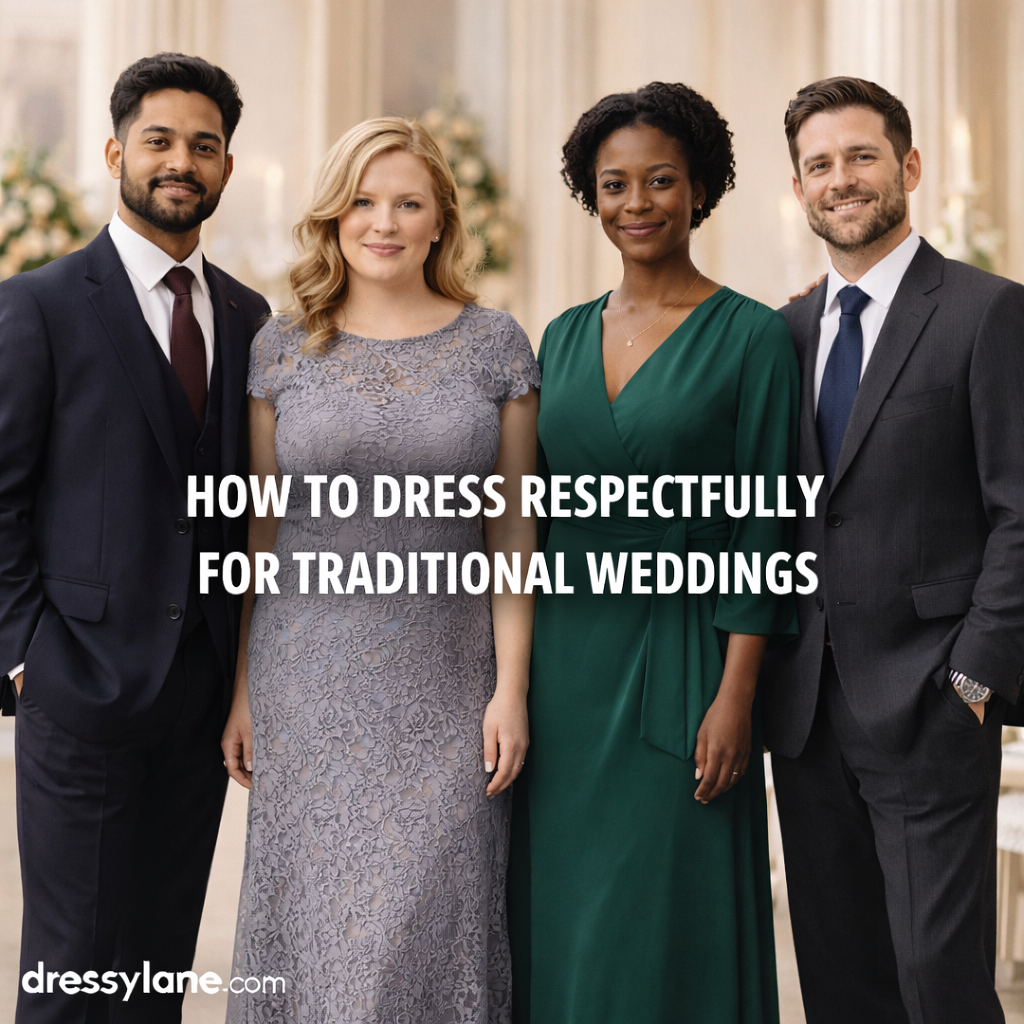
Appropriate dress styles include:
- Midi or maxi dresses
- Dresses with sleeves or higher necklines
- Structured jumpsuits with coverage
- Dresses paired with shawls or wraps
Avoid:
- Strapless or plunging necklines
- Very short hemlines
- Sheer or overly tight fabrics
Fabric Choices That Feel Respectful
Elegant fabrics help outfits feel appropriate without looking plain.
Good fabric options:
- Chiffon
- Satin
- Crepe
- Lightweight wool blends
- Structured lace (with lining)
Avoid fabrics that cling excessively or appear too casual.
Shoes and Accessories for Women
Shoes and accessories should support the overall tone of the event.
Appropriate footwear:
- Closed-toe heels
- Block heels
- Elegant flats
- Dressy sandals (if culturally acceptable)
Accessories should be:
- Minimal and refined
- Free of excessive sparkle
- Coordinated rather than statement-heavy
What Men Should Wear to Traditional Weddings
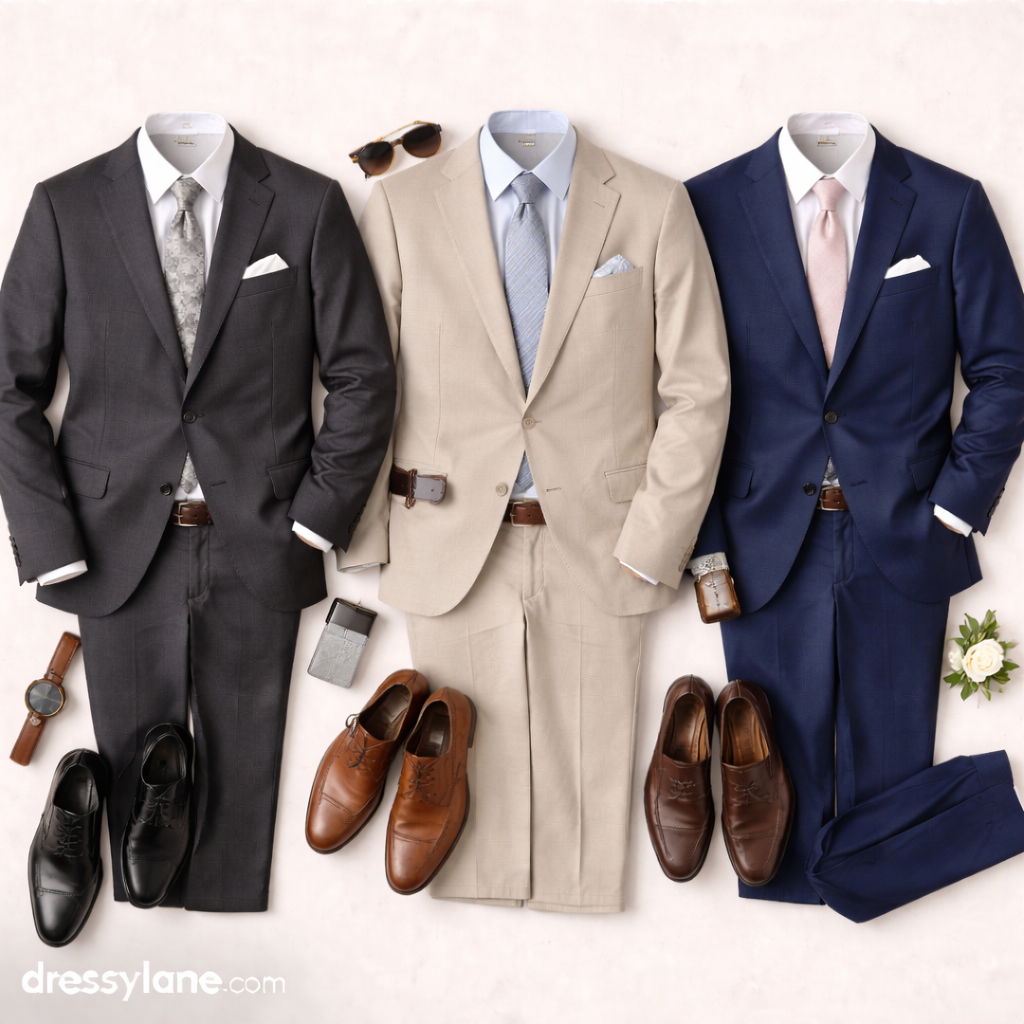
Men’s traditional wedding attire is usually more straightforward but still requires attention to detail.
Classic Suit Choices
Reliable suit options include:
- Dark or neutral suits (navy, charcoal, gray)
- Well-tailored blazers with matching trousers
- Conservative patterns or solid colors
Avoid:
- Loud prints
- Casual jackets
- Mismatched or ill-fitting pieces
Shirts, Ties, and Layers
To maintain a respectful appearance:
- Choose a crisp dress shirt
- Wear a tie unless explicitly stated otherwise
- Consider adding a vest for formal ceremonies
Keep patterns subtle and colors understated.
Shoes and Grooming for Men
Footwear and grooming matter as much as the suit itself.
Appropriate shoe choices:
- Oxfords
- Derbies
- Polished loafers (formal styles)
Make sure:
- Shoes are clean and polished
- Hair and facial hair are neat
- Accessories like watches are understated
Cultural and Religious Considerations
Some weddings have specific expectations guests should honor.
You may be expected to:
- Cover shoulders or hair
- Remove shoes indoors
- Avoid certain colors or materials
- Wear traditional garments or accessories
If the invitation or wedding website mentions customs, follow them closely. If unsure, asking the couple or someone familiar with the tradition is respectful—not awkward.
What to Do If the Dress Code Is Unclear
When details are limited:
- Dress slightly more conservatively
- Choose classic silhouettes
- Avoid fashion-forward or risky pieces
It’s better to blend in than to stand out at traditional weddings.
Common Mistakes to Avoid
Even well-intentioned outfits can miss the mark.
Avoid:
- Overly revealing styles
- Casual fabrics like denim or jersey
- Statement pieces that draw attention away from the ceremony
- Assuming all weddings follow modern trends
Respectful dressing is about the event—not personal expression.
How to Balance Respect and Personal Style
You don’t need to abandon your style completely.
Ways to stay true to yourself:
- Choose flattering cuts within modest silhouettes
- Express style through texture or color
- Use subtle accessories for personality
Respectful dressing and personal style can coexist beautifully.
Final Thoughts
Traditional weddings are meaningful occasions rooted in culture, faith, and family. Dressing respectfully shows appreciation for those values while honoring the couple on their special day.
By choosing modest silhouettes, refined fabrics, and thoughtful details, both women and men can attend traditional weddings looking polished, appropriate, and confident—without ever feeling out of place.