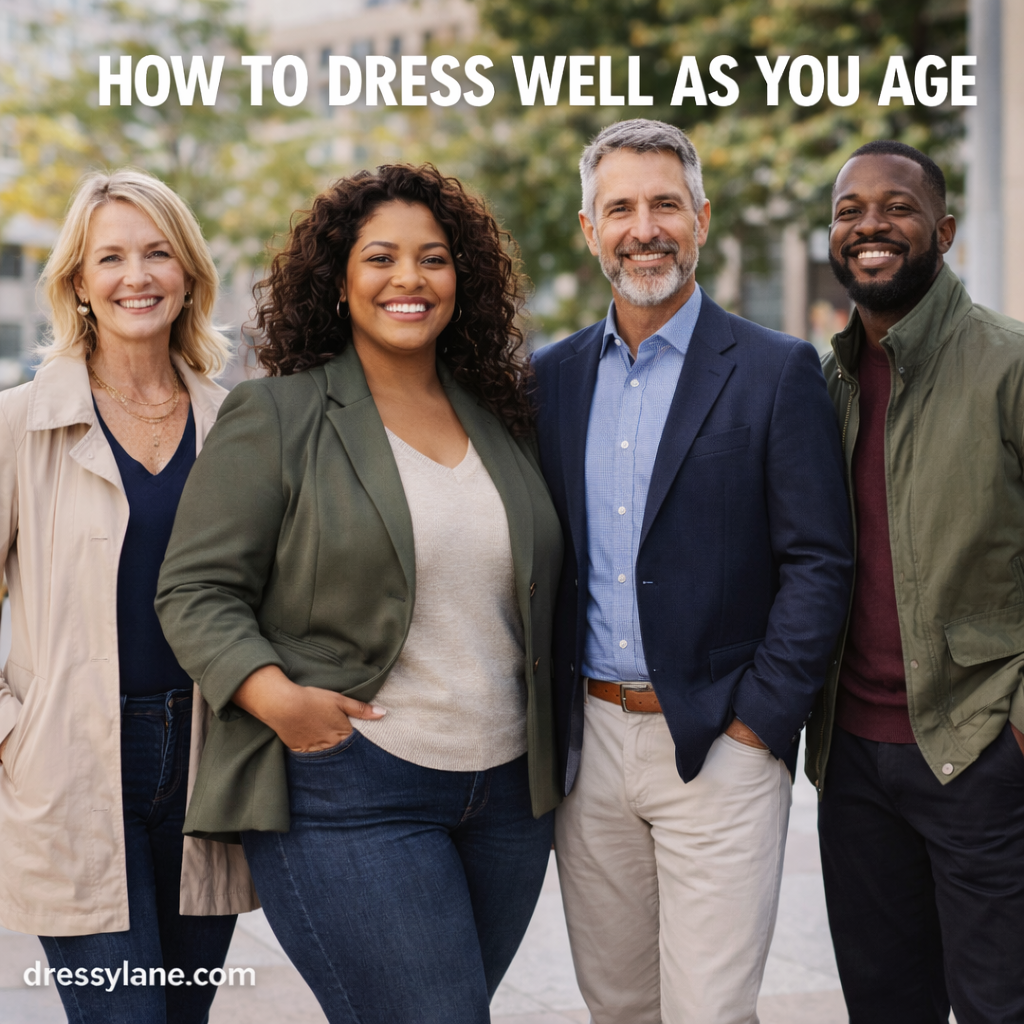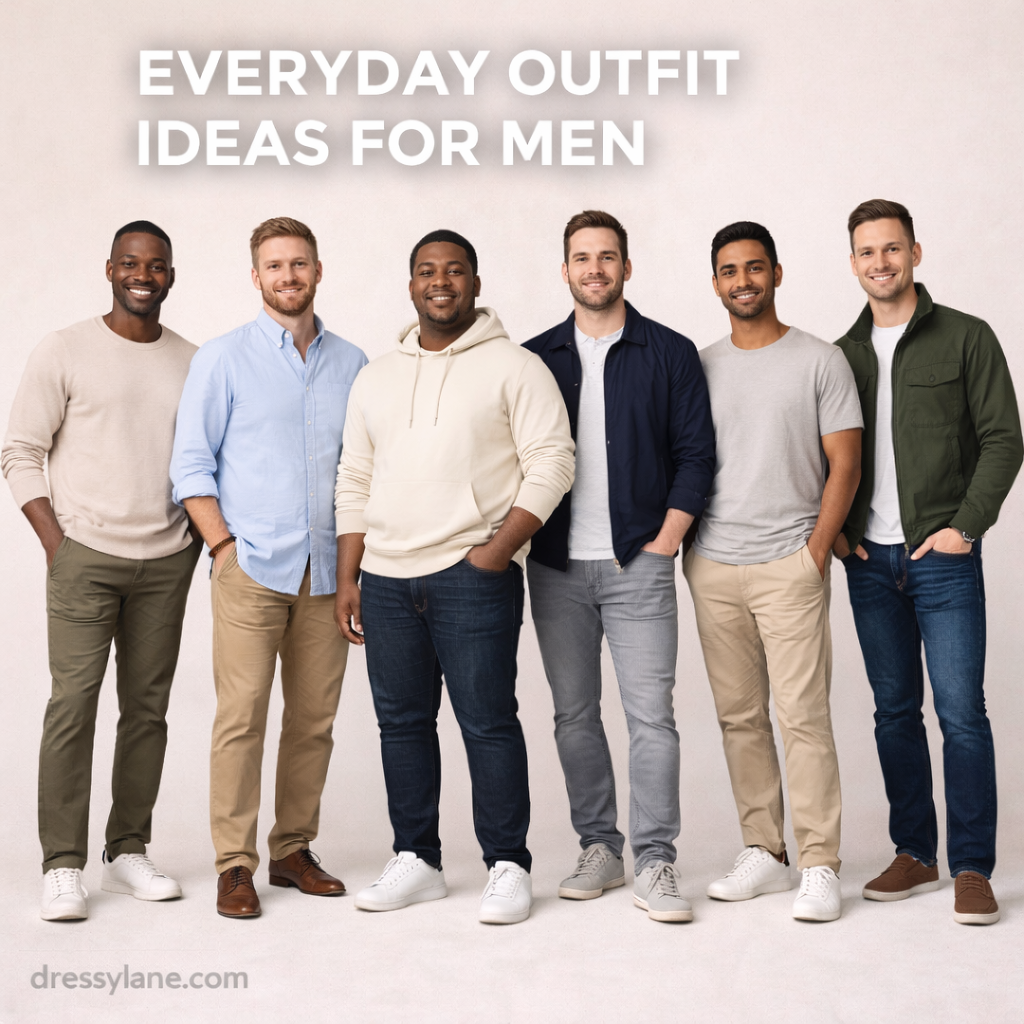
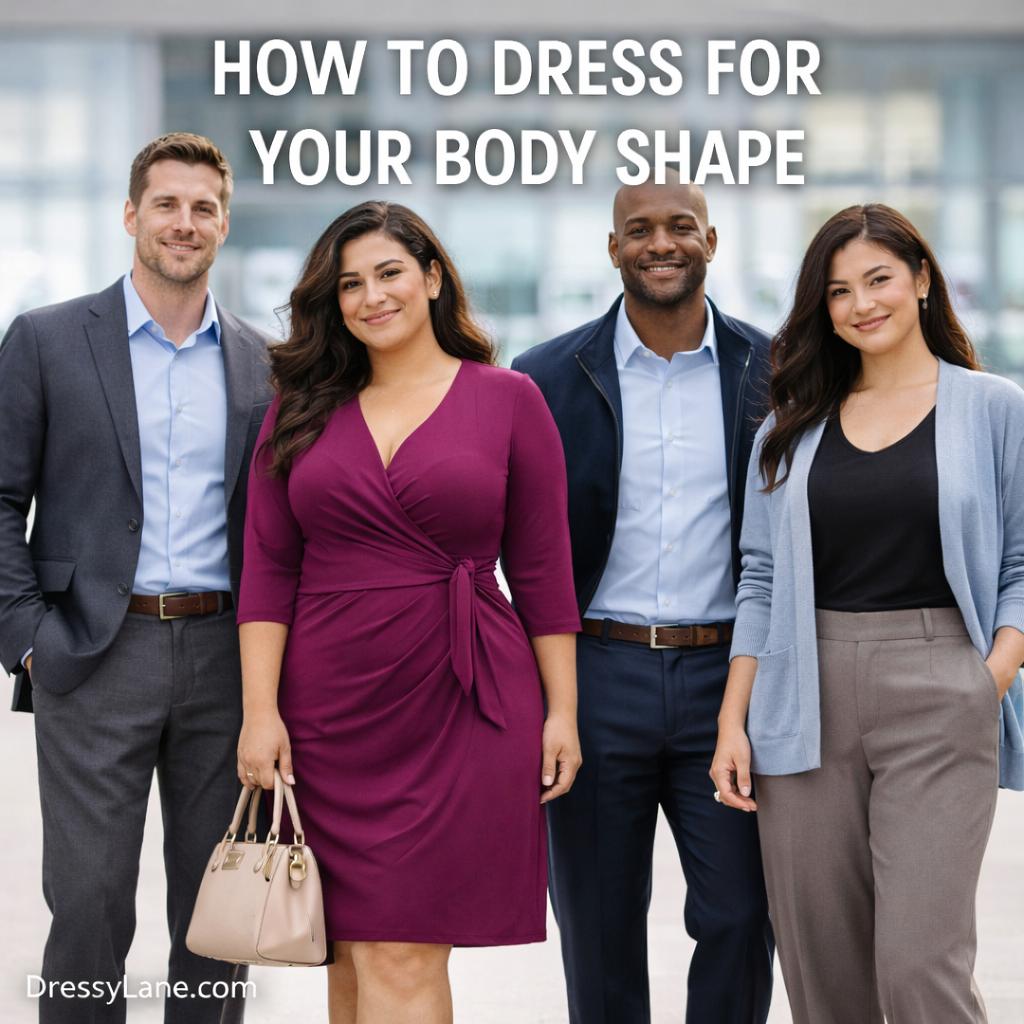
Dressing well isn’t about following trends or fitting into a single ideal—it’s about understanding your body and choosing clothes that enhance your natural proportions. When you dress for your body shape, outfits feel more comfortable, look more intentional, and boost confidence without effort.
This guide breaks down how to dress for your body shape using practical, timeless principles, with clear guidance for both men and women.
Why Body Shape Matters in Style
Clothing interacts with proportions. The same outfit can look completely different on two people with different body structures.
Dressing for your body shape helps you:
- Create visual balance
- Highlight your strongest features
- Avoid awkward fits and constant adjustments
- Build a wardrobe that feels effortless
The goal isn’t to hide your body—it’s to work with it.
Core Principles That Apply to All Body Shapes
Before diving into specific shapes, these fundamentals apply to everyone.
Focus on Fit First
Fit matters more than size labels.
Look for:
- Proper shoulder alignment
- Comfortable waist placement
- Clean lines without pulling or sagging
Tailoring simple pieces often makes the biggest difference.
Use Structure to Create Balance
Structure defines shape.
Examples include:
- Blazers that define shoulders
- Waist seams or belts for subtle shaping
- Clean hems and intentional layering
Structure helps guide the eye and creates polish.
Choose Fabrics That Work With Your Frame
Fabric weight and drape matter.
Generally:
- Stiffer fabrics hold shape
- Softer fabrics drape and skim
- Stretch fabrics add comfort but should still support structure
The right fabric enhances your silhouette instead of fighting it.
Common Body Shapes (Simplified)
Most bodies fall into a few general categories. You may relate to more than one—and that’s normal.
Typical shapes include:
- Straight or rectangular
- Curved or rounded
- Broad-shouldered or top-heavy
- Bottom-heavy or hip-dominant
Use these as guides, not rules.
How to Dress for Your Body Shape (Women)
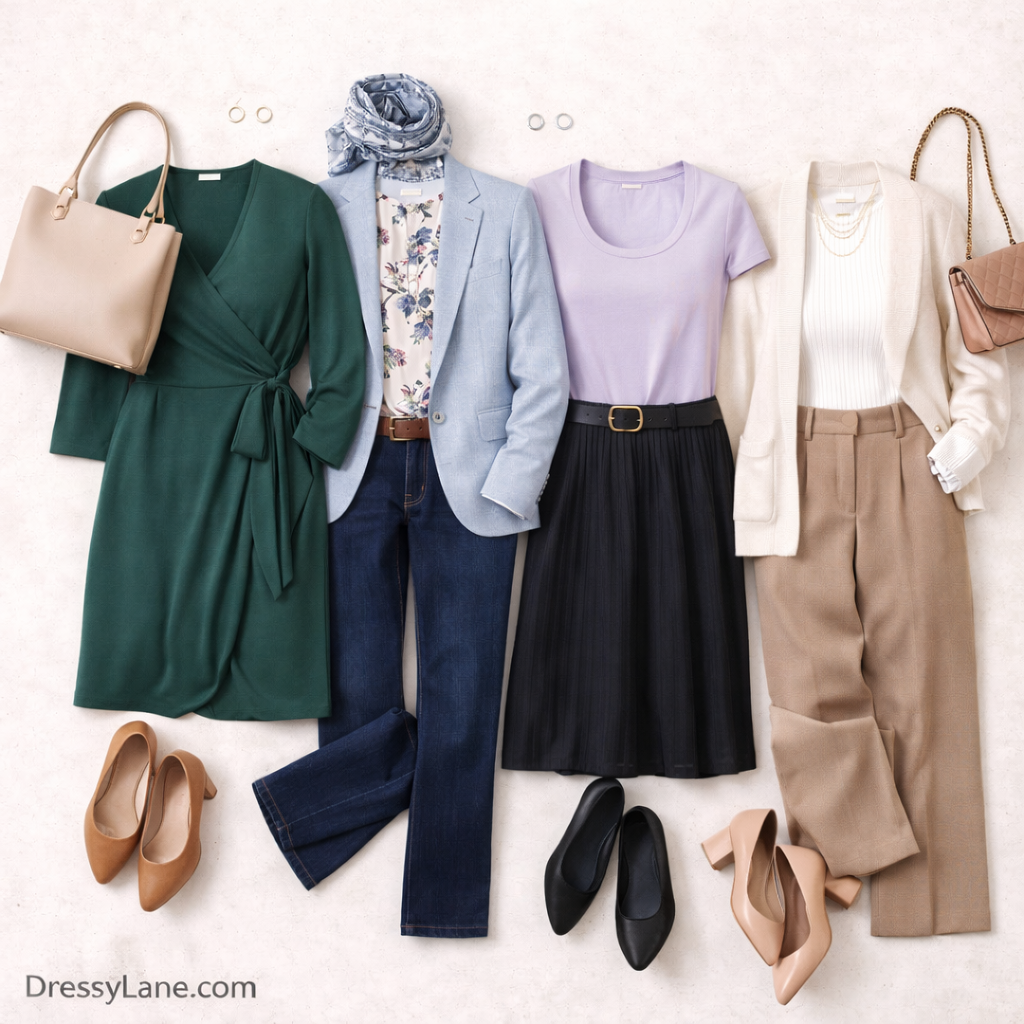
If You Have a Straight or Athletic Shape
- Add definition with belted styles or tailored seams
- Choose dresses and tops with shape or drape
- Layer strategically to create dimension
Avoid overly boxy silhouettes unless intentionally styled.
If You Have a Curvy Shape
- Choose structured garments that follow your natural lines
- Highlight the waist with fitted or wrap styles
- Opt for fabrics that skim rather than cling
Balance is key—support your curves without hiding them.
If You Carry Weight on the Bottom
- Balance proportions with structured or detailed tops
- Choose darker or streamlined bottoms
- Use layers to draw attention upward
Visual balance creates harmony.
If You Carry Weight on the Top
- Keep tops clean and simple
- Add volume or interest to bottoms
- Use vertical lines to elongate the torso
The goal is a smooth, balanced silhouette.
How to Dress for Your Body Shape (Men)
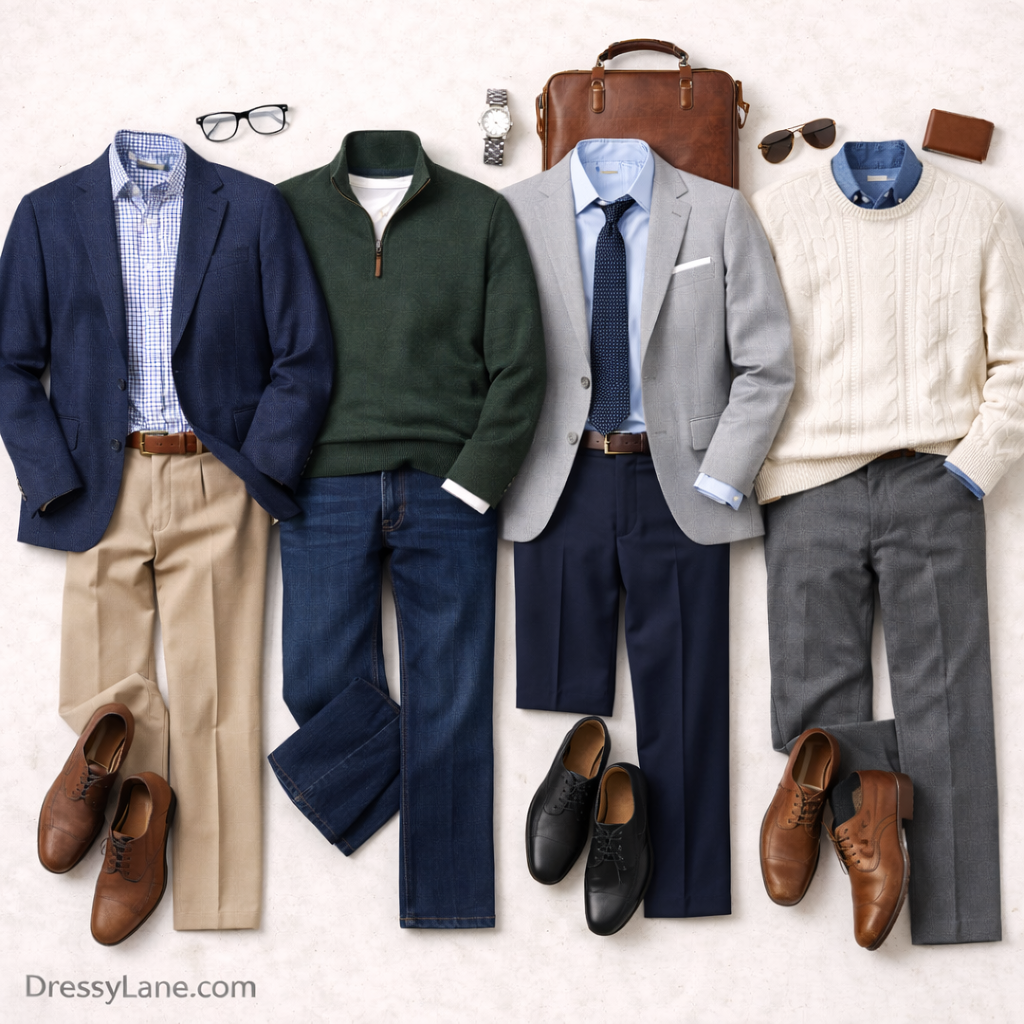
If You Have a Slim or Straight Build
- Add structure with tailored jackets and layers
- Choose fabrics with some weight
- Avoid overly tight fits
Structure creates presence.
If You Have a Muscular or Broad Upper Body
- Look for clean lines that accommodate shoulders
- Avoid tight armholes or overly slim cuts
- Choose balanced proportions through the torso
Comfort and movement matter.
If You Carry Weight in the Midsection
- Prioritize proper fit through the shoulders
- Choose structured outer layers
- Avoid clingy fabrics
Well-fitted layers create a clean line.
If You Have a Larger Lower Body
- Balance with structured tops and jackets
- Choose straight or relaxed-fit trousers
- Keep proportions even
Symmetry improves overall appearance.
Dressing for Body Shape Without Overthinking
You don’t need to analyze every outfit.
Simple habits help:
- Try clothes on and move in them
- Notice which silhouettes you reach for most
- Keep items that consistently make you feel confident
- Let go of pieces that fight your body
Your body is the reference point—not trends.
Common Mistakes to Avoid
These habits often undermine great outfits:
- Dressing for trends instead of fit
- Buying clothes too tight “for motivation”
- Ignoring tailoring
- Forcing silhouettes that feel uncomfortable
Style should support you, not pressure you.
Final Thoughts
Dressing for your body shape isn’t about restriction—it’s about clarity. When you understand what works for your proportions, getting dressed becomes easier, faster, and more enjoyable.
The best style choices respect your body as it is right now, helping you show up confident, comfortable, and authentically yourself.