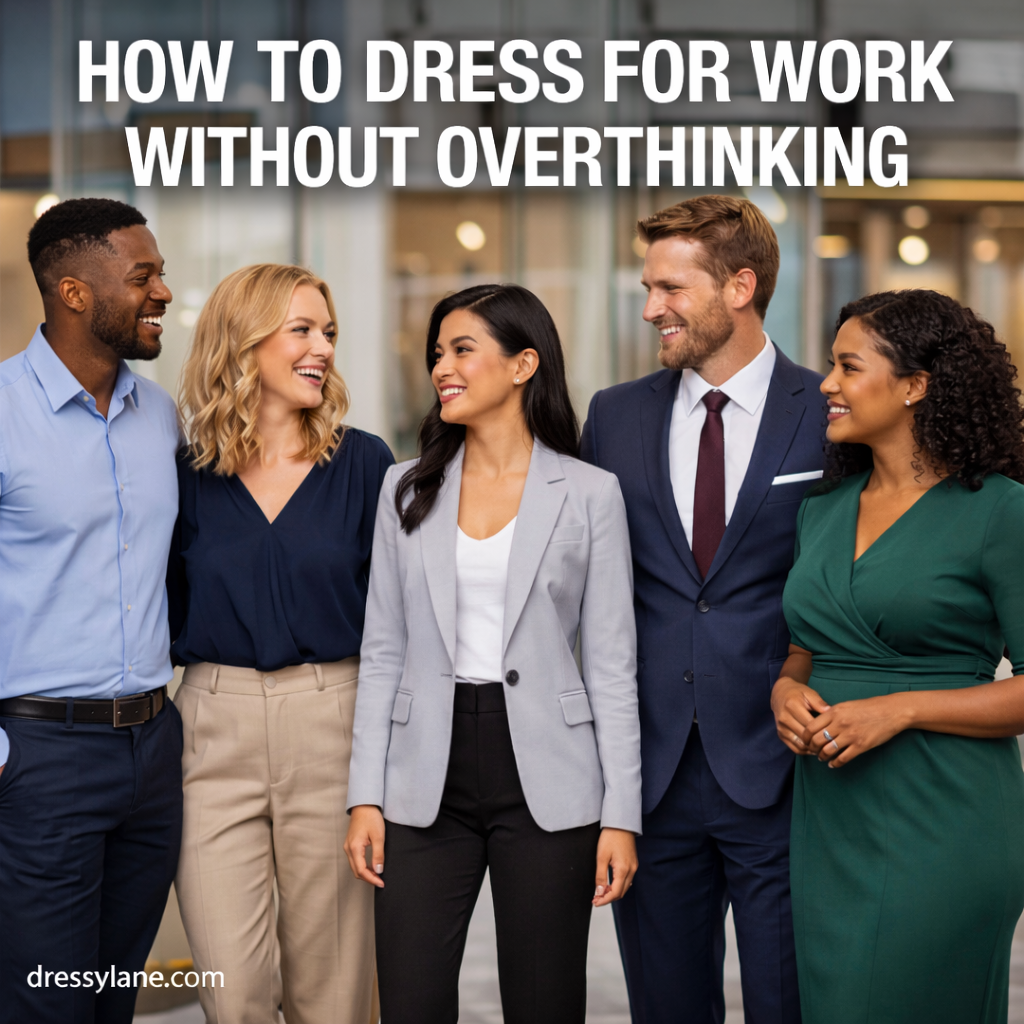
Getting dressed for work shouldn’t feel like a daily stress test. Yet for many people, deciding what to wear can become an exhausting mental loop — second-guessing choices, worrying about impressions, or feeling stuck between comfort and professionalism.
The good news is that dressing well for work doesn’t require a huge wardrobe, constant trend tracking, or complicated rules. With a few clear principles and simple systems, you can look polished, appropriate, and confident without overthinking it every morning.
Why Workwear Feels So Complicated
Work attire sits in a gray area for many professionals. Unlike formal events or casual weekends, work clothing often lacks clear boundaries.
Common reasons people overthink work outfits include:
- Unclear or loosely defined dress codes
- Fear of looking underdressed or overdressed
- Pressure to appear professional and likable at the same time
- Rapidly changing workplace norms, especially with hybrid work
The goal isn’t to eliminate thought entirely — it’s to reduce decision fatigue and build confidence through consistency.
Start With the Real Dress Code (Not the Imagined One)
Many people dress for a stricter environment than they’re actually in.
To reset your expectations:
- Observe what respected coworkers wear regularly
- Note how leadership dresses day to day, not just for meetings
- Separate “occasional formal” from everyday expectations
If your workplace allows smart casual but you’re dressing like it’s a boardroom every day, you may be creating unnecessary stress.
Build a Simple Work Uniform
A work uniform doesn’t mean wearing the same outfit every day. It means having a repeatable formula that always works.
A basic formula might include:
- One or two neutral base colors
- Consistent silhouettes you feel confident in
- Comfortable fabrics that hold their shape
When you know your formula, getting dressed becomes automatic instead of emotional.
Focus on Fit Over Fashion
Fit is the fastest way to look polished without trying harder.
Well-fitting clothes:
- Look intentional even when simple
- Reduce the need for statement pieces
- Help you feel more confident throughout the day
Tailoring a few key items often makes a bigger difference than buying new ones.
How Men Can Dress for Work Without Overthinking
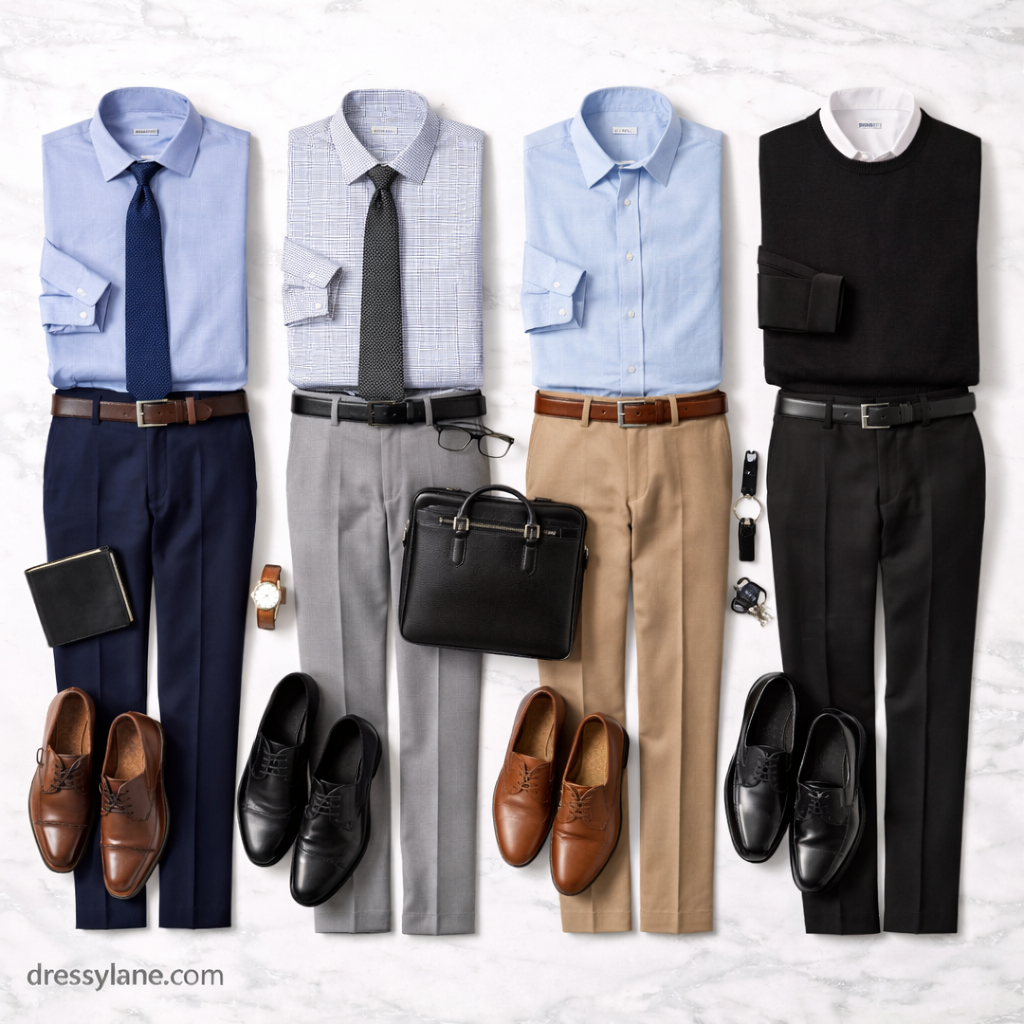
Men’s workwear is especially well-suited to simplification.
Core Pieces That Always Work
A streamlined men’s work wardrobe can revolve around:
- Neutral trousers or chinos
- Well-fitted button-down shirts
- A blazer or structured jacket
- Clean leather or minimalist shoes
Sticking to classic colors like navy, gray, white, and earth tones allows everything to mix easily.
Keep Decisions Minimal
Reduce daily choices by:
- Owning multiple versions of the same shirt style
- Rotating two or three trusted shoe options
- Keeping accessories minimal and consistent
If you never have to decide between ten options, you’ll never overthink.
How Women Can Dress for Work Without Overthinking
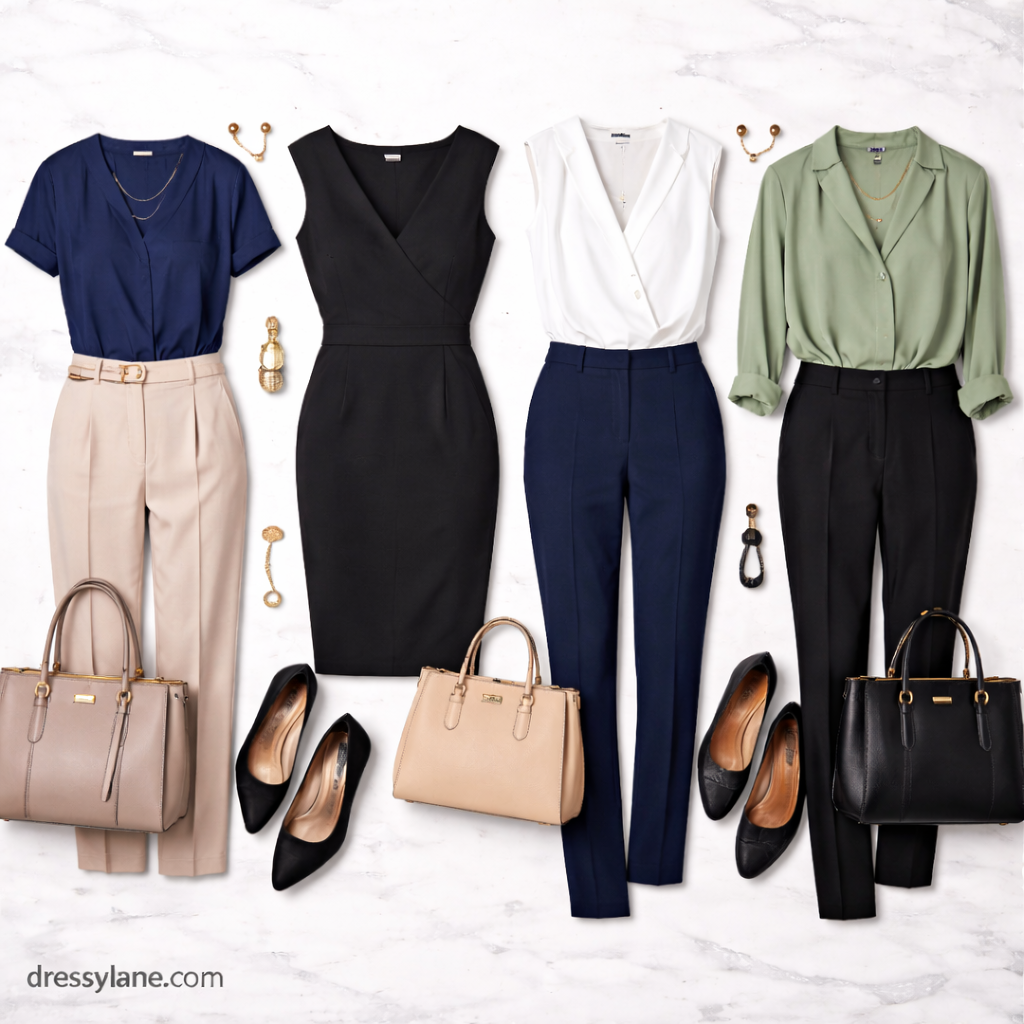
Women often face more variation and unspoken expectations at work, which can increase outfit anxiety.
Create Go-To Outfit Templates
Instead of starting from scratch each morning, rely on templates such as:
- Tailored pants with a polished top
- A simple dress with neutral shoes
- A skirt paired with a structured blouse
Once you find combinations that work, repeat them confidently.
Balance Comfort and Professionalism
Overthinking often starts when clothing feels uncomfortable or impractical.
Look for:
- Stretch fabrics that maintain structure
- Shoes you can wear all day without distraction
- Layers that adapt to changing temperatures
Comfort reduces self-consciousness, which reduces overthinking.
Limit Your Color Palette
A limited color palette simplifies everything.
Benefits include:
- Easier outfit coordination
- Faster decisions in the morning
- A more cohesive, professional appearance
Choose two or three core neutrals and one or two accent colors. Everything in your work wardrobe should work together effortlessly.
Stop Saving Clothes for “Special Work Days”
Many people save their best work outfits for presentations or meetings, then overthink daily wear.
Instead:
- Wear your best-fitting pieces regularly
- Let your everyday look reflect your professional standard
- Normalize looking polished without an occasion
This removes the pressure of constantly “stepping it up.”
Prepare Outfits Ahead of Time
Decision fatigue is highest in the morning.
Simple habits that help:
- Planning outfits the night before
- Hanging complete outfits together
- Keeping a few fallback outfits ready
When you already know what you’re wearing, your brain stays focused on more important tasks.
Avoid These Common Workwear Mistakes
Overthinking often leads to small missteps.
Watch out for:
- Constantly changing your style based on trends
- Buying pieces that don’t match your existing wardrobe
- Dressing for how you want the job to feel rather than how it actually functions
- Over-accessorizing to compensate for uncertainty
Simplicity usually reads as confidence.
Dressing Well Without Needing Validation
The most effortless work style comes from internal clarity, not external approval.
Ask yourself:
- Does this outfit meet my workplace standards?
- Do I feel comfortable and capable in it?
- Can I forget about my clothes once I leave the house?
If the answer is yes, you’ve succeeded.
Final Thoughts
Dressing for work without overthinking is about systems, not perfection. When you understand your workplace, streamline your wardrobe, and trust what already works, getting dressed becomes a non-issue instead of a daily challenge.
Your work clothes should support your confidence — not compete for your attention. When your outfit fades into the background, your focus, performance, and presence naturally stand out.