Introduction
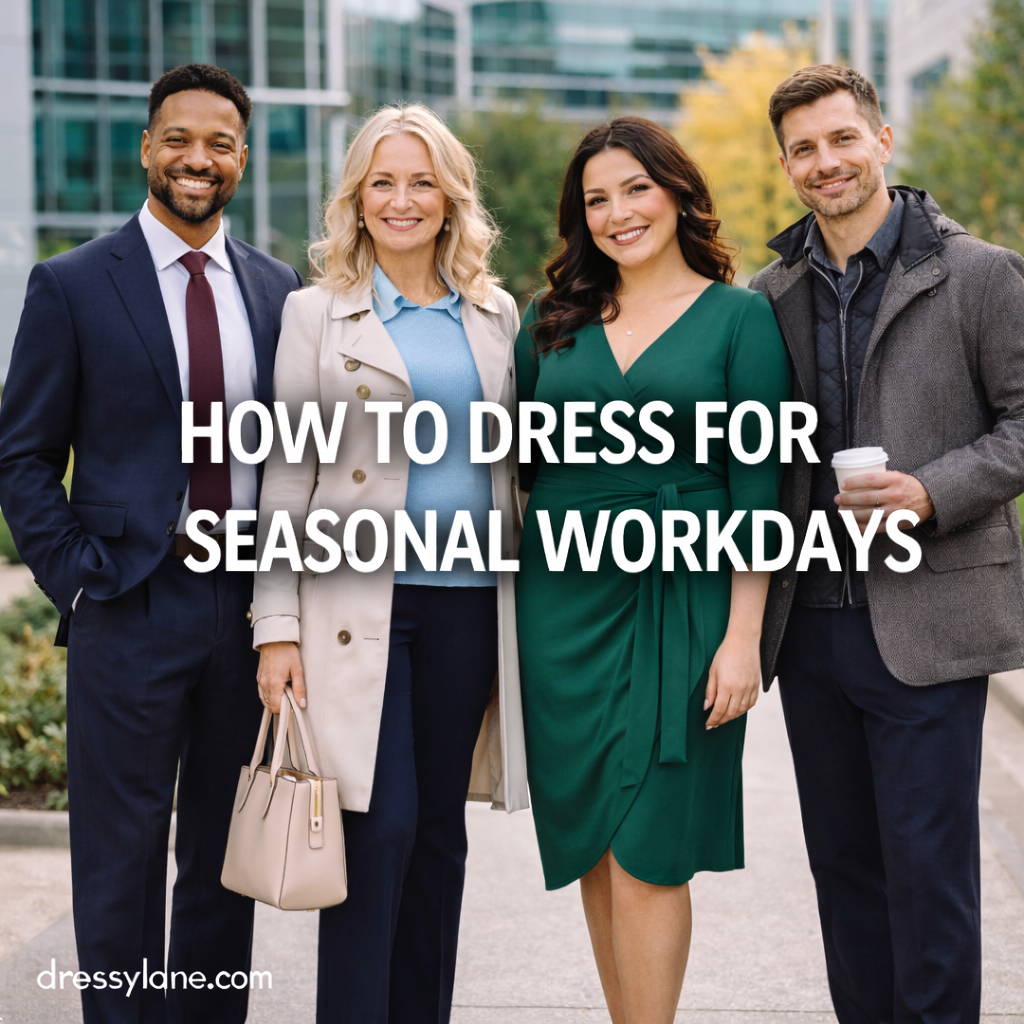
Workdays don’t stop when the seasons change. From summer heat to winter cold and everything in between, dressing appropriately for the weather while staying professional can feel like a daily challenge. This guide explains how to dress for seasonal workdays so you can stay comfortable, polished, and prepared no matter the forecast.
Why Seasonal Dressing Matters at Work
Seasonal changes affect comfort, focus, and how professional an outfit appears throughout the day.
Well-planned seasonal work outfits help you:
- Stay comfortable during long work hours
- Adapt to temperature changes indoors and outdoors
- Maintain a professional appearance year-round
- Avoid over- or under-dressing for the weather
The key is balance—practical layers with a professional finish.
Core Principles for Seasonal Work Dressing
Before focusing on individual seasons, a few fundamentals always apply.
Seasonal workwear should:
- Layer easily
- Use breathable, appropriate fabrics
- Maintain structure and fit
- Transition well from commute to office
Building outfits with these principles keeps seasonal dressing simple.
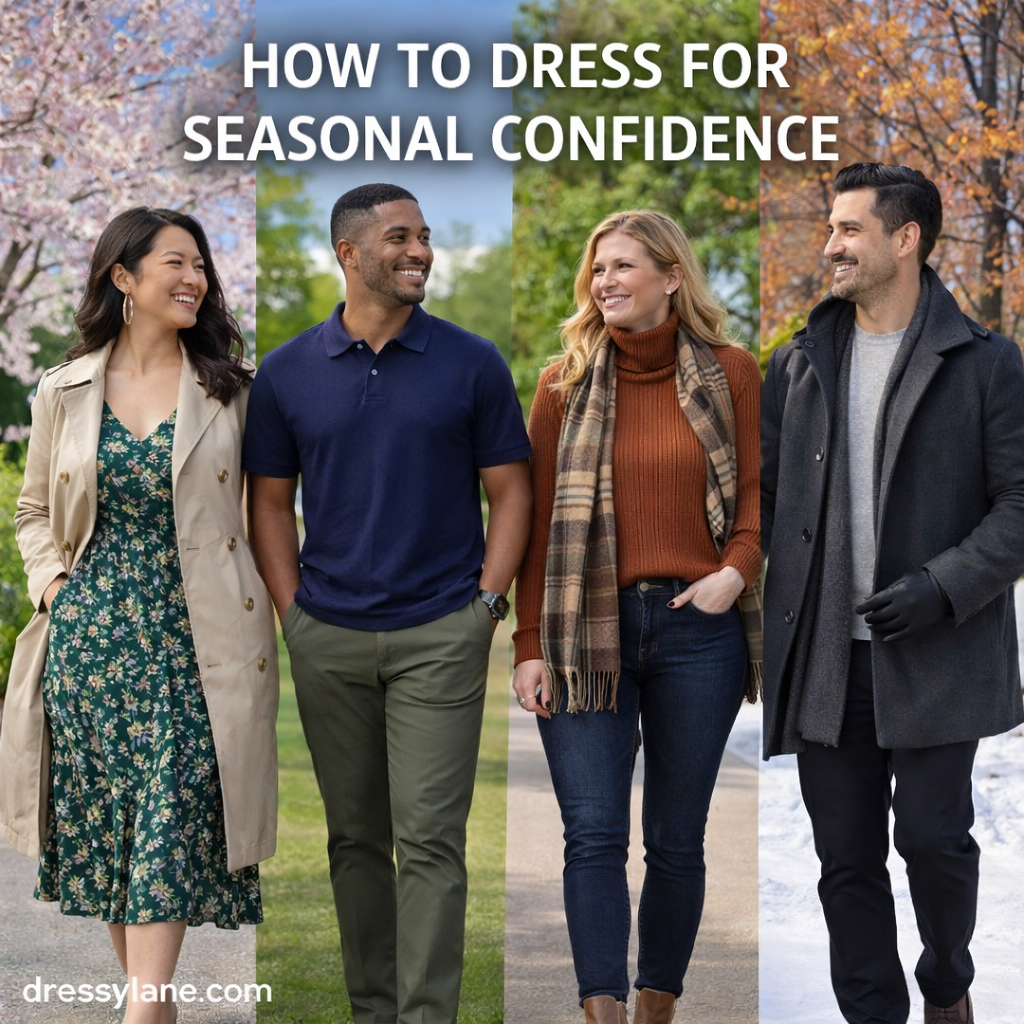
How to Dress for Work in Spring
Spring weather can be unpredictable, making versatility essential.
Smart spring work staples include:
- Lightweight blazers or trench coats
- Breathable long-sleeve tops
- Tailored trousers or midi skirts
- Closed-toe shoes suitable for rain
Stick to lighter layers you can remove as temperatures shift.
How to Dress for Work in Summer
Summer workdays require comfort without sacrificing professionalism.
Key summer workwear tips include:
- Choose lightweight, breathable fabrics
- Opt for lighter colors that reflect heat
- Keep silhouettes structured but relaxed
- Avoid heavy layering
Air-conditioned offices may still require a light jacket or cardigan.
How to Dress for Work in Fall
Fall is ideal for layering and richer textures.
Effective fall work outfits often include:
- Lightweight sweaters or knit tops
- Blazers and structured jackets
- Ankle boots or polished flats
- Mid-weight trousers
Fall colors and textures help outfits feel seasonally appropriate.
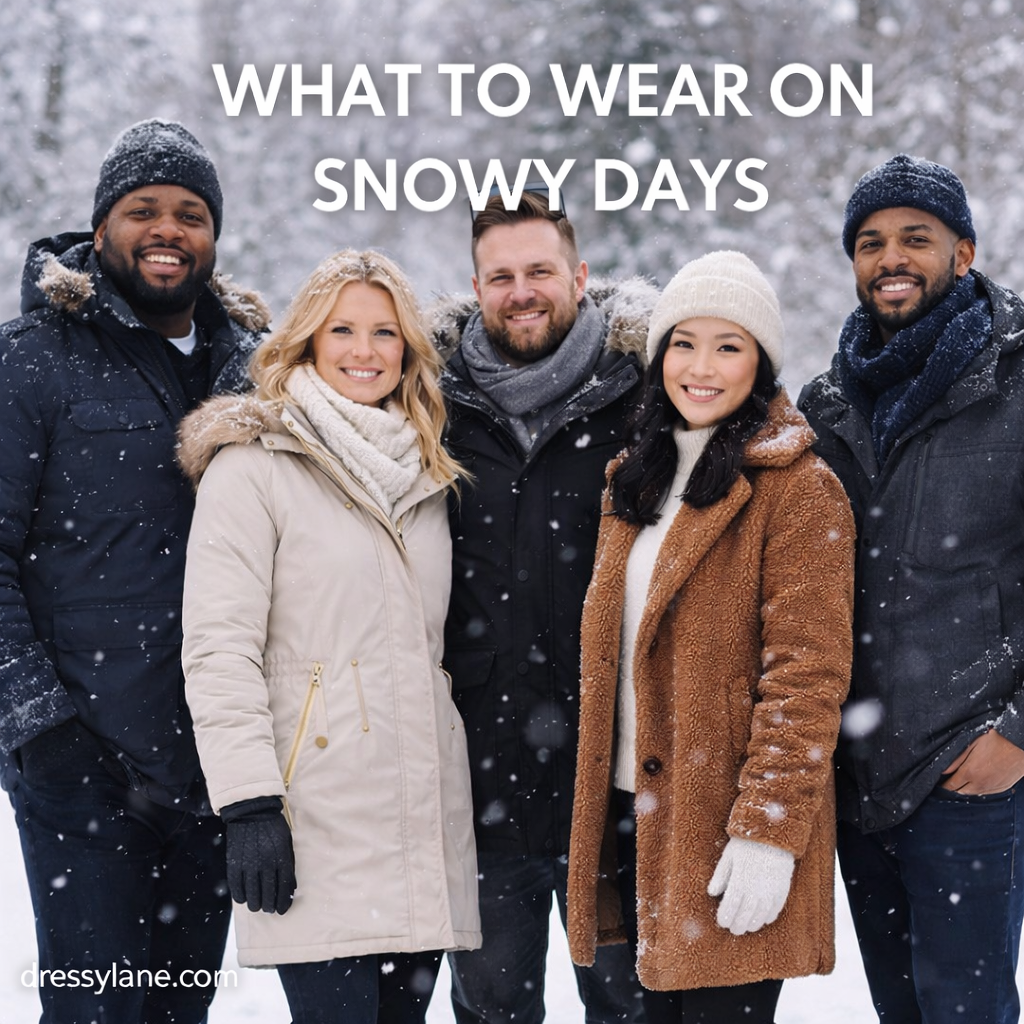
How to Dress for Work in Winter
Winter workdays demand warmth without bulk.
Cold-weather work essentials include:
- Insulated but tailored coats
- Thermal layers under workwear
- Structured knitwear
- Weather-appropriate footwear
Layering allows you to stay warm outside while remaining comfortable indoors.
Seasonal Work Outfit Ideas for Women
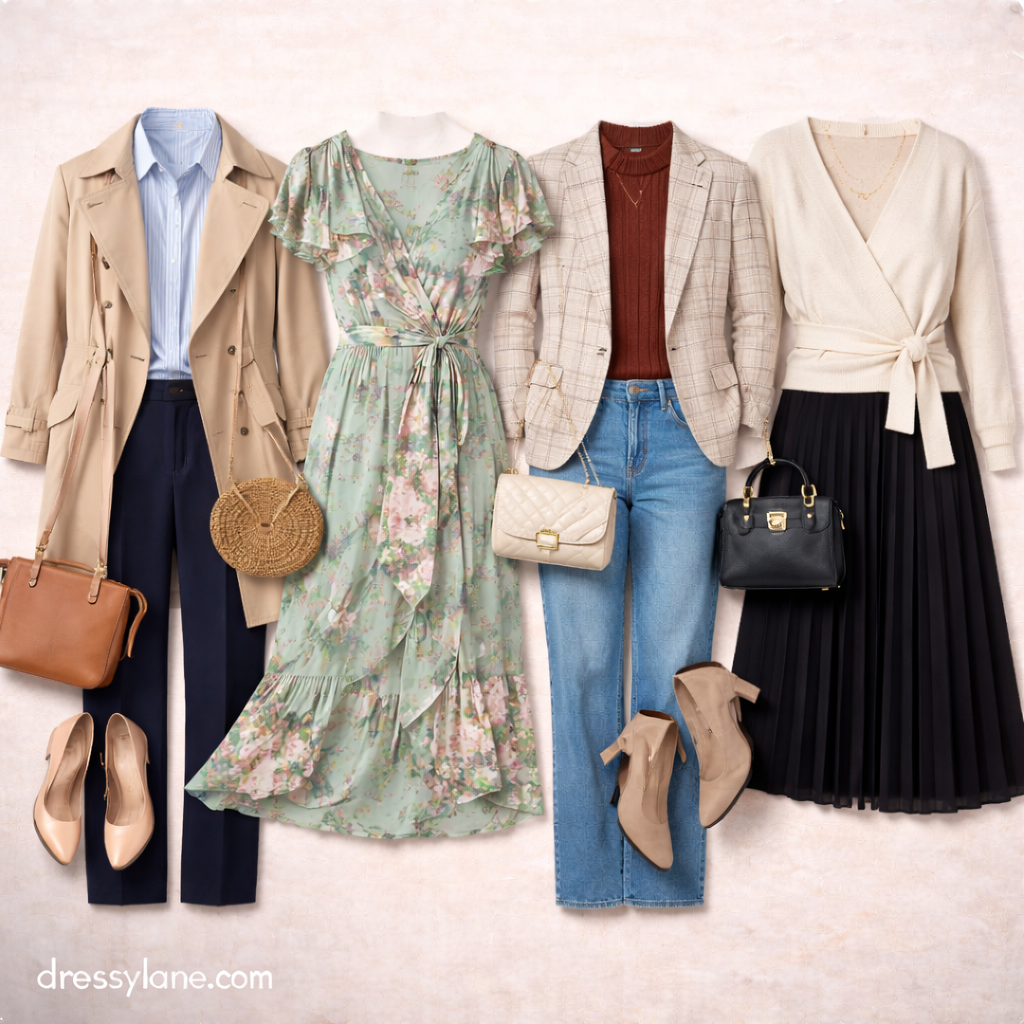
Versatile Clothing Choices
Women benefit from adaptable pieces that work across seasons.
Reliable options include:
- Dresses that layer with jackets or sweaters
- Tailored trousers in season-appropriate fabrics
- Blouses in breathable or insulating materials
- Lightweight to mid-weight outer layers
Avoid overly delicate fabrics that don’t hold up to weather changes.
Shoes and Accessories by Season
Footwear and accessories matter year-round.
Seasonal-friendly choices include:
- Closed-toe shoes for cooler months
- Breathable flats or low heels for warmer days
- Scarves, belts, and bags that add warmth or polish
Choose accessories that enhance comfort without adding bulk.
Seasonal Work Outfit Ideas for Men
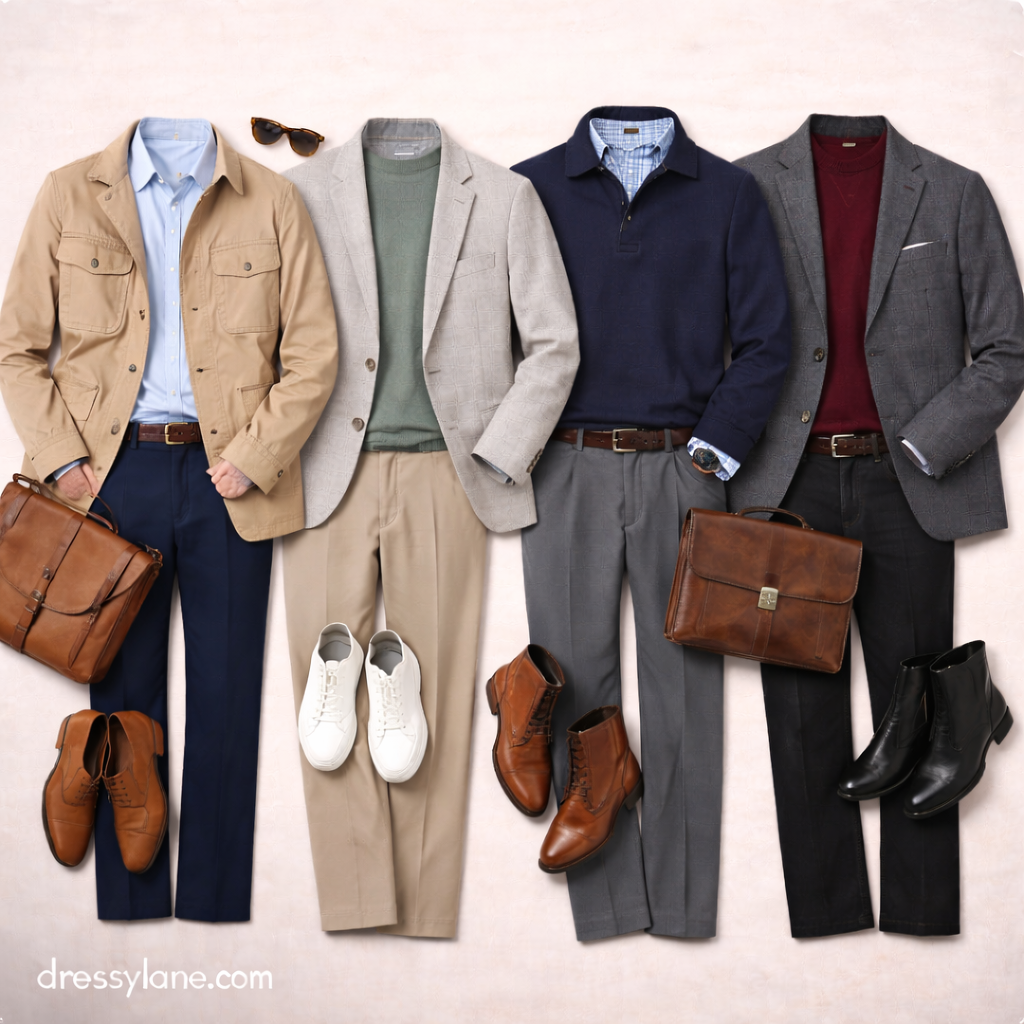
Adaptable Wardrobe Staples
Men’s seasonal workwear should focus on flexibility.
Strong choices include:
- Layerable shirts and sweaters
- Blazers in lighter or heavier fabrics depending on season
- Tailored trousers suitable for temperature changes
Avoid overly heavy or overly thin fabrics outside their intended season.
Footwear and Finishing Touches
Shoes should match both the weather and workplace.
Good options include:
- Breathable dress shoes for warmer months
- Boots or sturdier shoes for colder weather
- Simple accessories like belts and watches
Comfort and professionalism should go hand in hand.
Dressing for Temperature Changes Throughout the Day
Many workdays involve temperature swings.
Helpful strategies include:
- Wearing removable layers
- Choosing fabrics that regulate temperature
- Keeping a light jacket at the office
Planning for transitions prevents discomfort.
Common Seasonal Workwear Mistakes
Avoid these common issues:
- Dressing only for outdoor temperatures
- Ignoring office climate control
- Over-layering bulky pieces
- Choosing fabrics that don’t breathe or insulate properly
Small adjustments can make a big difference.
Final Thoughts
Dressing for seasonal workdays is about preparation and adaptability. By choosing appropriate fabrics, layering thoughtfully, and maintaining structure, you can stay comfortable and professional year-round. With a flexible wardrobe and seasonal awareness, getting dressed for work becomes easier—no matter the weather.