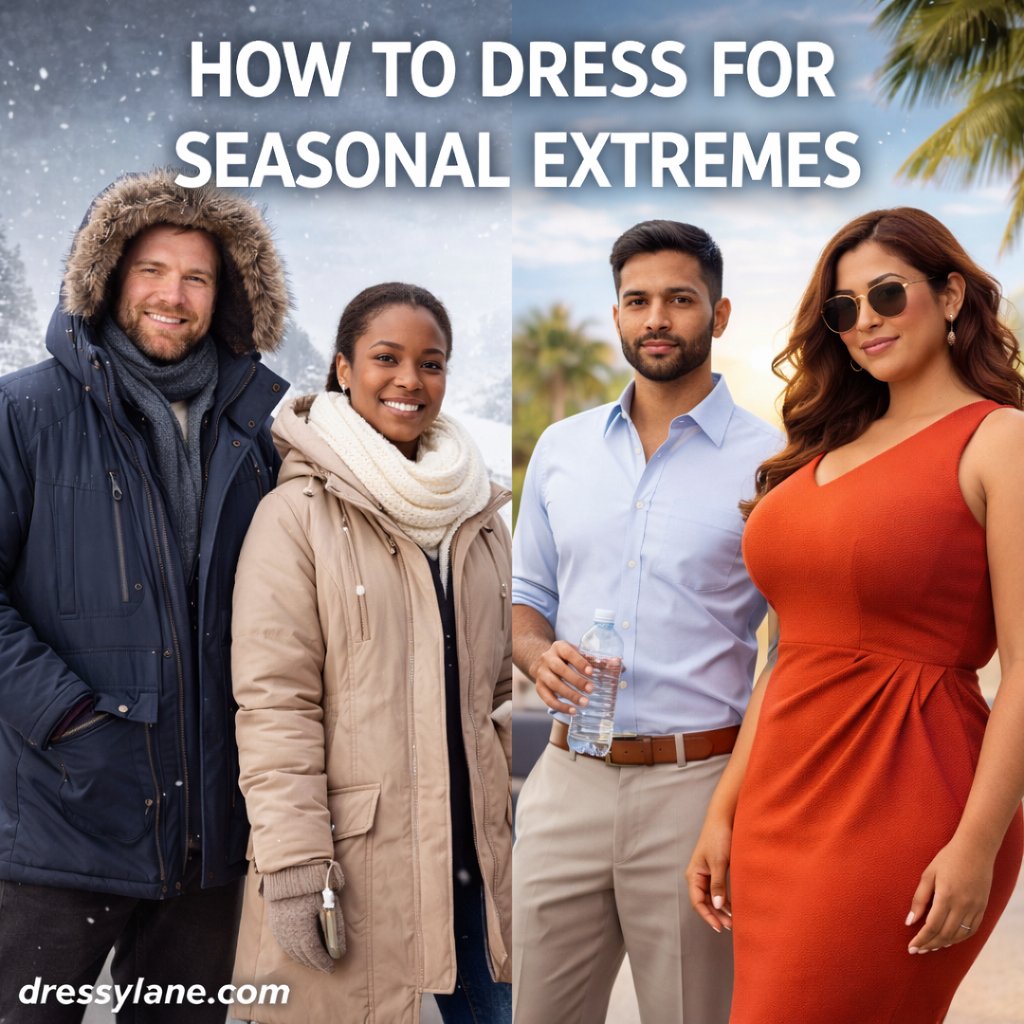
Seasonal extremes—whether intense heat, bitter cold, sudden temperature swings, or unpredictable weather—can make getting dressed feel like a daily challenge. Dressing well in these conditions isn’t about owning extreme gear or sacrificing style. It’s about understanding how fabrics, layering, and smart outfit choices work together to protect your comfort and energy.
This guide explains how to dress for seasonal extremes, offering practical, adaptable strategies for both men and women so you can stay comfortable, functional, and put together in even the most challenging conditions.
What Counts as Seasonal Extremes?
Seasonal extremes vary by location and lifestyle, but they often include:
- Heat waves and high humidity
- Freezing temperatures and wind chill
- Large temperature swings within the same day
- Extreme indoor vs outdoor temperature differences
- Unexpected weather shifts during travel or commutes
Preparing for extremes means planning outfits that adapt, not react.
Core Principles for Dressing in Extreme Conditions
No matter the season, a few universal rules make extreme-weather dressing easier.
Layer With Purpose
Each layer should serve a clear function—temperature control, insulation, or protection.
Choose Performance-Friendly Fabrics
Fabric choice matters more than outfit complexity.
Plan for Removal and Adjustment
Outfits should allow you to add or remove layers without disrupting your look.
How to Dress for Extreme Heat
Extreme heat challenges your body’s ability to cool itself, making fabric and airflow critical.
Key Heat-Dressing Strategies
- Prioritize breathable, moisture-managing fabrics
- Avoid tight or restrictive silhouettes
- Minimize unnecessary layers
- Protect skin from sun exposure
Women’s Extreme Heat Dressing
- Loose dresses or skirts in natural fabrics
- Sleeveless or short-sleeve tops
- Lightweight layers for indoor air conditioning
- Breathable footwear and minimal accessories
Men’s Extreme Heat Dressing
- Lightweight button-downs or polos
- Relaxed-fit trousers or breathable pants
- Unlined jackets when structure is required
- Shoes designed for airflow and comfort
In extreme heat, simplicity and airflow outperform style tricks.
How to Dress for Extreme Cold
Extreme cold requires insulation, protection, and smart layering without restricting movement.
Key Cold-Dressing Strategies
- Start with heat-retaining base layers
- Build insulation through mid-layers
- Finish with protective outerwear
- Seal warmth at the neck, hands, and feet
Women’s Extreme Cold Dressing
- Thermal base layers under everyday outfits
- Insulating sweaters or knits
- Long coats with proper insulation
- Warm accessories like scarves and gloves
Men’s Extreme Cold Dressing
- Thermal undershirts and lined trousers
- Wool sweaters or insulated vests
- Structured outerwear that blocks wind
- Weather-appropriate footwear
In cold conditions, layered insulation works better than one heavy piece.
Dressing for Rapid Temperature Changes
Some environments shift dramatically throughout the day.
Examples include:
- Cold mornings and hot afternoons
- Indoor air conditioning during summer
- Heated offices during winter
Smart Adjustment Strategies
- Wear removable outer layers
- Choose breathable base layers year-round
- Use lightweight mid-layers instead of bulky ones
- Avoid fabrics that trap heat excessively
Adaptability is the key to staying comfortable all day.
How to Dress for Seasonal Extremes as a Woman
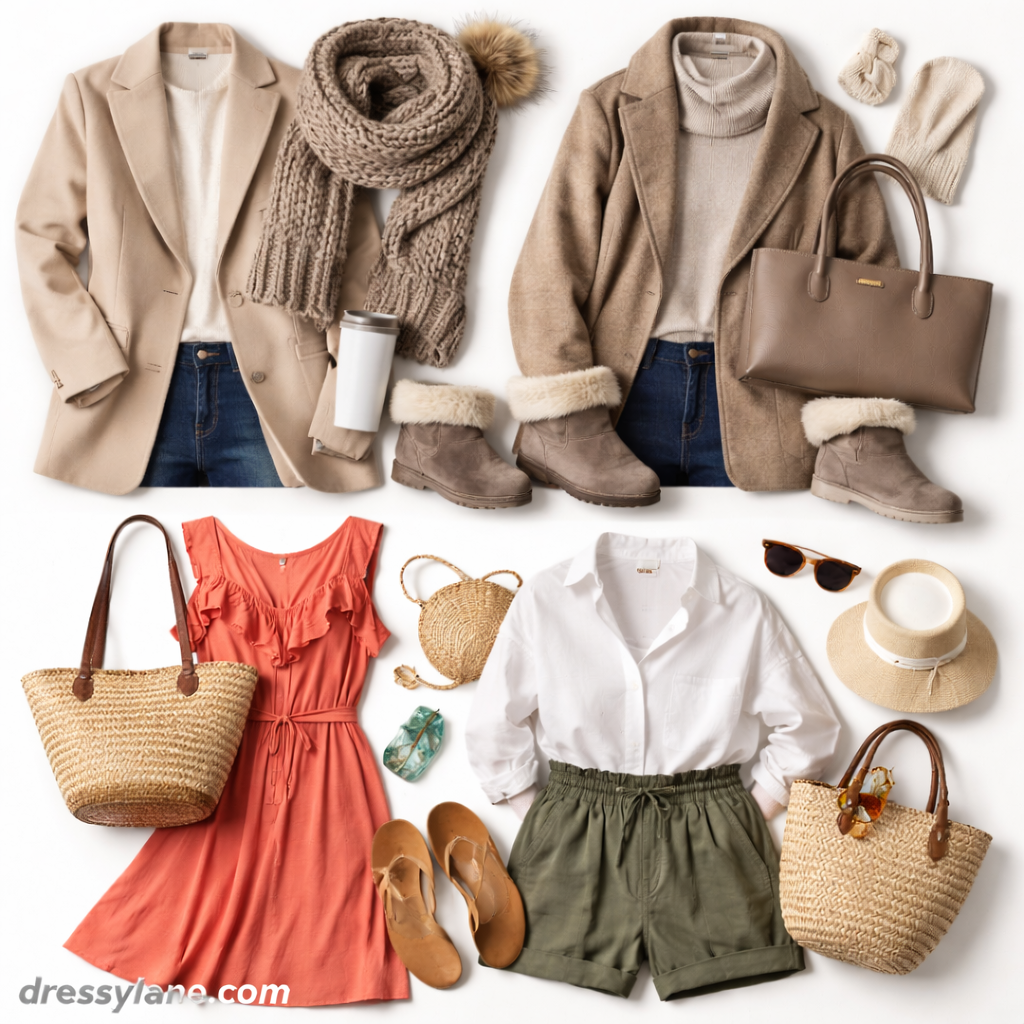
Women often balance layering with fit and silhouette concerns.
Practical Strategies
- Build outfits around a breathable base
- Use structured layers to maintain shape
- Choose versatile dresses that layer well
- Keep accessories functional and minimal
Warmth or cooling doesn’t require sacrificing elegance when layers are intentional.
How to Dress for Seasonal Extremes as a Man
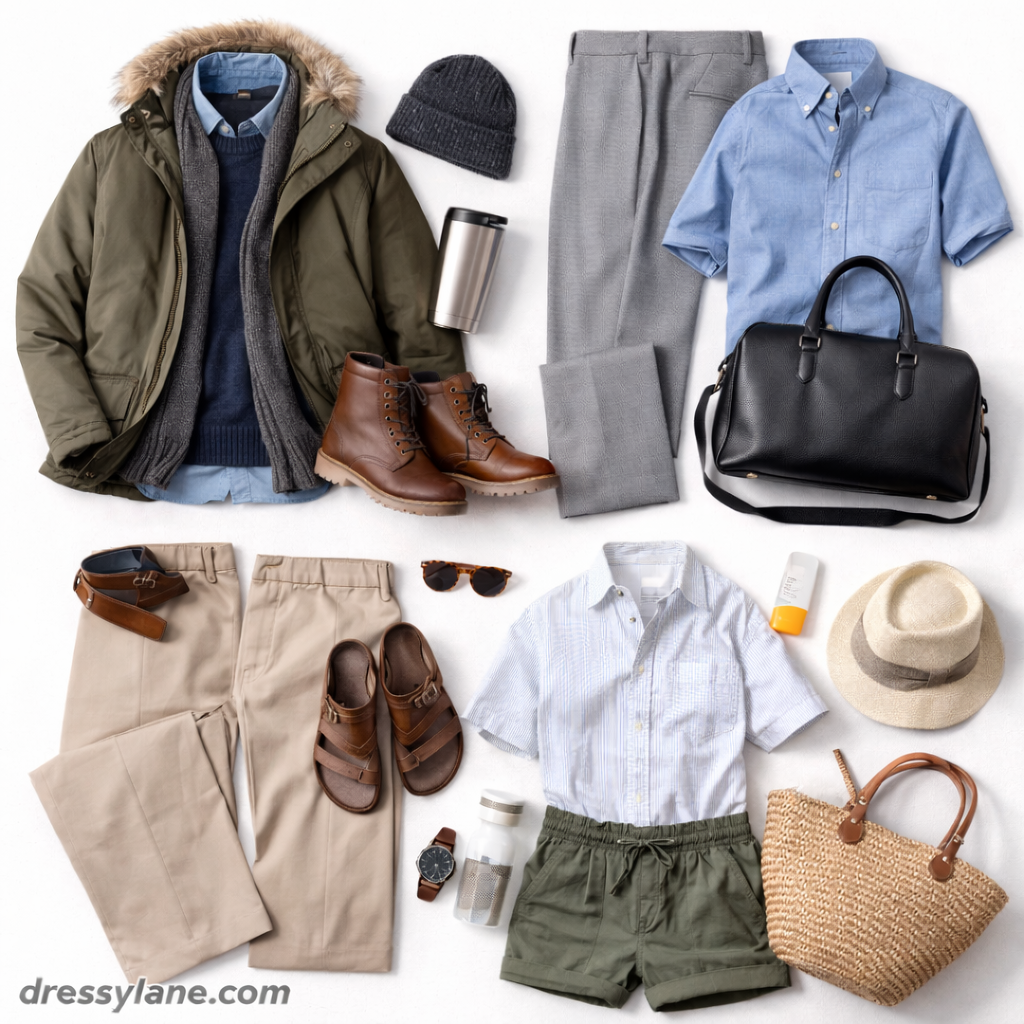
Men’s clothing often handles extremes well when chosen thoughtfully.
Practical Strategies
- Invest in quality base layers
- Use texture and fabric weight for insulation
- Prioritize fit that allows movement
- Choose outerwear appropriate for conditions
Consistency and preparation make extreme-weather dressing manageable.
Footwear Matters More Than You Think
Feet play a major role in overall comfort during extreme weather.
Footwear Tips for Extremes
- Breathable shoes for heat
- Insulated, moisture-resistant shoes for cold
- Proper socks to regulate temperature
- Shoes suited for terrain and weather conditions
Uncomfortable feet can make any outfit feel unbearable.
Common Mistakes When Dressing for Extremes
Avoid these frequent issues:
- Ignoring base layers
- Wearing fabrics unsuitable for the season
- Over-layering without airflow
- Dressing only for outdoor conditions
- Choosing style over function in extreme weather
Extreme conditions demand practical planning.
Final Thoughts
Learning how to dress for seasonal extremes is about preparation, adaptability, and understanding how your body responds to temperature. By choosing the right fabrics, layering strategically, and planning for adjustment, both men and women can stay comfortable without sacrificing style.
When your clothing works with the environment instead of against it, extreme weather becomes far easier to manage—and getting dressed becomes a confident, intentional part of your day.