Introduction
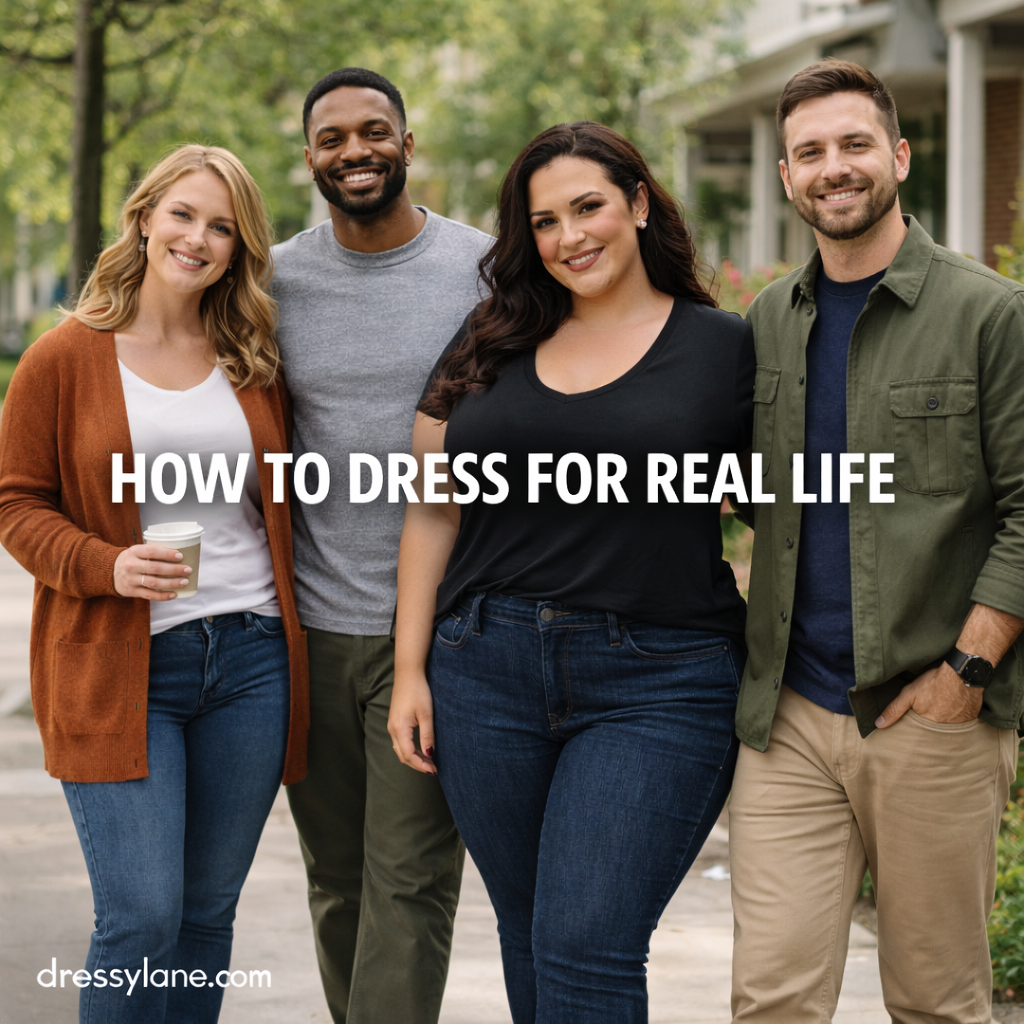
Real life doesn’t come with a dress code. Between work, errands, social plans, and downtime, most days require outfits that feel comfortable, practical, and presentable all at once. This guide explains how to dress for real life by building a wardrobe that works across everyday situations without feeling restrictive, trendy, or overcomplicated.
What “Dressing for Real Life” Really Means
Dressing for real life is about balance. It’s not about perfection or fashion rules—it’s about wearing clothes that support your routine.
Real-life style focuses on:
- Comfort you can move in
- Clothes that suit multiple settings
- Easy coordination without overthinking
- Practical fabrics and fits
- A look that feels like you
The goal is effort without exhaustion.
Build Around Your Actual Routine
The most functional wardrobes reflect how you actually spend your time—not how you wish you did.
Ask yourself:
- Where do I go most days?
- What activities fill my schedule?
- What clothes do I reach for repeatedly?
Your wardrobe should match your lifestyle first and aesthetics second.
Prioritize Fit Over Trends
Well-fitting clothes instantly look better and feel more wearable than trend-driven pieces.
Focus on:
- Clothing that skims the body without clinging
- Comfortable waistlines and shoulder fits
- Hem lengths that work with your shoes
- Cuts that allow easy movement
When fit works, style follows naturally.
Choose Practical Fabrics That Hold Up
Real-life clothing needs to last beyond one wear.
Look for fabrics that:
- Breathe comfortably
- Resist wrinkles
- Stretch slightly for movement
- Wash and wear easily
Avoid overly delicate materials that demand constant care.
Everyday Outfit Foundations for Women
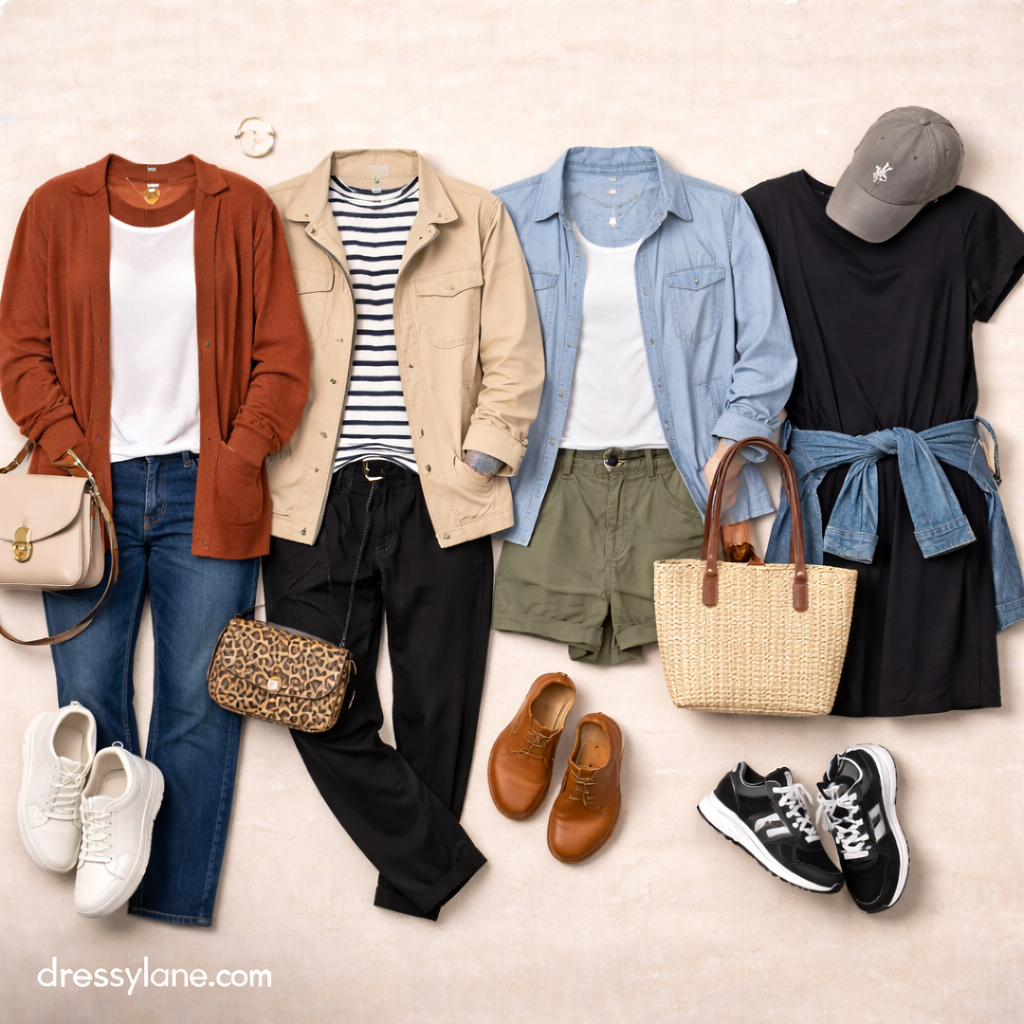
Reliable Clothing Staples
Women benefit from pieces that move easily between tasks and settings.
Strong real-life staples include:
- Comfortable trousers or relaxed jeans
- Simple dresses that layer well
- Neutral tops in breathable fabrics
- Lightweight sweaters or jackets
Choose items that feel good all day, not just for an hour.
Shoes That Support Daily Movement
Shoes can make or break a real-life outfit.
Smart everyday choices include:
- Clean sneakers or flats
- Low boots or loafers
- Supportive sandals when weather allows
If you can’t walk comfortably, the outfit won’t work long-term.
Everyday Outfit Foundations for Men
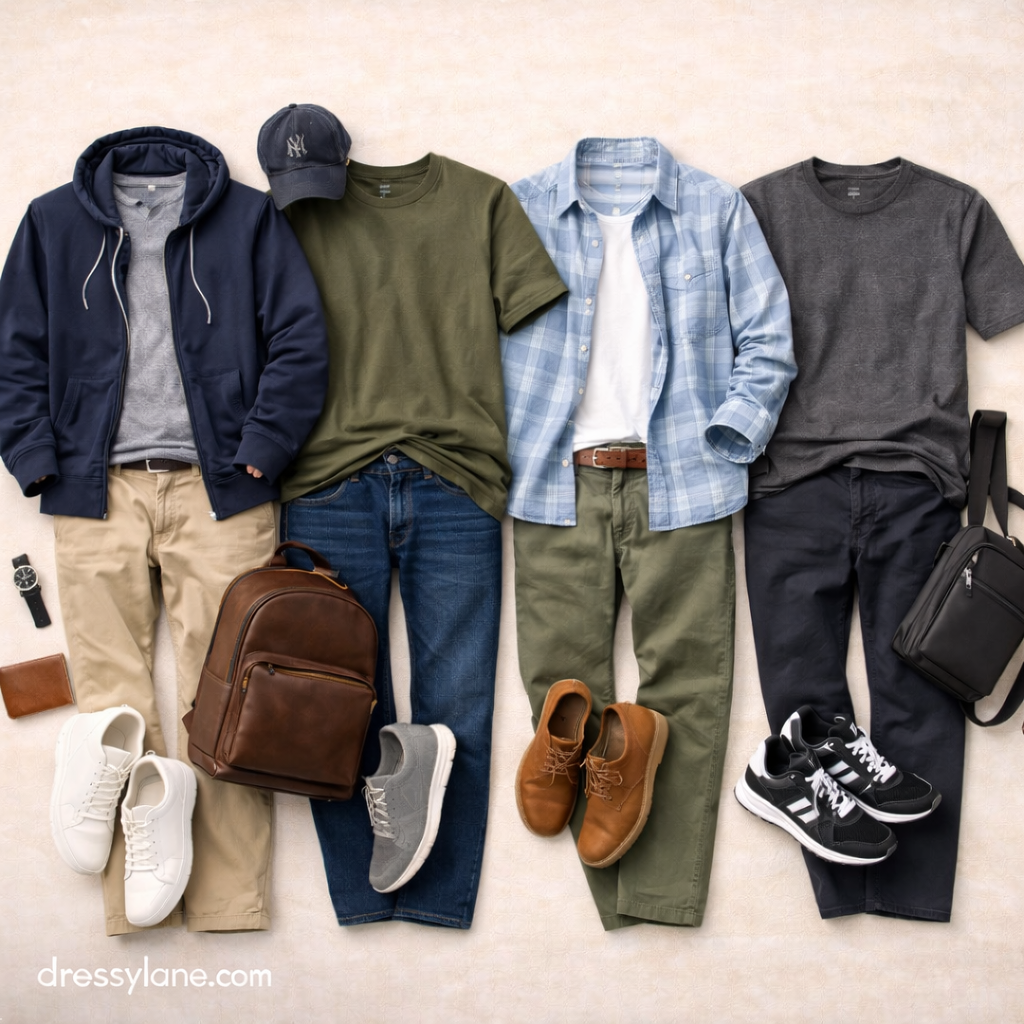
Versatile Clothing Essentials
Men’s real-life wardrobes thrive on adaptable basics.
Reliable staples include:
- Neutral T-shirts or casual shirts
- Comfortable pants or jeans
- Lightweight jackets or overshirts
- Shoes that handle both errands and casual outings
Focus on pieces that layer well and stay comfortable throughout the day.
Comfortable, Functional Footwear
Men’s shoes should support movement and versatility.
Good options include:
- Clean sneakers
- Casual boots
- Loafers or slip-ons
Avoid shoes that only work in one situation.
Dressing Up Without Overdoing It
Real life still includes moments that call for a slightly polished look.
Easy ways to elevate an outfit include:
- Adding a structured jacket
- Switching casual shoes for cleaner ones
- Using accessories sparingly
- Choosing darker or richer colors
Small changes can shift an outfit’s tone without sacrificing comfort.
Avoid Common “Real Life” Style Mistakes
These habits often make dressing harder than it needs to be.
Avoid:
- Saving clothes for “special” occasions only
- Wearing uncomfortable items out of obligation
- Buying pieces that don’t match your lifestyle
- Overcomplicating daily outfits
Style should support your day—not slow it down.
Build a Wardrobe That Works for You
Real-life dressing improves when your wardrobe feels cohesive.
Helpful strategies include:
- Stick to a consistent color palette
- Invest in pieces you wear weekly
- Remove items you never reach for
- Replace worn basics regularly
Consistency beats constant reinvention.
Final Thoughts
Dressing for real life is about ease, comfort, and confidence. When your clothes match your routine, fit well, and feel good to wear, getting dressed becomes simpler and more enjoyable. By focusing on practicality and personal comfort, you can build a style that works every single day—without effort or frustration.