Traveling across time zones can throw off your sleep, energy levels, and body temperature. What you wear during long flights and upon arrival plays a bigger role than most people realize. The right clothing helps you stay comfortable, adapt to changing climates, and transition smoothly between day and night.
This guide explains how to dress for different time zones with practical outfit strategies for both men and women.
Why Time Zones Affect How You Dress
Crossing time zones often means:
- Overnight flights or early arrivals
- Temperature changes between departure and destination
- Extended periods of sitting or movement
- Disrupted sleep patterns
Clothing that adapts easily helps reduce discomfort and stress during travel days.
Prioritize Layering for Flexibility
Layering allows you to adjust quickly as conditions change.
Travel-friendly layering essentials:
- Lightweight jackets or cardigans
- Breathable base layers
- Easy-to-remove mid layers
- Compact outerwear
Choose layers that pack easily and don’t wrinkle.
Choose Fabrics That Support Comfort and Rest
Certain fabrics help regulate temperature and promote comfort.
Best fabric choices:
- Cotton blends for breathability
- Merino wool for temperature regulation
- Modal or bamboo for softness
- Wrinkle-resistant fabrics for long wear
Avoid heavy fabrics that trap heat or restrict movement.
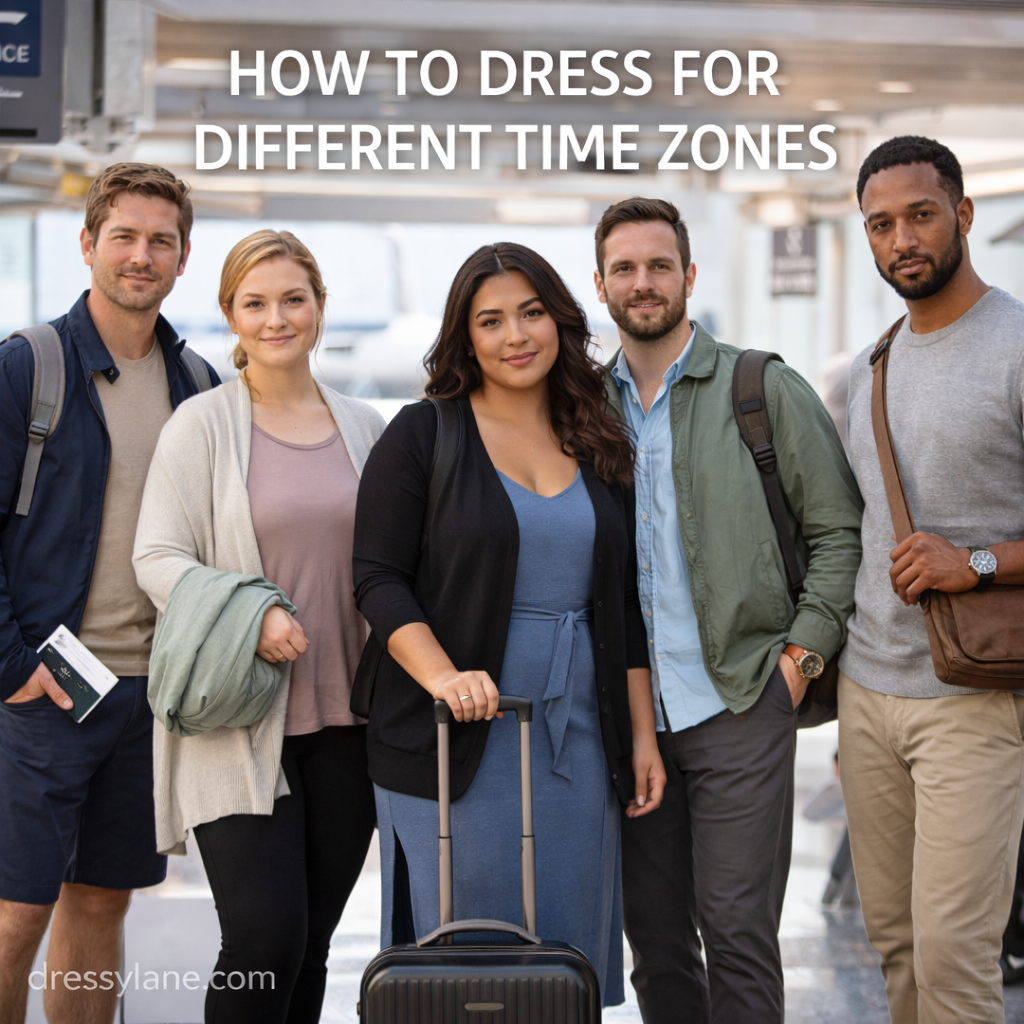
How to Dress for Different Time Zones (Women)
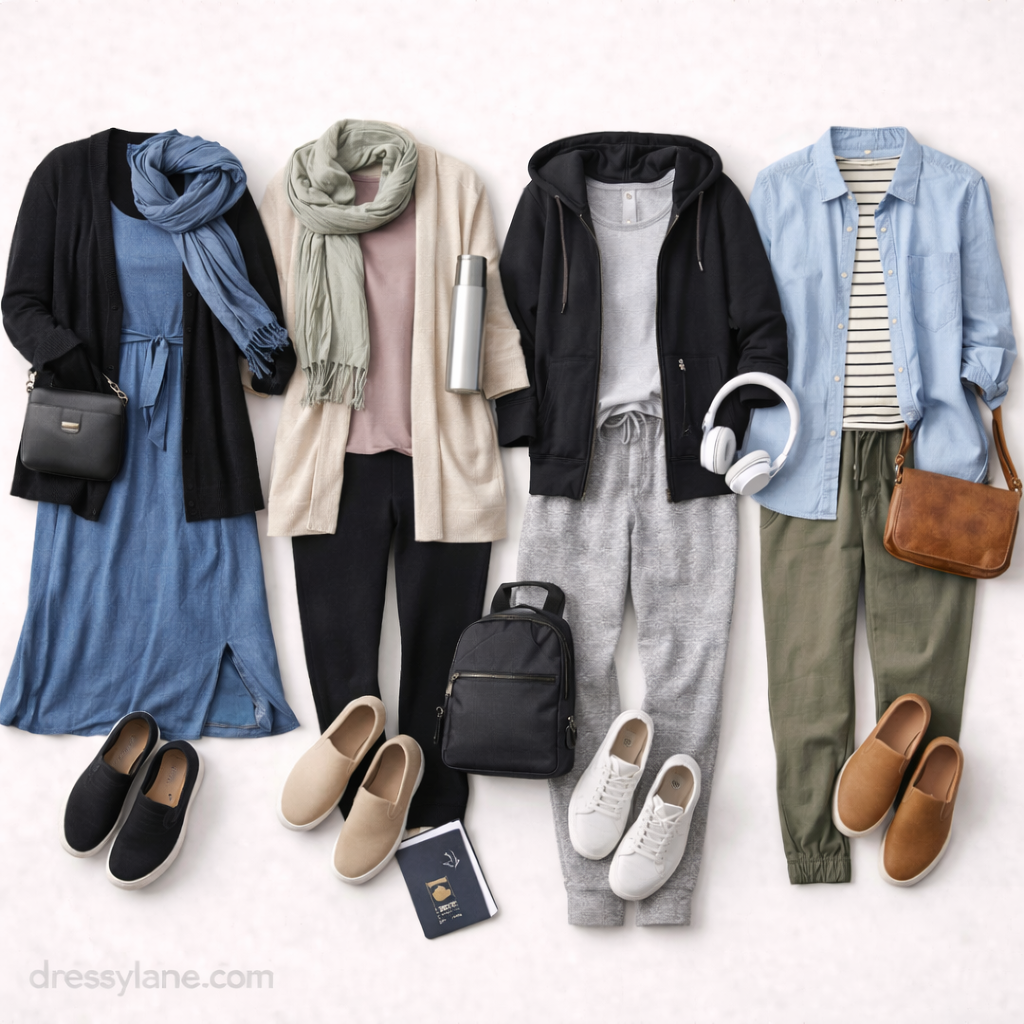
Women’s travel outfits should balance comfort, versatility, and polish.
Smart outfit ideas:
- Stretch pants or leggings with longer tops
- Midi dresses layered with cardigans
- Lightweight scarves for warmth or style
- Comfortable flats or sneakers
Stick to neutral colors for easy mixing and matching.
How to Dress for Different Time Zones (Men)
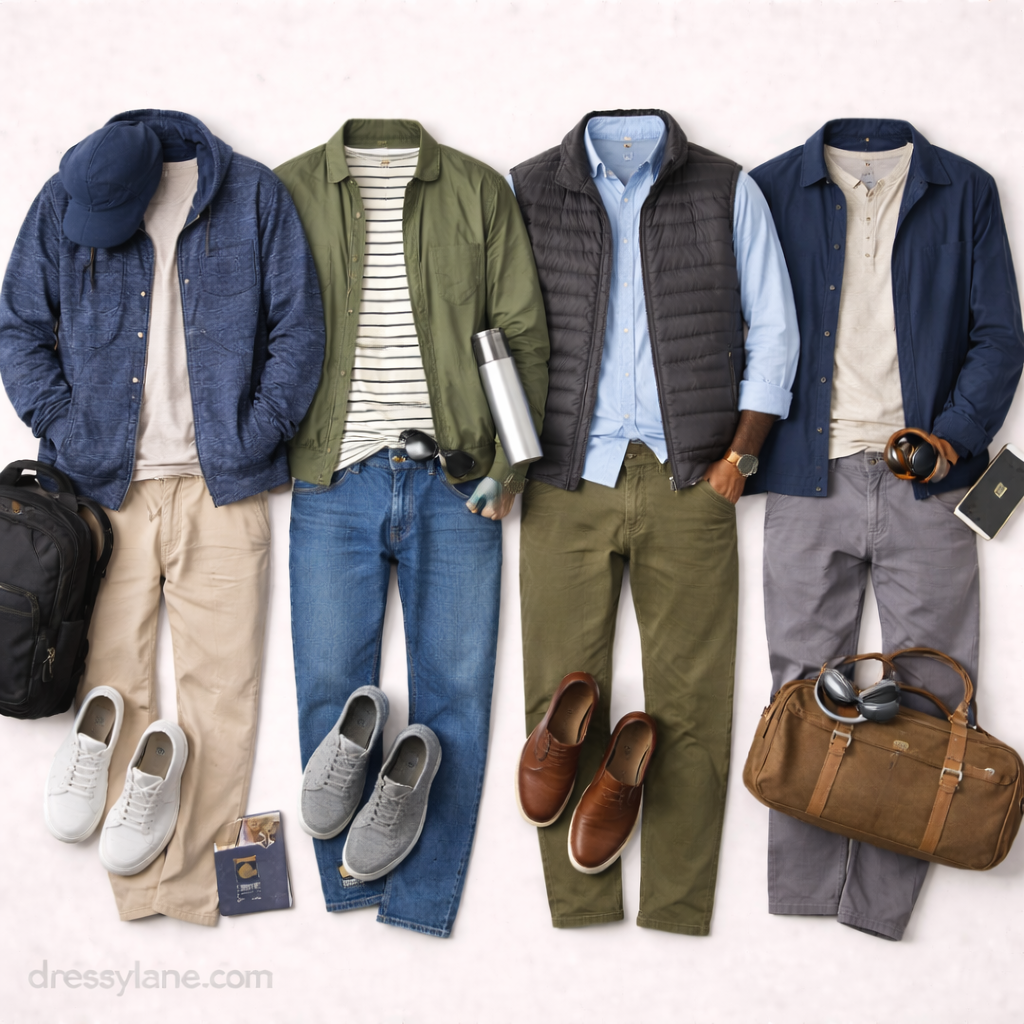
Men benefit from simple, adaptable pieces.
Reliable outfit combinations:
- Stretch chinos or relaxed-fit pants
- Soft t-shirts or button-down shirts
- Light sweaters or zip-up layers
- Comfortable, supportive footwear
Choose items that look presentable even after hours of wear.
Dressing for Day-to-Night Transitions
Time zone changes often blur day and night.
Helpful strategies:
- Wear darker neutrals that transition well
- Choose outfits that work both casually and socially
- Avoid pajamas or overly casual loungewear
- Keep a fresh layer in your carry-on
Looking put-together helps your body and mind adjust faster.
Preparing for Climate Differences
Time zone changes often come with climate shifts.
Tips for climate transitions:
- Check weather forecasts for both locations
- Pack a light outer layer even for warm destinations
- Choose breathable fabrics for variable conditions
Being prepared prevents unnecessary discomfort.
Footwear for Time Zone Travel
Shoes should support long wear and movement.
Best footwear choices:
- Slip-on sneakers or loafers
- Cushioned soles for long walking periods
- Breathable materials
Avoid new or uncomfortable shoes on travel days.
Accessories That Make Travel Easier
Small accessories can improve comfort significantly.
Helpful accessories:
- Compression socks
- Scarves or wraps
- Eye masks and neck pillows
- Crossbody or backpack-style bags
Accessories should be practical, not bulky.
What to Avoid When Traveling Across Time Zones
Some clothing choices make travel harder.
Avoid:
- Tight or restrictive clothing
- Heavy layering that’s hard to remove
- Fabrics that wrinkle or retain odors
- Overly casual outfits that limit flexibility
Comfort and adaptability matter most.
Final Thoughts
Knowing how to dress for different time zones helps make long-distance travel smoother and more comfortable. By choosing breathable fabrics, flexible layers, and versatile outfits, you can support your body as it adjusts to new schedules and environments.
Dress with comfort, adaptability, and ease—and your travel days will feel far less exhausting.