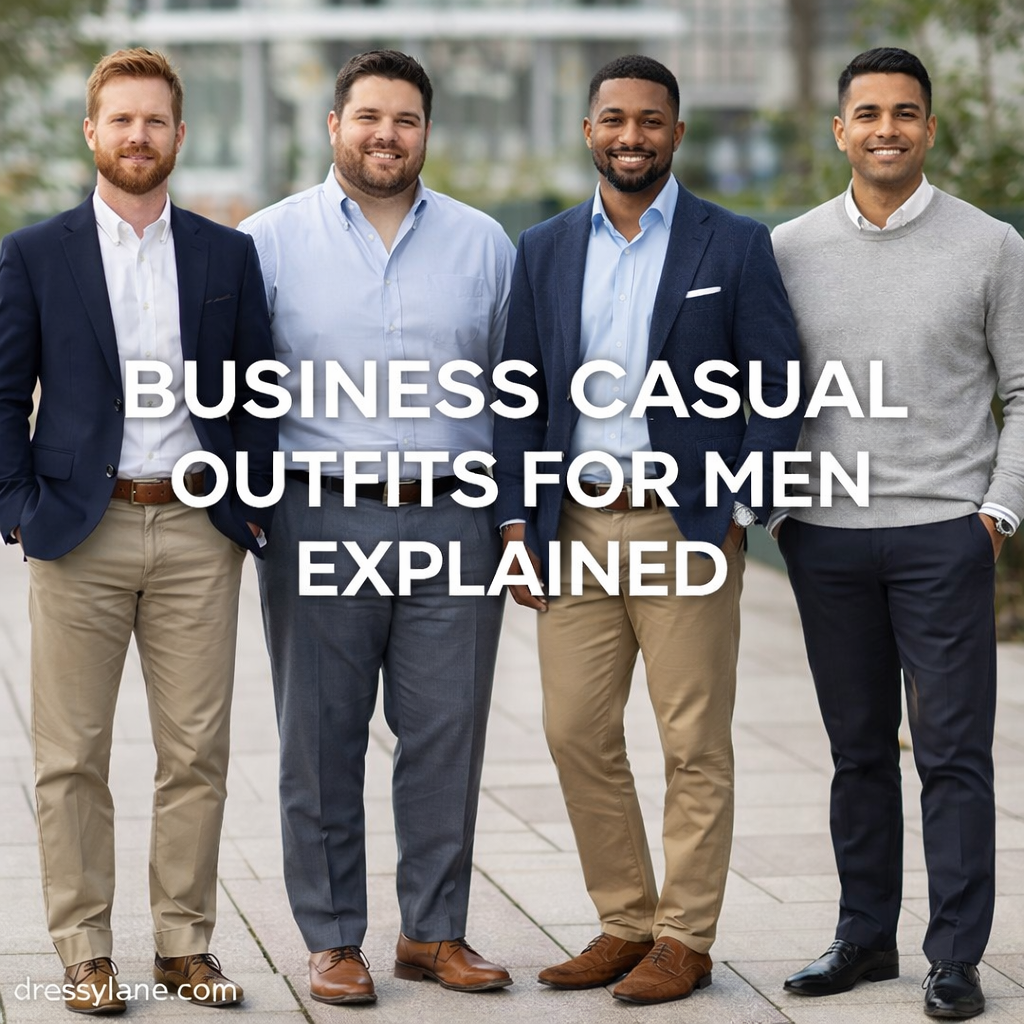
Business casual can be one of the most confusing dress codes for men. It sits between formal office attire and relaxed casual wear, leaving plenty of room for interpretation. Dressing business casual isn’t about wearing whatever feels comfortable—it’s about looking professional, approachable, and polished without being overly formal.
This guide breaks down business casual outfits for men, explaining what works, what doesn’t, and how to dress confidently for modern workplaces.
What Business Casual Really Means
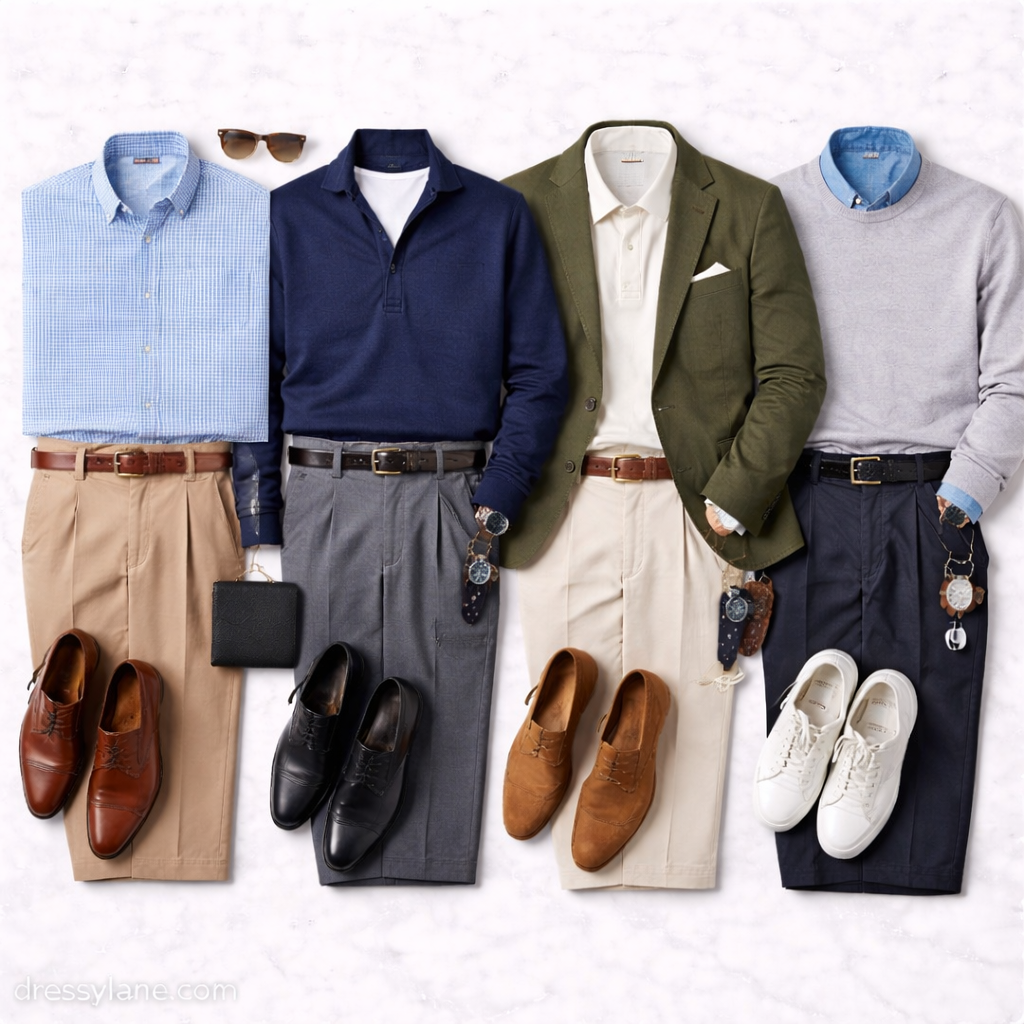
Business casual blends traditional business clothing with more relaxed elements. The goal is to look professional while maintaining comfort and flexibility.
Business casual generally includes:
- Collared shirts
- Tailored pants
- Clean, professional shoes
- Optional layering pieces
It typically excludes:
- Suits and ties (unless company culture requires them)
- Jeans in conservative environments
- Sneakers and athletic footwear
- Graphic t-shirts or hoodies
Always consider your workplace culture when deciding how relaxed you can be.
Core Pieces of a Business Casual Wardrobe
A strong business casual wardrobe is built around versatile, well-fitting basics.
Essential business casual pieces for men:
- Button-down shirts
- Polo shirts
- Chinos or tailored trousers
- Lightweight sweaters
- Blazers or sport coats
These pieces mix easily and create multiple outfit combinations without looking repetitive.
Business Casual Shirts That Work
Shirts are the foundation of most business casual outfits.
Best shirt options:
- Button-down shirts in solid colors or subtle patterns
- Polo shirts with clean lines
- Lightweight knit tops layered under blazers
Shirt tips:
- Choose breathable fabrics
- Avoid loud prints
- Make sure shirts fit comfortably at the shoulders and chest
- Keep collars neat and structured
A crisp shirt instantly elevates your overall look.
Pants That Fit the Business Casual Standard
The right pants strike a balance between comfort and professionalism.
Best pants for business casual:
- Chinos
- Tailored trousers
- Dress pants in modern cuts
Pant tips:
- Stick to neutral colors like navy, gray, or beige
- Avoid overly tight or baggy fits
- Ensure pants break cleanly at the shoe
- Skip distressed or casual fabrics
Well-fitted pants are essential for maintaining a polished appearance.
Shoes That Complete a Business Casual Look
Shoes can make or break a business casual outfit.
Appropriate business casual shoes:
- Loafers
- Derby shoes
- Oxford shoes
- Clean leather sneakers (office-dependent)
Shoe tips:
- Keep shoes clean and polished
- Match shoe color to your belt
- Avoid athletic or worn-out footwear
Classic leather shoes are always a safe choice.
Layering Options for Business Casual
Layering adds flexibility and style to business casual outfits.
Smart layering pieces:
- Blazers
- Cardigans
- Crewneck or V-neck sweaters
- Lightweight jackets
Layering tips:
- Choose structured layers
- Stick to neutral or muted colors
- Avoid bulky outerwear indoors
A blazer instantly adds professionalism without requiring a full suit.
Business Casual Outfit Examples for Men
Here are a few reliable outfit formulas.
Classic business casual outfit:
- Button-down shirt
- Chinos
- Leather loafers
- Optional blazer
Relaxed business casual outfit:
- Polo shirt
- Tailored trousers
- Derby shoes
Polished modern business casual outfit:
- Knit sweater over a collared shirt
- Dress pants
- Oxford shoes
These combinations work across most professional settings.
What Not to Wear in a Business Casual Office
Certain items are best left out of a business casual environment.
Avoid wearing:
- T-shirts or graphic tops
- Hoodies or sweatshirts
- Shorts
- Flip-flops or sandals
- Distressed or ripped jeans
When in doubt, choose the more polished option.
Grooming Matters in Business Casual Style
Your appearance isn’t just about clothing.
Grooming tips:
- Neatly styled hair
- Trimmed facial hair
- Clean shoes
- Light fragrance
Well-groomed details enhance even simple outfits.
Adapting Business Casual to Different Workplaces
Not all offices interpret business casual the same way.
Traditional offices
Stick to button-down shirts, trousers, and leather shoes.
Creative or startup environments
You may have more flexibility, but clean lines still matter.
Client-facing roles
Dress slightly more formal to maintain credibility.
Observe how leadership dresses and adjust accordingly.
Final Thoughts
Business casual outfits for men are about balance. By focusing on fit, clean lines, and versatile basics, you can dress confidently for work without feeling restricted by formalwear. The best business casual looks feel comfortable, professional, and intentional.
When unsure, choose classic pieces, neutral colors, and polished shoes. Consistency and simplicity go a long way in creating a strong business casual wardrobe.