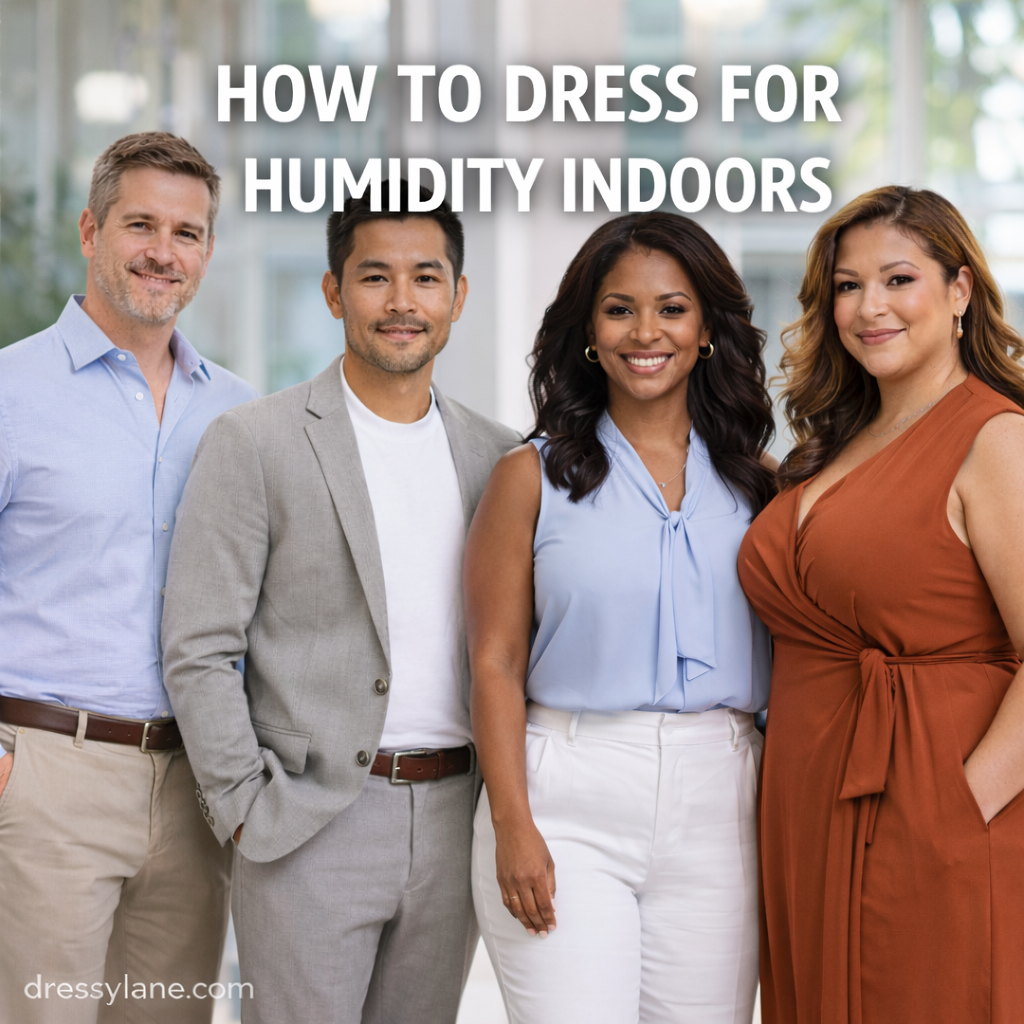
Indoor humidity can be surprisingly uncomfortable. Whether you’re dealing with a poorly ventilated office, a humid apartment, or a climate-controlled space that still feels sticky, dressing for indoor humidity requires a different approach than outdoor heat. The goal is to stay cool, polished, and comfortable without looking overly casual.
This guide explains how to dress for humidity indoors, with practical outfit strategies for both men and women.
Why Indoor Humidity Feels Different
Indoor humidity often lingers without airflow. Unlike outdoor heat, you don’t benefit from breeze or temperature shifts, which can make clothing feel heavier and clingier.
Common challenges include:
- Fabrics sticking to skin
- Feeling overheated while seated
- Limited ability to change layers
- Maintaining a professional or polished appearance
Choosing the right materials and silhouettes makes a noticeable difference.
Core Principles for Dressing in Humid Indoor Spaces
Before choosing specific outfits, focus on these essentials:
- Lightweight, breathable fabrics
- Loose or structured silhouettes that don’t cling
- Minimal layering
- Moisture-friendly materials
- Simple, polished styling
Comfort should never come at the expense of looking intentional.
How Men Can Dress for Indoor Humidity
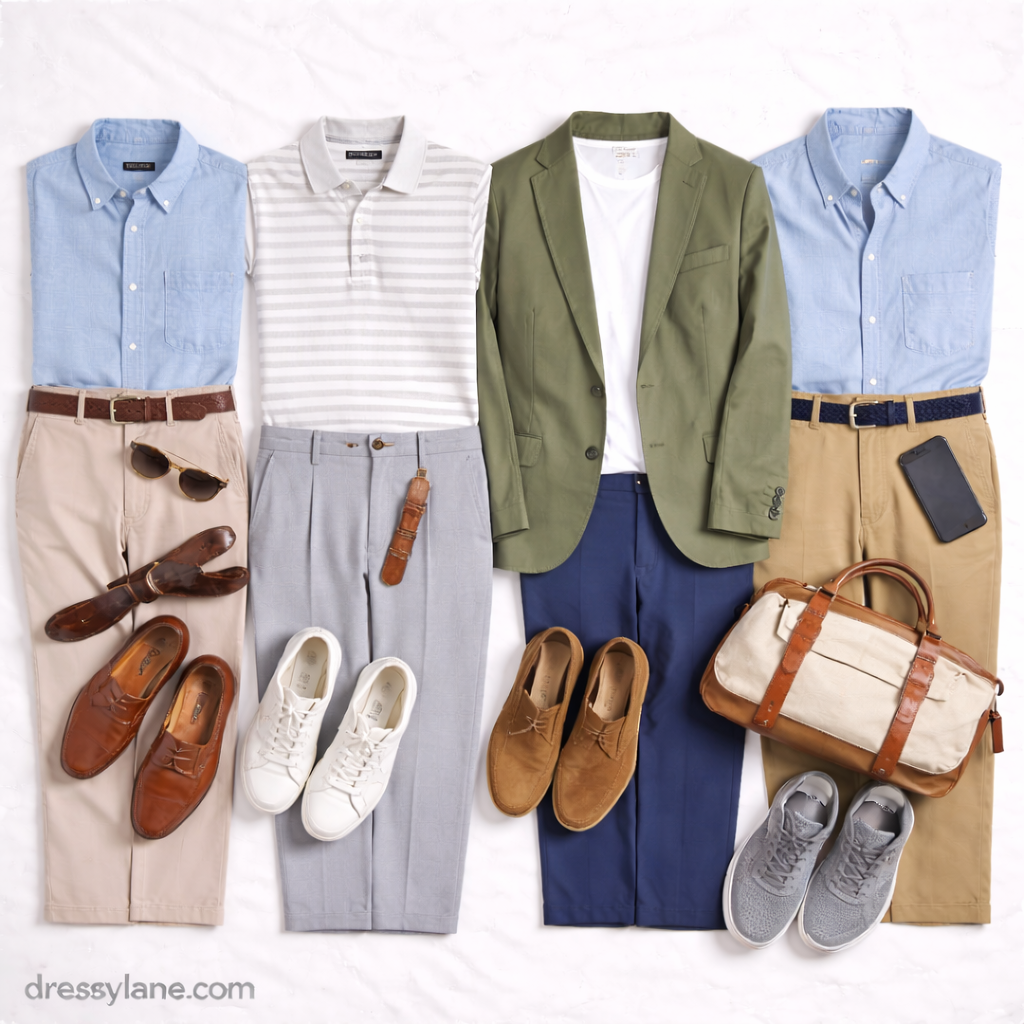
Men benefit from breathable fabrics and relaxed structure that still feels professional.
Ideal Outfit Choices for Men
- Cotton or linen-blend button-down shirts
- Lightweight polos with structure
- Unlined blazers or overshirts (when needed)
- Breathable chinos or lightweight trousers
Avoid heavy synthetics and thick linings that trap moisture.
Fabric and Fit Tips
- Choose fabrics with natural fibers
- Opt for slightly relaxed fits
- Stick to lighter colors that show less sweat
- Avoid tight collars or restrictive sleeves
Comfortable clothing helps maintain focus throughout the day.
How Women Can Dress for Indoor Humidity
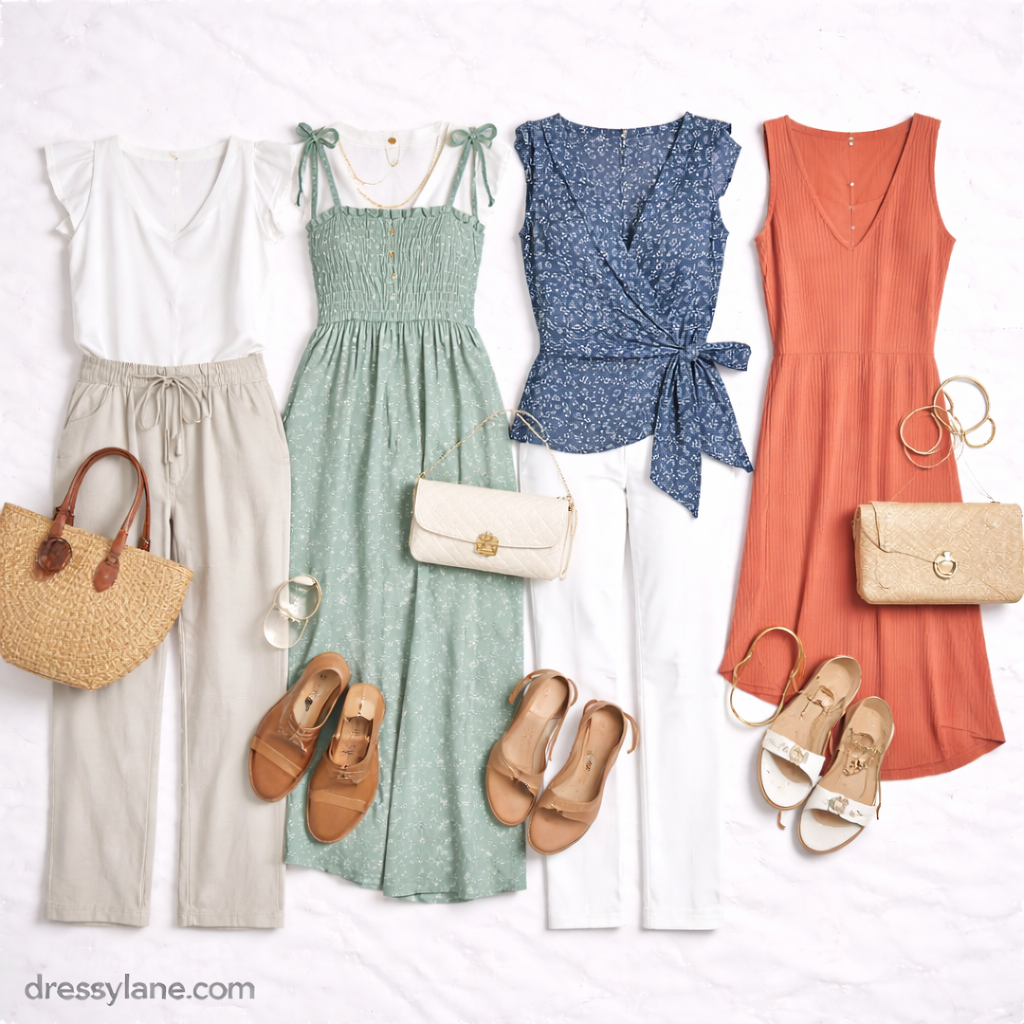
Women have flexibility to choose airflow-friendly silhouettes that remain polished.
Ideal Outfit Choices for Women
- Sleeveless or short-sleeve blouses
- Lightweight dresses with movement
- Breathable skirts or relaxed trousers
- Soft, structured tops that don’t cling
Avoid overly fitted styles that hold moisture.
Styling Tips for Comfort
- Choose wrinkle-resistant fabrics
- Opt for lighter colors
- Keep accessories minimal
- Style hair off the neck when possible
Ease and simplicity work best in humid conditions.
Fabrics That Work Best in Humid Indoor Environments
Fabric choice matters more than almost anything else.
Best options include:
- Cotton
- Linen blends
- Bamboo fabrics
- Lightweight wool blends
- Moisture-wicking natural fibers
Avoid heavy polyester, thick denim, and non-breathable synthetics.
Dressing for Humidity at Work or Home
Indoor humidity affects different environments differently.
Office or Professional Settings
- Structured but breathable clothing
- Polished silhouettes without layers
- Clean, minimal footwear
Home or Casual Settings
- Soft, breathable materials
- Relaxed fits
- Easy, low-maintenance pieces
Adjust your approach based on formality, not just comfort.
Common Mistakes to Avoid
Even stylish outfits can feel uncomfortable in humid spaces.
Avoid:
- Tight or clingy fabrics
- Heavy layering “just in case”
- Dark colors that show sweat
- Over-accessorizing
Humidity rewards simplicity.
How to Stay Comfortable All Day Indoors
Comfort improves confidence and focus.
Helpful habits:
- Dress lighter than you think you need
- Keep a spare breathable layer nearby
- Choose familiar fabrics you trust
- Dress for how long you’ll be indoors
Preparation prevents discomfort later.
Final Thoughts
Dressing for indoor humidity is about understanding fabric, fit, and airflow. With breathable materials, relaxed silhouettes, and thoughtful styling, you can stay cool and polished even in sticky indoor conditions. When your clothes work with the environment—not against it—you’ll feel more comfortable, confident, and focused throughout the day.