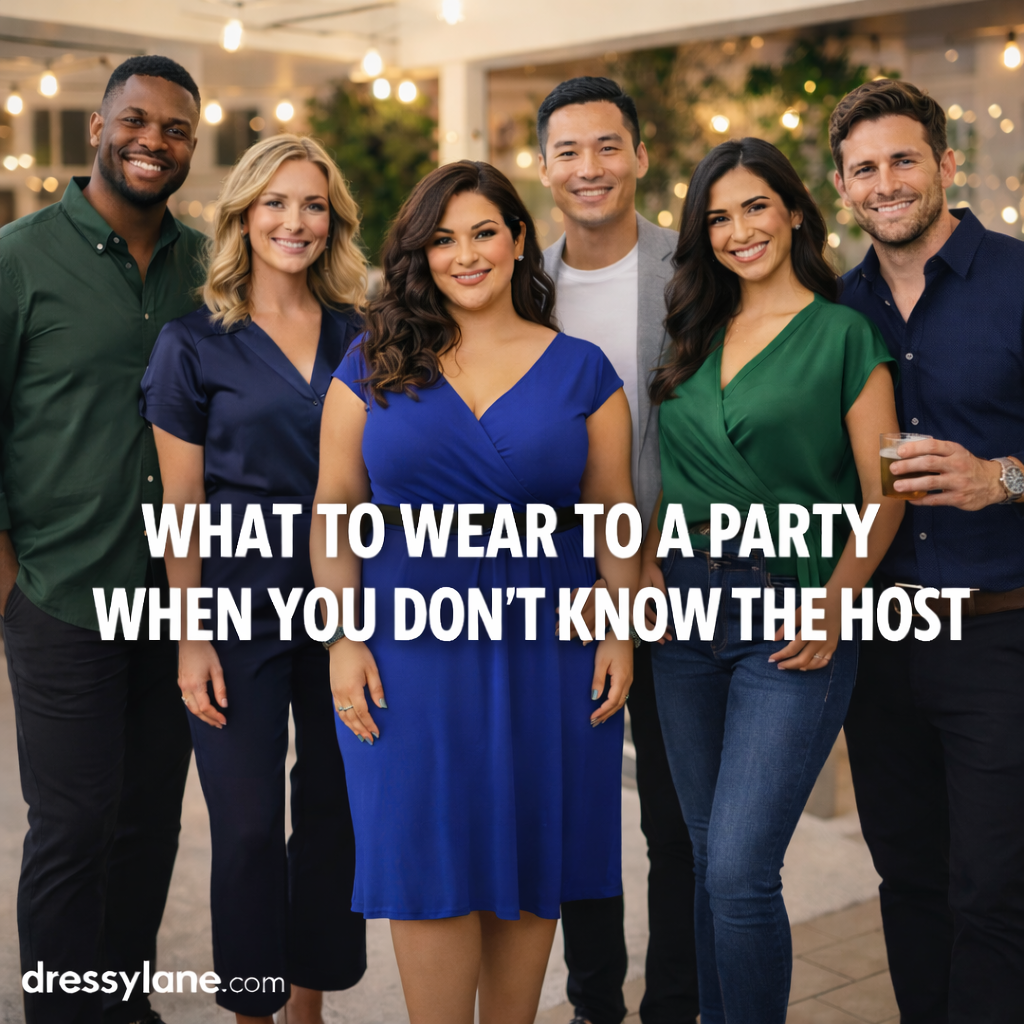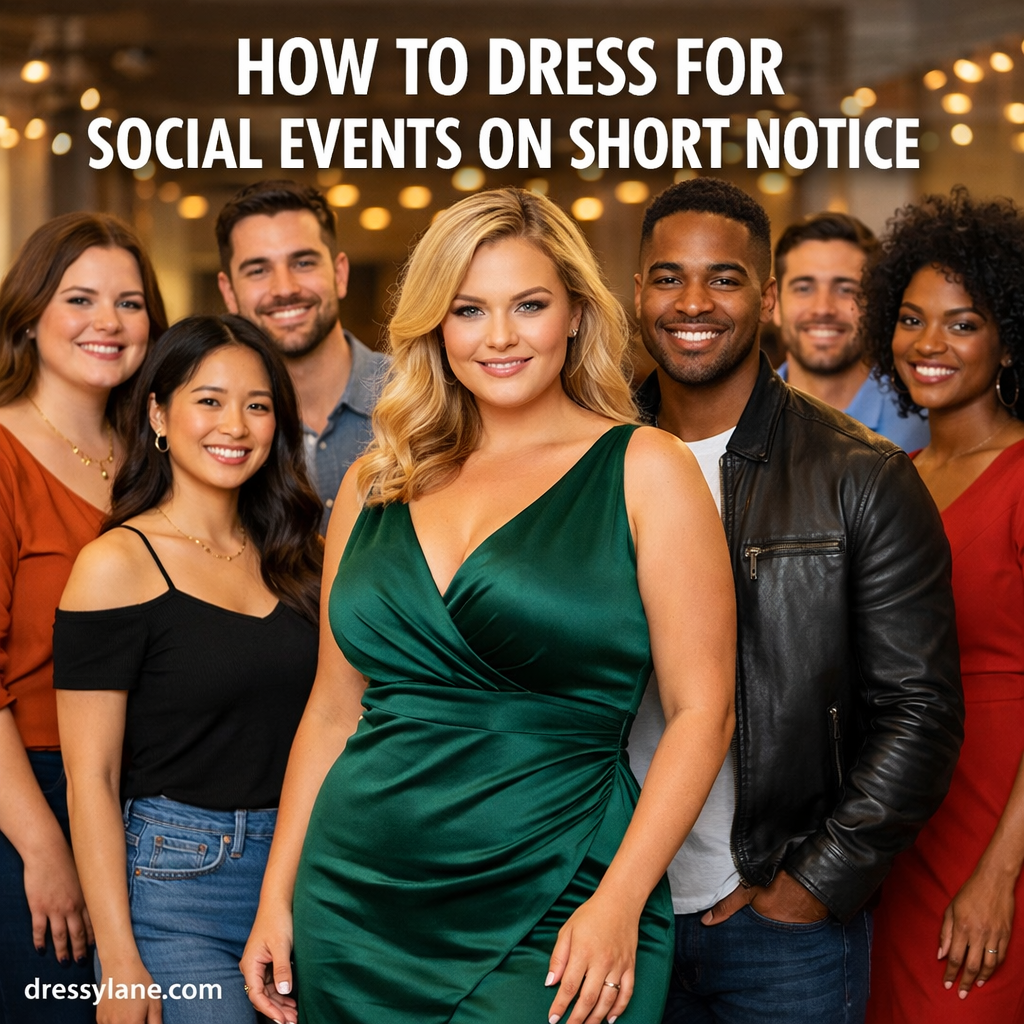
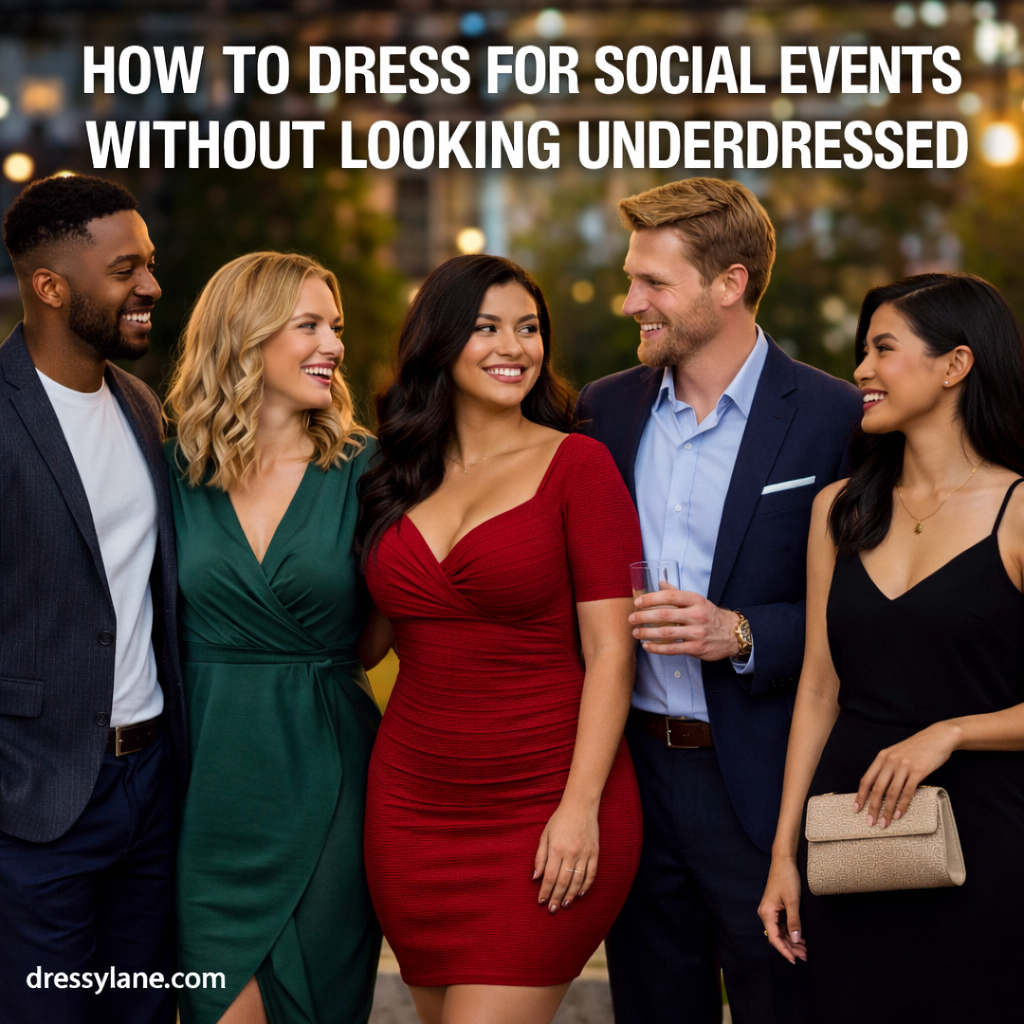
Social events sit in a tricky style zone. They’re not as structured as weddings or work functions, but they still come with expectations. Whether it’s a birthday party, engagement celebration, dinner gathering, networking mixer, or holiday event, showing up underdressed can make you feel out of place before the night even begins.
The goal isn’t to overdress or outshine anyone — it’s to look intentional, polished, and appropriate for the setting. This guide breaks down how to dress confidently for social events without guessing, stressing, or missing the mark.
Why Underdressing Happens So Often
Most underdressing isn’t about laziness — it’s about uncertainty.
Common reasons include:
- Vague or casual-sounding invitations
- Fear of standing out too much
- Overestimating how casual the event will be
- Mixing everyday outfits with “event” clothing
When people aren’t sure what’s expected, they often default to what’s comfortable — which can read as too casual in social settings.
Start With the Event Context, Not the Invite Wording
Social event dress codes are often implied rather than stated.
Before choosing an outfit, consider:
- The venue (home, restaurant, rooftop, lounge, event space)
- The time of day (afternoon vs evening)
- The reason for the gathering (celebration, networking, milestone)
- Who will be attending
A casual-sounding invite at an upscale venue usually still calls for polished attire.
The “One Level Up” Rule
A simple way to avoid looking underdressed is to dress one level above everyday wear.
That usually means:
- Elevated fabrics instead of casual cottons
- Structured pieces instead of relaxed silhouettes
- Intentional accessories instead of none
You don’t need formalwear — just refinement.
Key Style Principles for Social Events
These apply regardless of gender or personal style.
Choose polish over comfort-first outfits
Comfort matters, but social events call for clothing that looks styled, not thrown on.
Avoid anything that looks worn-in
Faded jeans, stretched tops, or overly casual shoes can instantly downgrade an outfit.
Finish the look
Hair, shoes, and accessories matter more at social events than during daily errands.
How Men Can Dress for Social Events Without Looking Underdressed
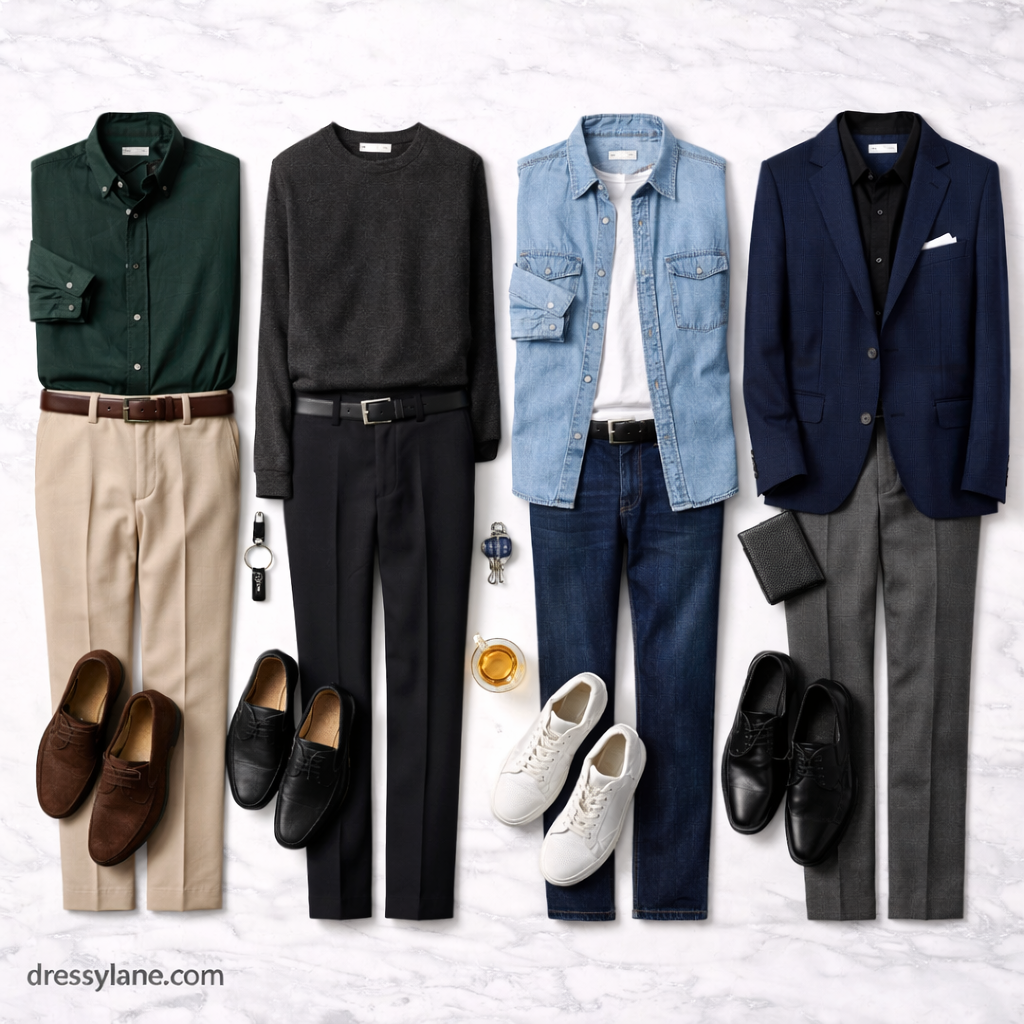
Men’s social style often fails at the shoe-and-top level.
Go Beyond Casual Basics
Instead of defaulting to everyday staples, upgrade slightly:
- Swap graphic tees for button-downs or clean polos
- Choose tailored trousers or dark, clean denim
- Add a blazer, overshirt, or structured jacket
Layers instantly signal effort.
Shoes Make or Break the Outfit
Footwear often determines whether an outfit feels social-ready.
Reliable options include:
- Leather sneakers in neutral tones
- Loafers or Chelsea boots
- Clean dress shoes for evening events
Athletic sneakers usually make outfits feel too casual.
How Women Can Dress for Social Events Without Looking Underdressed
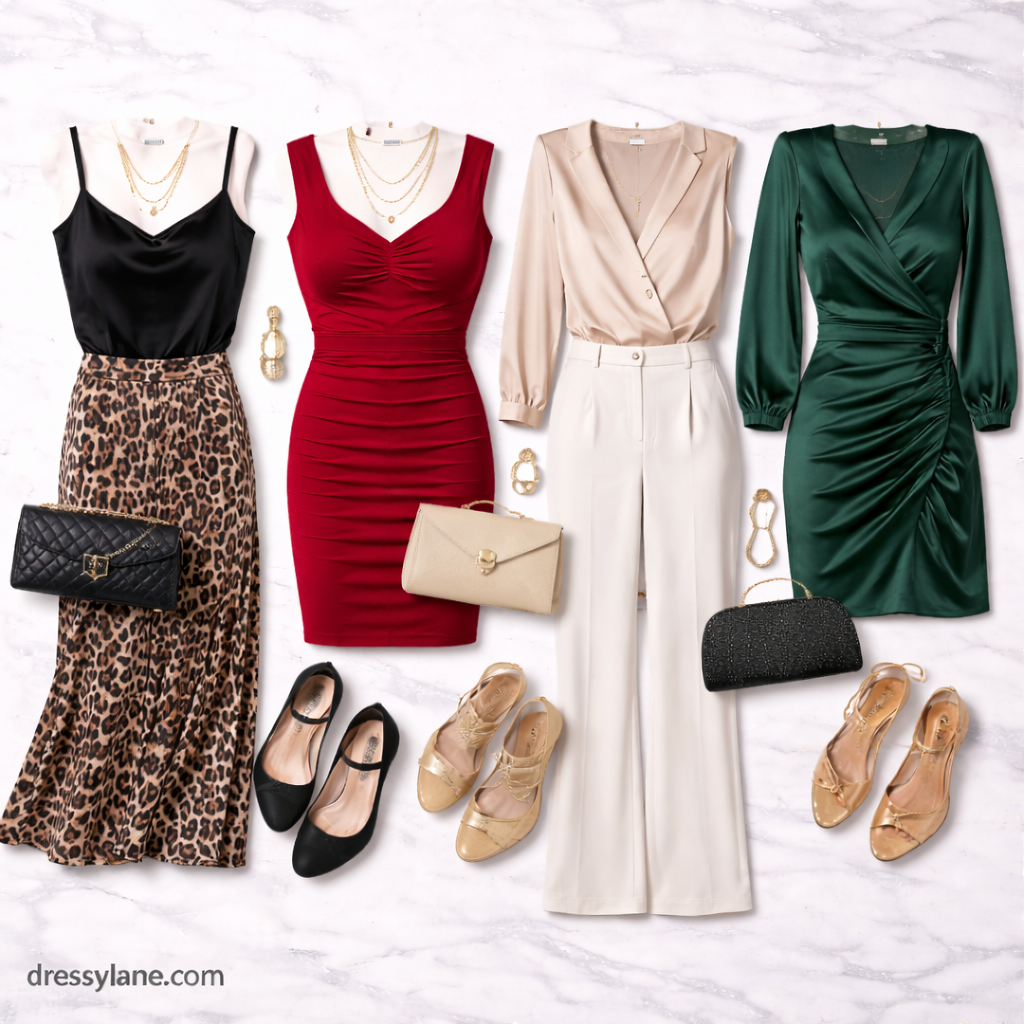
Women often underdress by leaning too far into comfort or daily wear.
Choose Event-Appropriate Silhouettes
Even casual social events benefit from structure.
Good options include:
- Midi dresses or elevated mini dresses
- Tailored pants with a statement top
- Skirts paired with polished blouses
If the outfit could pass as grocery-run wear, it’s probably too casual.
Balance Style and Ease
Looking dressed up doesn’t mean being uncomfortable.
Focus on:
- Fabrics with movement and structure
- Shoes you can stand and walk in confidently
- Accessories that elevate without overpowering
Small details often carry the outfit.
Color and Fabric Matter More Than You Think
Certain materials automatically read as more social-event appropriate.
More elevated fabrics:
- Satin
- Crepe
- Linen blends
- Structured knits
Colors like black, navy, jewel tones, neutrals, and soft metallics tend to photograph and age better than loud prints.
When in Doubt, Add One Elevated Piece
If you’re unsure about your outfit, add one element that clearly signals “event.”
Examples include:
- A blazer or structured jacket
- Statement shoes
- A bold but tasteful accessory
- A dressier bag
One strong piece can shift the entire look upward.
Common Social Event Style Mistakes
Avoid these if you want to look appropriately dressed.
- Treating social events like casual hangouts
- Wearing outfits designed for daytime errands
- Ignoring venue and time of day
- Saving your best outfits only for formal occasions
Social events live in the middle ground — dress for that space.
Confidence Comes From Feeling Prepared
The best-dressed people at social events rarely look stressed about their outfits.
That’s because:
- They planned ahead
- They understand the setting
- They trust what works for them
Preparation removes second-guessing.
Final Thoughts
Dressing for social events without looking underdressed is about intention, not excess. You don’t need dramatic outfits or constant trend awareness — you just need to show that you considered the moment.
When your outfit feels appropriate for the venue, time, and people involved, you’ll walk in confidently, relax faster, and enjoy the event instead of worrying about what you’re wearing.