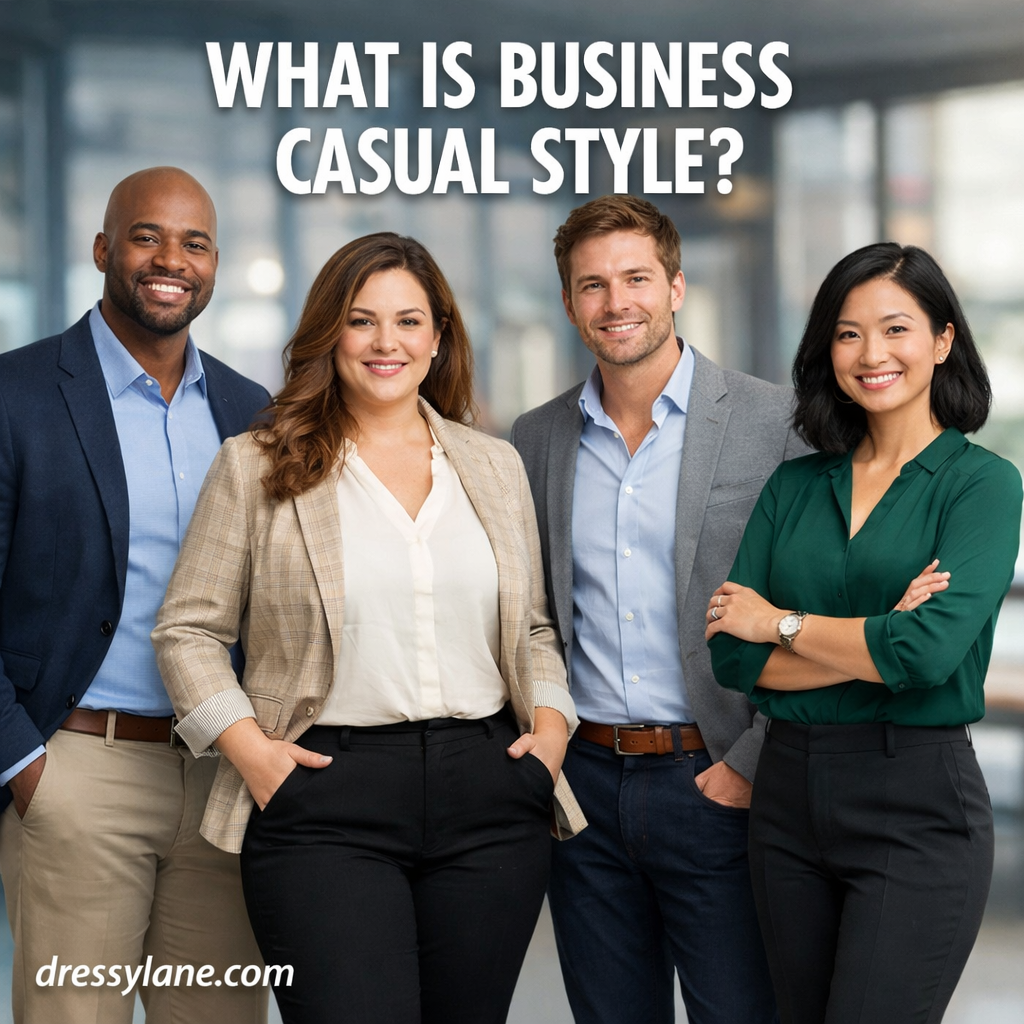
Business casual style is what you wear when a full suit feels too formal, but jeans and a T-shirt aren’t quite right for the workplace. Think navy chinos with an Oxford shirt and leather loafers, or tailored trousers with a fine-knit sweater and a relaxed blazer.
The challenge is that business casual doesn’t look identical in every office. A marketing agency might welcome dark denim and clean sneakers, while a financial services company may expect dress trousers and polished leather shoes.
Understanding business casual is less about memorizing a list of approved clothing and more about recognizing which fabrics, fits, and combinations look appropriate for your particular workplace.
Here’s what business casual style means, how it compares with other dress codes, and how to put together outfits for men and women.
What Does Business Casual Actually Mean?
Business casual is a workplace dress code that combines traditional professional clothing with more relaxed pieces.
You generally don’t need a matching suit or tie, but your outfit should still look appropriate for an office environment.
For example, charcoal wool-blend trousers, a pale blue button-down shirt, and brown loafers create a straightforward business casual outfit.
The same principle applies to a pair of black straight-leg trousers, an ivory blouse, and leather ballet flats.
Business casual typically includes:
- Tailored trousers, chinos, or appropriate skirts.
- Button-down shirts, blouses, and fine-knit tops.
- Blazers, cardigans, or lightweight jackets.
- Loafers, dress shoes, polished flats, or ankle boots.
Some workplaces also permit dark jeans and minimalist sneakers, although these aren’t universally accepted.
The defining feature is that the outfit looks suitable for professional work without requiring traditional formalwear.
Business Casual vs Business Professional vs Casual
These dress codes overlap, but they serve different purposes.
| Dress Code | Typical Clothing | Example Outfit |
|---|---|---|
| Business professional | Matching suits, dress shirts, structured dresses, formal footwear | Navy suit, white shirt, tie, and Oxford shoes |
| Business casual | Tailored separates, chinos, blouses, knitwear, polished shoes | Charcoal trousers, cream sweater, and loafers |
| Casual | Jeans, T-shirts, relaxed clothing, sneakers | Straight-leg jeans, cotton T-shirt, and canvas sneakers |
Business professional generally calls for coordinated tailoring and more traditional footwear.
Business casual removes the requirement for matching suits and allows softer fabrics, separate pieces, and greater flexibility.
Casual clothing prioritizes everyday comfort and may include items that wouldn’t be suitable for many professional environments.
The boundaries aren’t fixed. A company might classify dark jeans as business casual, while another considers them appropriate only on casual Fridays.
The Three Details That Make an Outfit Business Casual
Rather than relying on a strict list of clothing rules, pay attention to fit, fabric, and the overall combination.
1. Fit Should Look Intentional
Business casual clothing doesn’t need to be slim or restrictive.
Straight-leg trousers, relaxed blazers, and wide-leg pants can all work when the proportions are balanced.
Check that shirts don’t pull across the buttons, trousers don’t bunch excessively around the ankles, and jackets fit comfortably through the shoulders.
A small alteration to trouser length can make a bigger difference than purchasing another expensive shirt.
2. Fabric Changes the Appearance
A fine-gauge merino sweater generally looks more polished than a bulky sweatshirt, even though both provide warmth.
Cotton poplin and Oxford cloth are dependable shirt fabrics. Wool blends, crepe, and ponte work particularly well for trousers because they offer structure and drape.
Cotton-twill chinos are another versatile option.
I’d avoid building an entire work wardrobe around thin, stretchy fabrics. They may feel comfortable initially but can lose their shape around the knees and waistband after several hours of sitting.
3. The Whole Outfit Matters
A blazer doesn’t automatically make every outfit business casual.
For example, distressed jeans, a graphic T-shirt, and running shoes won’t necessarily become office-appropriate simply because you add a tailored jacket.
Instead, start with a dependable foundation such as trousers and a collared shirt, then introduce relaxed elements through knitwear, softer tailoring, or footwear.
Business Casual Style for Men
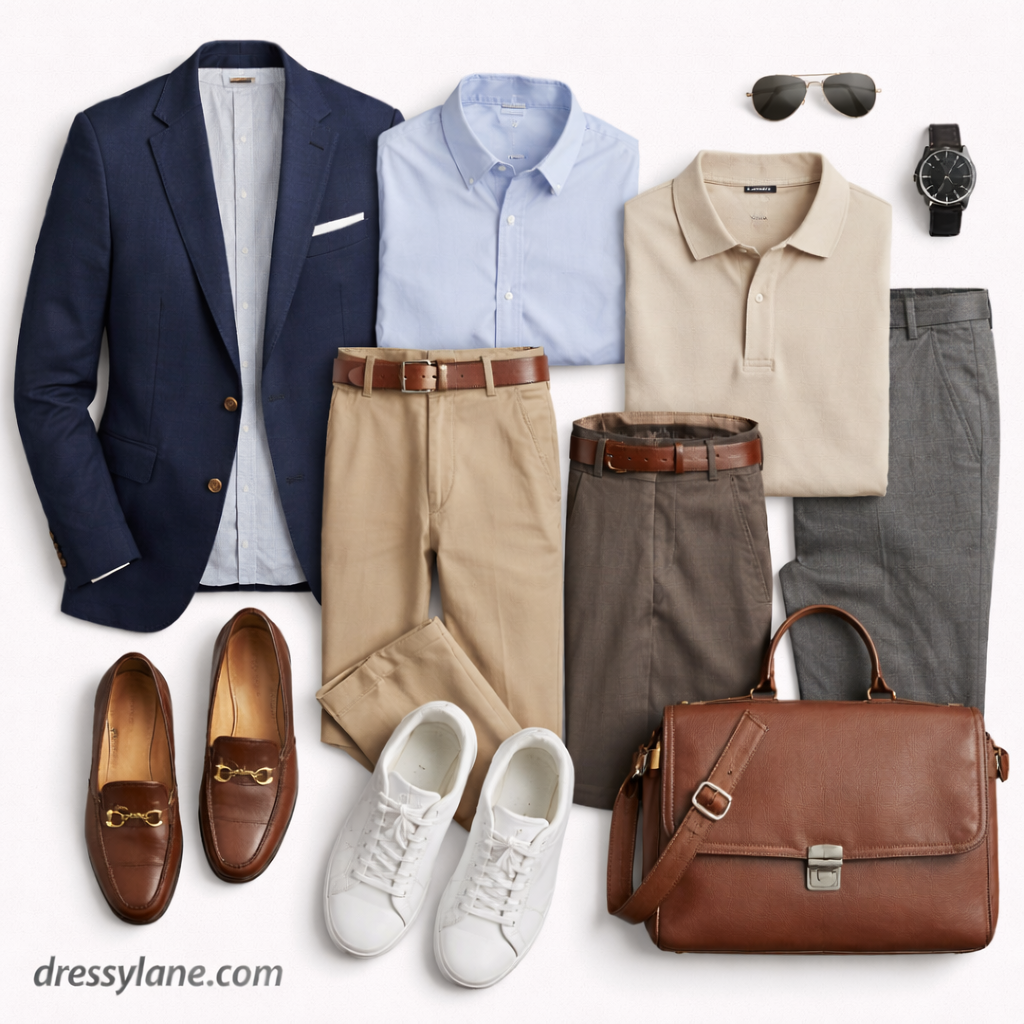
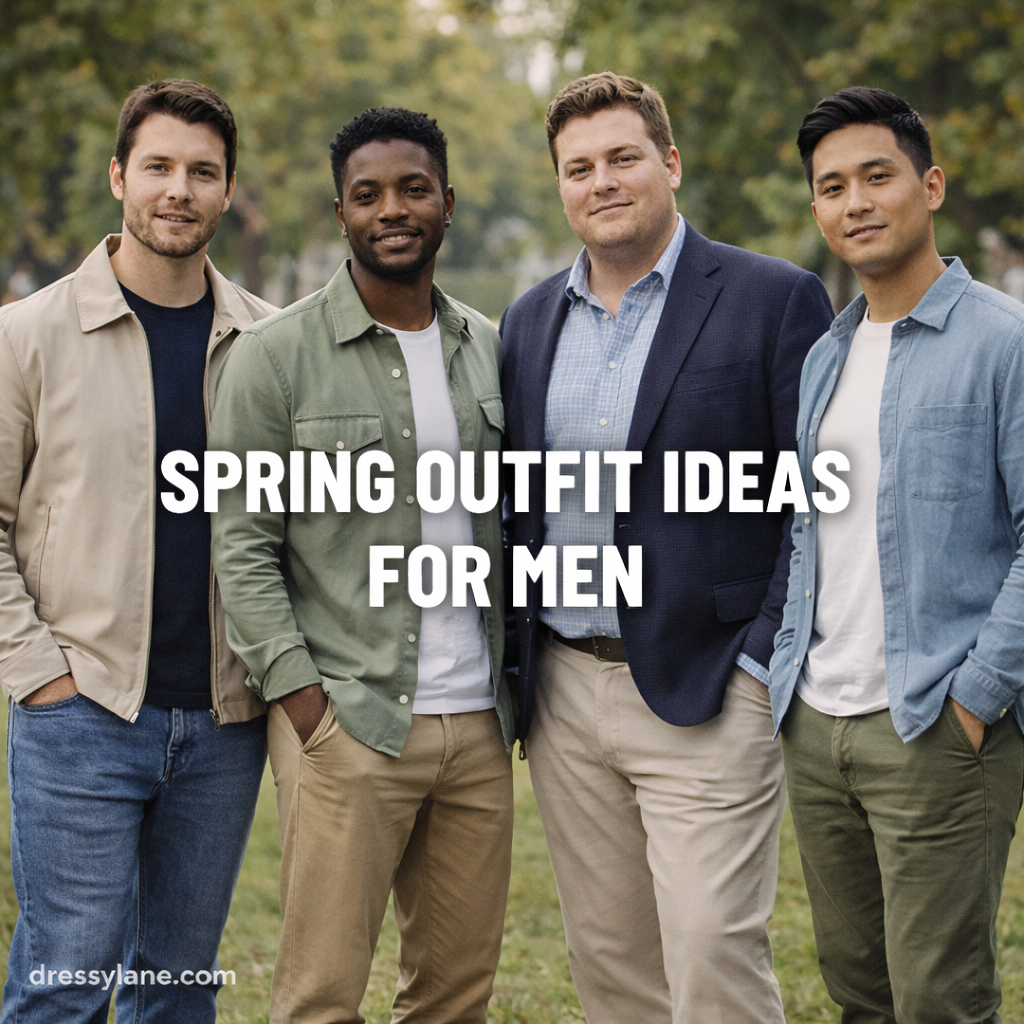
Men’s business casual wardrobes are relatively easy to build around a few versatile pieces.
Start With Trousers and Chinos
Navy and charcoal trousers work with almost any neutral shirt or sweater.
Cotton-twill chinos in beige, olive, or navy provide a slightly more relaxed alternative to traditional dress pants.
Choose a straight or gently tapered fit that sits comfortably at the waist and falls neatly over your shoes.
Dark, non-distressed jeans may also work if your employer explicitly permits denim.
Choose Shirts and Knitwear
A pale blue Oxford shirt is one of the most useful business casual pieces because it works with chinos, dress trousers, and blazers.
White button-down shirts, solid-colored knit polos, and fine-gauge sweaters are also dependable options.
For cooler weather, try a navy merino sweater over a white collared shirt.
Avoid excessively bulky layers if you plan to wear a blazer. They can make the jacket feel tight through the shoulders and sleeves.
Finish With Appropriate Shoes
Brown leather loafers are particularly versatile with navy, beige, and charcoal trousers.
Derby shoes and Chelsea boots are useful alternatives.
Minimal leather sneakers may be acceptable in relaxed offices, but traditional business casual environments generally call for more polished footwear.
A practical starting outfit: Navy chinos, a pale blue Oxford shirt, brown leather loafers, and an optional charcoal blazer.
It’s simple, easy to repeat, and suitable for many everyday office settings.
Business Casual Style for Women
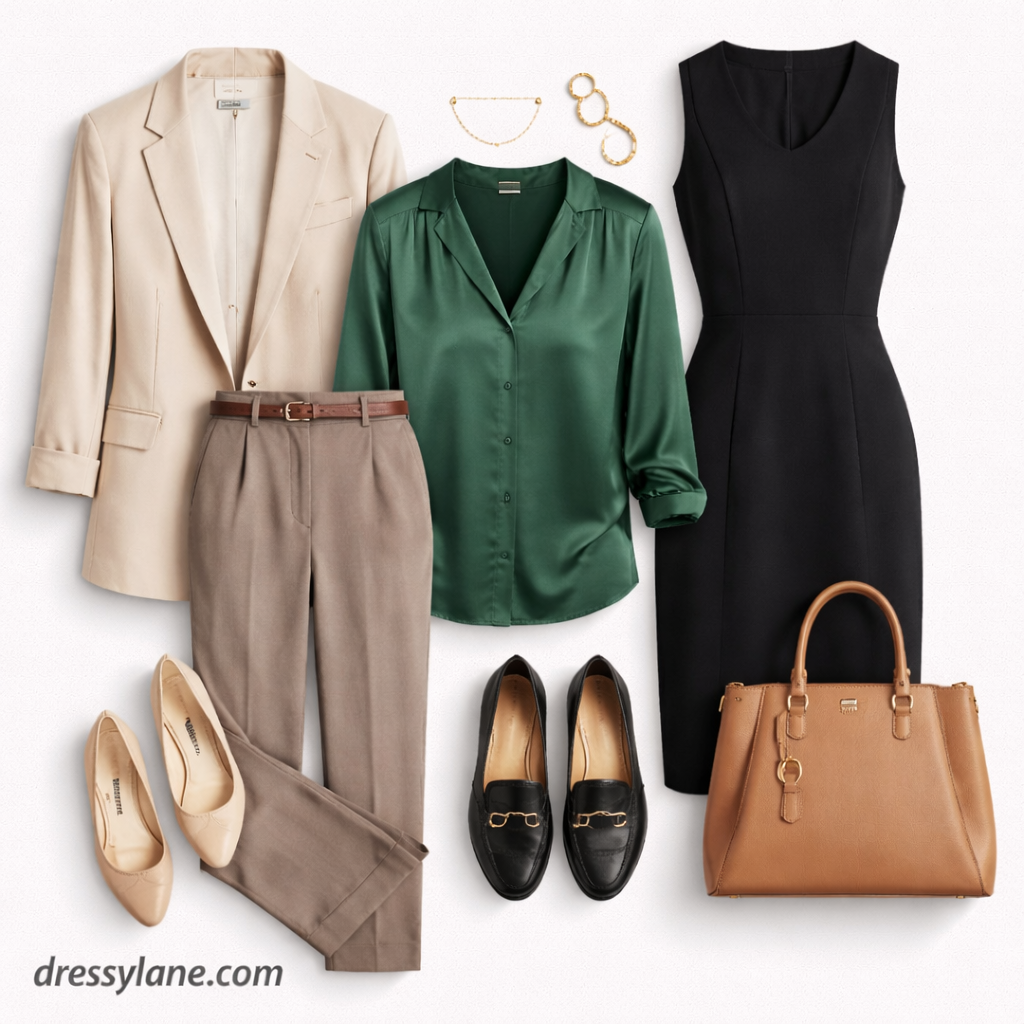
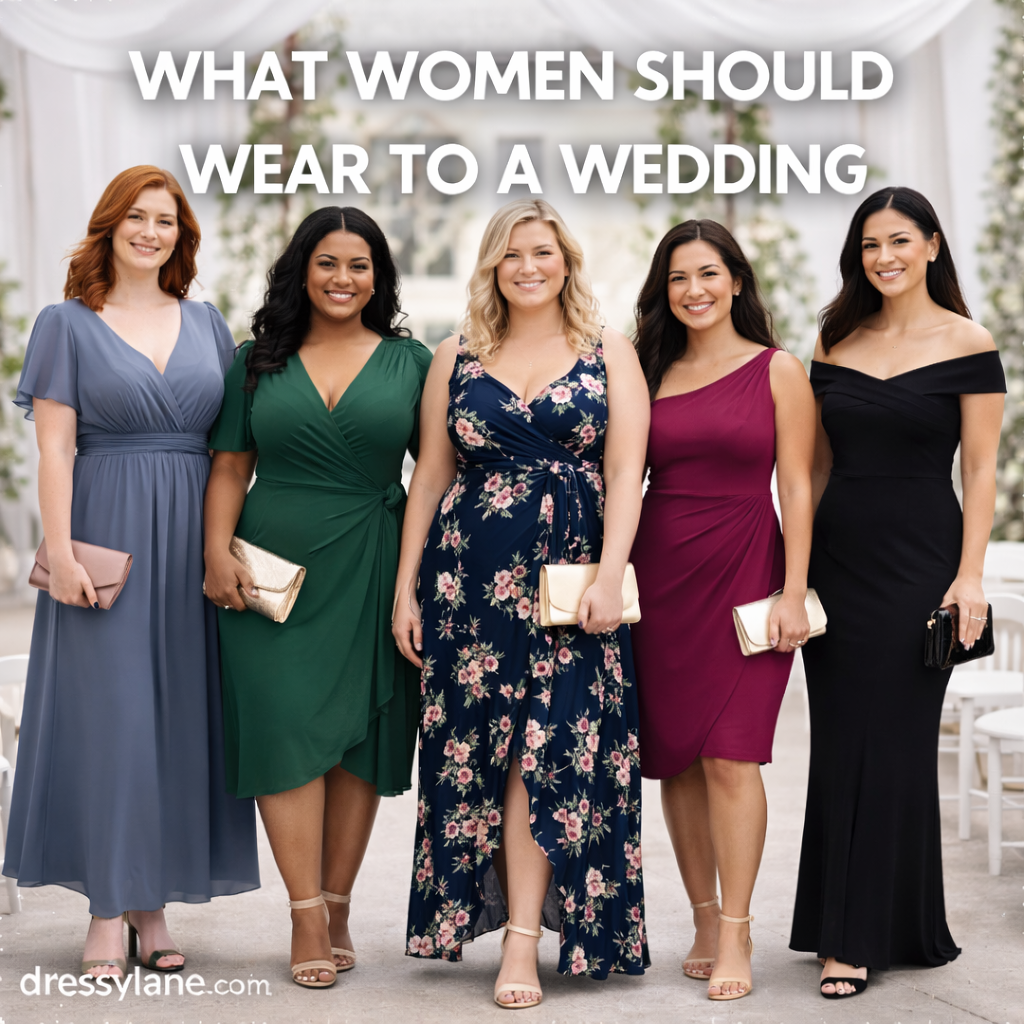
Women’s business casual clothing offers considerable variety, from tailored trousers and blouses to midi skirts, dresses, and knitwear.
The easiest approach is to build around a few reliable silhouettes rather than buying unrelated outfits.
Trousers and Skirts
Black straight-leg trousers are an excellent foundation because they pair easily with blouses, sweaters, and blazers.
Wide-leg trousers in crepe or a wool blend can also look professional, provided they’re hemmed appropriately.
For skirts, an A-line midi or tailored pencil skirt works well with a tucked-in blouse or fitted knit.
Choose a length and fit that remain comfortable when sitting and walking.
Blouses, Sweaters, and Dresses
Cotton poplin shirts, crepe blouses, and fine-knit sweaters are versatile options.
An ivory blouse with charcoal trousers creates a classic combination, while a burgundy sweater adds color without requiring an entirely different outfit.
Simple sheath dresses, shirt dresses, and tailored midi dresses can also work for business casual.
A structured blazer or cardigan provides an additional layer for cooler offices.
Shoes and Accessories
Leather loafers, pointed-toe flats, ankle boots, and low block heels are dependable footwear choices.
A structured tote and simple belt can finish an outfit without requiring much additional styling.
I’d prioritize comfortable shoes over buying several pairs of heels for the sake of looking professional. A polished loafer can work just as well in many offices, especially if your day involves walking between buildings or standing for long periods.
A practical starting outfit: Black straight-leg trousers, an ivory crepe blouse, a camel blazer, and black leather loafers.
How Business Casual Changes by Workplace
The same outfit may be appropriate in one company and too relaxed in another.
A traditional financial office might expect tailored trousers, collared shirts, blouses, and leather footwear.
A technology company may allow dark jeans, knit polos, and clean sneakers.
Creative workplaces sometimes offer more flexibility with color, patterns, and silhouettes.
Rather than assuming everyone in a particular industry dresses alike, check your employer’s actual policy.
If you’re starting a new job, I’d wear tailored trousers and polished shoes during the first few days. Once you’ve seen what colleagues in similar roles wear, you can adjust accordingly.
How to Build a Business Casual Wardrobe Without Overspending
You don’t need dozens of pieces to create a useful work wardrobe.
Start with a small selection that coordinates easily:
- Two pairs of trousers in navy, charcoal, or black.
- Three shirts, blouses, or fine-knit tops.
- One versatile blazer or cardigan.
- One pair of comfortable leather shoes.
- A belt and practical work bag.
Choose two or three main colors so that most pieces can be worn together.
For example, navy trousers can work with a white shirt, cream sweater, or light blue blouse. A charcoal blazer can be worn over all three combinations.
My recommendation is to spend your initial budget on trousers and shoes that fit properly. They’re pieces you’ll wear repeatedly, and poor fit is difficult to disguise with accessories.
Add variety through affordable shirts and knitwear once the foundation is in place.
Common Business Casual Mistakes
A few details can make an otherwise suitable outfit look less polished.
- Wearing trousers that are too long or excessively tight.
- Choosing shirts that wrinkle heavily during the commute.
- Pairing overly casual athletic shoes with traditional office clothing.
- Assuming jeans are permitted without checking the dress code.
- Wearing jackets that restrict movement or pull across the shoulders.
Don’t overlook the condition of your clothing. Clean shoes, properly pressed shirts, and trousers that maintain their shape contribute more to a polished appearance than expensive labels.
Final Thoughts
Business casual style combines professional clothing with enough flexibility for everyday comfort.
Tailored trousers, chinos, blouses, Oxford shirts, fine knitwear, and polished footwear provide a dependable foundation. From there, you can adjust the colors, layers, and silhouettes to suit your workplace and personal preferences.
The most useful approach is to build a wardrobe around pieces you can comfortably wear for an entire workday rather than outfits that only look good when you’re standing in front of a mirror.
Once you understand your workplace’s expectations and have a few reliable combinations, getting dressed for work becomes considerably simpler.