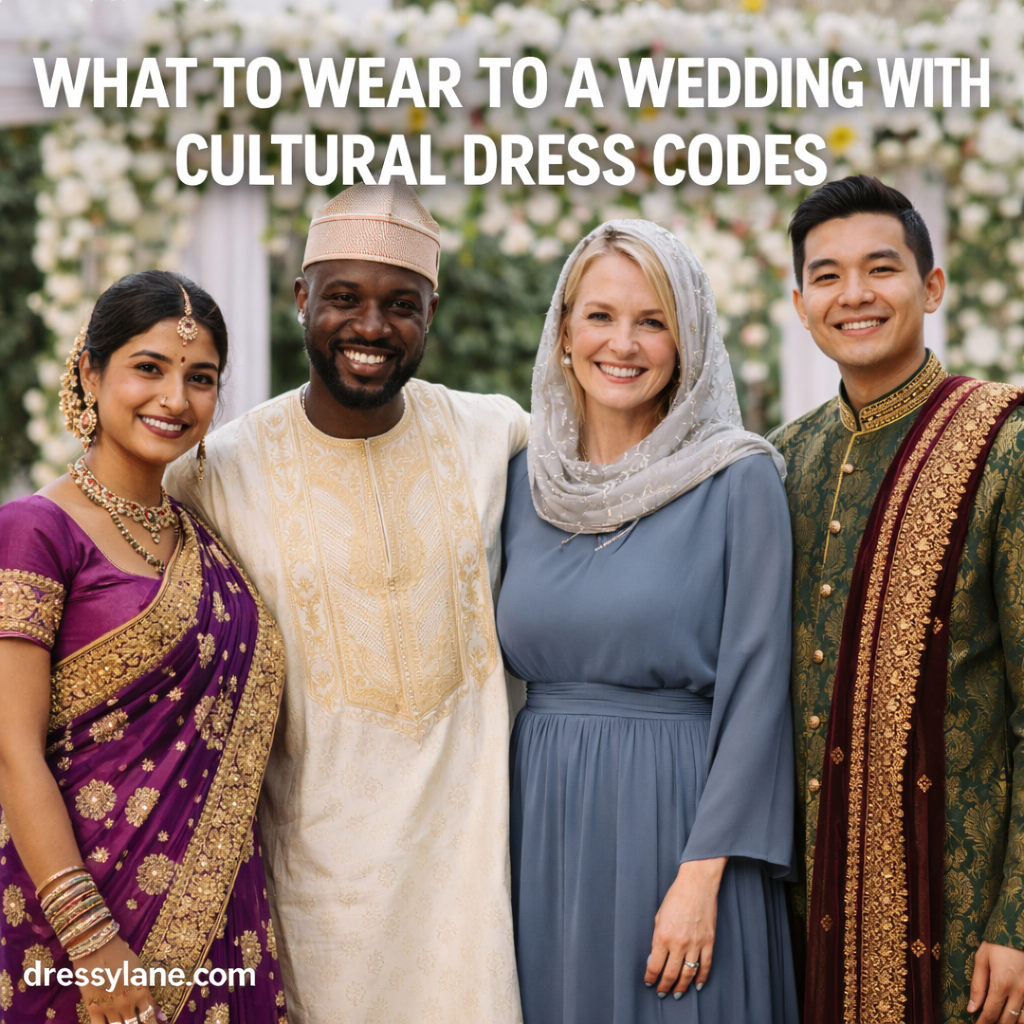
Weddings with cultural dress codes can feel intimidating—especially if you’re unfamiliar with the traditions involved. You want to be respectful, appropriate, and stylish, without worrying about accidentally breaking etiquette or standing out for the wrong reasons.
The good news is that dressing for culturally influenced weddings doesn’t require expert-level knowledge. With a bit of preparation, thoughtful choices, and an understanding of the basics, you can confidently dress in a way that honors the culture while still feeling comfortable and authentic.
This guide walks you through how to approach cultural wedding dress codes, with practical tips for both women and men.
Why Cultural Wedding Dress Codes Matter
Cultural attire is often deeply meaningful. It can represent heritage, religion, family traditions, and ceremonial significance.
Being mindful of these details shows:
- Respect for the couple and their families
- Cultural awareness and sensitivity
- Consideration for the event’s traditions
Even small efforts—like choosing the right colors or coverage—can go a long way.
Start With the Wedding Invitation and Website
Your first clues are usually right in front of you.
Look for:
- Specific dress code notes (traditional attire encouraged, formal cultural wear, etc.)
- Color guidance
- Ceremony location details
- Religious or ceremonial expectations
If the invitation is unclear, the wedding website often includes additional guidance.
When It’s Appropriate to Wear Traditional Attire
Some weddings encourage guests to wear traditional clothing, while others simply expect respectful modern attire.
Traditional attire is often appropriate when:
- The invitation explicitly encourages it
- Many guests are expected to wear cultural clothing
- The ceremony is highly traditional
- The couple has shared examples or guidance
If you’re unsure, it’s perfectly acceptable to ask the couple or a close family member for advice.
General Rules That Apply Across Cultures
While each culture is unique, a few universal principles help guide your choices.
- Dress modestly when in doubt
- Avoid white, ivory, or bridal colors unless instructed otherwise
- Skip overly revealing outfits
- Choose elegant, polished silhouettes
- Avoid costumes or exaggerated interpretations
Respectful simplicity is always better than guessing incorrectly.
What to Wear to a Wedding With Cultural Dress Codes: Women’s Guide
Coverage and Silhouettes
Many cultural weddings prioritize modesty.
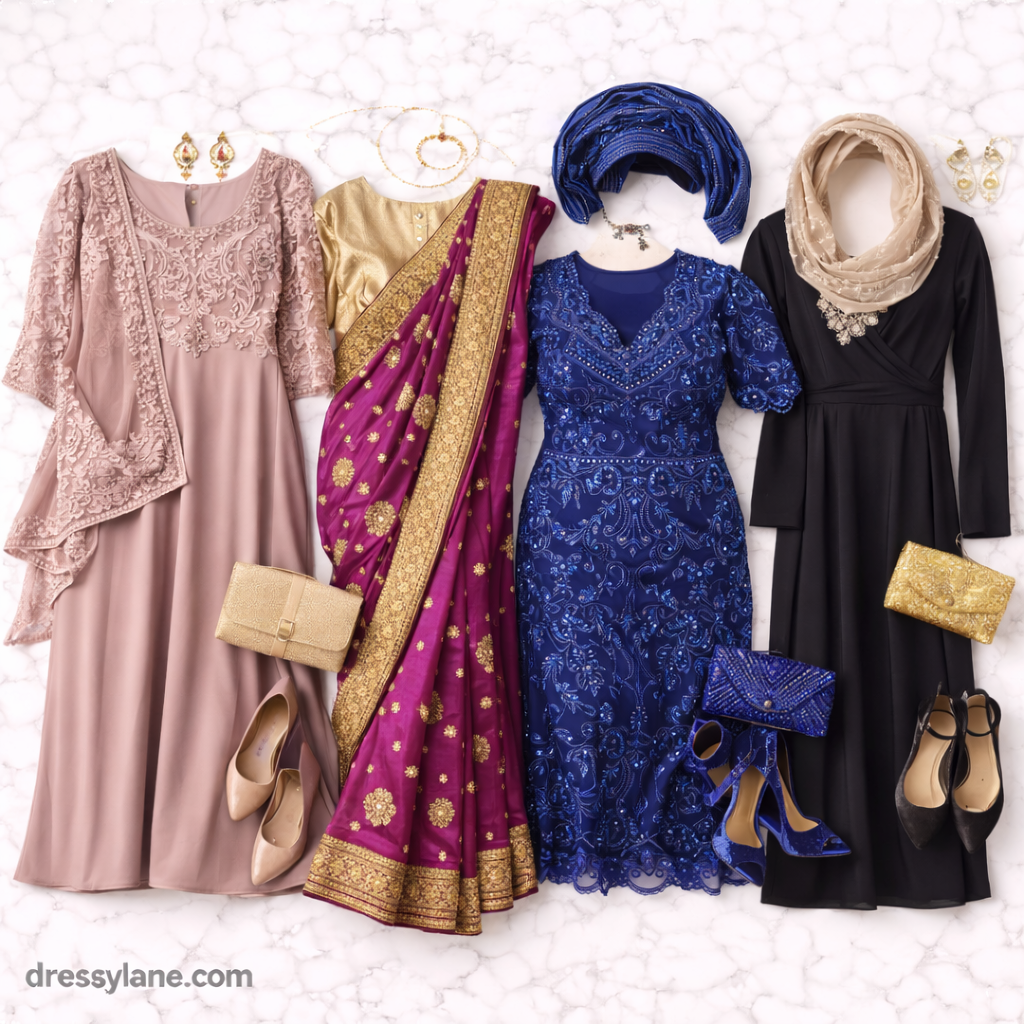
Safe options often include:
- Maxi or midi dresses
- Dresses with sleeves or shawls
- High necklines
- Flowy fabrics that drape well
If sleeveless or strapless dresses are allowed, bringing a wrap or shawl is a smart backup.
Colors and Patterns
Color symbolism varies widely across cultures.
General tips:
- Avoid white unless explicitly allowed
- Be cautious with black in cultures where it symbolizes mourning
- Embrace rich tones like jewel colors or soft pastels
- Avoid loud prints if unsure
When traditional garments are worn by guests, elegant modern dresses in complementary colors are usually welcome.
Footwear and Accessories
- Choose comfortable, formal shoes
- Avoid overly flashy accessories
- Keep jewelry elegant and minimal
- Consider cultural expectations around head coverings or accessories
When in doubt, understated elegance works best.
What to Wear to a Wedding With Cultural Dress Codes: Men’s Guide
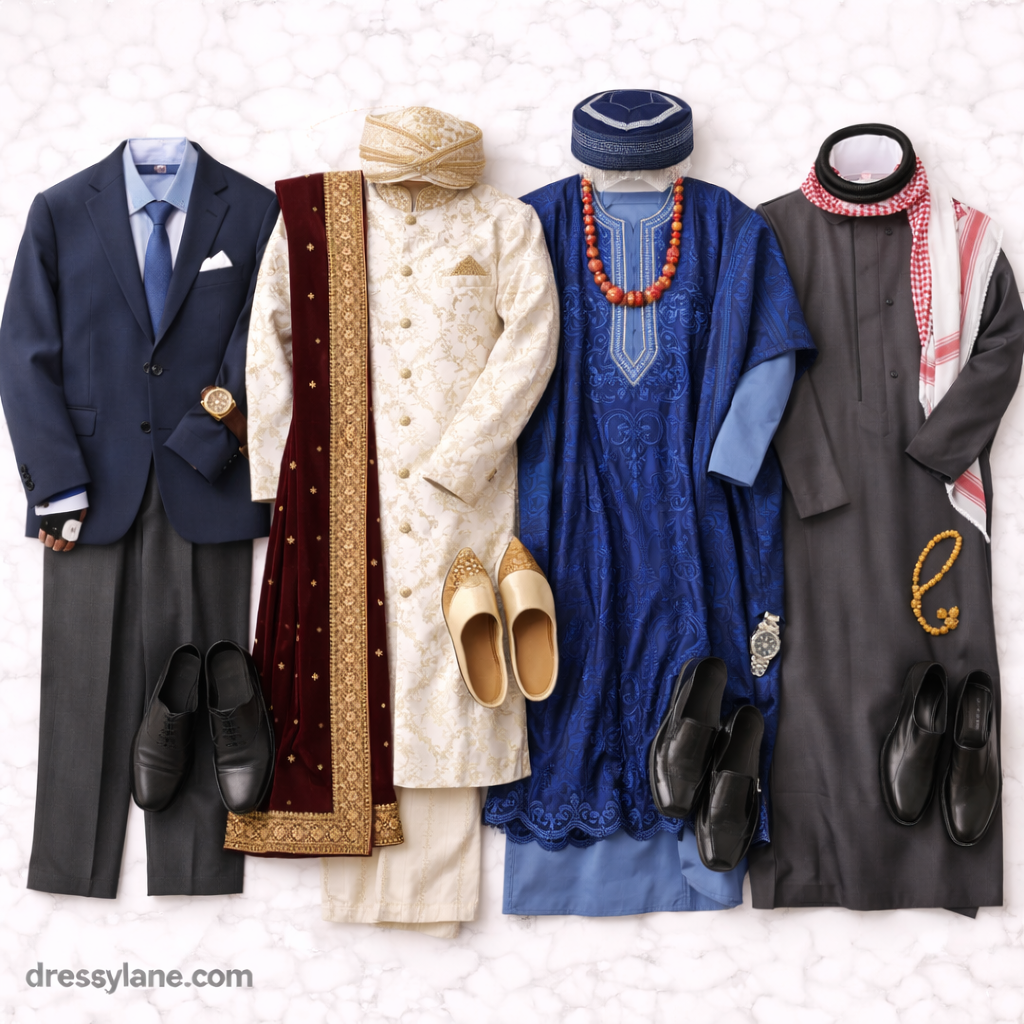
Suits and Formalwear
A well-tailored suit is often the safest option.
Recommended choices include:
- Neutral or dark-colored suits
- Dress shirts with minimal patterns
- Conservative ties
- Polished dress shoes
Avoid casual fabrics or relaxed silhouettes unless specified.
When Traditional Men’s Attire Is Appropriate
If traditional attire is encouraged:
- Wear pieces respectfully and correctly
- Avoid mixing cultural garments casually
- Ask for guidance on accessories or footwear
Wearing traditional clothing correctly is more important than wearing it perfectly.
Grooming and Presentation
- Keep grooming neat and polished
- Avoid overly casual hairstyles
- Choose subtle accessories like watches or cufflinks
A clean, respectful appearance matters as much as clothing.
Religious and Ceremony-Specific Considerations
Some cultural weddings take place in religious spaces with additional expectations.
Be mindful of:
- Covered shoulders
- Longer hemlines
- Head coverings
- Removing shoes
- Conservative color choices
Always prioritize the ceremony requirements over personal style preferences.
When You’re Unsure What’s Appropriate
If you’re ever unsure, here’s what to do:
- Ask the couple or wedding party
- Look up general cultural guidelines
- Choose a conservative, elegant outfit
- Bring layers or accessories to adjust if needed
Most couples appreciate thoughtful questions more than risky guesses.
Common Mistakes to Avoid
- Treating cultural attire as a costume
- Wearing bridal colors or styles
- Ignoring modesty expectations
- Over-accessorizing
- Assuming all weddings from one culture follow the same rules
Each wedding is unique, even within the same culture.
How to Balance Respect and Personal Style
Respect doesn’t mean losing your identity.
You can still:
- Choose colors that flatter you
- Select silhouettes that feel comfortable
- Add subtle personal accessories
- Express elegance through fit and fabric
The goal is harmony—not blending in completely or standing out excessively.
Final Thoughts
Dressing for a wedding with cultural dress codes is about awareness, respect, and thoughtful preparation. You don’t need to know every tradition—you just need to approach the event with care and consideration.
By focusing on modesty, elegance, and guidance from the couple, you can confidently choose an outfit that honors the culture while allowing you to enjoy the celebration fully.
When in doubt, respect always looks stylish.