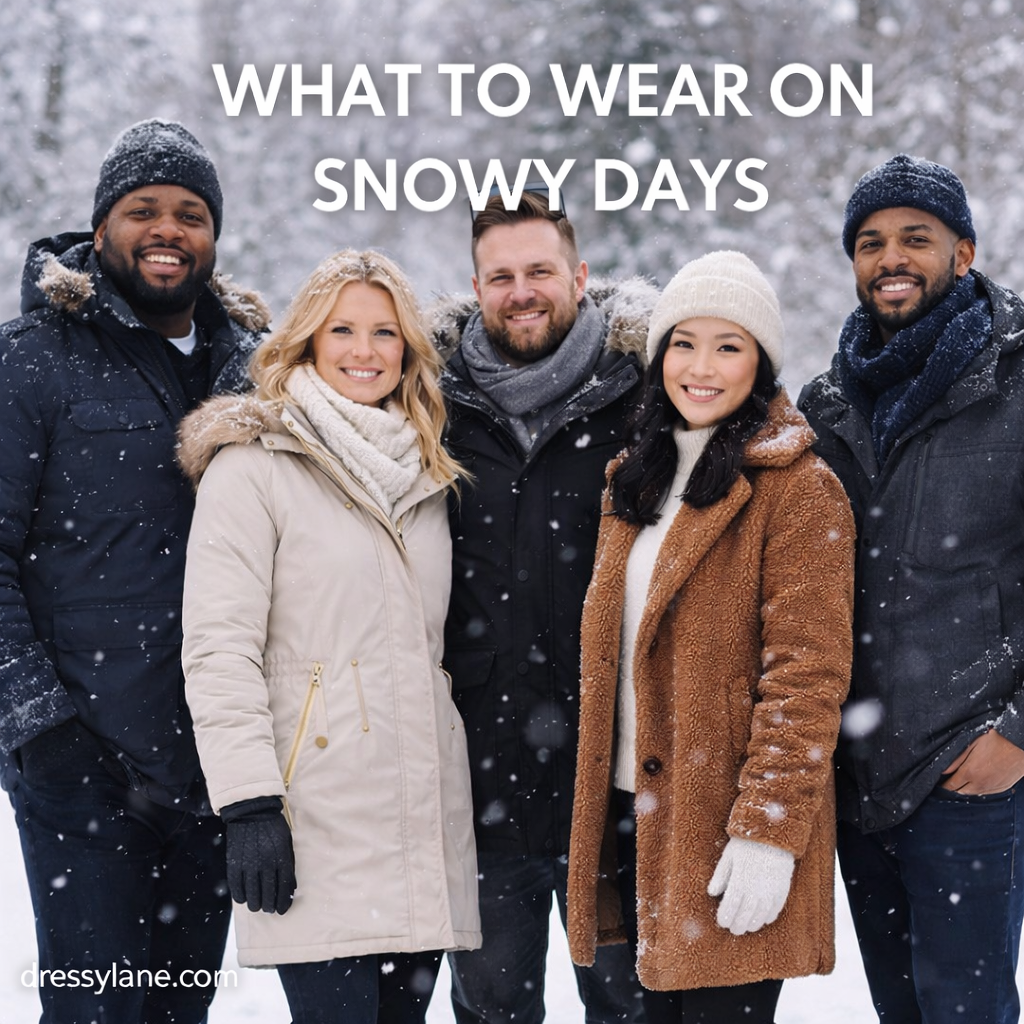
Snowy days require a careful balance between warmth, practicality, and style. Cold temperatures, slippery sidewalks, and wet conditions make outfit planning especially important. Knowing what to wear on snowy days helps you stay comfortable and protected while still looking put together.
This guide covers smart snowy-day outfit strategies, including layering tips, fabric choices, and outfit ideas for both men and women.
Key Principles for Dressing on Snowy Days
Snowy weather demands function-first dressing, but style doesn’t have to suffer.
Keep these principles in mind:
- Layer for warmth without bulk
- Choose water-resistant or waterproof fabrics
- Prioritize traction and insulation in footwear
- Protect exposed areas like hands, neck, and head
Planning ahead prevents discomfort and cold-related issues.
Best Fabrics for Snowy Weather
Fabric choice is critical in snow.
Recommended materials include:
- Wool and wool blends
- Fleece or thermal linings
- Down or insulated synthetics
- Waterproof-treated outer layers
Avoid fabrics like cotton for outer layers, as they absorb moisture and lose warmth.
What Women Should Wear on Snowy Days
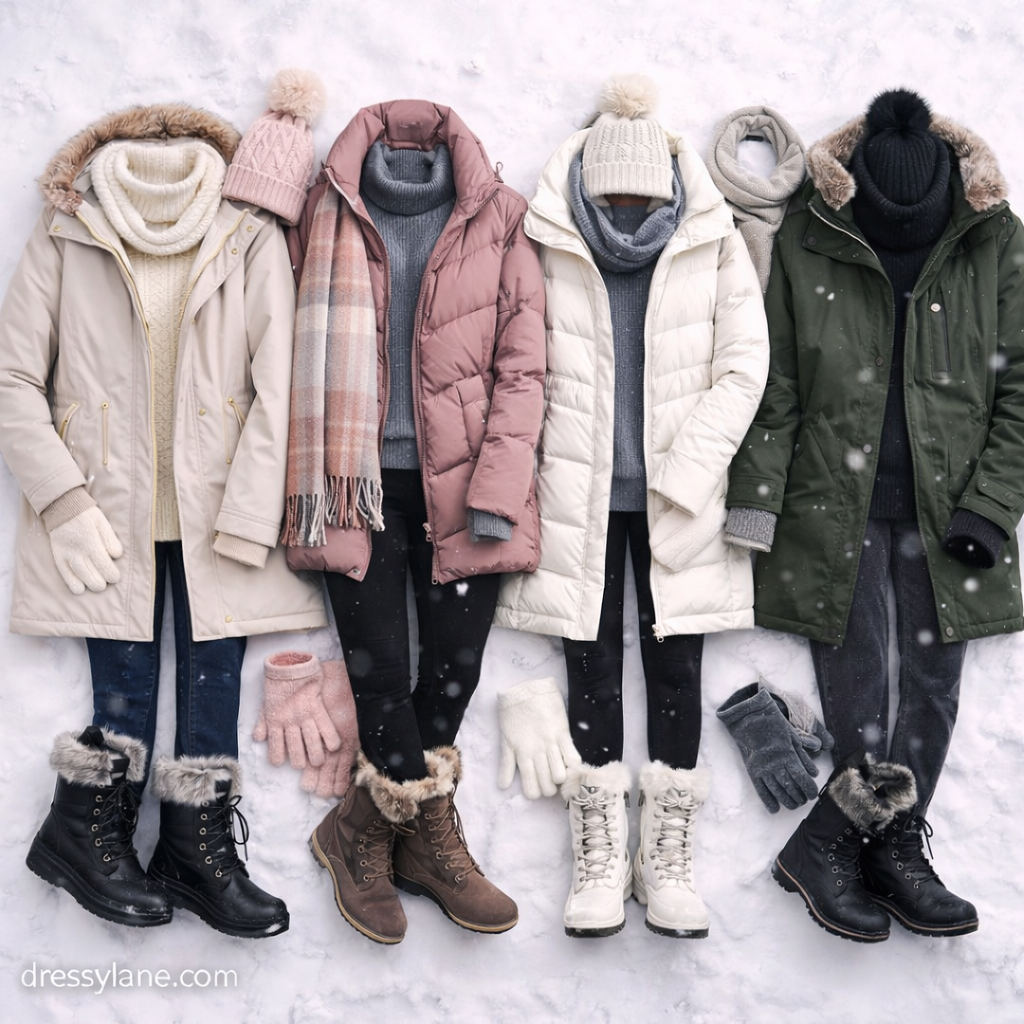
Warm and Stylish Outfit Ideas for Women
Women can stay warm while maintaining a polished look.
Effective snowy-day outfits include:
- Insulated coats or puffer jackets
- Thermal tops layered under sweaters
- Slim trousers or lined leggings
- Midi skirts with thermal tights
Choose fitted layers under structured coats to avoid bulky silhouettes.
Shoes and Accessories for Women
Footwear and accessories make a major difference on snowy days.
Best footwear options:
- Waterproof boots with traction
- Insulated ankle boots
- Snow boots for heavy snowfall
Accessories to wear:
- Wool scarves
- Insulated gloves
- Beanies or lined hats
Avoid shoes with smooth soles or inadequate insulation.
What Men Should Wear on Snowy Days
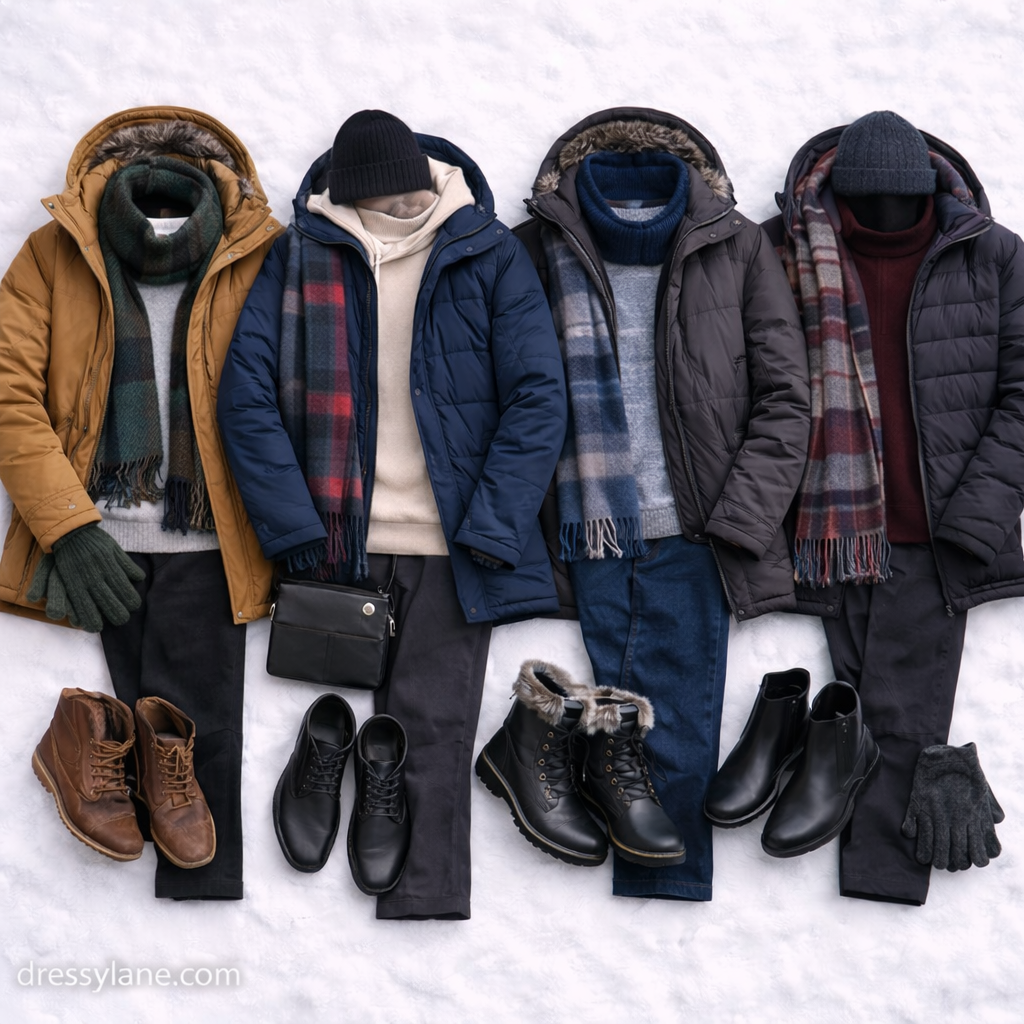
Practical and Polished Outfit Ideas for Men
Men should focus on warmth, mobility, and protection.
Reliable snowy-day outfit combinations include:
- Insulated winter coats or parkas
- Thermal base layers under sweaters
- Wool or fleece-lined pants
- Weather-resistant outer layers
Layering allows flexibility between outdoor cold and indoor warmth.
Shoes and Accessories for Men
Proper footwear prevents slipping and cold feet.
Recommended options:
- Waterproof boots with grip soles
- Insulated leather boots
- Weather-treated shoes for light snow
Accessories to include:
- Wool scarves
- Insulated gloves
- Warm hats or beanies
Avoid sneakers or non-weather-treated shoes.
Layering Smartly for Snowy Days
Layering works best when each layer serves a purpose.
A simple layering system:
- Base layer: thermal or moisture-wicking
- Mid-layer: insulation (sweaters or fleece)
- Outer layer: waterproof and wind-resistant coat
Avoid piling on heavy layers that restrict movement.
Snowy Day Outfit Tips by Setting
Casual Snowy Days
For errands or casual outings:
- Comfortable insulated jackets
- Snow-ready boots
- Simple, warm layers
Work or Commuting on Snowy Days
Professional settings require extra care.
- Tailored winter coats
- Polished waterproof boots
- Neutral, layered outfits under outerwear
Remove bulky layers indoors when possible.
What Not to Wear on Snowy Days
Certain items increase discomfort and risk.
Avoid wearing:
- Canvas or fabric shoes
- Thin jackets without insulation
- Cotton socks
- Smooth-soled footwear
- Long pants that drag in snow
Safety and warmth should come first.
Staying Stylish While Dressing for Snow
Style is still possible with thoughtful choices.
Helpful tips:
- Stick to neutral winter palettes
- Choose structured outerwear
- Use accessories to add personality
- Keep outfits clean and well-fitted
A polished coat can elevate any snowy-day look.
Final Thoughts
Knowing what to wear on snowy days helps you stay warm, safe, and comfortable without sacrificing style. With the right layers, fabrics, and footwear, you can confidently handle winter weather while looking put together.
Dress smart, plan ahead, and let functionality guide your snowy-day outfits.