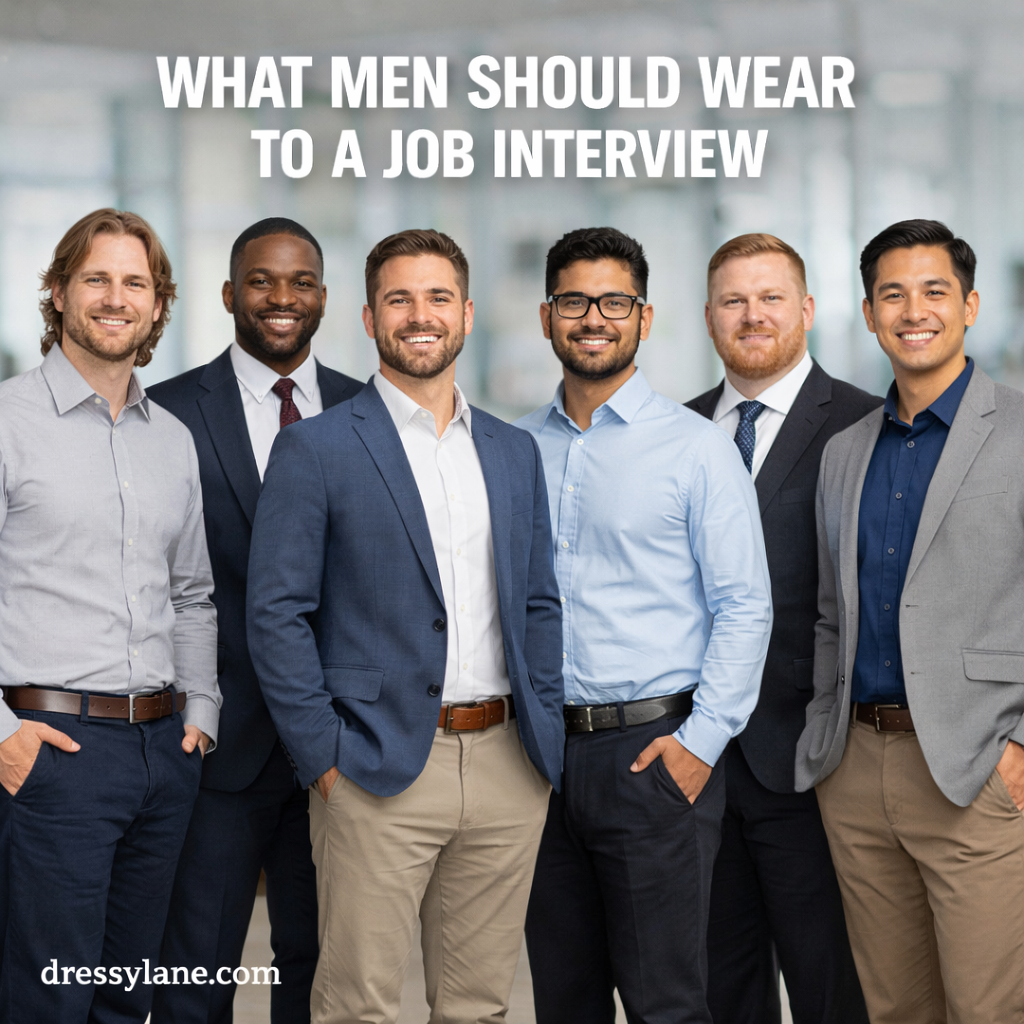
First impressions matter—especially in job interviews. Before you say a word, your appearance already communicates professionalism, confidence, and attention to detail. Knowing what to wear to a job interview helps hiring managers focus on your skills instead of your outfit.
This guide breaks down exactly what men should wear to a job interview, with clear advice based on industry expectations, company culture, and role type. Whether you’re interviewing for a corporate role or a modern startup, you’ll know how to dress with confidence.
Why Interview Attire Matters for Men
Your clothing sends nonverbal signals about reliability, respect, and preparedness. Even qualified candidates can lose opportunities by dressing too casually—or trying too hard.
Dressing appropriately shows:
- You understand professional norms
- You respect the interviewer’s time
- You take the opportunity seriously
- You can represent the company well
The Safest Choice: Business Professional
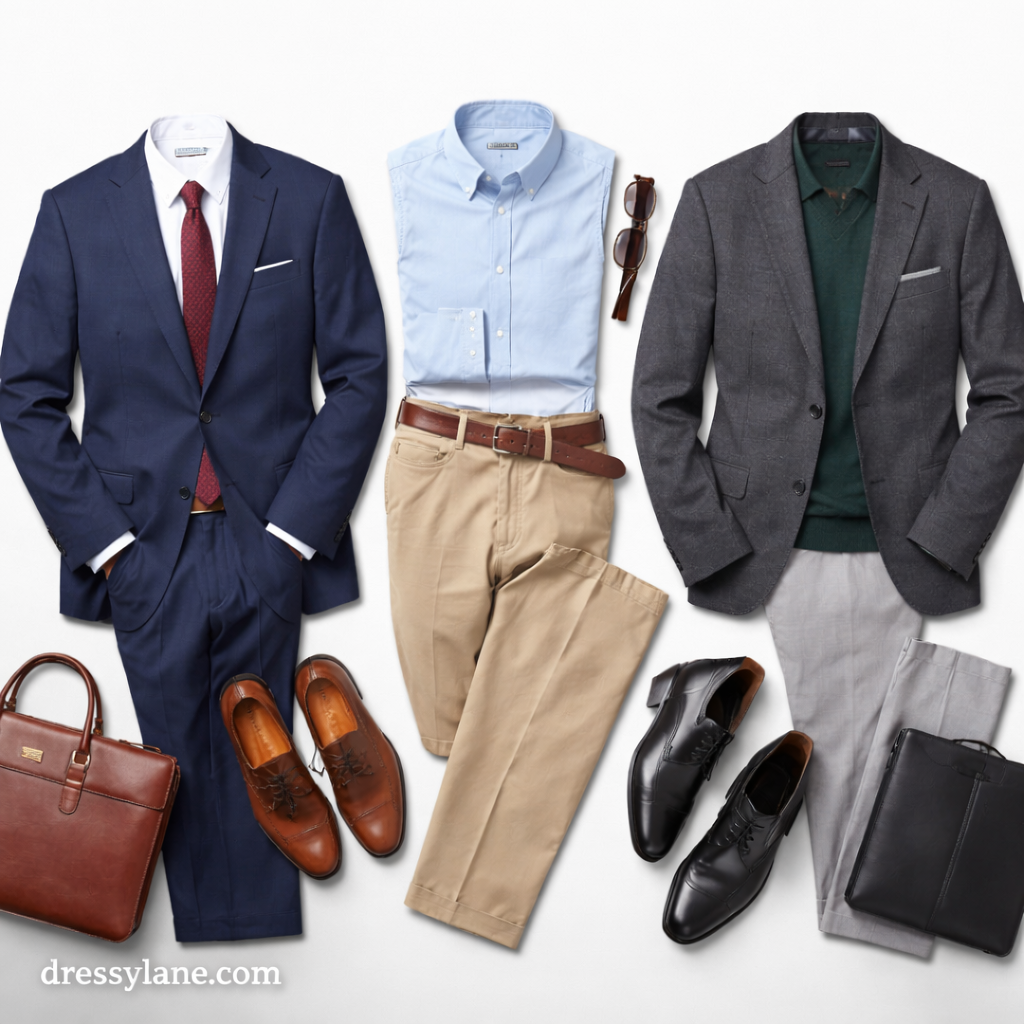
When in doubt, business professional is always a safe option for men. This style works best for corporate, finance, legal, consulting, and management roles.
What to Wear
- Dark, tailored suit (navy, charcoal, or dark gray)
- White or light blue dress shirt
- Conservative tie (solid or subtle pattern)
- Black or dark brown leather dress shoes
- Matching leather belt
- Dark dress socks that cover the calf
Why It Works
Business professional attire signals reliability, discipline, and leadership—qualities most employers value.
Business Casual: When the Company Is More Relaxed
Many modern offices use business casual dress codes. However, interview attire should still be slightly more polished than everyday workwear.
What to Wear
- Tailored blazer or structured jacket
- Button-down shirt or dress shirt (no bold prints)
- Chinos or dress slacks
- Leather loafers or lace-up shoes
- Neutral belt and socks
Avoid
- Jeans
- Sneakers
- Untucked shirts
- Loud colors or logos
Creative or Startup Roles: Polished but Modern
Tech, design, and creative industries often prefer clean, modern styles rather than formal suits.
What to Wear
- Crisp button-down shirt
- Slim-fit trousers or dark chinos
- Minimalist leather shoes or Chelsea boots
- Optional blazer for structure
Tips
- Choose neutral tones
- Focus on fit and grooming
- Keep accessories minimal
Grooming Essentials Men Should Not Ignore
Even the best outfit falls flat without proper grooming.
Grooming Checklist
- Hair neatly styled or trimmed
- Clean-shaven or well-maintained facial hair
- Trimmed nails
- Light or no fragrance
- Ironed, wrinkle-free clothing
Colors That Work Best for Interviews
Certain colors project professionalism and confidence.
Best Choices
- Navy: trust and stability
- Gray: balance and competence
- White: clarity and cleanliness
- Light blue: approachability
Colors to Avoid
- Bright red
- Neon shades
- Flashy patterns
- Distracting textures
Shoes Can Make or Break the Outfit
Interviewers notice shoes more than many candidates realize.
Best Shoe Styles
- Oxford dress shoes
- Derby shoes
- Leather loafers (for business casual)
- Chelsea boots (modern settings)
Avoid
- Sneakers
- Scuffed or worn shoes
- Sandals or slip-ons
Accessories: Keep It Minimal
Accessories should support your look—not distract from it.
Acceptable Accessories
- Classic wristwatch
- Leather portfolio or briefcase
- Simple tie bar (optional)
Avoid
- Flashy jewelry
- Oversized watches
- Backpacks (unless industry-appropriate)
What Men Should Avoid Wearing to an Interview
Some items almost always hurt first impressions.
Do Not Wear
- T-shirts or polos (unless explicitly allowed)
- Graphic prints or slogans
- Shorts
- Wrinkled or ill-fitting clothes
- Heavy cologne
How to Match Your Outfit to the Company
Research the company before your interview:
- Check their website and social media
- Look at employee photos on LinkedIn
- Note how leadership presents themselves
Dress one level more formal than the average employee appearance.
Final Thoughts
Knowing what men should wear to a job interview removes unnecessary stress and helps you show up with confidence. Clean lines, proper fit, neutral colors, and polished grooming go a long way.
When you look prepared, you feel prepared—and that confidence often carries into how you speak, listen, and perform during the interview.