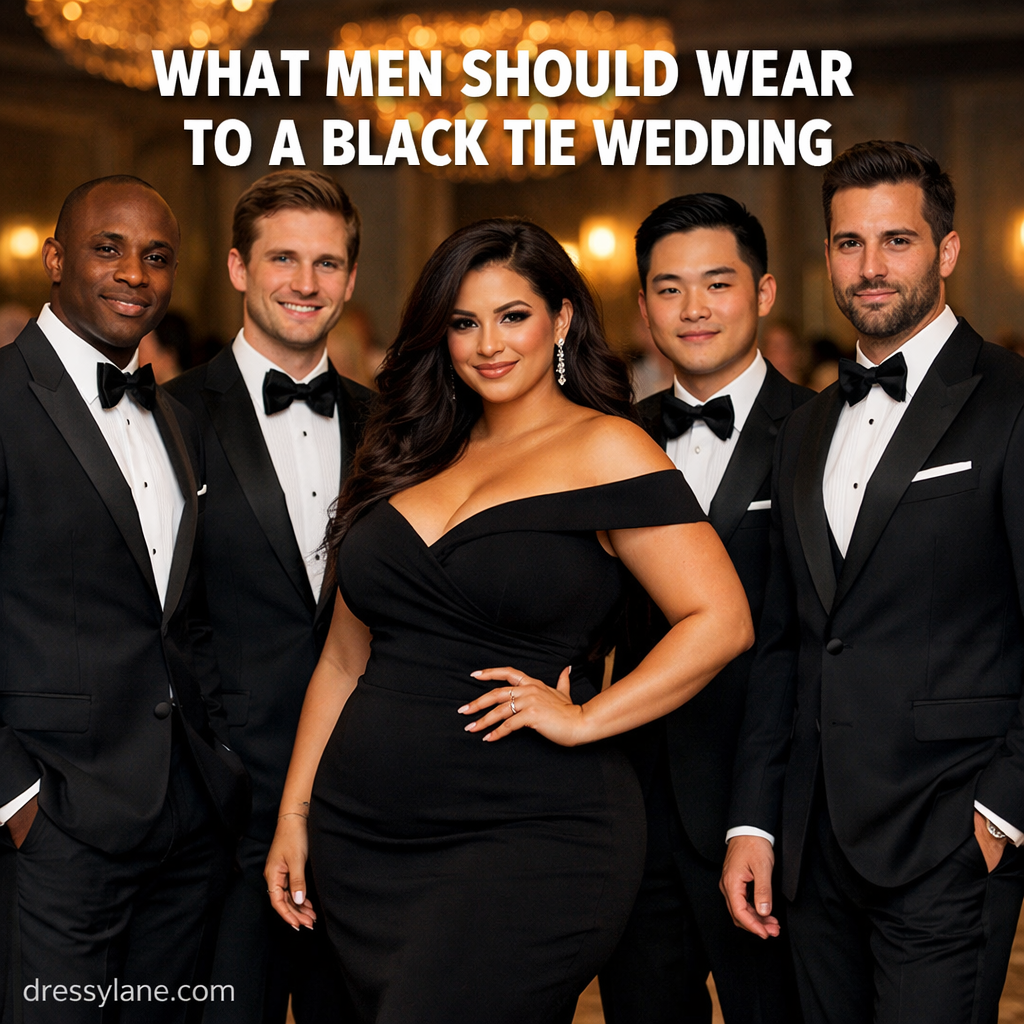
A black tie wedding is one of the most formal social events a man can attend. It carries specific expectations, traditions, and style standards that go beyond everyday suits or cocktail attire. Dressing correctly isn’t about standing out—it’s about honoring the couple, the occasion, and the timeless elegance that black tie represents.
If you’ve received a black tie wedding invitation and aren’t sure what that truly means, this guide breaks it down step by step so you can arrive confident, polished, and appropriately dressed.
What “Black Tie” Really Means
Black tie is a strict formal dress code, not a suggestion. While modern weddings sometimes allow slight flexibility, traditional black tie attire follows a clear structure that should be respected unless the invitation explicitly states otherwise.
At its core, black tie means:
- Evening formalwear
- Dark, elegant, classic styling
- Minimal experimentation or trend-driven looks
Think timeless sophistication rather than personal flair.
The Foundation: The Tuxedo
Jacket
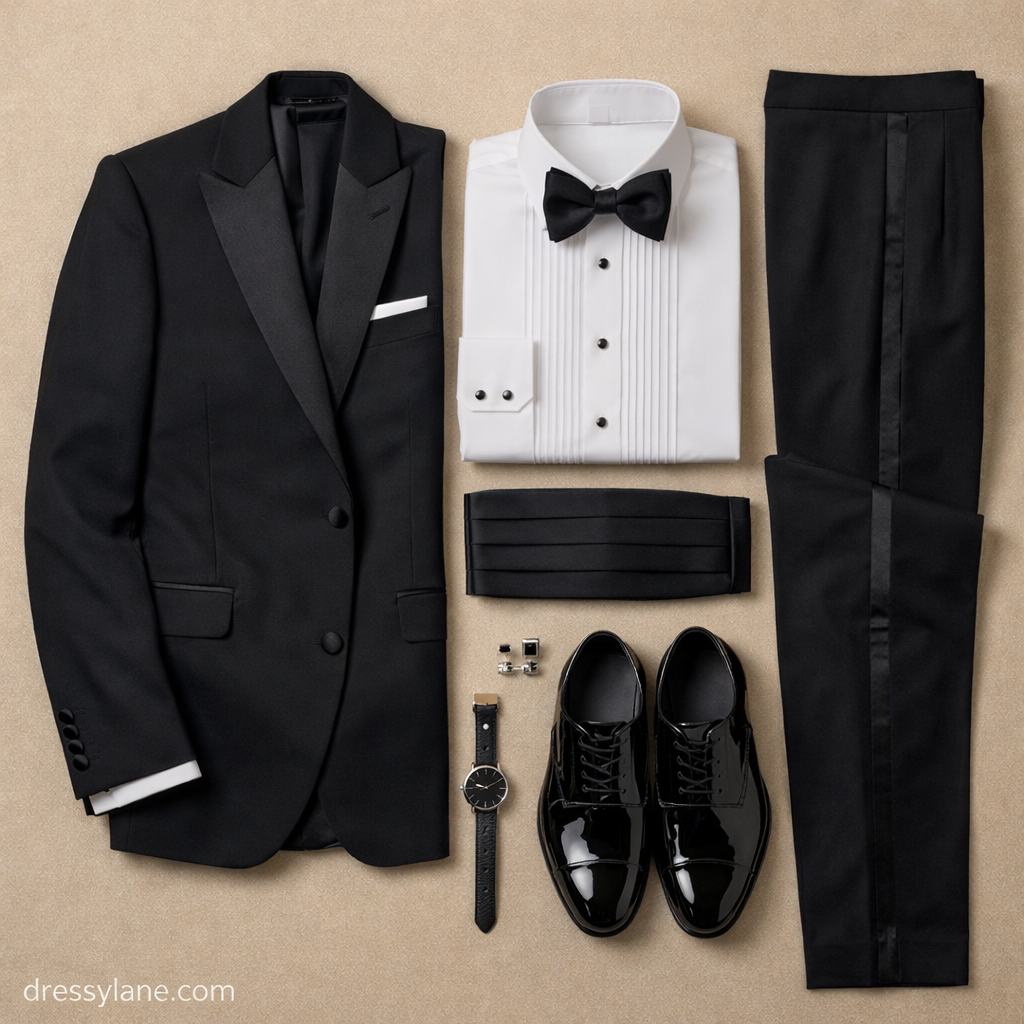
The tuxedo jacket is the centerpiece of black tie attire.
Key requirements:
- Black or midnight blue color
- Satin or grosgrain lapels
- Shawl lapel or peak lapel (not notch)
- Single-breasted preferred (double-breasted is acceptable)
Avoid:
- Regular suit jackets
- Casual textures
- Patterned fabrics
Midnight blue tuxedos are especially appropriate for evening weddings and photograph beautifully under low light.
Tuxedo Trousers
Your trousers should match the jacket and include traditional detailing.
Look for:
- A satin stripe down the outer seam
- No belt loops
- A clean, tailored fit
Pair them with suspenders or side adjusters rather than a belt for a polished silhouette.
The Shirt: Formal and Crisp
A black tie shirt is not a standard dress shirt.
Proper options include:
- White dress shirt only
- Pleated front or pique bib
- Wingtip collar or turndown collar
- French cuffs for cufflinks
Avoid:
- Colored shirts
- Button-down collars
- Casual cotton or textured fabrics
A clean white shirt provides the contrast that defines black tie elegance.
The Bow Tie (Yes, It Matters)
A black bow tie is mandatory unless otherwise specified.
Best practices:
- Black only
- Self-tied preferred
- Satin or grosgrain fabric
Avoid:
- Pre-tied bow ties if possible
- Long neckties
- Novelty or patterned bow ties
A slightly imperfect self-tied bow adds character and authenticity.
Footwear: Formal From the Ground Up
Shoes complete the look and should never be overlooked.
Appropriate choices:
- Black patent leather oxfords
- Highly polished calfskin oxfords
- Opera pumps (traditional but less common)
Socks should be:
- Black
- Over-the-calf
- Thin dress material (silk or fine cotton)
Avoid loafers, boots, or shoes with visible stitching or texture.
Accessories That Elevate the Look
Black tie accessories are minimal but intentional.
Essential Accessories
- Black cummerbund or waistcoat (never both)
- Black suspenders
- Simple cufflinks (silver, black, or mother-of-pearl)
- Studs for formal shirts if applicable
Optional Enhancements
- White pocket square (linen or silk)
- Classic wristwatch (thin, black strap)
- Minimal lapel pin
Avoid flashy jewelry, oversized watches, or colored accents.
Groom vs Guest: Key Style Differences
While guests should look polished, the groom often stands out subtly.
Grooms may consider:
- Slightly richer fabric
- Peak lapels instead of shawl
- Waistcoat instead of cummerbund
- Custom tailoring for sharper structure
Guests should stick closely to traditional black tie rules and avoid drawing attention away from the couple.
Seasonal Considerations
Black tie attire adapts slightly depending on season and venue.
Summer Black Tie
- Lightweight wool or wool-silk blend
- Breathable shirt fabric
- Midnight blue instead of black for evening events
Winter Black Tie
- Heavier wool tuxedo
- Velvet jacket (only if explicitly appropriate)
- Optional formal overcoat or cloak
Outdoor weddings may allow subtle flexibility, but formality remains key.
Men Only: Black Tie Do’s and Don’ts
Do
- Wear a tuxedo, not a suit
- Choose classic black or midnight blue
- Keep accessories understated
- Tailor everything for a clean fit
- Follow the invitation wording exactly
Don’t
- Wear a regular black suit
- Skip the bow tie
- Experiment with colors or patterns
- Wear casual shoes or belts
- Assume “formal” means flexible
When in doubt, lean traditional. Black tie rewards restraint.
Common Black Tie Mistakes Men Make
- Confusing black tie with cocktail attire
- Wearing skinny or fashion-forward cuts that disrupt proportions
- Using novelty bow ties or colored cummerbunds
- Ignoring proper shirt and cuff details
- Over-accessorizing
Elegance comes from simplicity and precision.
Final Thoughts
A black tie wedding is an opportunity to dress at the highest level of classic men’s style. When done correctly, it’s not restrictive—it’s empowering. The rules exist to ensure every guest looks refined, cohesive, and respectful of the occasion.
By sticking to traditional elements, paying attention to fit, and keeping details intentional, you’ll not only meet expectations—you’ll look effortlessly confident doing so.