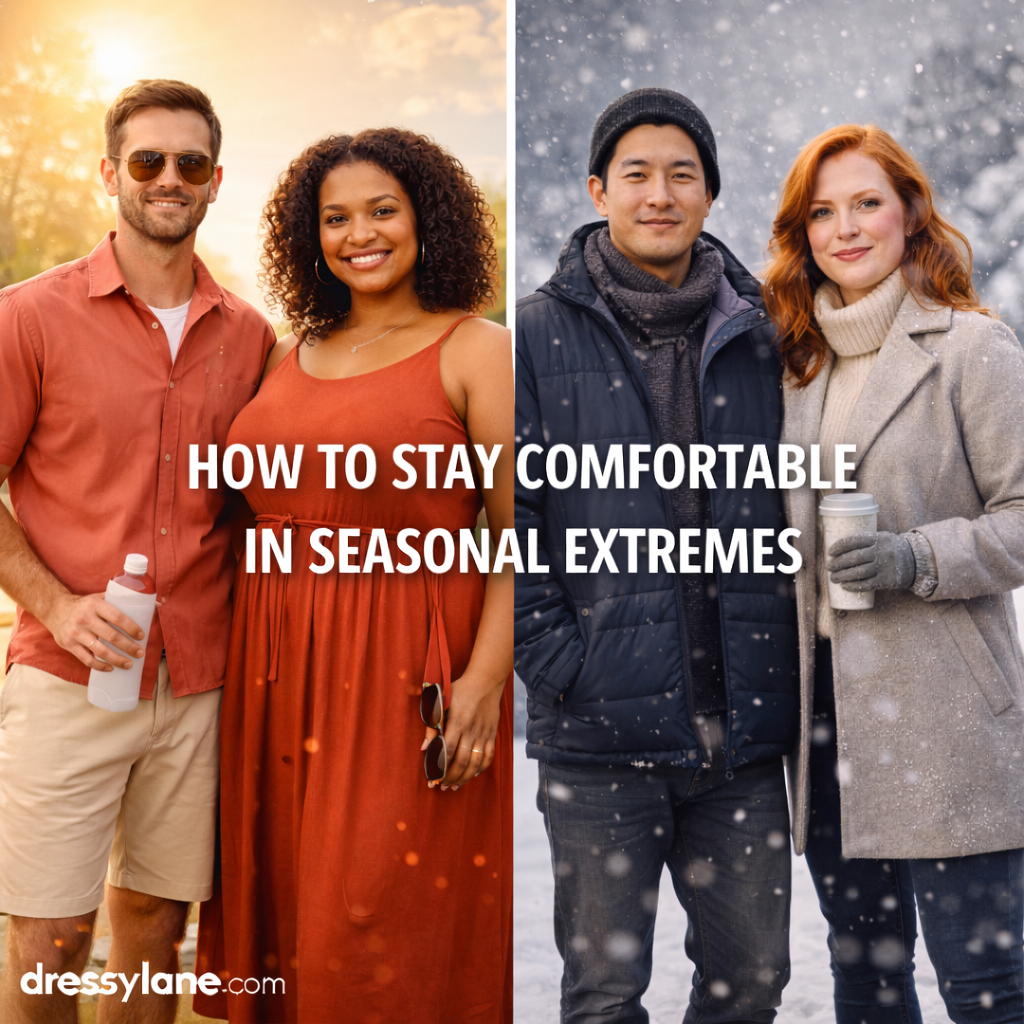
Seasonal extremes—whether scorching heat, freezing cold, or sudden weather swings—can make getting dressed feel like a daily challenge. Comfort isn’t just about temperature; it’s about choosing the right fabrics, layers, and outfit strategies that help your body adapt without sacrificing style.
This guide explains how both women and men can stay comfortable through extreme heat, deep cold, and unpredictable seasonal transitions while still looking put together.
Why Seasonal Extremes Affect Comfort So Much
Extreme weather puts extra stress on the body.
Temperature extremes can lead to:
- Overheating or excessive sweating
- Chilled muscles and reduced mobility
- Skin irritation or dryness
- Fatigue from wearing the wrong fabrics
Dressing intentionally helps regulate body temperature and maintain comfort all day.
General Rules for Dressing in Extreme Weather
No matter the season, a few universal principles apply.
Comfort-first rules to follow:
- Prioritize breathable or insulating fabrics as needed
- Dress in layers you can adjust
- Avoid heavy, restrictive clothing
- Pay attention to moisture control
The goal is flexibility and balance.
Staying Comfortable in Extreme Heat
Hot weather demands lightweight, breathable choices that allow airflow and moisture evaporation.
Best Fabrics for Hot Conditions
Choose fabrics that stay cool:
- Cotton
- Linen
- Tencel or modal
- Bamboo blends
Avoid thick synthetics that trap heat.
What Women Can Wear in Extreme Heat
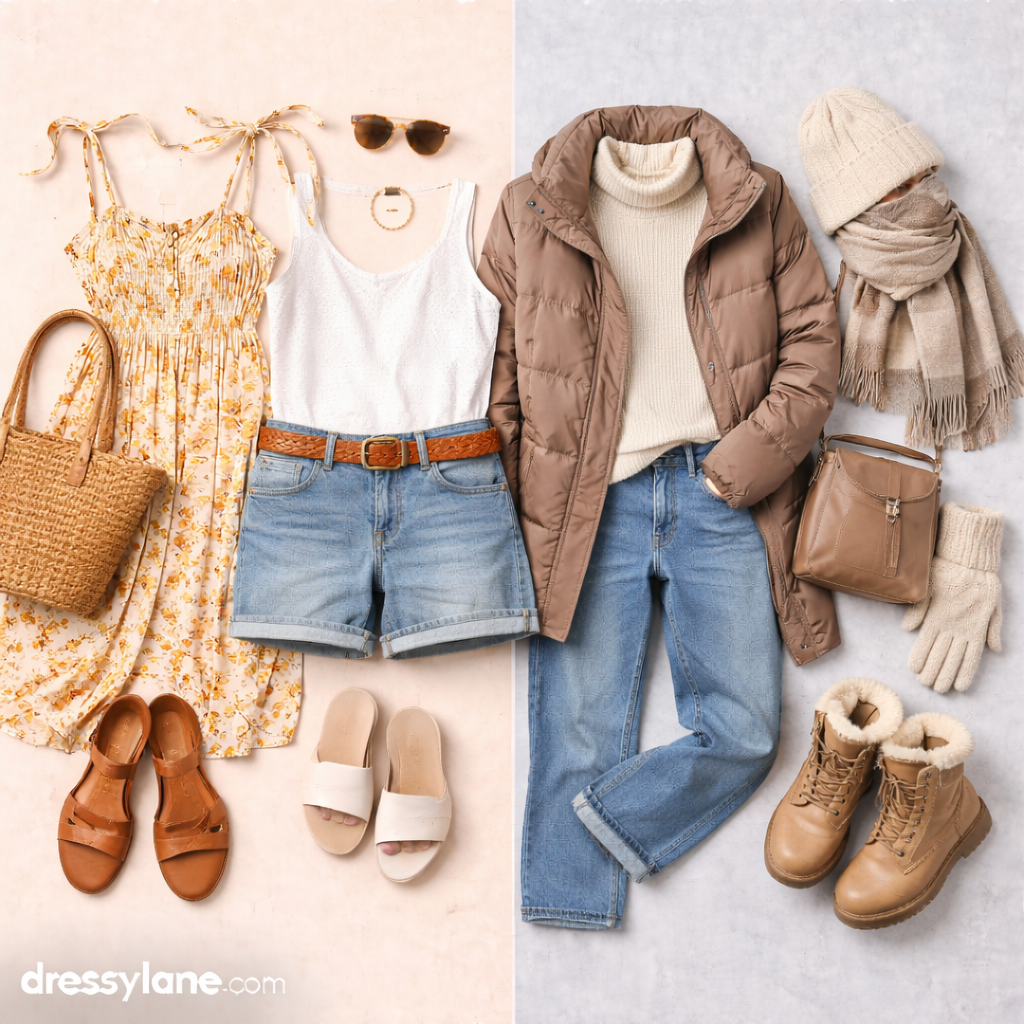
Women should focus on airflow and relaxed silhouettes.
Good outfit choices include:
- Loose-fitting dresses or jumpsuits
- Lightweight skirts or wide-leg pants
- Breathable tops with minimal layering
- Open, airy footwear
Avoid tight clothing and heavy accessories that increase discomfort.
What Men Can Wear in Extreme Heat
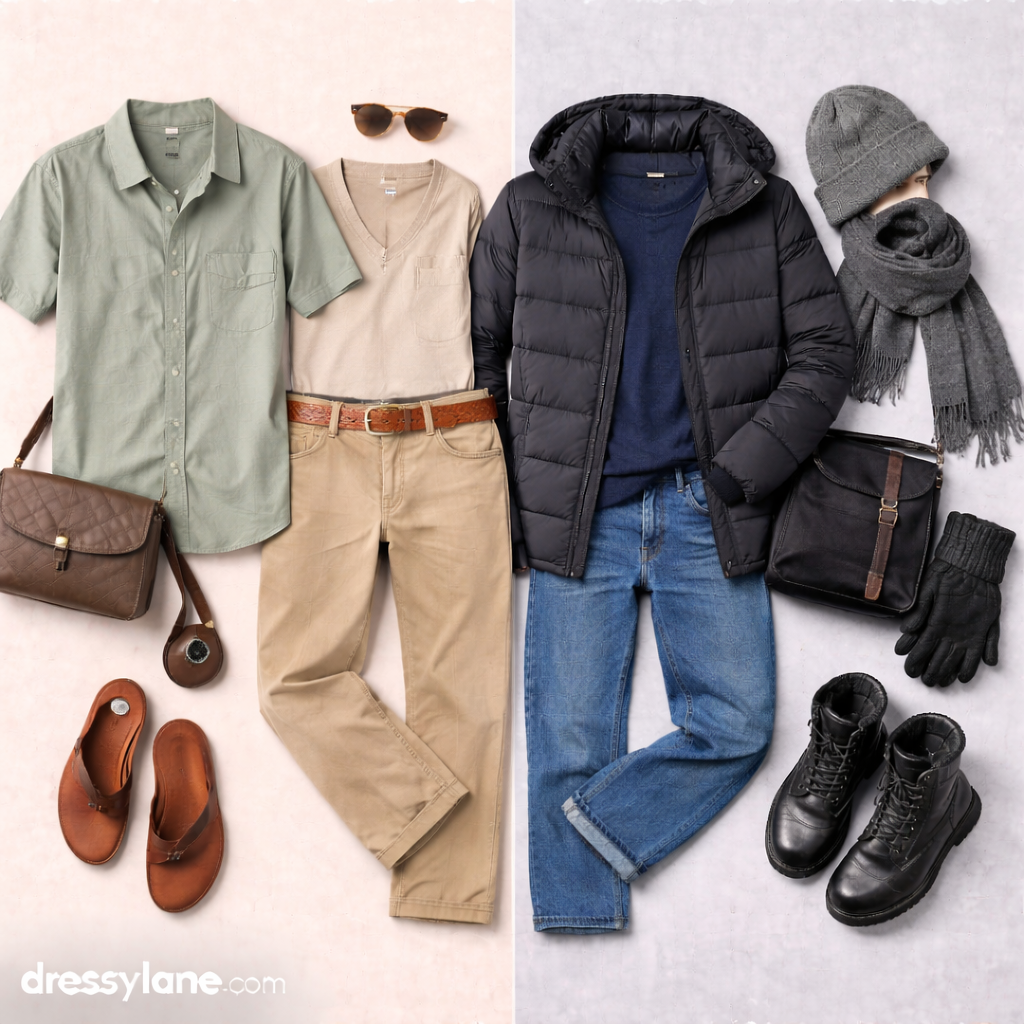
Men benefit from breathable structure.
Comfortable options include:
- Lightweight button-down shirts
- Linen or cotton polos
- Relaxed-fit chinos or shorts (if appropriate)
- Breathable footwear
Stick to light colors that reflect heat.
Staying Comfortable in Extreme Cold
Cold weather requires insulation, moisture control, and strategic layering.
Best Fabrics for Cold Conditions
Choose insulating materials:
- Wool
- Cashmere
- Fleece
- Thermal blends
Layering natural fibers helps trap warmth without bulk.
What Women Can Wear in Extreme Cold
Women should focus on layered warmth.
Effective outfit strategies include:
- Thermal base layers
- Wool sweaters and coats
- Insulated trousers or skirts with tights
- Weather-appropriate boots
Avoid relying on thin fabrics alone.
What Men Can Wear in Extreme Cold
Men should prioritize insulation and wind protection.
Good options include:
- Thermal undershirts
- Wool sweaters
- Insulated jackets or coats
- Cold-weather footwear
Layering allows temperature adjustment indoors.
Dressing for Rapid Seasonal Changes
Transitional seasons often include unpredictable temperature shifts.
Smart Strategies for Unstable Weather
Helpful approaches:
- Wear removable layers
- Choose mid-weight fabrics
- Carry lightweight outerwear
- Avoid committing to one extreme
Flexibility is key during seasonal transitions.
Moisture Management Matters
Sweat and dampness quickly lead to discomfort.
Look for:
- Moisture-wicking base layers
- Breathable fabrics
- Quick-drying materials
Managing moisture helps maintain comfort in both heat and cold.
Accessories That Improve Comfort
Small accessories can make a big difference.
Helpful additions include:
- Hats for sun or cold
- Scarves for insulation or sun protection
- Gloves in cold climates
- Sunglasses for bright conditions
Choose functional accessories that match the season.
Common Mistakes to Avoid
Avoid these comfort-killers:
- Dressing for style only
- Ignoring fabric performance
- Over-layering in warm weather
- Under-layering in cold weather
Comfort comes from balance, not extremes.
How to Adjust Throughout the Day
Weather can change quickly.
Quick adjustment tips:
- Remove or add layers as needed
- Switch footwear when possible
- Stay hydrated in heat
- Warm up gradually in cold conditions
Small changes help maintain comfort all day.
Final Thoughts
Staying comfortable in seasonal extremes is about preparation, smart fabric choices, and flexible layering. By understanding how your clothing interacts with temperature and moisture, both women and men can stay comfortable no matter how intense the weather becomes.
Comfort-focused dressing doesn’t limit style—it supports it, allowing you to move, work, and enjoy your day with ease.