
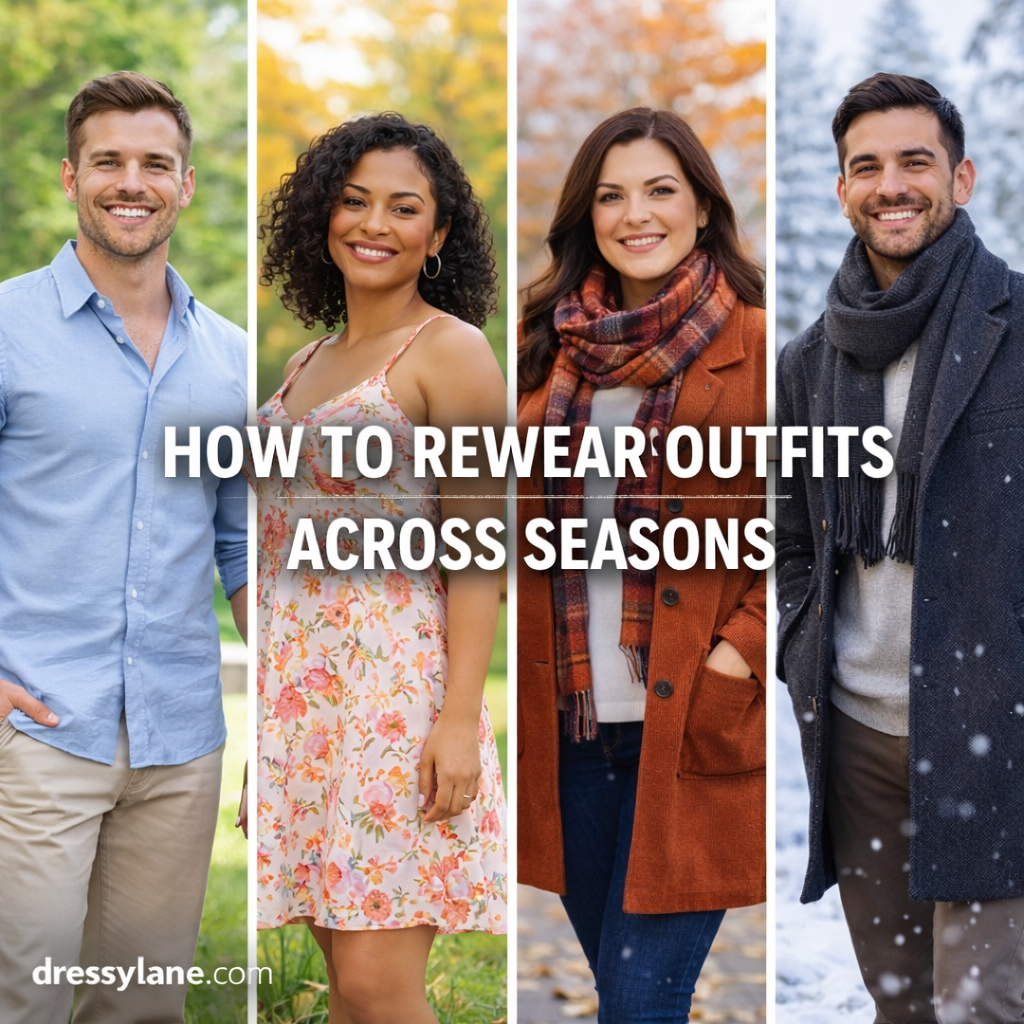
Rewearing outfits across seasons is one of the smartest ways to build a stylish, sustainable wardrobe. Instead of buying entirely new clothes every few months, you can adapt what you already own to fit changing temperatures, trends, and occasions. With thoughtful layering, fabric choices, and styling tricks, the same outfit can work year-round. This guide shows you how to rewear outfits across seasons—without looking repetitive or outdated.
Why Rewearing Outfits Makes Sense
Rewearing clothing isn’t just about saving money. It also helps reduce waste and simplifies daily outfit decisions.
Key benefits include:
- Lower clothing costs
- Less closet clutter
- More intentional personal style
- Easier outfit planning year-round
A flexible wardrobe gives you more options with fewer pieces.
Build a Seasonless Wardrobe Foundation
Certain items naturally work across multiple seasons.
Core Pieces That Transition Well
- Neutral t-shirts and tops
- Button-down shirts
- Lightweight sweaters
- Blazers and structured jackets
- Straight-leg pants or tailored trousers
- Versatile dresses and skirts
These items form the backbone of a multi-season wardrobe.
How to Rewear Outfits Across Seasons for Women
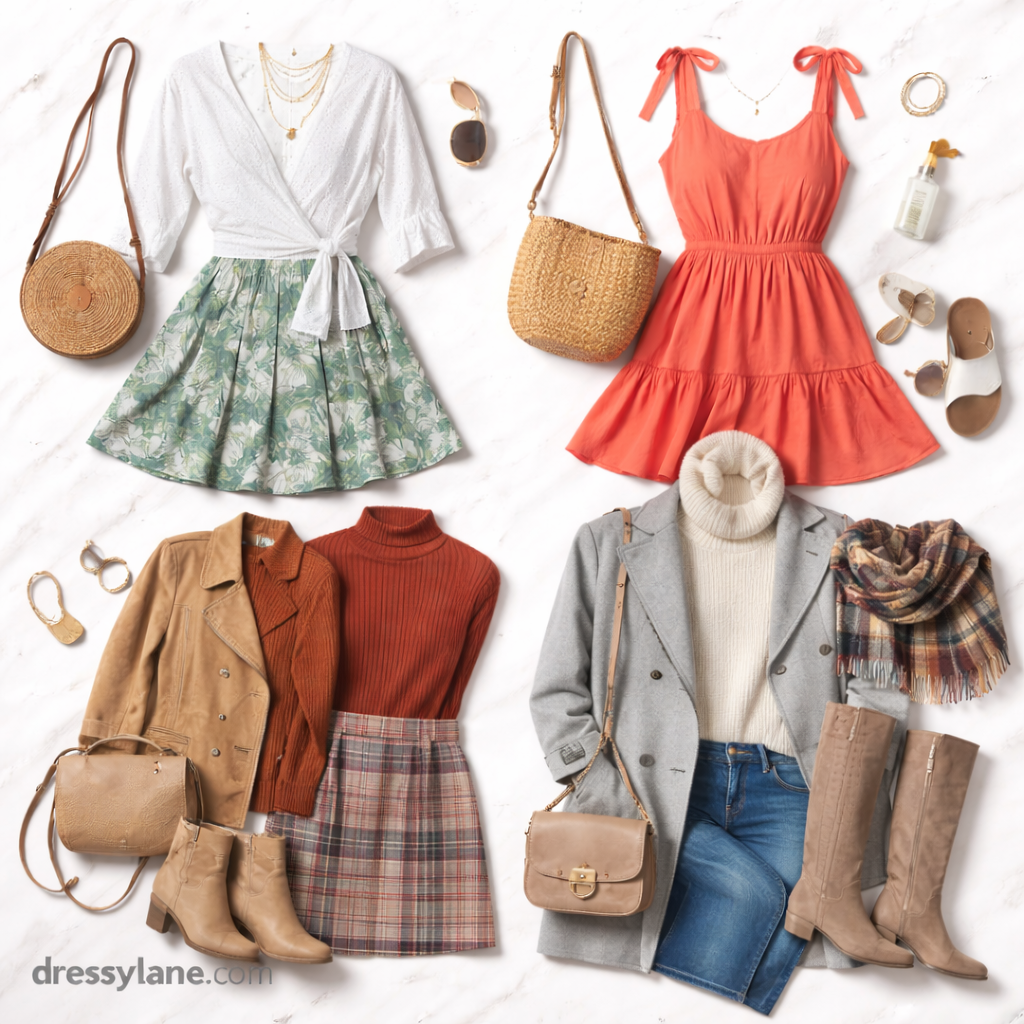
Women can transform outfits easily by adjusting layers, footwear, and accessories.
Spring to Summer Transitions
- Wear dresses without tights
- Swap boots for sandals or flats
- Replace heavy jackets with lightweight cardigans
- Choose breathable fabrics like cotton or linen
Summer to Fall Transitions
- Add a blazer or denim jacket
- Layer a thin sweater over sleeveless tops
- Introduce ankle boots or closed-toe flats
- Use scarves for warmth without bulk
Fall to Winter Transitions
- Add tights or leggings under dresses
- Layer sweaters over blouses
- Pair outfits with coats, boots, and thermal layers
- Choose darker colors and richer textures
Small layering changes make a big seasonal difference.
How to Rewear Outfits Across Seasons for Men
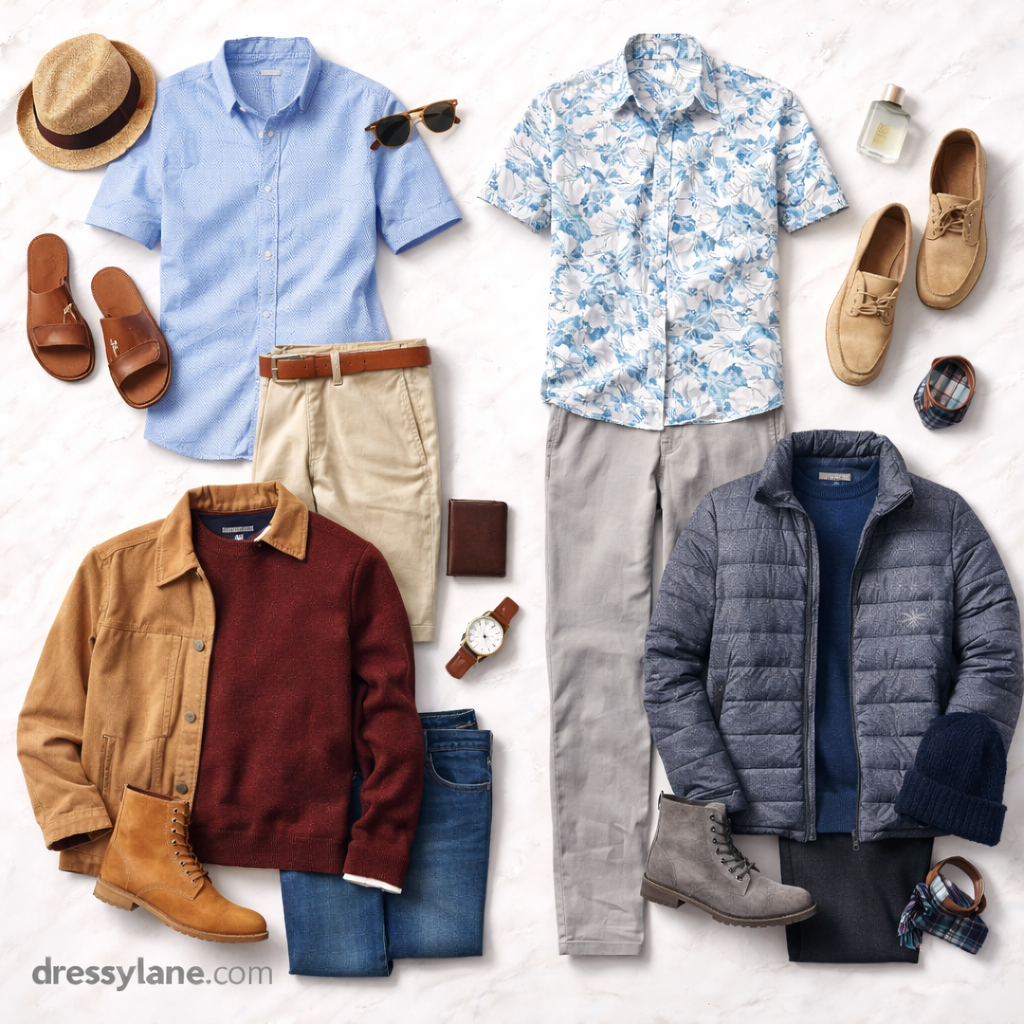
Men can keep outfits versatile with smart layering and fabric choices.
Spring to Summer Transitions
- Remove undershirts or extra layers
- Choose lighter fabrics and colors
- Wear button-down shirts untucked for casual settings
- Switch heavy shoes for loafers or sneakers
Summer to Fall Transitions
- Add lightweight jackets or overshirts
- Layer long-sleeve shirts under sweaters
- Introduce neutral outerwear
- Wear breathable trousers instead of shorts
Fall to Winter Transitions
- Layer sweaters over collared shirts
- Add coats, scarves, and gloves
- Wear thicker socks and insulated footwear
- Choose wool or flannel fabrics
Reusing the same base outfits creates consistency without boredom.
Master the Art of Layering
Layering is the key to making outfits work year-round.
Smart Layering Tips
- Start with lightweight base layers
- Add removable mid-layers
- Finish with outer layers for warmth
- Avoid bulky combinations that restrict movement
Layering allows flexibility throughout the day as temperatures change.
Use Accessories to Refresh Looks
Accessories can completely change how an outfit feels from season to season.
Season-Switching Accessories
- Scarves and wraps
- Belts
- Jewelry
- Hats
- Shoes
Rotating accessories helps outfits feel new without buying more clothes.
Fabric Matters More Than You Think
The right fabrics make seasonal transitions easier.
- Cotton works year-round with layering
- Wool regulates temperature naturally
- Linen is ideal for warm months but can be layered in cooler seasons
- Knits adapt well to temperature changes
Understanding fabric behavior helps extend outfit life.
Common Mistakes to Avoid When Rewearing Outfits
Avoid these pitfalls when transitioning outfits across seasons:
- Wearing heavy fabrics in hot weather
- Skipping proper layering
- Ignoring fit when adding layers
- Over-accessorizing
Balance comfort and style for the best results.
Final Thoughts
Learning how to rewear outfits across seasons gives you more freedom, flexibility, and confidence in your wardrobe. With the right foundation pieces, layering techniques, and styling adjustments, your clothes can work harder for you year-round. A seasonless wardrobe isn’t about owning less—it’s about using what you own more effectively.