What you wear has a quiet but powerful impact on how you feel throughout the day. When clothes are uncomfortable, hard to coordinate, or constantly need adjusting, they add stress you don’t need. Dressing with ease and intention can help you feel calmer, more confident, and more in control of your routine.
This guide explains how to dress when you want less stress, focusing on simplicity, comfort, and practical style choices that support both your body and your mindset.
How Clothing Contributes to Daily Stress
Stressful clothing often shows up in small, persistent ways.
Common sources of outfit-related stress include:
- Tight or restrictive fits
- Fabrics that itch, wrinkle, or overheat
- Outfits that require frequent adjusting
- Too many choices and combinations
- Clothes that don’t fit your actual lifestyle
Reducing these friction points makes daily life feel lighter.
Start With Comfort as the Foundation
Comfort isn’t about looking casual — it’s about removing distractions.
Signs your clothes are low-stress:
- You forget you’re wearing them
- You can move freely
- You don’t think about your outfit all day
- You feel physically supported
Comfort-first clothing frees up mental space.
Simplify Your Wardrobe to Reduce Decision Fatigue
Fewer, better pieces create less stress than a crowded closet.
Helpful simplification strategies:
- Build around a core color palette
- Keep pieces that mix easily
- Remove clothes you avoid wearing
- Repeat outfits without guilt
- Choose quality over quantity
When everything works together, getting dressed becomes easier.
Choose Fabrics That Feel Calm on the Body
Fabric affects how relaxed or tense you feel.
Low-stress fabric choices:
- Cotton blends
- Modal and viscose
- Soft knits
- Lightweight wool
- Breathable performance fabrics
Avoid fabrics that:
- Scratch or cling
- Trap heat
- Feel stiff or heavy
- Wrinkle excessively
Soft, breathable fabrics support calm.
Dress for the Day You’re Actually Having
Stress increases when clothes don’t match your schedule.
Ask yourself:
- Will I sit, walk, or stand most of the day?
- Am I moving between environments?
- Do I need flexibility or structure?
- Will comfort matter more than formality?
When clothes match your reality, stress drops naturally.
What Women Should Wear to Feel Less Stressed
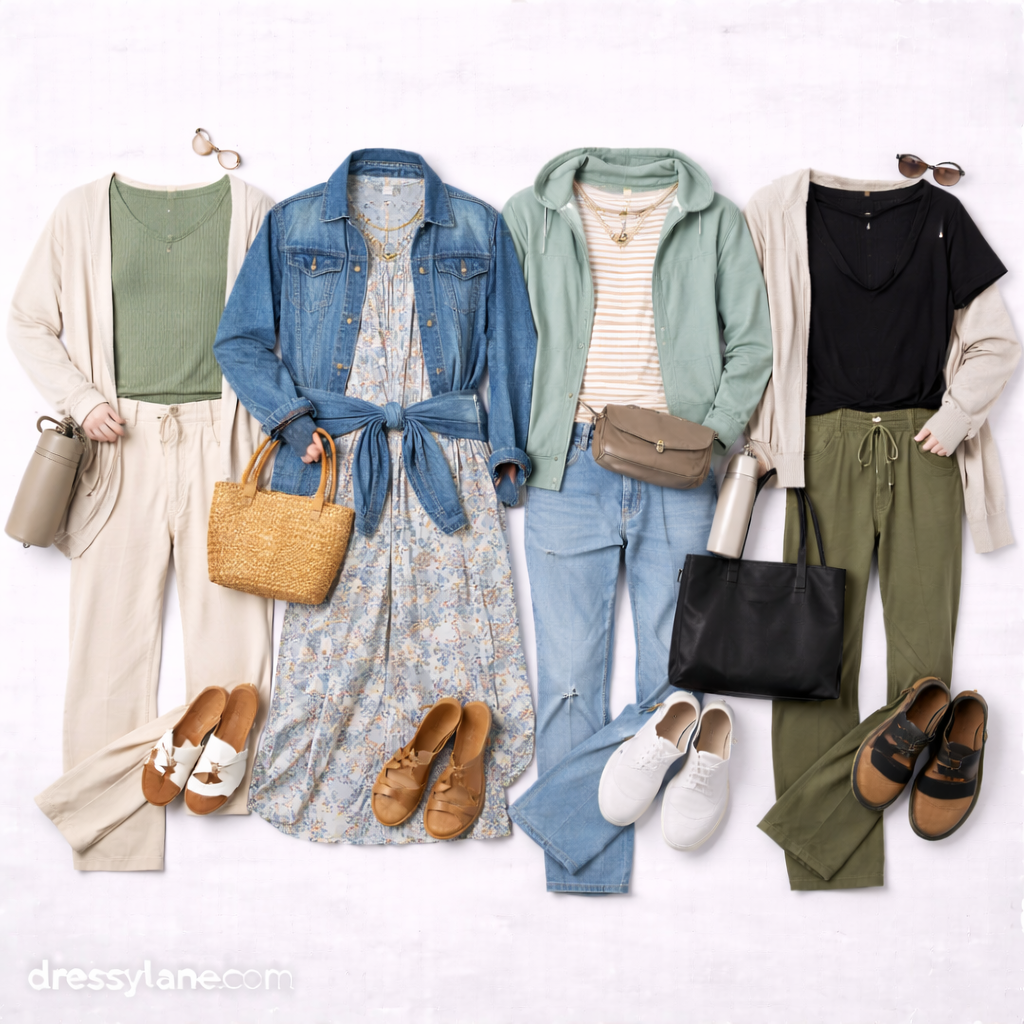
Women often juggle multiple roles and environments in one day.
Low-Stress Outfit Staples for Women
Reliable, calming choices include:
- Stretch trousers or pull-on pants
- Midi dresses with relaxed silhouettes
- Soft blouses or knit tops
- Cardigans or unstructured jackets
- Comfortable flats or sneakers
These pieces move easily between settings.
Fit Choices That Reduce Tension
Helpful fit tips:
- Choose forgiving waistlines
- Avoid overly tight cuts
- Look for draped or flowy silhouettes
- Size for comfort, not labels
Comfortable fit equals mental ease.
What Men Should Wear to Feel Less Stressed
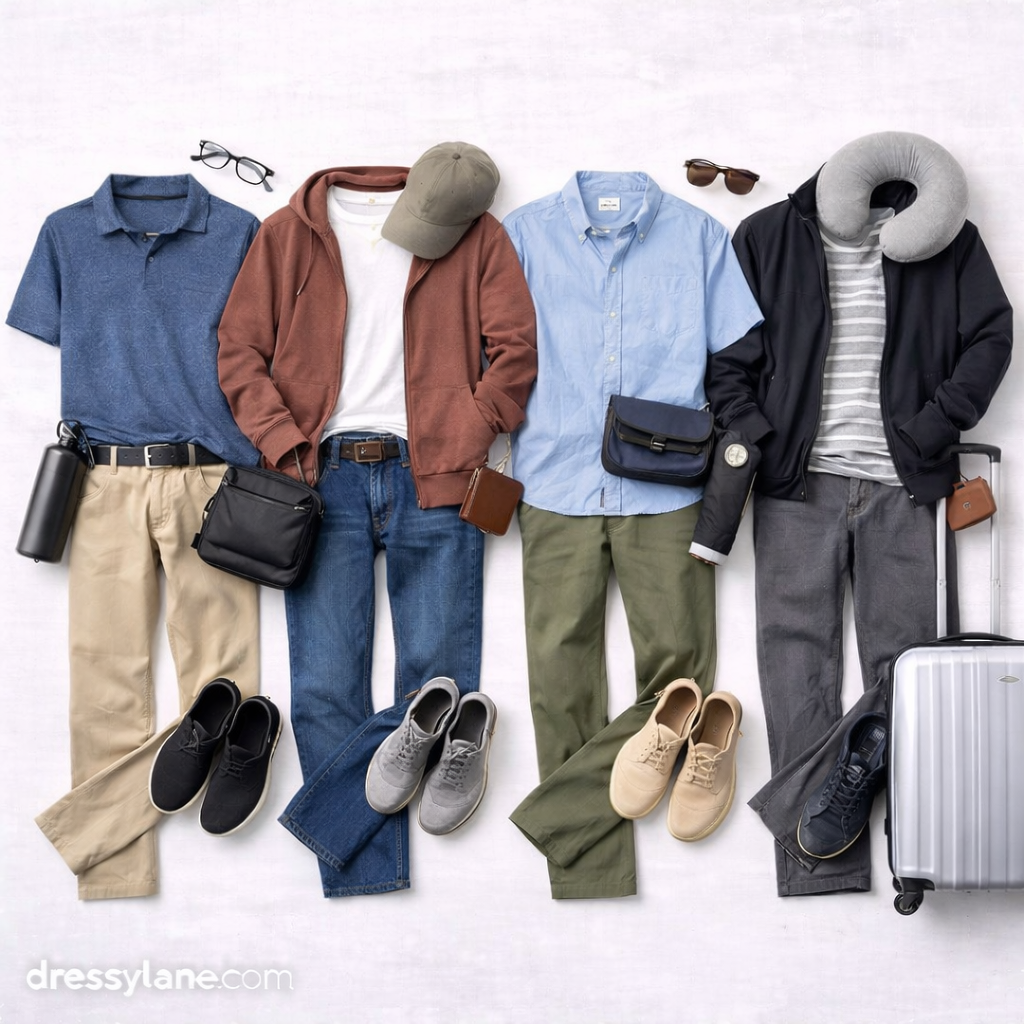
Men benefit from simple, repeatable outfit formulas.
Low-Stress Outfit Staples for Men
Go-to pieces include:
- Stretch chinos or relaxed-fit pants
- Soft t-shirts or polos
- Breathable button-downs
- Lightweight sweaters
- Comfortable everyday shoes
These basics create consistency without effort.
Simplify Without Looking Sloppy
- Stick to neutral colors
- Keep fits comfortable but clean
- Choose layers that are easy to remove
- Avoid fussy details
Simple doesn’t mean boring — it means reliable.
Create a Go-To Outfit Formula
Routine reduces stress.
Examples of low-stress outfit formulas:
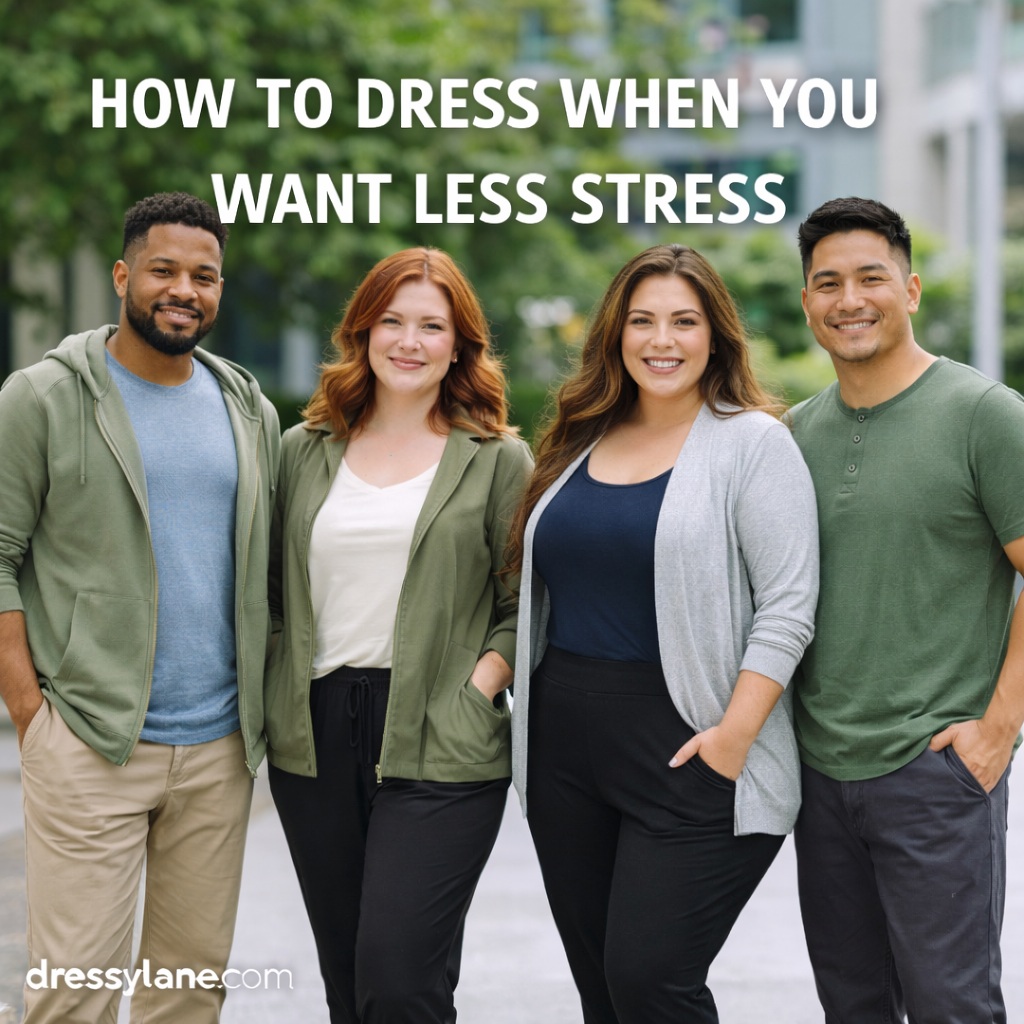
- Comfortable pants + soft top + light layer
- Dress + supportive shoes
- Jeans + t-shirt + casual jacket
- Knit set + clean sneakers
When you know what works, decision-making disappears.
Shoes Play a Bigger Role Than You Think
Uncomfortable shoes create instant stress.
Low-stress footwear traits:
- Cushioned soles
- Roomy toe boxes
- Breathable materials
- Broken-in design
Supportive shoes protect your energy all day.
Use Color to Create Calm
Color influences mood.
Calming color strategies:
- Neutrals for everyday wear
- Soft tones over loud prints
- Consistent palettes
- Colors you feel good wearing
You don’t need bright colors to feel confident.
Let Go of Perfection
Stress often comes from trying too hard.
Helpful mindset shifts:
- Your outfit doesn’t need to impress
- Repeating clothes is normal
- Comfort is not a failure
- Ease is a form of confidence
When you dress for yourself, stress fades.
What to Avoid When You Want Less Stress
Certain choices quietly increase tension.
Avoid:
- Clothes that need constant fixing
- Shoes that hurt after an hour
- Trend pieces you don’t feel like yourself in
- Overcomplicated outfits
- Dressing for fantasy versions of your life
If it creates friction, it’s not worth it.
Final Thoughts
Learning how to dress when you want less stress is about creating ease, not lowering standards. When your clothes support your body, your schedule, and your personality, daily life feels more manageable.
Stress often comes from overthinking — and the right wardrobe helps you let go, move freely, and feel more grounded in every moment.