If clothes rarely fit you “off the rack,” you’re not alone. Most clothing is designed around standardized proportions that don’t reflect real bodies. Whether items feel too tight in one area, too loose in another, or simply never sit the way they should, dressing well isn’t about fixing your body—it’s about styling smarter.
This guide shows how to dress confidently and comfortably when clothes never fit quite right, using practical styling strategies for everyday life.
Understand Where Fit Usually Goes Wrong
Fit problems tend to repeat in the same areas. Identifying your patterns helps you dress more intentionally.
Common trouble spots include:
- Waist fitting but hips or chest pulling
- Shoulders fitting but sleeves too tight or too long
- Pants fitting lengthwise but gaping at the waist
- Dresses fitting the body but not the bust or torso
Once you know your usual issues, you can choose clothing that works with—not against—your shape.
Prioritize One Area of Good Fit
Trying to make every part of an outfit fit perfectly often leads to frustration. Instead, aim for one main area of correct fit.
Focus on:
- Shoulders for tops and jackets
- Waist or hips for bottoms
- Bust or torso for dresses
It’s easier to style around one well-fitting anchor point than to fight every measurement at once.
Choose Fabrics That Forgive
Fabric choice can instantly improve how clothes feel and look on your body.
More forgiving fabrics include:
- Stretch cotton blends
- Soft knits
- Ponte fabric
- Drapey materials like modal or viscose
Stiff or rigid fabrics tend to exaggerate fit issues, while flexible materials adapt better to real proportions.
Use Structure to Create Shape
When clothes don’t fit perfectly, structure helps define your silhouette.
Helpful structured elements:
- Belts to control waist gaps
- Blazers to shape shoulders and torso
- Layers that skim instead of cling
- Shoes that visually balance the outfit
Structure adds intention, even when the fit isn’t exact.
Adjust Styling Instead of Size
Sizing up or down often creates new problems. Styling adjustments can be more effective.
Simple styling fixes:
- Tucking or half-tucking tops
- Rolling or cuffing sleeves and hems
- Layering fitted pieces under looser ones
- Using belts, scarves, or jewelry to draw the eye
These techniques redirect attention and improve proportions without altering the garment.
How Men Can Dress When Clothes Don’t Fit Quite Right
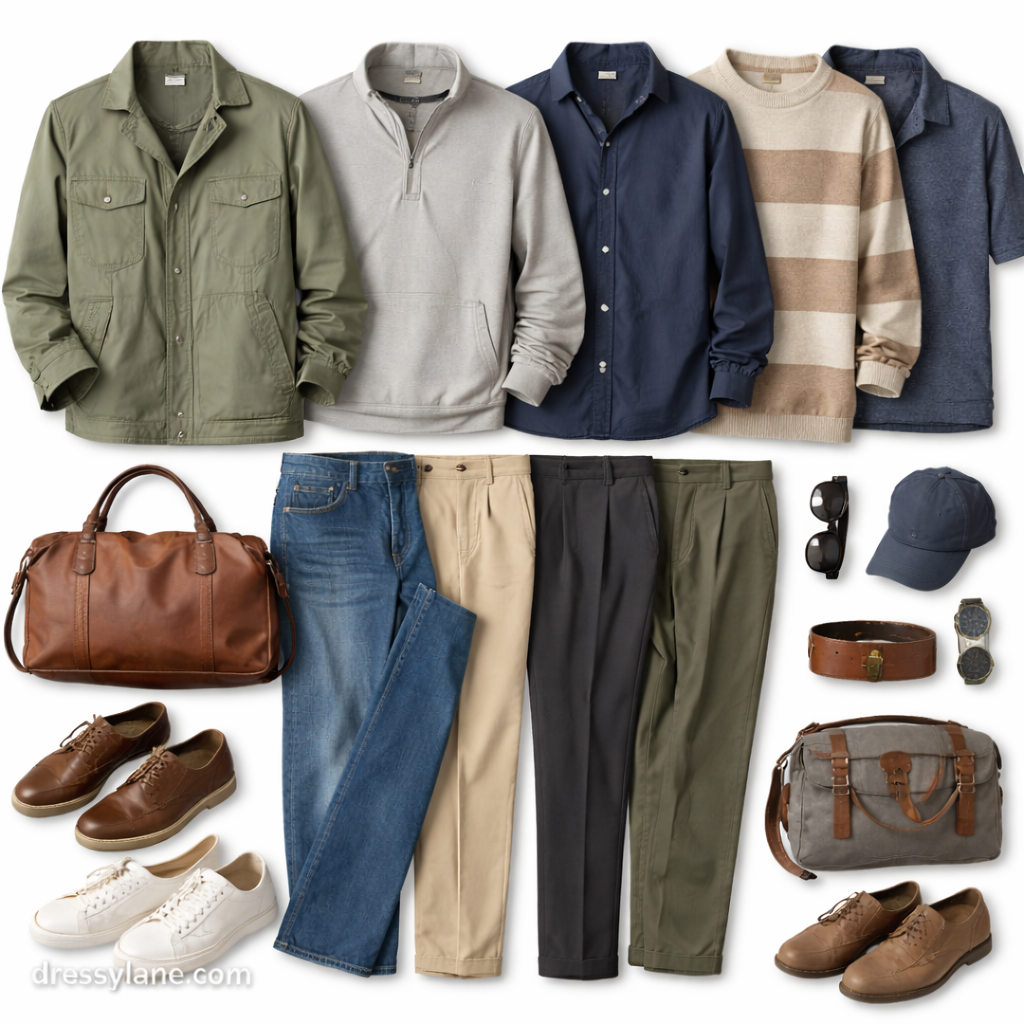
Men often struggle with shoulder, chest, or pant fit discrepancies.
Practical strategies include:
- Buying jackets that fit the shoulders, then styling the rest
- Choosing pants that fit the thighs and adjusting the waist with belts
- Layering undershirts to smooth lines
- Using heavier fabrics that drape cleanly instead of clinging
A slightly relaxed fit often looks more polished than something that’s too tight in key areas.
How Women Can Dress When Clothes Don’t Fit Quite Right
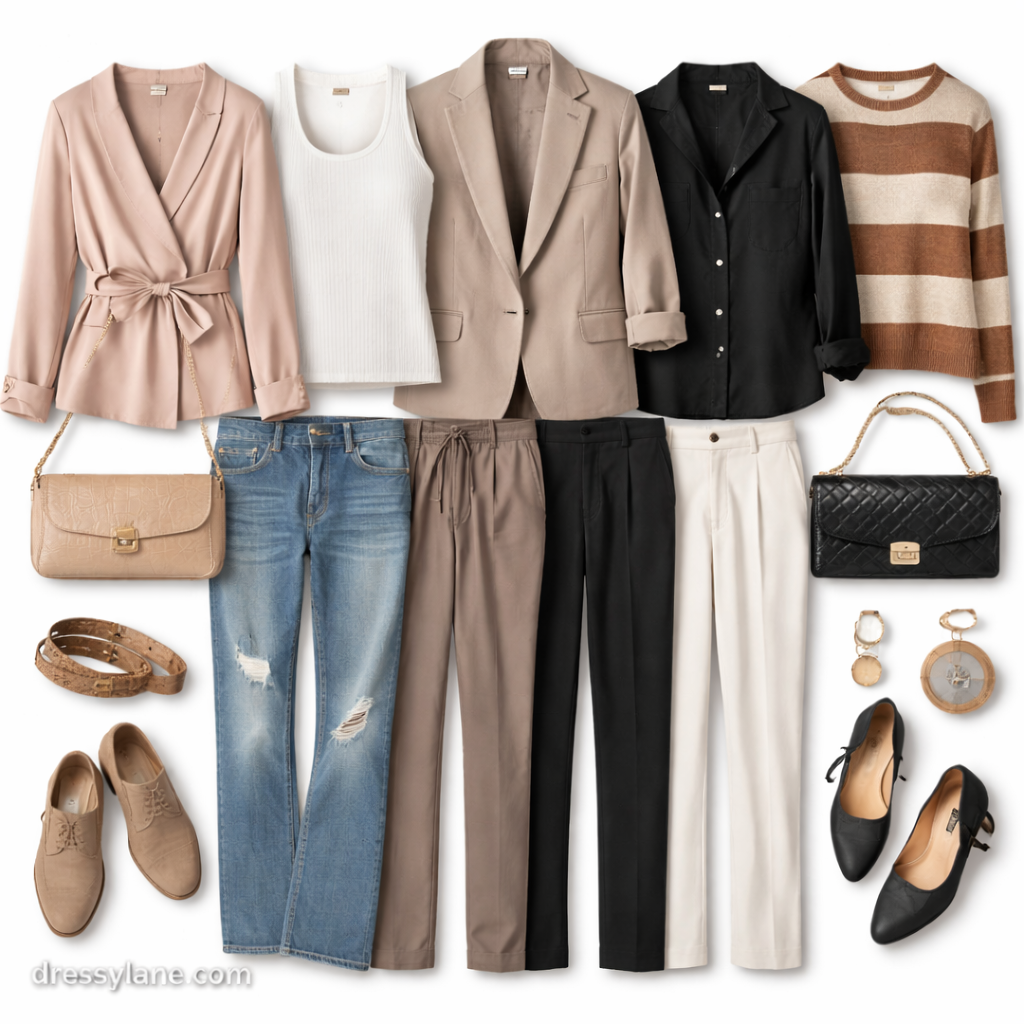
Women commonly deal with mismatched bust, waist, and hip proportions.
Helpful approaches include:
- Using wrap styles or adjustable silhouettes
- Choosing dresses and tops with stretch
- Adding belts or structured layers to define shape
- Styling oversized pieces intentionally rather than sizing down
When clothes don’t fit evenly, styling for balance matters more than exact measurements.
Consider Minor Alterations When Possible
You don’t need a fully tailored wardrobe, but small alterations can be game-changing.
Worthwhile simple adjustments:
- Hemming pants
- Taking in a loose waist
- Shortening sleeves
- Adding darts for shape
Even altering a few key pieces can dramatically improve how your entire wardrobe feels.
Build a Closet Around What Actually Works
Instead of chasing trends or ideal fits, build around what consistently feels good.
Focus on:
- Silhouettes that repeat successfully
- Brands or styles that accommodate your proportions
- Colors and textures that feel comfortable and confident
- Pieces you reach for without hesitation
A wardrobe built on real-life fit will always outperform one built on wishful sizing.
Final Thoughts
When clothes never fit quite right, the goal isn’t perfection—it’s comfort, balance, and confidence. By choosing forgiving fabrics, styling strategically, and focusing on what works instead of what doesn’t, you can dress well without fighting your body every day.
Great style isn’t about flawless fit. It’s about knowing how to work with what you have—and doing it on your own terms.