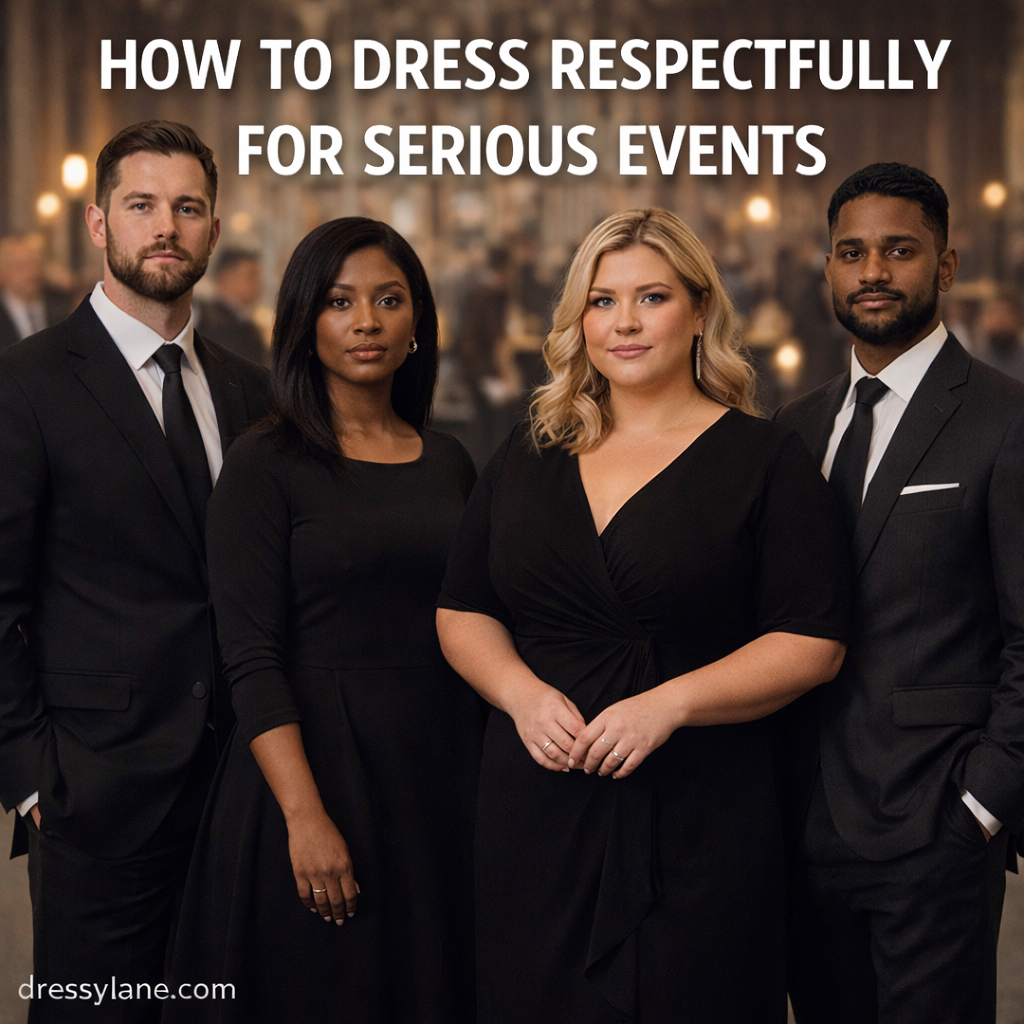
Serious events such as funerals, memorial services, wakes, and solemn ceremonies call for thoughtful, respectful attire. What you wear communicates consideration, empathy, and awareness of the occasion’s emotional weight. Dressing appropriately isn’t about fashion trends—it’s about showing respect for the people involved and the moment itself.
This guide explains how to dress respectfully for serious events, with clear guidance, practical tips, and outfit suggestions for both men and women.
Why Clothing Matters at Serious Events
At serious or somber events, clothing plays a quiet but important role. Your outfit should never distract from the purpose of the gathering or draw unnecessary attention.
Respectful attire helps:
- Honor the occasion and those involved
- Show empathy and emotional awareness
- Maintain a calm, unified atmosphere
- Avoid unintentional offense
When in doubt, understated and modest choices are always appropriate.
General Guidelines for Dressing Respectfully
Regardless of the specific event, these principles apply to most serious occasions.
Key rules to follow:
- Choose modest, conservative silhouettes
- Stick to neutral or dark colors
- Avoid loud patterns or bold prints
- Keep accessories minimal
- Prioritize clean, well-fitted clothing
Your outfit should blend in rather than stand out.
Appropriate Colors for Serious Occasions
Color choice is one of the most important factors in respectful dressing.
Safe color options:
- Black
- Charcoal gray
- Navy
- Dark brown
- Muted earth tones
Colors to avoid:
- Bright or neon shades
- Flashy metallics
- Loud prints
- Highly contrasting color blocks
Soft, muted colors convey solemnity and respect.
Fabric and Fit Considerations
Fabric and fit contribute to the overall tone of your outfit.
Recommended fabrics:
- Wool blends
- Cotton
- Crepe
- Linen blends (for warm climates)
Fit tips:
- Avoid overly tight or revealing clothing
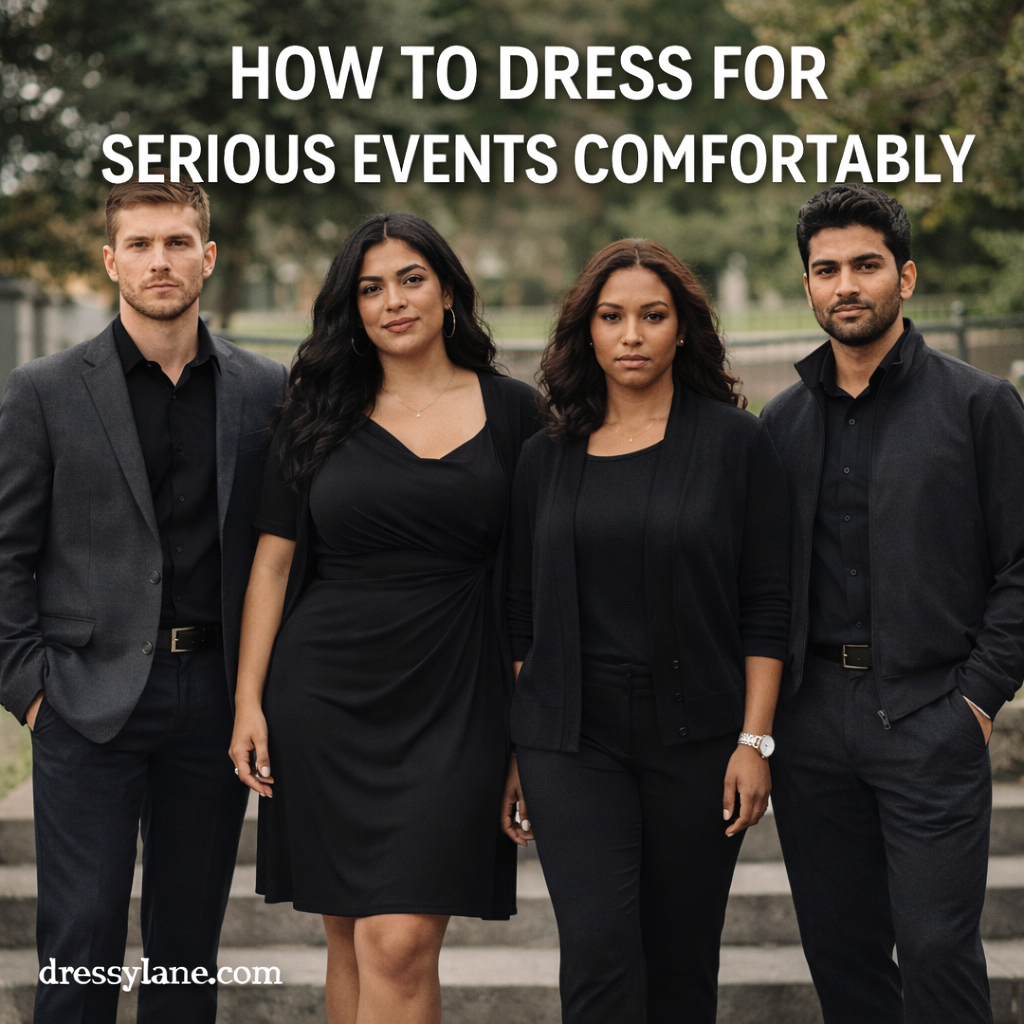
- Choose structured but comfortable pieces
- Ensure garments are wrinkle-free and clean
Comfort matters, especially for longer services, but should never compromise appropriateness.
How to Dress Respectfully for Serious Events: Women
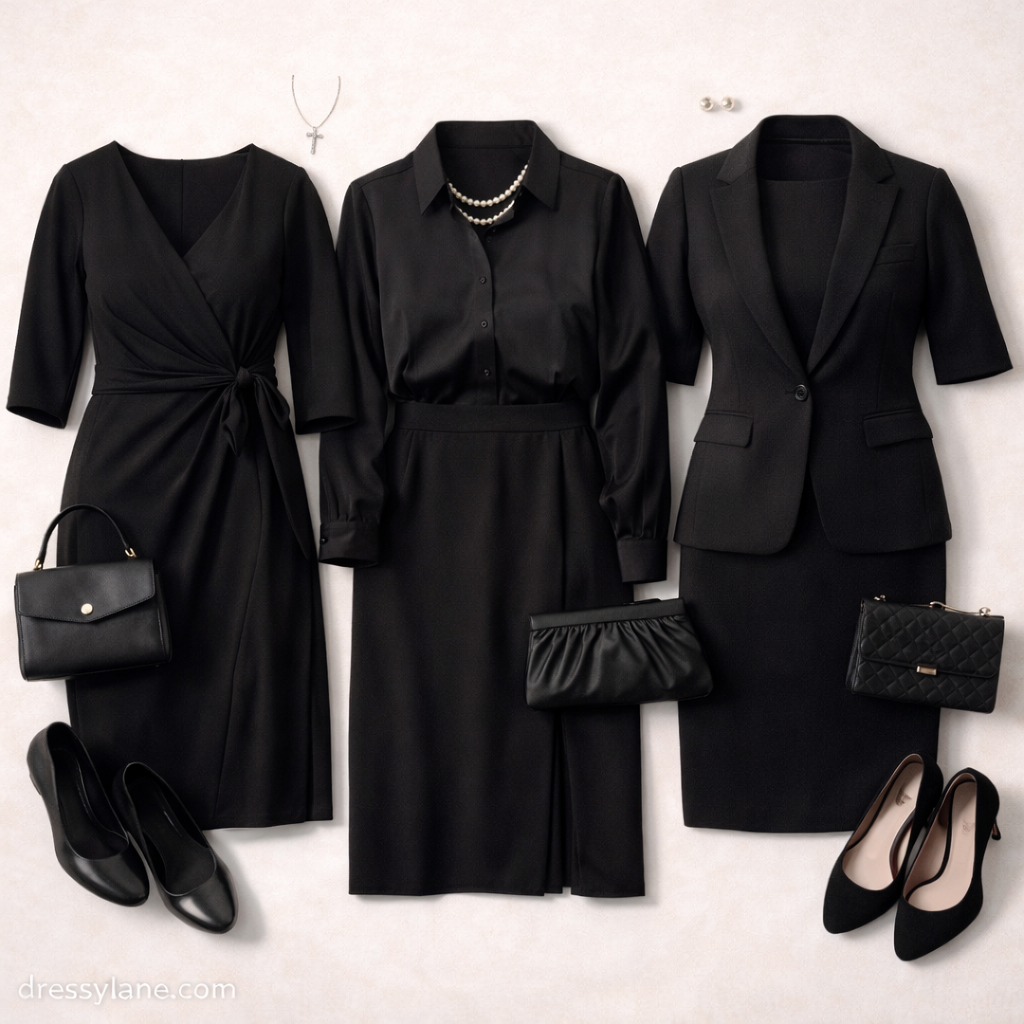
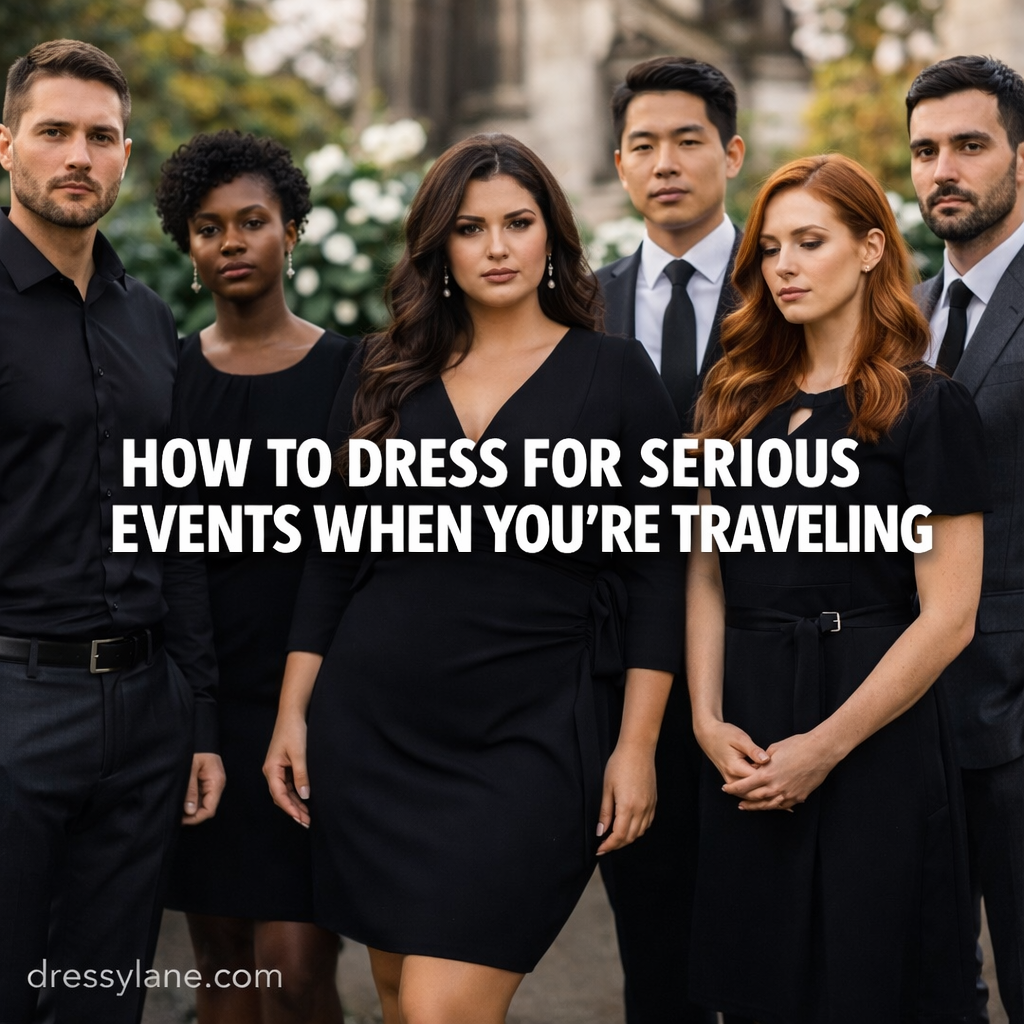
Women should aim for modest, understated outfits that feel appropriate for the emotional setting.
Appropriate outfit choices for women:
- Knee-length or midi dresses
- Modest skirts with blouses
- Tailored pants with simple tops
- Conservative jumpsuits
Footwear and layering:
- Closed-toe flats or low heels
- Simple dress shoes
- Cardigans, blazers, or light coats
Women’s styling tips:
- Keep necklines modest
- Avoid sheer fabrics or cutouts
- Choose minimal jewelry
- Keep makeup natural and understated
A simple, well-fitted dress in a dark or neutral color is a timeless option.
How to Dress Respectfully for Serious Events: Men
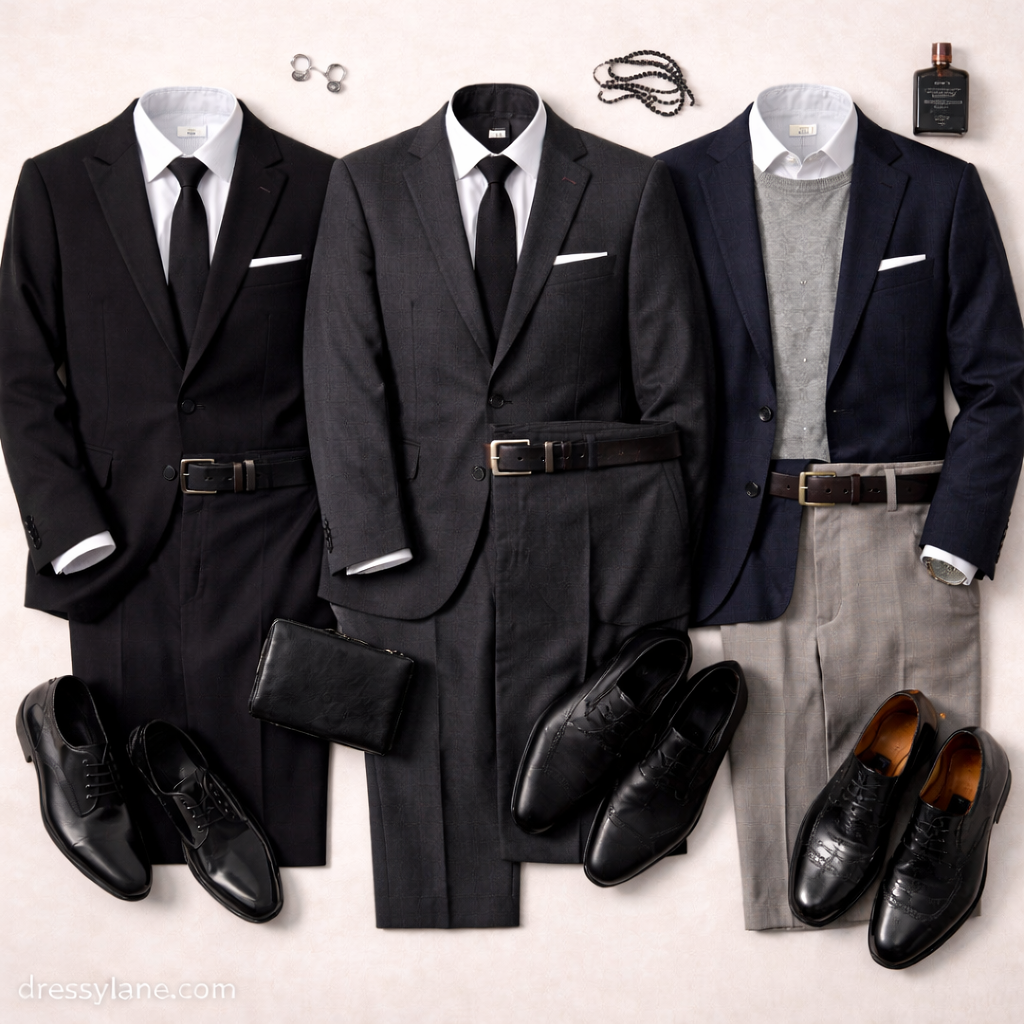
Men should choose clean, classic pieces that project respect and composure.
Appropriate outfit choices for men:
- Dress pants or chinos
- Button-down or dress shirts
- Blazer, suit jacket, or sweater
- Dark, polished shoes
Tie or no tie:
- A tie is appropriate and often encouraged
- For less formal settings, a blazer without a tie may be acceptable
Men’s styling tips:
- Stick to neutral or dark colors
- Ensure shoes are clean and polished
- Avoid bold patterns or novelty items
- Keep accessories minimal
A simple suit or blazer-and-slacks combination is almost always appropriate.
What Not to Wear to Serious Events
Some clothing choices can feel disrespectful or out of place, even if unintentionally.
Avoid wearing:
- Jeans or casual denim
- T-shirts or graphic tops
- Sneakers or athletic shoes
- Flashy jewelry
- Strong fragrances
- Trend-driven or attention-grabbing outfits
If an outfit feels better suited for a social gathering, it likely isn’t appropriate here.
Dressing for Different Types of Serious Events
Not all serious events are identical, but respectful dressing principles remain consistent.
Funerals and memorial services
Lean toward darker colors and more traditional attire.
Wakes or visitations
Conservative business-casual attire is often acceptable.
Religious ceremonies
Consider cultural or religious customs and dress modestly.
Public ceremonies or formal services
Structured, polished outfits are best.
When unsure, err on the side of formality and modesty.
Cultural and Regional Considerations
Cultural expectations can influence appropriate attire.
Helpful considerations:
- Some cultures allow lighter colors or specific garments
- Religious traditions may require covered shoulders or headwear
- Climate may affect fabric choices
If attending an unfamiliar cultural event, it’s respectful to research or ask discreetly.
Grooming and Presentation Matter
Personal grooming is just as important as clothing choice.
Grooming tips:
- Neatly styled hair
- Clean, understated makeup
- Trimmed facial hair
- Minimal fragrance
Well-groomed appearances convey care and respect.
Final Thoughts
Dressing respectfully for serious events is about sensitivity, simplicity, and awareness. By choosing modest clothing, neutral colors, and classic silhouettes, you show consideration for the occasion and the people involved.
When in doubt, keep your outfit understated, polished, and respectful. The goal is not to be noticed—but to quietly honor the moment.