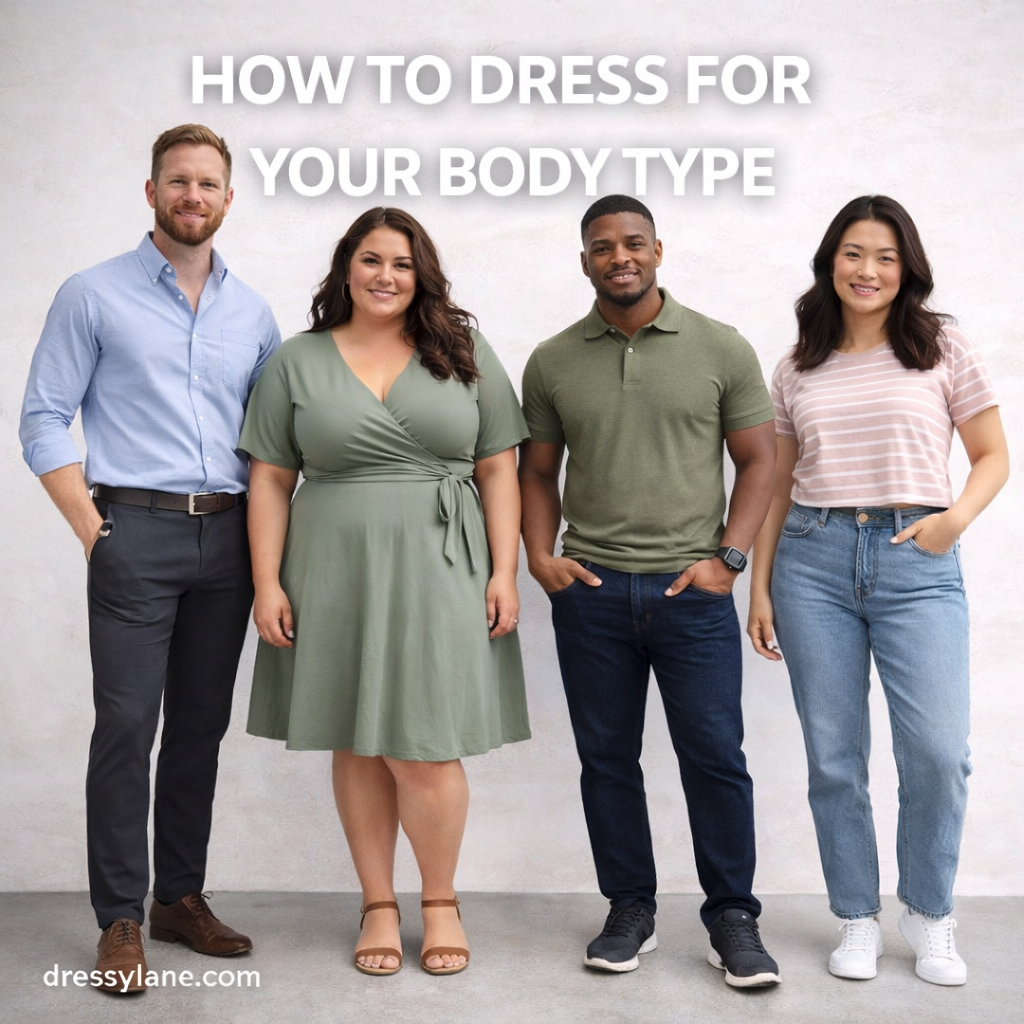
Dressing well isn’t about chasing trends—it’s about understanding proportions and choosing clothes that work with your natural shape. When you dress for your body type, outfits feel more balanced, comfortable, and confidence-boosting without requiring a complete wardrobe overhaul.
This guide explains how to dress for your body type with practical styling principles, easy outfit tips, and dedicated sections for both women and men.
Why Dressing for Your Body Type Matters
Every body is different, and there’s no single “ideal” shape. Dressing for your body type helps you:
- Create visual balance and proportion
- Highlight your favorite features
- Feel more comfortable in your clothes
- Build outfits that feel intentional
The goal isn’t to hide your body—it’s to dress in a way that feels natural and flattering.
Core Styling Principles That Work for Everyone
Before getting into specific body types, these universal rules apply across the board.
- Focus on fit over size labels
- Choose fabrics that drape well instead of clinging
- Use structure where you want definition
- Keep proportions balanced from top to bottom
- Dress for comfort as well as appearance
Once these basics are in place, styling becomes much easier.
How to Identify Your Body Type
Body types are general categories based on proportions, not rigid rules. Most people fall somewhere between types.
For women, body type is often based on shoulder, waist, and hip balance.
For men, body type is typically based on shoulder width, waist, and overall build.
Use these categories as guides—not limitations.
How Women Can Dress for Their Body Type
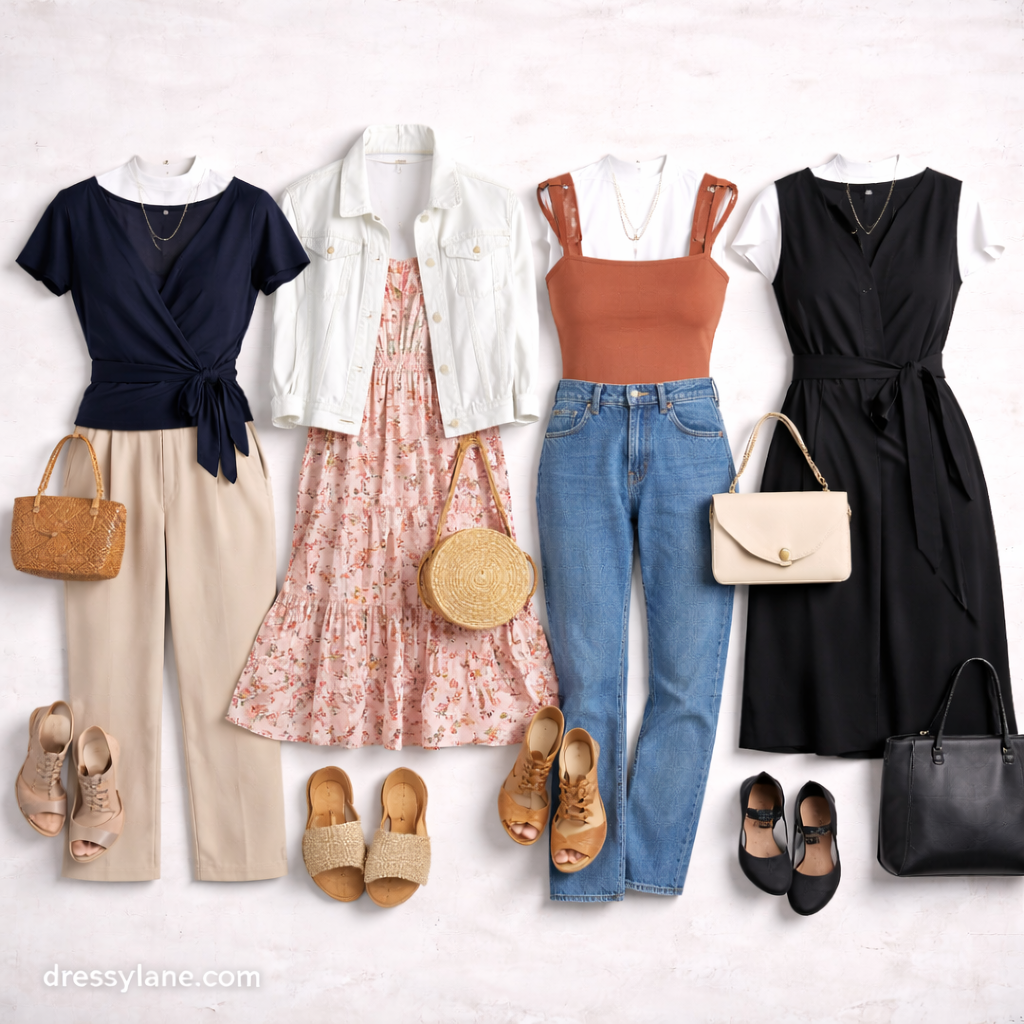
Dressing for an Hourglass Body Type
Hourglass figures have balanced shoulders and hips with a defined waist.
Best styling tips:
- Highlight the waist with fitted or belted pieces
- Choose wrap dresses and tailored tops
- Opt for high-waisted bottoms
Avoid overly boxy silhouettes that hide natural shape.
Dressing for a Pear Body Type
Pear shapes have narrower shoulders and fuller hips.
Flattering outfit choices:
- Structured or detailed tops to balance proportions
- A-line skirts and wide-leg pants
- Darker colors on the bottom, lighter on top
Balance is key—draw attention upward.
Dressing for an Apple Body Type
Apple shapes carry more volume around the midsection with slimmer legs.
Smart styling ideas:
- Flowing tops with structure at the shoulders
- Empire-waist dresses
- Straight-leg or tapered pants
Avoid overly tight tops around the waist.
Dressing for a Rectangle Body Type
Rectangle shapes have similar measurements at shoulders, waist, and hips.
Best outfit strategies:
- Add shape with belts or layered pieces
- Choose textured or patterned fabrics
- Experiment with structured jackets and skirts
Creating dimension helps define the silhouette.
How Men Can Dress for Their Body Type
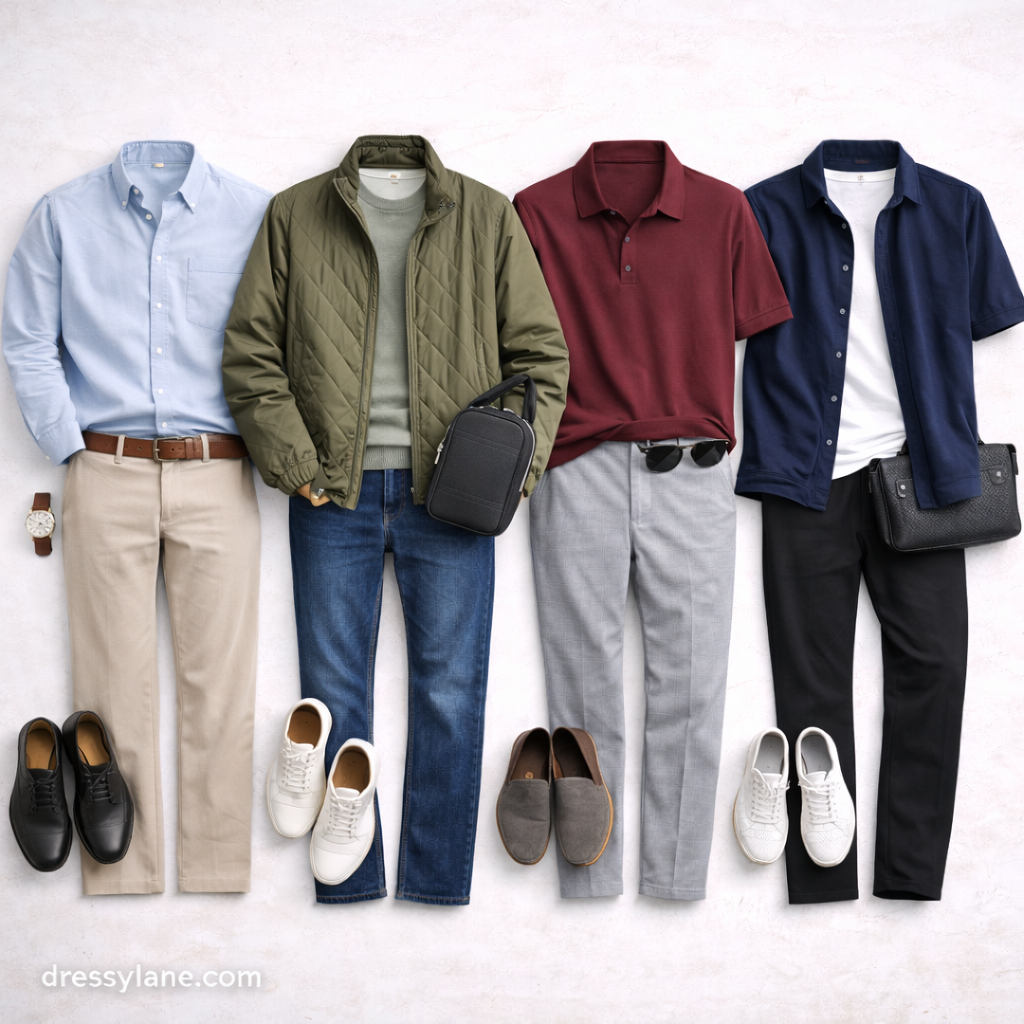
Dressing for an Athletic or V-Shaped Body Type
Athletic builds feature broad shoulders and a narrower waist.
Best styling tips:
- Fitted shirts that follow your shape
- Slim or straight-leg pants
- Lightweight layers that don’t add bulk
Avoid overly tight clothing that restricts movement.
Dressing for a Slim Body Type
Slim builds often benefit from added structure and layers.
Flattering outfit ideas:
- Layered looks with jackets or overshirts
- Textured fabrics like knits or flannel
- Straight-leg or tailored pants
Avoid extremely skinny fits that exaggerate thinness.
Dressing for a Broad or Stockier Body Type
Broader builds benefit from clean lines and balanced proportions.
Best styling choices:
- Structured jackets and vertical lines
- Darker, neutral color palettes
- Straight-cut pants
Avoid overly baggy clothing that adds unnecessary volume.
How Fabric and Color Affect Body Proportions
Fabric and color choices can subtly change how outfits look on your body.
Helpful guidelines:
- Dark colors minimize visual bulk
- Light or bright colors draw attention
- Structured fabrics create shape
- Soft fabrics drape and flow
Use these tools intentionally depending on the look you want.
Dressing for Comfort and Confidence
The most flattering outfit is one you feel good wearing.
- Don’t force trends that feel uncomfortable
- Choose clothes that fit your lifestyle
- Prioritize movement and comfort
- Trust how you feel in an outfit
Confidence comes from alignment, not perfection.
Common Body-Type Styling Mistakes to Avoid
Even great outfits can miss the mark with these missteps.
- Wearing clothes that are too tight or too loose
- Ignoring tailoring and fit
- Dressing only to “hide” instead of enhance
- Comparing your body to others
Focus on what works for you.
Final Thoughts
Learning how to dress for your body type simplifies getting dressed and builds confidence over time. When you understand proportions, fit, and balance, outfits naturally look more polished and intentional.
There’s no right or wrong body type—only different ways to dress well. Choose clothes that fit, feel good, and reflect who you are, and style will follow naturally.