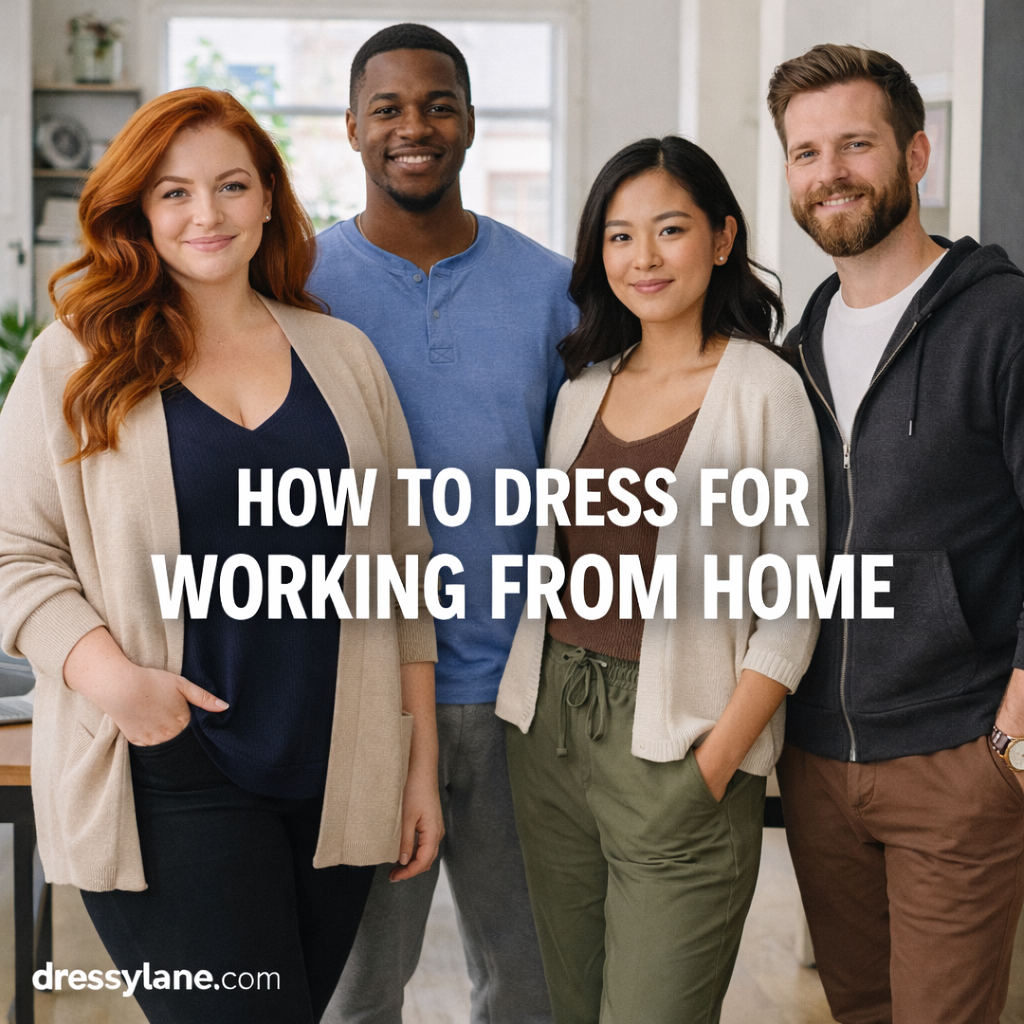
Working from home has changed how we think about everyday clothing. Comfort matters more than ever, but that doesn’t mean style should disappear. The best work-from-home outfits support long hours of sitting, occasional video calls, quick errands, and the mental shift between “home mode” and “work mode.”
This guide shows how to dress for working from home in a way that feels comfortable, practical, and polished — with clear tips for both women and men.
Why What You Wear at Home Still Matters
Even without a commute or office environment, clothing plays a role in focus, confidence, and productivity. What you wear can influence how seriously you take your workday and how smoothly you transition between tasks.
Benefits of dressing intentionally at home include:
- Better mental separation between work and rest
- Increased focus and motivation
- Comfort for long sitting periods
- Readiness for video calls or quick outings
- A consistent daily routine
The goal is not to dress formally — it’s to dress purposefully.
Core Principles of Work-From-Home Style
Before choosing specific outfits, it helps to follow a few foundational rules.
Comfort Comes First
Working from home often means sitting for extended periods.
- Choose soft, breathable fabrics
- Avoid tight waistbands or stiff seams
- Prioritize stretch and ease of movement
Polished on Top, Relaxed on Bottom
Many remote jobs require video calls.
- Tops should look clean and intentional
- Bottoms can prioritize comfort as long as they fit well
- Avoid anything that feels like sleepwear
Easy Transitions Matter
Your outfit should carry you through:
- Morning work hours
- Afternoon errands
- Short walks or breaks
- Casual evening plans
Minimal Maintenance Wins
Work-from-home clothes should be easy to care for.
- Wrinkle-resistant fabrics
- Washable materials
- Pieces that don’t need constant adjusting
Dressing for Working From Home: Women’s Guide
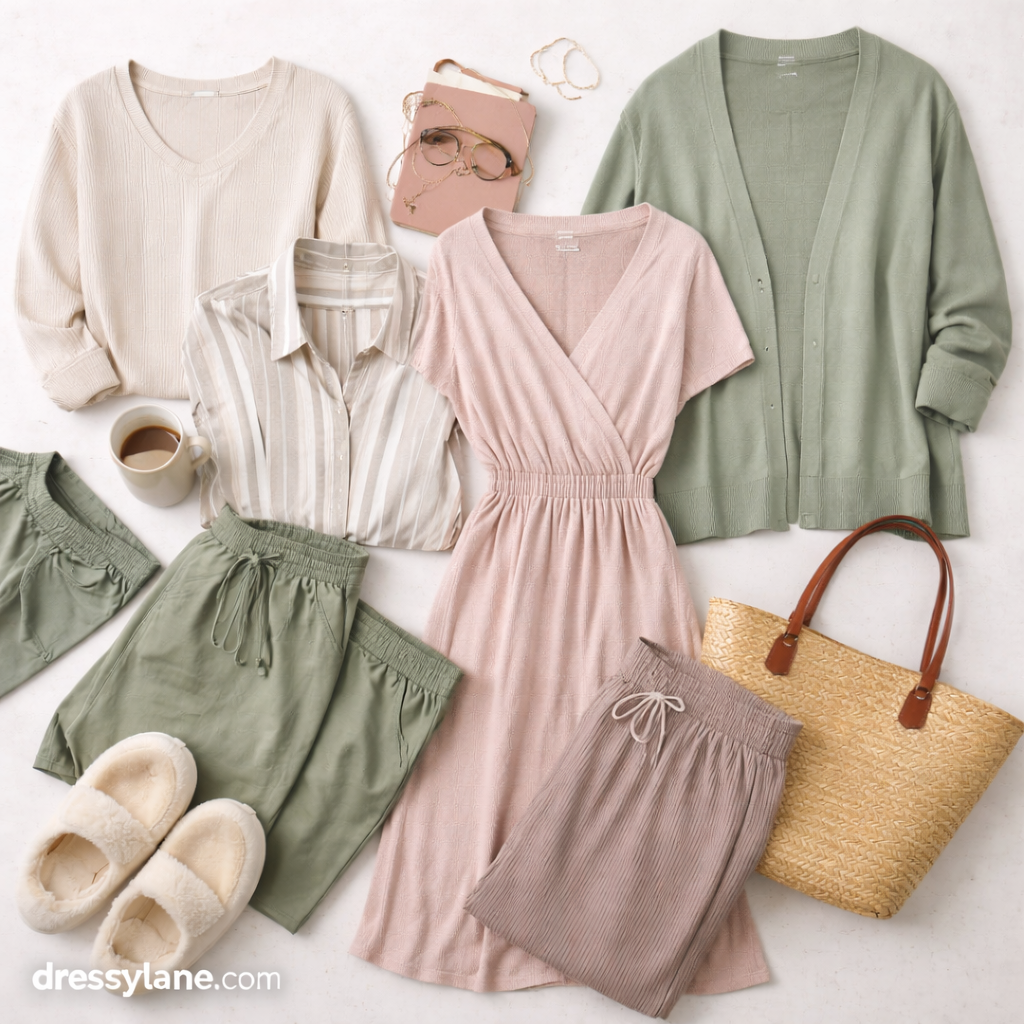
Women’s work-from-home outfits should balance softness with structure to avoid feeling underdressed or uncomfortable.
Comfortable Work-Ready Tops
- Soft knit tops with a clean neckline
- Relaxed blouses that don’t cling
- Lightweight sweaters or cardigans
- Breathable button-front tops
Neutral colors and simple patterns tend to look best on video calls.
Bottoms That Feel Comfortable All Day
- Elastic-waist trousers with a polished cut
- Soft joggers in structured fabrics
- Stretch leggings paired with longer tops
- Pull-on pants that don’t dig in
The key is choosing bottoms that feel like loungewear but look intentional.
Dresses That Work at Home
- Knit dresses with stretch
- Loose-fit midi or shift dresses
- Simple silhouettes without heavy structure
Dresses offer an easy one-piece solution that feels put together with minimal effort.
Layering for Temperature Changes
- Lightweight cardigans
- Soft wrap sweaters
- Relaxed jackets for video calls
Layers allow you to adjust throughout the day without changing outfits.
Shoes and Accessories
- Comfortable slippers or indoor shoes
- Simple jewelry for video calls
- Hair styles that stay in place without effort
Avoid heavy accessories that become distracting during long work hours.
Dressing for Working From Home: Men’s Guide
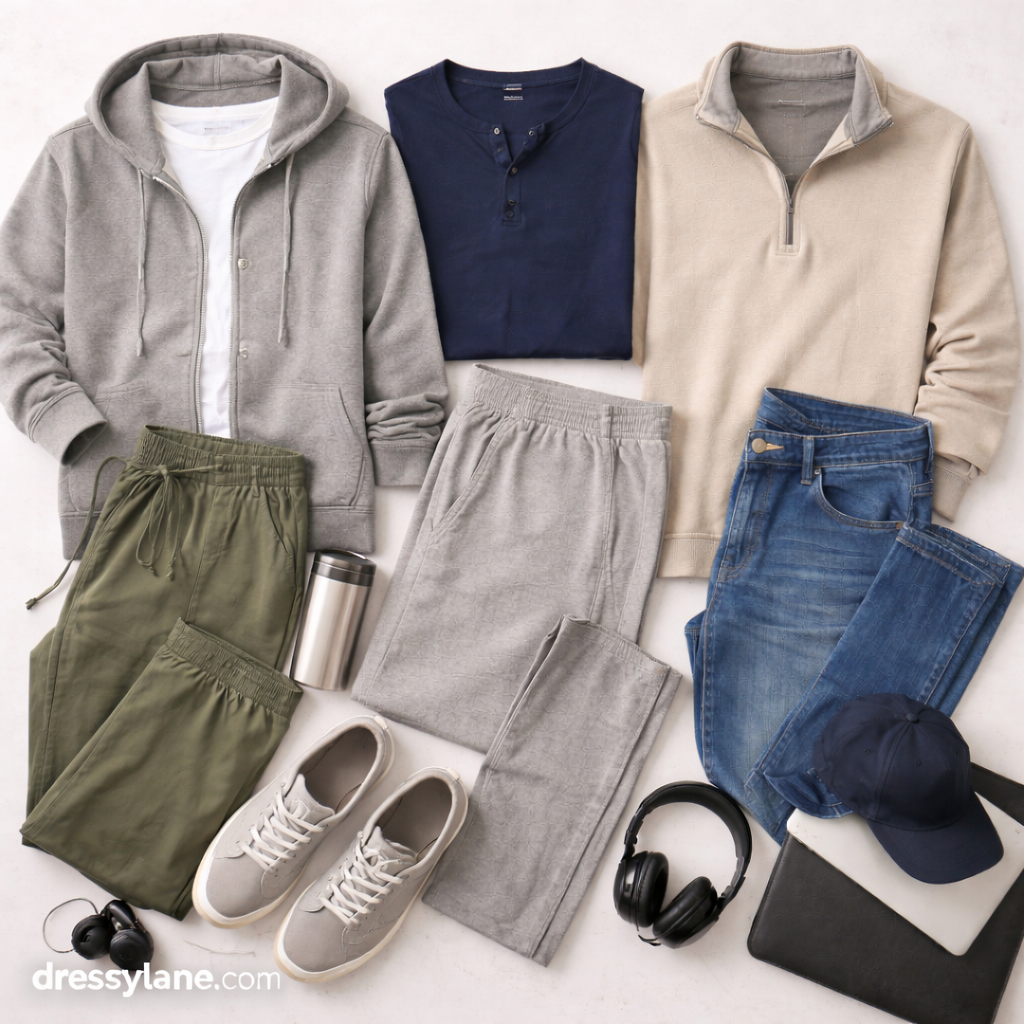
Men’s work-from-home style benefits from simple, repeatable outfit formulas.
Work-Appropriate Tops
- Soft t-shirts with structure
- Polos made from breathable fabrics
- Casual button-downs without stiffness
- Lightweight sweaters or zip-ups
Stick to solid colors or subtle textures for a clean look on camera.
Comfortable Bottoms
- Stretch joggers with a tailored shape
- Elastic-waist chinos
- Relaxed-fit pants with soft fabric
Avoid overly worn or baggy pieces that can affect posture and confidence.
Easy Layers
- Zip-up hoodies with clean lines
- Lightweight overshirts
- Casual jackets that elevate a basic outfit
Layers help you look polished instantly when a video call pops up.
Footwear and Accessories
- Indoor shoes with support
- Minimal accessories like watches
- Avoid belts or hardware that feel restrictive
Comfortable footwear still matters, especially if you stand or walk during calls.
Video Call Style Tips That Actually Help
Looking good on camera doesn’t require dressing up — it requires awareness.
Focus on the Upper Half
- Solid colors photograph better than busy patterns
- Avoid shiny or overly textured fabrics
- Choose necklines that frame your face
Lighting and Color Awareness
- Medium tones tend to look best on screen
- Avoid colors that blend into your background
- Simple contrast improves visual clarity
Fit Still Matters
Even relaxed clothing should fit well.
- Avoid oversized tops that look sloppy on camera
- Choose pieces that hold their shape
Building a Work-From-Home Capsule Wardrobe
A small collection of reliable pieces makes daily dressing easier.
Essentials to Prioritize
- 3–5 comfortable tops suitable for video calls
- 2–3 soft bottoms you can wear all day
- 1–2 versatile layers
- Comfortable indoor footwear
Create Outfit Formulas
Examples:
- Soft top + stretch pants + light layer
- Knit dress + cardigan
- Polo or tee + relaxed chinos
Repeating outfits is not a problem — consistency saves time.
Common Work-From-Home Style Mistakes
Even comfortable clothes can work against you if chosen poorly.
Avoid:
- Staying in sleepwear all day
- Wearing clothing that restricts movement
- Choosing overly sloppy or worn pieces
- Ignoring posture-friendly fits
- Dressing too casually for your job expectations
What you wear should support both comfort and professionalism.
Final Thoughts
Dressing for working from home is about finding balance. When your clothes feel comfortable but intentional, you’re more likely to stay focused, confident, and productive throughout the day. The right work-from-home wardrobe removes friction from your routine and helps you show up — even when your office is just a few steps away.
Comfort doesn’t replace style. At home, it becomes the foundation of it.