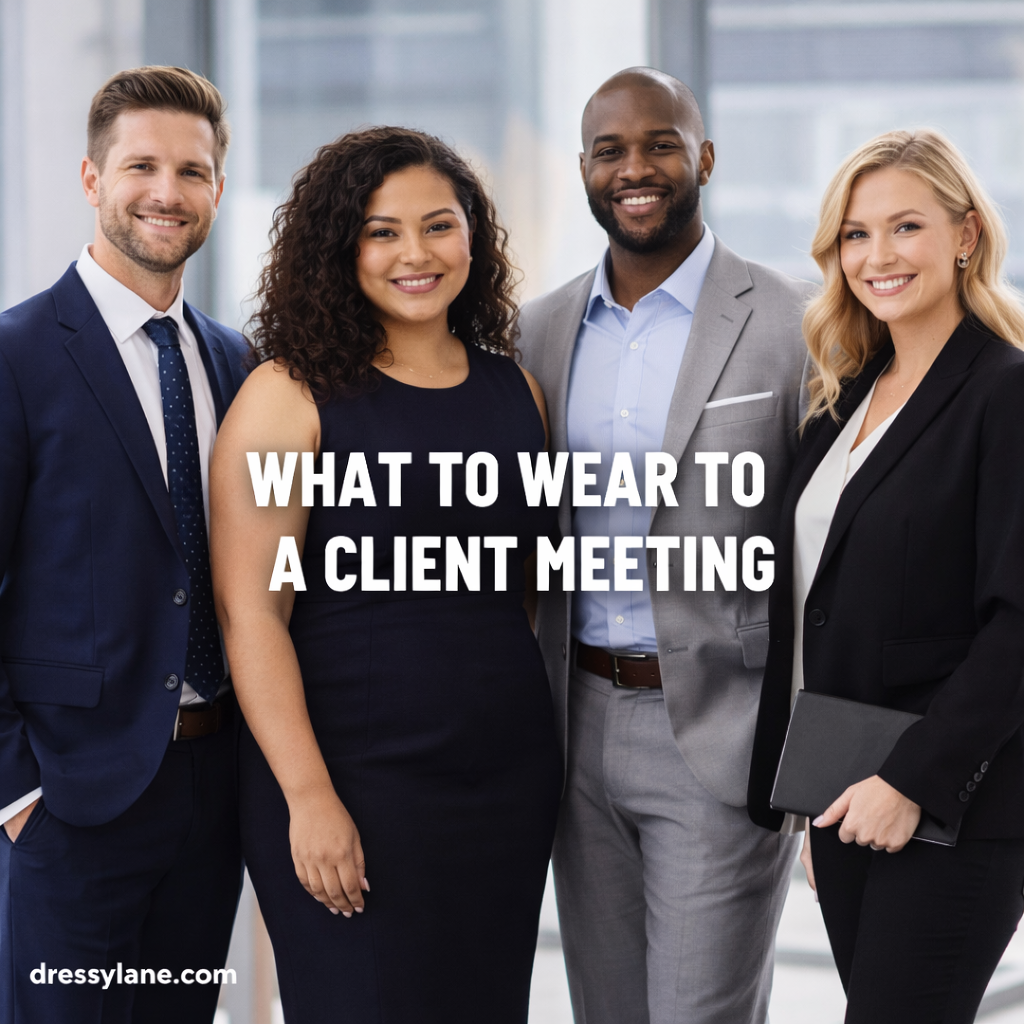
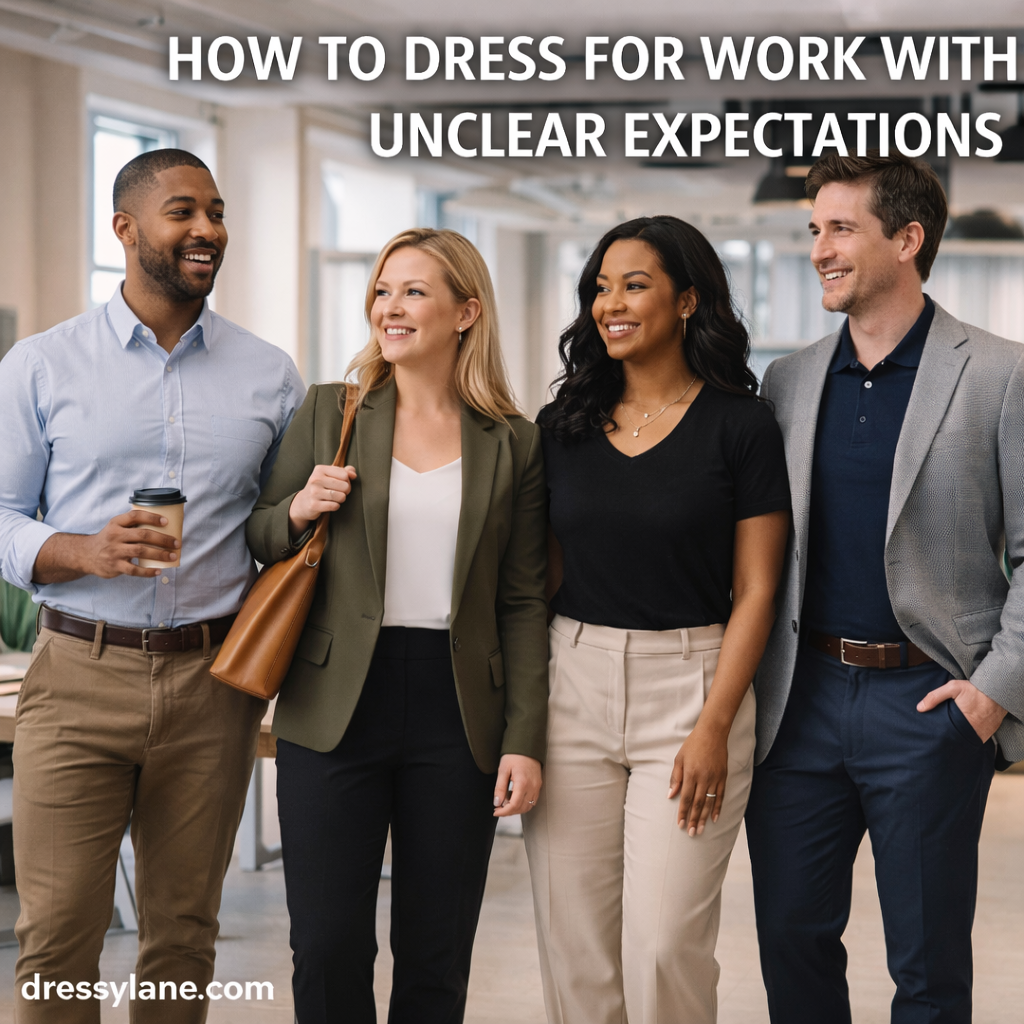
Not every workplace spells out exactly what “appropriate” means. Hybrid offices, evolving company cultures, new roles, and casual-but-not-too-casual environments often leave employees guessing what to wear. When expectations aren’t clear, dressing for work can feel stressful instead of routine.
This guide explains how to dress for work with unclear expectations, using practical strategies and adaptable outfit ideas for both women and men.
Why Unclear Dress Codes Are So Common
Modern work environments are less rigid than they used to be.
Unclear expectations often come from:
- Hybrid or remote-first workplaces
- Startups and fast-growing companies
- Shifts from formal to casual cultures
- Industry blending (creative + corporate)
- Vague terms like “business casual” or “smart casual”
When rules aren’t defined, flexibility becomes your advantage.
The Safest Rule When Expectations Are Unclear
When in doubt, aim for slightly more polished than casual.
A good baseline approach:
- Choose clean, structured pieces
- Avoid extremes (too formal or too relaxed)
- Prioritize fit and grooming
- Keep outfits neutral and simple
It’s easier to dress something down than to recover from being underdressed.
What Women Can Wear When Dress Codes Are Unclear
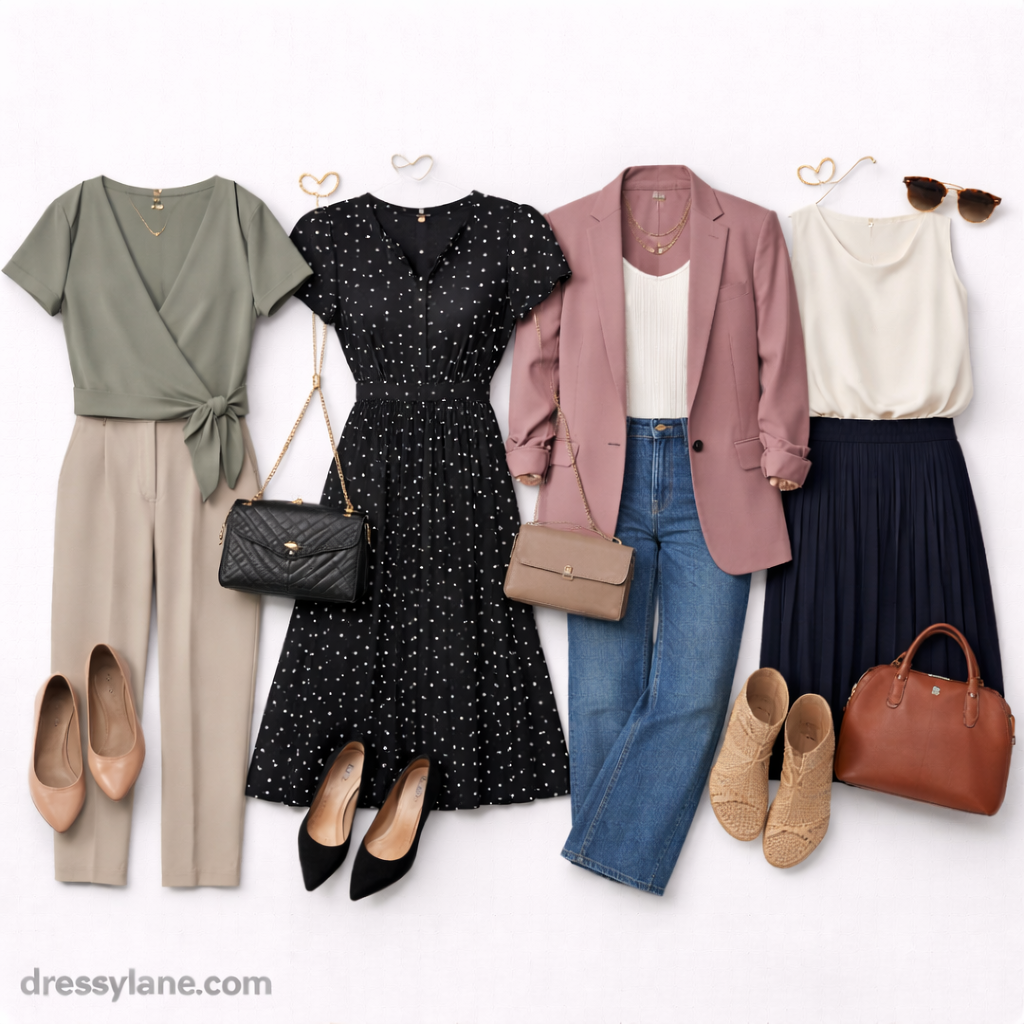
Women benefit from versatile pieces that sit comfortably between casual and professional.
Reliable Outfit Foundations
- Tailored trousers or polished ponte pants
- Midi skirts or structured dresses
- Blouses with clean lines
- Lightweight blazers or cardigans
- Flats, loafers, or low block heels
Styling Tips for Women
- Avoid overly trendy or revealing pieces
- Choose neutral colors with subtle accents
- Keep accessories minimal and intentional
- Focus on fabrics that hold their shape
These outfits look appropriate across most work environments.
What Men Can Wear When Expectations Are Unclear
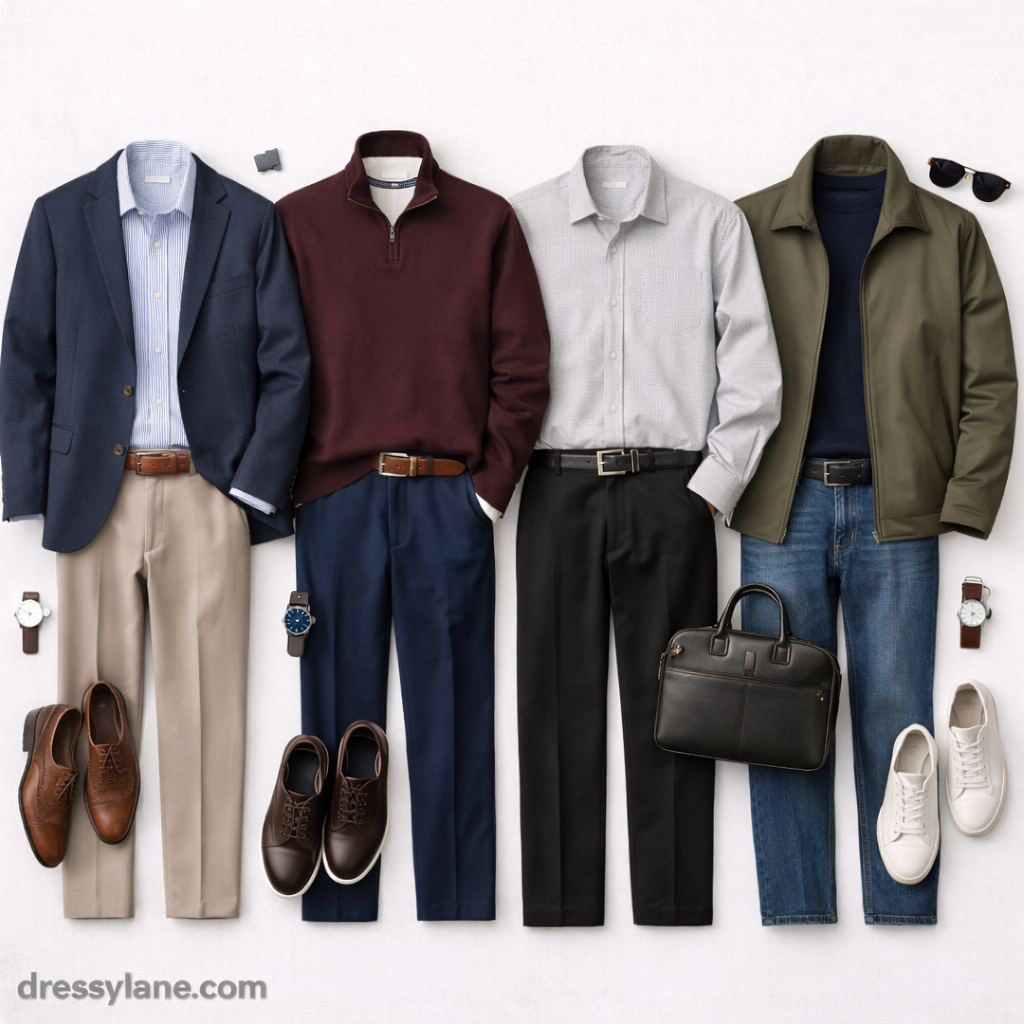
Men can stay safe with refined basics and smart layering.
Reliable Outfit Foundations
- Chinos or tailored trousers
- Button-down shirts or knit polos
- Unstructured blazers or clean jackets
- Leather sneakers, loafers, or dress shoes
- Simple belts and watches
Styling Tips for Men
- Skip graphic tees or distressed items
- Prioritize fit over brand names
- Choose classic colors like navy, gray, or beige
- Keep shoes clean and polished
A well-fitted outfit signals professionalism without being formal.
How to Read the Workplace Without Asking Directly
You can learn a lot before your first day—or during your first week.
Look for clues such as:
- Company website and social media photos
- Team profiles or LinkedIn images
- What managers and leadership wear
- How colleagues dress on different days
Observe before adjusting your wardrobe.
Dressing for the First Few Weeks
Your first weeks are about gathering information.
Smart approach:
- Start slightly more polished
- Adjust gradually as you observe others
- Avoid statement pieces early on
- Build a rotation of neutral outfits
Consistency builds trust and confidence.
Using Layers to Adapt Throughout the Day
Layers are especially helpful in unclear environments.
Effective layering options:
- Blazers that can be removed
- Cardigans or lightweight jackets
- Overshirts for men
- Neutral outer layers that elevate basics
Layers allow quick adjustments without changing outfits.
Common Mistakes to Avoid
Avoid these pitfalls when expectations aren’t defined:
- Dressing too casually too soon
- Overcompensating with overly formal attire
- Wearing loud or distracting pieces
- Ignoring grooming and fit
- Assuming “casual” means informal
Neutral, polished choices are rarely wrong.
When to Ask for Clarification
Sometimes, asking is the smartest move.
You can:
- Ask HR about general guidelines
- Observe and ask a trusted colleague
- Frame it as wanting to align with the culture
Most workplaces appreciate thoughtfulness.
Building a Flexible Work Wardrobe
A flexible wardrobe reduces stress long-term.
Helpful strategies:
- Invest in mix-and-match basics
- Stick to a consistent color palette
- Choose comfort-tested pieces
- Avoid overly trend-driven items
- Replace worn clothing promptly
Flexibility gives you confidence in any setting.
Final Thoughts
Dressing for work with unclear expectations is about balance, observation, and adaptability. By choosing polished basics, using layers strategically, and paying attention to workplace cues, you can dress confidently without feeling out of place.
When your outfit feels intentional and appropriate, uncertainty becomes manageable—and getting dressed becomes easier.