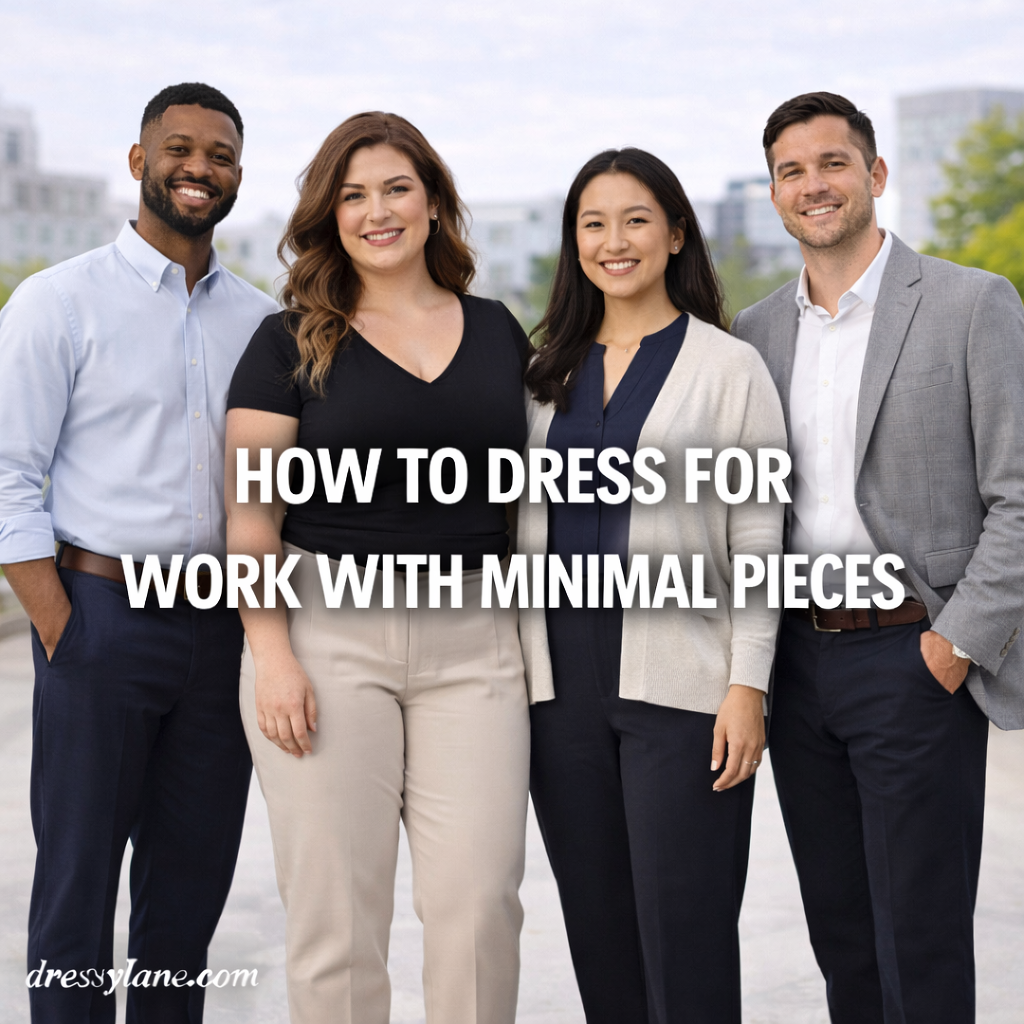
Building a professional work wardrobe doesn’t require a closet full of clothes. With a small, intentional selection of versatile pieces, you can create polished, work-appropriate outfits that feel comfortable, modern, and easy to maintain. The key is choosing items that mix well, fit properly, and adapt to different work settings.
This guide shows you how to dress for work with minimal pieces—without sacrificing professionalism or personal style.
Why a Minimal Work Wardrobe Works
A smaller work wardrobe reduces stress and improves consistency.
Benefits of dressing with fewer work pieces:
- Faster outfit decisions
- Easier morning routines
- Less clutter and maintenance
- Better use of high-quality items
- A more cohesive professional image
When your clothes work together, getting dressed becomes effortless.
Step 1: Choose Versatile Core Work Pieces
Your work wardrobe should be built around a few reliable staples that can be styled multiple ways.
Essential work basics:
- Neutral trousers or skirts
- Comfortable, well-fitting tops
- A structured layer like a blazer or cardigan
- Polished shoes suitable for your workplace
These core items form the base of nearly every outfit.
Step 2: Stick to a Work-Friendly Color Palette
Limiting colors makes mixing and matching easier.
Work-appropriate palette tips:
- Start with neutral shades like black, navy, gray, or beige
- Add one or two accent colors
- Avoid buying items that don’t match your existing pieces
A cohesive palette allows every item to earn its place.
Minimal Work Outfit Ideas for Women
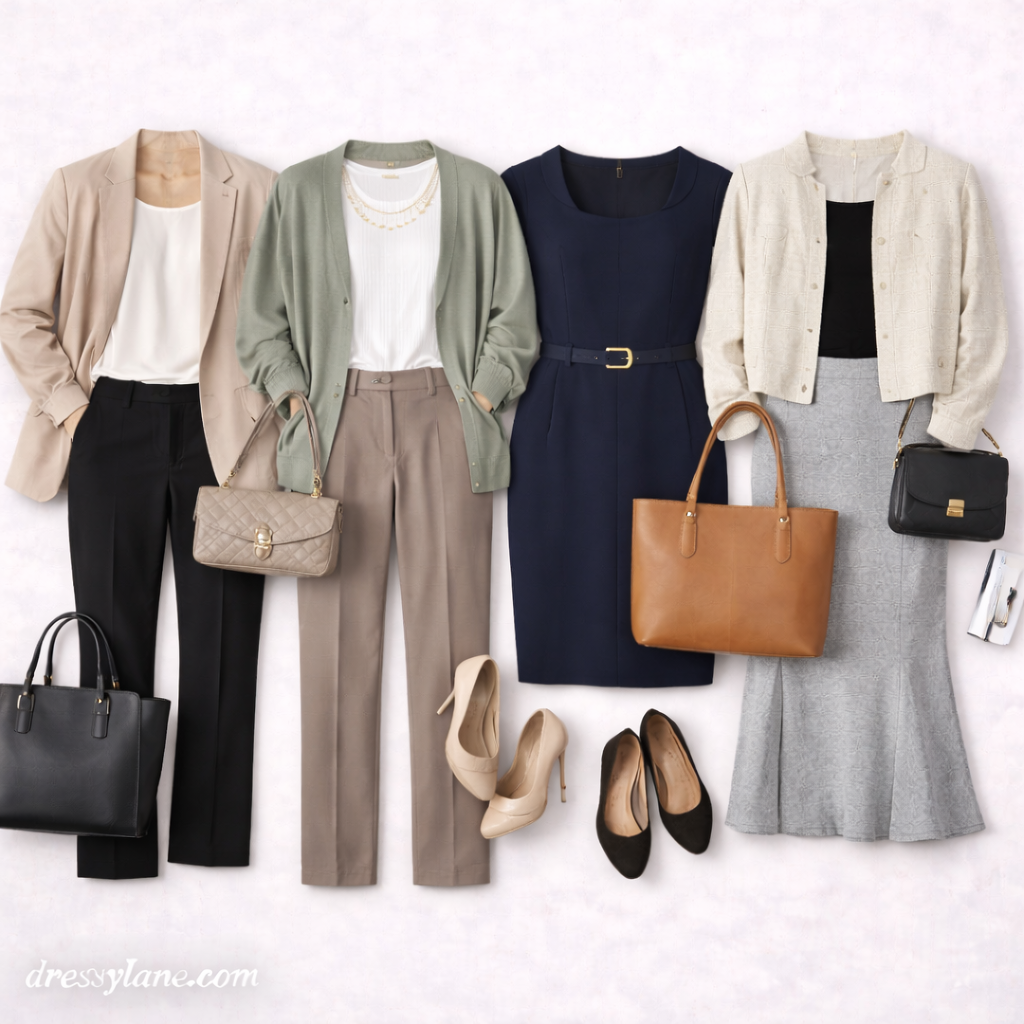
Women can build a complete work wardrobe with just a few smart choices.
Key pieces for women:
- Tailored trousers or a midi skirt
- Neutral blouses or knit tops
- A versatile blazer or cardigan
- Comfortable, professional shoes
How to create multiple outfits:
- Rotate tops with the same bottoms
- Use layering pieces to change the look
- Swap accessories instead of full outfits
Fit and fabric quality matter more than quantity.
Minimal Work Outfit Ideas for Men
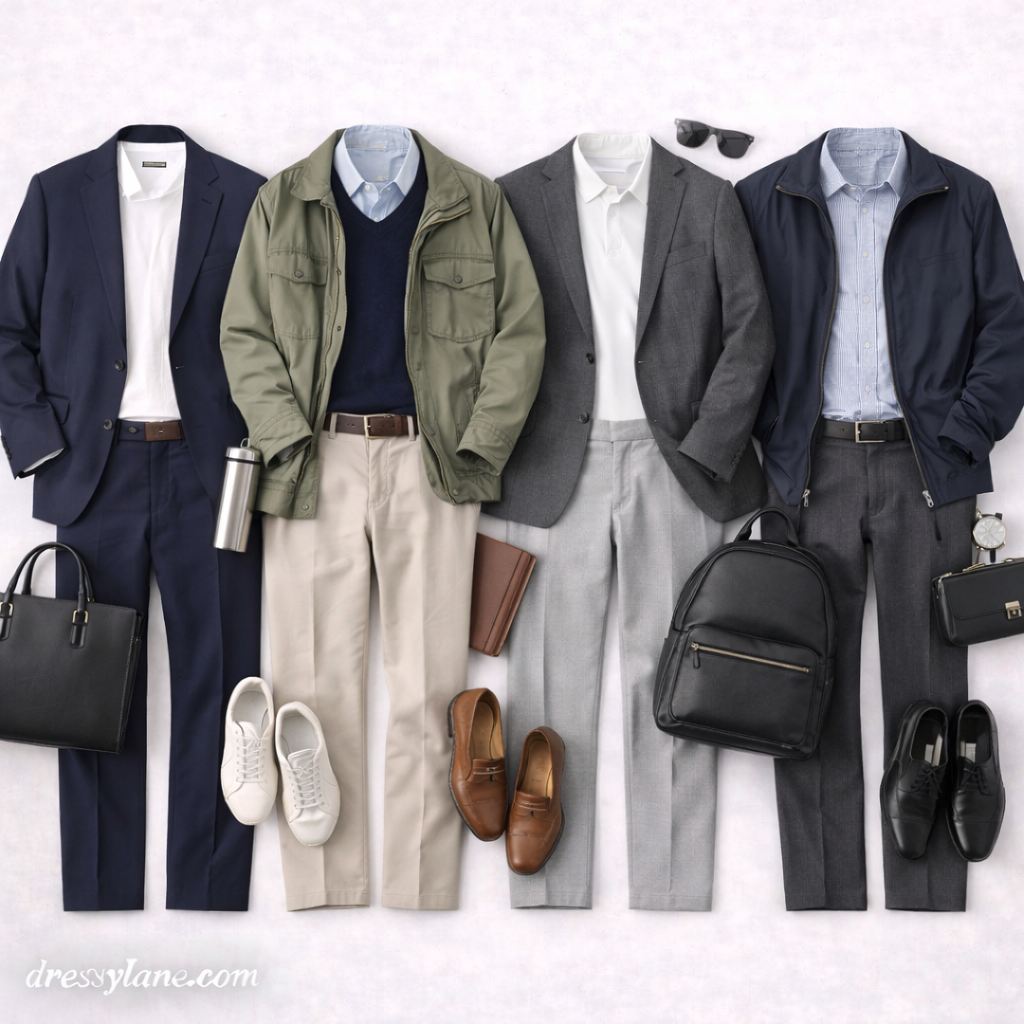
Men benefit greatly from streamlined, repeatable outfit formulas.
Key pieces for men:
- Neutral trousers or chinos
- Breathable button-downs or polos
- A versatile jacket or blazer
- Work-appropriate shoes
How to maximize your wardrobe:
- Stick to classic cuts
- Layer strategically for variety
- Keep shoes clean and well-maintained
Consistency creates a polished professional appearance.
Step 3: Prioritize Fit and Comfort
Minimal wardrobes rely on pieces that feel good all day.
Fit-focused tips:
- Tailor key items if needed
- Avoid overly tight or restrictive clothing
- Choose fabrics that allow movement
Comfort improves confidence—and confidence shows.
Step 4: Build a Simple Work Uniform
A “work uniform” reduces daily decision-making.
Examples of easy work uniforms:
- Trousers + top + blazer
- Dress + structured shoes
- Chinos + shirt + light jacket
Rotating colors keeps the uniform from feeling repetitive.
Common Mistakes to Avoid
Minimal wardrobes still require balance.
Avoid these mistakes:
- Choosing pieces that only work with one outfit
- Ignoring shoe quality
- Keeping uncomfortable items
- Over-accessorizing
- Buying trends that don’t fit your work environment
Less works best when it’s intentional.
Final Thoughts
Dressing for work with minimal pieces is about clarity, not limitation. By choosing versatile items, maintaining a cohesive color palette, and focusing on fit, you can build a work wardrobe that feels effortless and professional. When every piece earns its place, your style becomes simpler—and stronger.