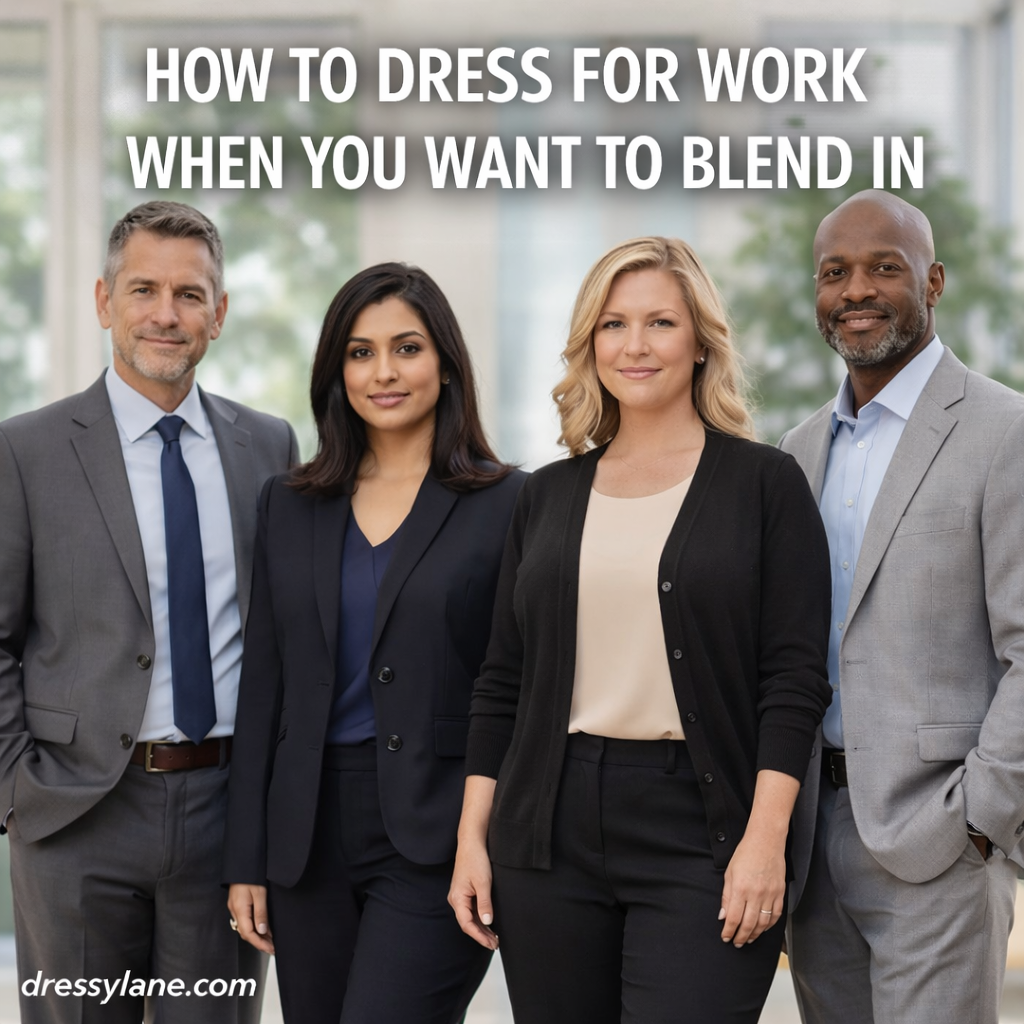
Not everyone wants to stand out at work—and that’s completely valid. In many professional environments, blending in can actually be an advantage. Dressing in a way that aligns with workplace norms helps you avoid unwanted attention, reduces judgment, and keeps the focus on your performance rather than your appearance.
This guide explains how to dress for work when you want to blend in, using subtle style strategies that work across industries. You’ll learn how men and women can look professional, neutral, and appropriate without feeling invisible or uncomfortable.
Why Blending In at Work Can Be a Smart Choice
Blending in doesn’t mean dressing poorly or without intention. It means dressing in a way that matches expectations and minimizes friction.
Many professionals choose to blend in to:
- Avoid drawing attention in conservative environments
- Build trust and credibility
- Reduce appearance-based bias
- Navigate office politics more smoothly
- Keep focus on skills and results
In traditional or hierarchical workplaces, neutral dressing often signals reliability and professionalism.
Understand Your Workplace Baseline
Before choosing outfits, observe what’s already accepted in your workplace.
Pay attention to:
- What most people wear day to day
- How managers and leaders dress
- Color palettes commonly used
- Levels of formality across departments
Your goal is to stay within the “middle zone”—not the most casual, not the most dressed up.
Stick to Neutral Colors
Color choice is one of the fastest ways to blend in.
Safe Color Choices
- Navy
- Gray
- Black
- Beige
- White
- Soft blue
- Muted earth tones
Avoid bright colors, loud prints, and high-contrast combinations if blending in is the goal.
Choose Simple, Familiar Silhouettes
Classic shapes are easier to overlook—and that’s a good thing.
Blending-In Silhouette Tips
- Straight-leg or tailored trousers
- Classic button-down shirts
- Simple blazers or cardigans
- Knee-length skirts or midi dresses
- Closed-toe shoes in neutral shades
Timeless pieces rarely attract attention, which is exactly what you want.
How to Dress for Work When You Want to Blend In as a Woman
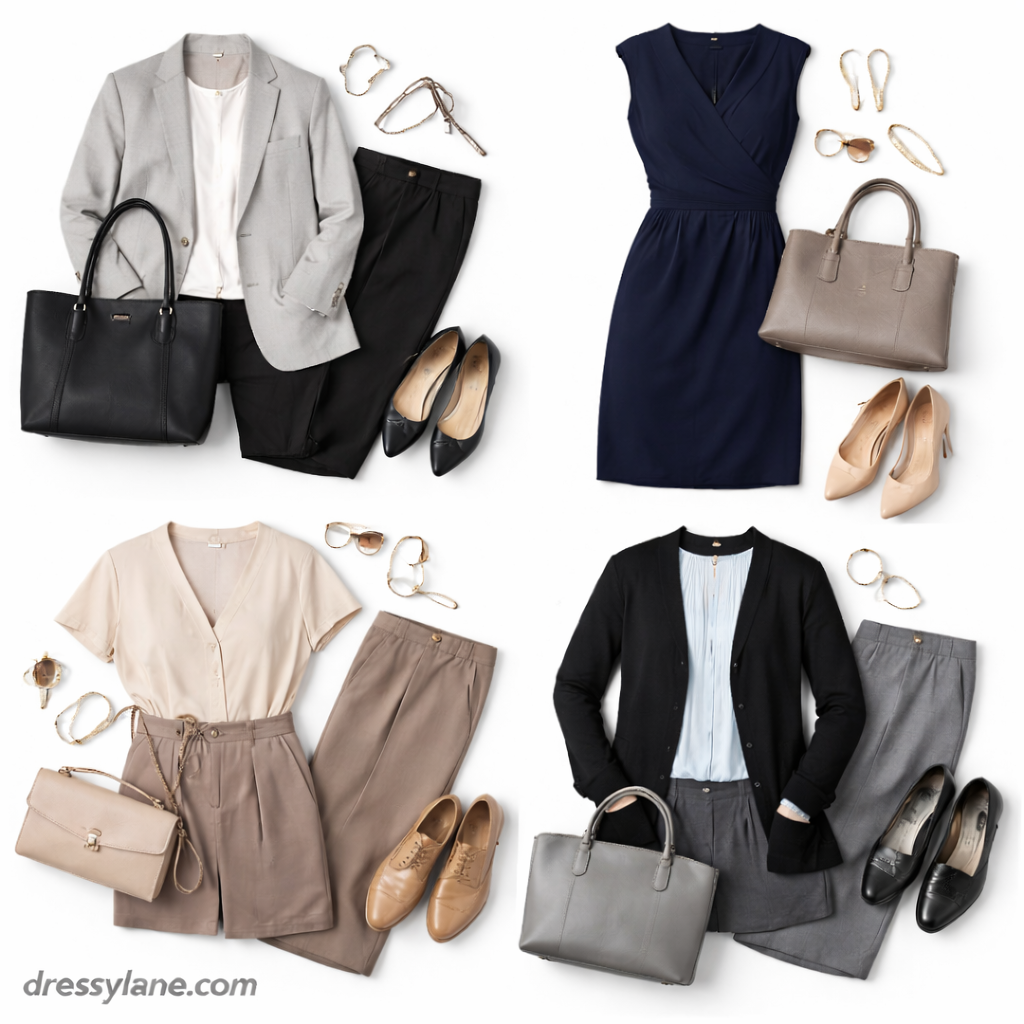
Women often have more variety in workplace clothing, which can make blending in feel tricky.
Practical Outfit Strategies
- Stick to solid colors or subtle patterns
- Choose structured but comfortable pieces
- Avoid extreme cuts, lengths, or details
- Keep accessories minimal and understated
Safe Go-To Pieces
- Neutral blouses
- Tailored pants or skirts
- Simple dresses with sleeves
- Flats or low heels
- Light layering pieces like blazers
Blending in doesn’t mean dressing down—it means dressing predictably and professionally.
How to Dress for Work When You Want to Blend In as a Man

Men’s workplace attire often has clearer expectations, which can make blending in easier.
Practical Outfit Strategies
- Wear standard office colors
- Choose classic fits over trendy cuts
- Avoid bold ties or statement shoes
- Keep grooming clean and consistent
Safe Go-To Pieces
- Button-down shirts in white or blue
- Neutral trousers
- Simple belts and shoes
- Basic blazers or suit jackets
Consistency is key—wearing similar outfits daily helps you fade into the professional background.
Keep Patterns and Textures Subtle
Patterns can quickly draw attention if they’re too bold.
Better options include:
- Fine stripes
- Small checks
- Light texture fabrics
- Low-contrast prints
Avoid large florals, novelty prints, or high-contrast designs when blending in is the goal.
Accessories Should Be Quiet, Not Loud
Accessories can easily make an outfit stand out.
Blending-Friendly Accessories
- Simple watches
- Minimal jewelry
- Neutral handbags or briefcases
- Plain belts and shoes
If an accessory becomes a conversation starter, it’s probably too noticeable.
Grooming Matters as Much as Clothing
Even neutral outfits can stand out if grooming is inconsistent.
Blending-in grooming basics include:
- Clean, simple hairstyles
- Natural makeup
- Neatly trimmed facial hair
- Polished shoes
Professional grooming reinforces the “reliable and unremarkable” look many workplaces reward.
When Blending In Is Especially Useful
Blending in can be particularly helpful during:
- New jobs or probation periods
- Corporate restructures
- Client-facing roles
- Conservative industries
- High-visibility team environments
You can always adjust your style later once you understand the culture better.
Common Mistakes That Prevent You From Blending In
Avoid these common pitfalls:
- Dressing significantly more formal or casual than peers
- Wearing standout colors or statement pieces
- Following trends that haven’t reached your workplace
- Over-accessorizing
- Trying to express too much personality through workwear
At work, subtlety often communicates maturity and awareness.
Final Thoughts
Learning how to dress for work when you want to blend in is about observation, restraint, and consistency. By choosing neutral colors, classic silhouettes, and understated accessories, both men and women can fit seamlessly into their workplace environment.
Blending in doesn’t mean losing your identity—it means understanding when quiet professionalism works in your favor. Once you’ve built trust and credibility, you can always introduce more personal style on your own terms.