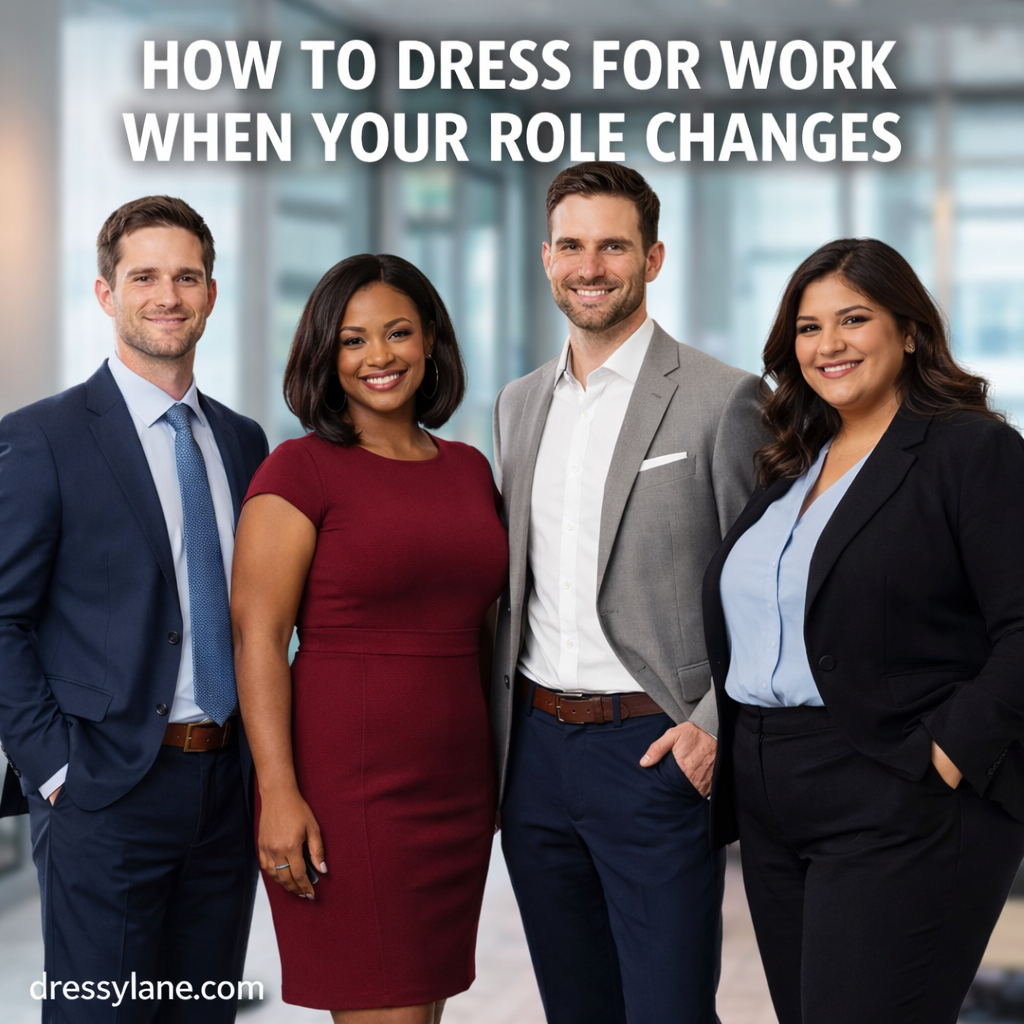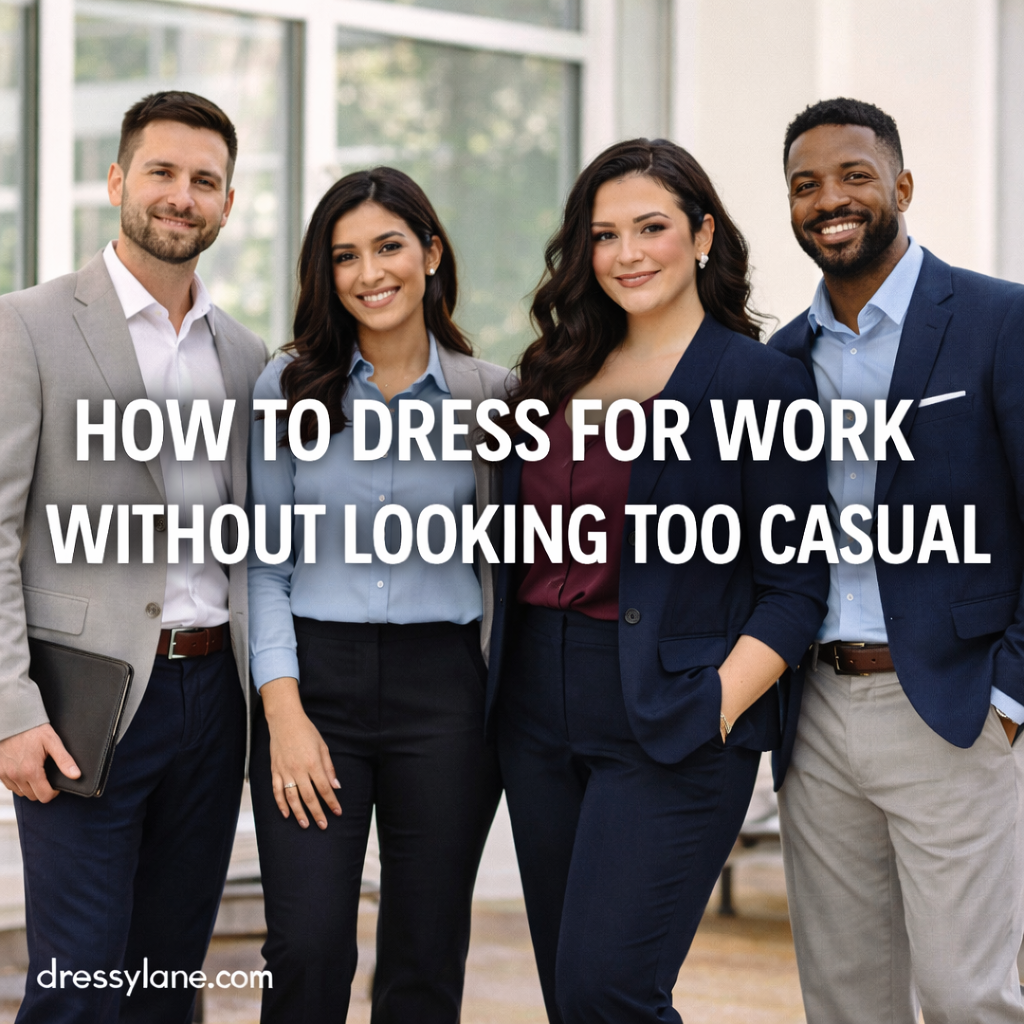
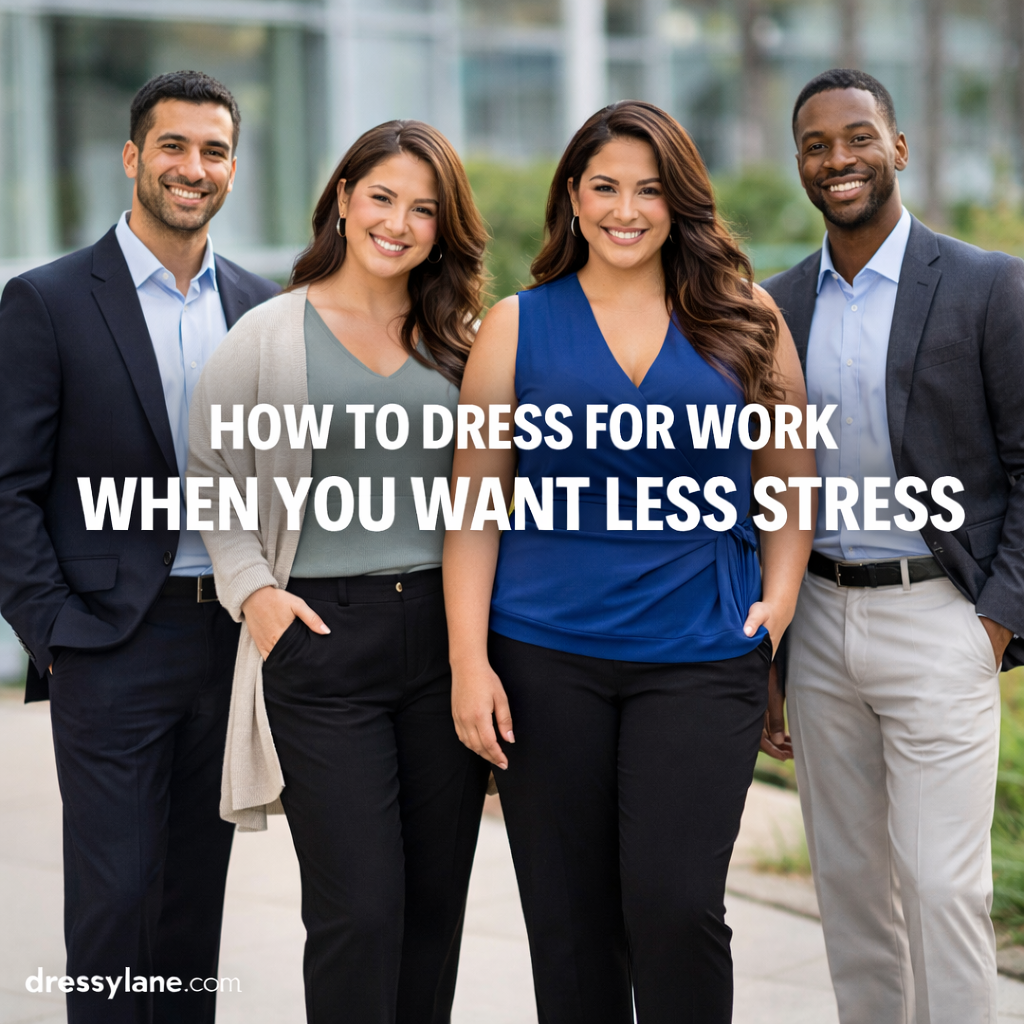
What you wear to work affects more than how you look—it shapes how you feel throughout the day. Uncomfortable clothing, restrictive fits, or high-maintenance outfits can quietly add stress before your workday even begins.
This guide focuses on how to dress for work in a way that reduces stress, supports comfort, and still looks professional. You’ll find practical strategies along with dedicated tips for both men and women.
How Clothing Contributes to Workplace Stress
Work stress isn’t always about deadlines or meetings—sometimes it starts in your closet.
Clothing can increase stress when it:
- Feels tight or restrictive during long hours
- Requires constant adjusting
- Doesn’t suit your daily tasks
- Feels inauthentic or forced
Stress-reducing workwear supports movement, confidence, and ease.
Prioritize Comfort Without Sacrificing Professionalism
Comfortable work clothes don’t have to look casual or sloppy.
Key principles to follow:
- Choose structured pieces with soft fabrics
- Look for stretch in pants, skirts, and jackets
- Avoid extreme tailoring that restricts movement
- Stick to simple, polished silhouettes
Professional comfort comes from balance—not extremes.
Choose Work Fabrics That Reduce Discomfort
Fabric choice has a major impact on daily stress levels.
Low-stress fabric options:
- Breathable cotton blends
- Lightweight wool or wool blends
- Ponte knits for structure and stretch
- Wrinkle-resistant fabrics for easier care
Avoid heavy, stiff, or itchy materials that demand constant awareness.
Simplify Your Work Wardrobe
Decision fatigue adds unnecessary stress to busy mornings.
Ways to simplify:
- Build a small rotation of reliable outfits
- Stick to a consistent color palette
- Choose pieces that mix and match easily
- Keep go-to outfits ready for high-pressure days
A simpler wardrobe leads to calmer mornings.
Dress for Your Actual Workday
Your role and environment should guide what you wear.
Ask yourself:
- Am I sitting most of the day or moving around?
- Do I meet with clients or work independently?
- Is my workplace temperature consistent?
Dress for what your day looks like—not just what the dress code suggests.
Stress-Reducing Workwear for Women
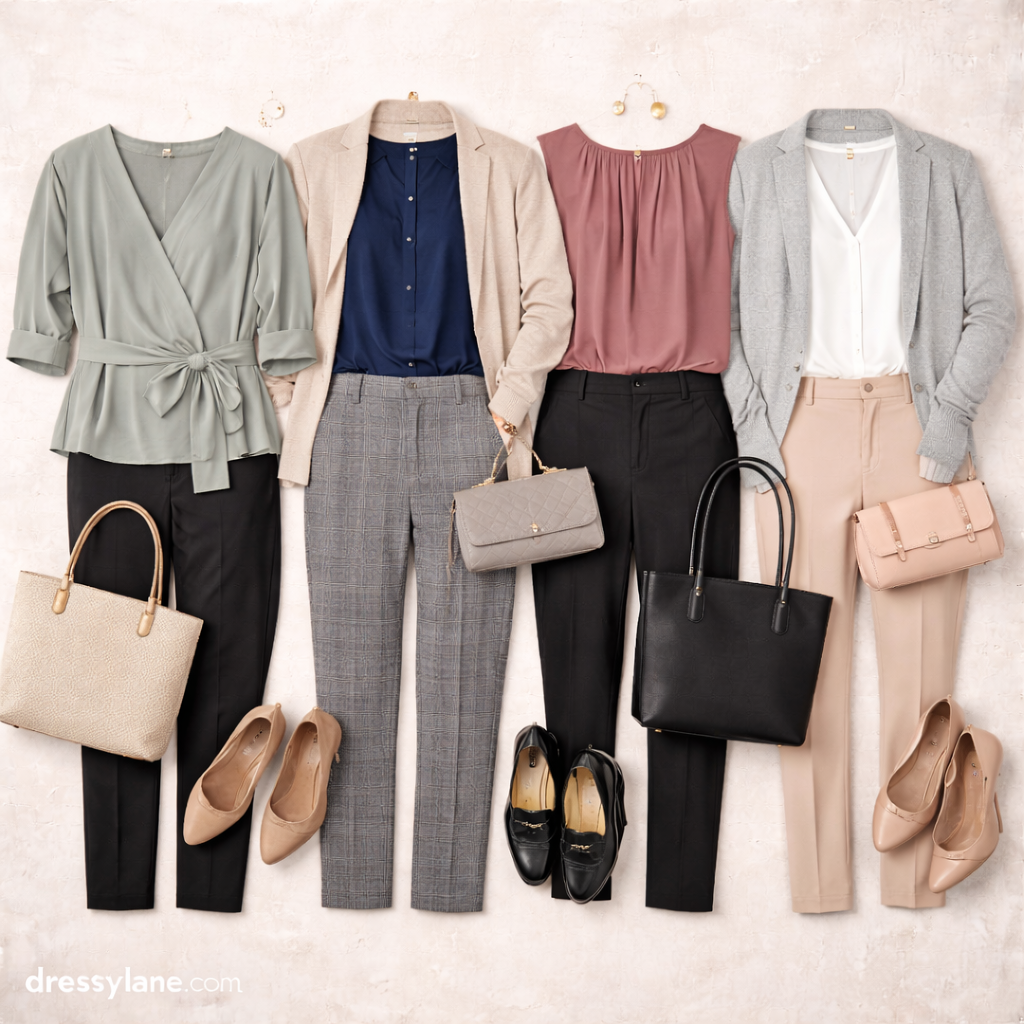
Women’s workwear often balances professionalism, comfort, and versatility.
Comfort-focused tips for women:
- Choose trousers or skirts with flexible waistbands
- Opt for blouses with stretch or flow
- Layer with soft cardigans or stretch blazers
- Wear supportive, low-maintenance footwear
- Avoid fabrics that wrinkle easily or restrict movement
Comfortable workwear helps you focus on your work—not your outfit.
Stress-Reducing Workwear for Men
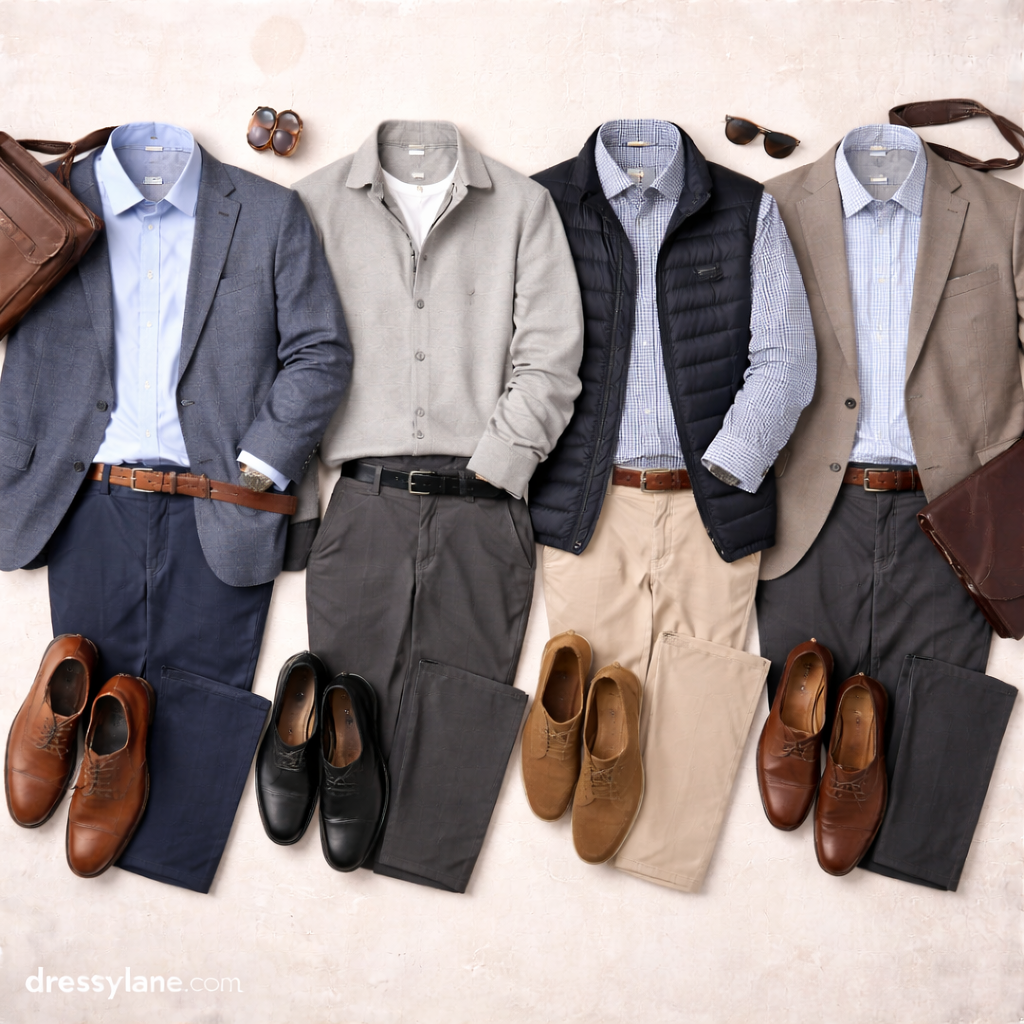
Men’s workwear comfort comes from fit, fabric, and practicality.
Comfort-focused tips for men:
- Choose shirts with breathable fabrics
- Look for trousers with stretch or flexible waistbands
- Opt for modern tailored cuts instead of ultra-slim fits
- Wear shoes that support long periods of standing or walking
- Layer with lightweight sweaters or flexible jackets
A comfortable outfit supports productivity and confidence.
Use Layers to Manage Temperature Stress
Office temperatures can change throughout the day.
Stress-free layering ideas:
- Lightweight blazers
- Cardigans or knit jackets
- Breathable undershirts
Layers let you adjust without disrupting your professional look.
Eliminate High-Maintenance Pieces
Clothing that demands constant attention adds unnecessary stress.
Consider avoiding:
- Items that wrinkle immediately
- Shoes that hurt after short wear
- Clothing that requires frequent dry cleaning
- Pieces that limit movement or comfort
Low-maintenance clothing frees mental energy.
Build a Calm Morning Routine Through Clothing
Your work outfit can support a calmer start to the day.
Helpful habits:
- Prepare outfits the night before
- Keep reliable outfits for busy mornings
- Choose clothing you feel confident wearing all day
Less stress in the morning sets the tone for the workday.
Final Thoughts
Dressing for work doesn’t need to add pressure to your day. When you choose comfortable, flexible, and practical clothing, you reduce stress and increase focus, confidence, and productivity.
The best work outfit is one that supports you—quietly and consistently—through everything your day brings.